Monday, September 30, 2019

"Cancer Avatars" Could Personalize Treatments


Cancer is very complex in that one treatment may work for one person's cancer but that same treatment might not work for another person's cancer.  Doctors are now testing many different types of medicines on specially created animals that were given the extra replica of a certain person's cancer (cancer avatars). 
Drosophila could help personalise cancer treatments


One approach was used on a man with terminal colon cancer. Scientists generated Drosophila fruit flies to have the same genetic mutations as the man with colon cancer.  Before the experiment, the man's colon cancer had spread throughout his body and his tumor had at least nine cancerous mutations.  The fruit flies were genetically altered to have all of the same genetic mutations as the man and the scientists bred about 300,000.  They tested different types of drugs on these genetically modified fruit flies and they tested them with different combinations of the drugs as well.  Many of the combinations kept the flies alive and slowed the growth of their tumors.  The combination that worked the best on the fruit flies was given to the man with colon cancer.  The man stopped responding to the treatment after 11 months and scientists could not identify what mutations made the tumor resistant to the drugs.  The man did die after three years but the results show that he most likely lived longer than he would have if hadn't taken these drugs.  Mouse avatars are also being used but flies are preferred because of the ethics of animal testing. 

I think this is very important research because we have cancer medicines that fight individual mutations but we can't determine how a tumor would respond with multiple mutations.  By using these fruit flies we are able to test thousands of different combinations of drugs to help prolong or perhaps, eventually, save one's life. 

https://www.newscientist.com/article/2204384-specially-created-animal-cancer-avatars-could-personalise-treatments/
https://advances.sciencemag.org/content/5/5/eaav6528
https://www.biospace.com/article/using-fruit-flies-to-personalize-cancer-treatment/

Sunday, September 29, 2019

What are Genetic and Lifestyle Risks associated with Dementia

Experts are hoping to intervene in the lives of those afflicted with dementia before they have even faced a diagnosis. They hope to do this by encouraging changes to the lifestyles of those who may develop the condition.

Experts believe that dementia is brought on by both genetic and environmental factors. The genetic factors include genes passed from the mother and father of an individual while environmental factors are lifestyle choices such as smoking, diet and exercise. Since the genes that cause dementia are not modifiable, researchers hope that positive changes in lifestyle can decrease the possibility of developing dementia. A recent study in JAMA explores the extent of each factor on dementia. The study used information from a UK based biobank. A biobank holds health information about individuals including disease history and lifestyle choices. The study looked at 20,000 individuals aged 60 or older. Using pre-set lifestyle choices the researchers gave each individual a score in which a higher score denoted a "better" or healthier lifestyle. There can be errors with this method of scoring such as only accounting for specific factors and being unable to distinguish which factors have an effect on the results. Similarly a genetic risk score was created by looking for gene variants strongly associated with patients who have Alzheimer's. Together these numbers created the polygenic risk score.

It was found that while both factors have an effect on the development of dementia, they work independently of each other. Individuals who came up with a bad score for both genetic and lifestyle factors had a risk of developing dementia two and a half  times higher than those with better scores. This study does not prove that lifestyle choices are the cause of dementia but only that they may influence the development.

I believe that more studies should be conducted to look further into the relationship between lifestyle and dementia. This way high risk patients can start to make changes early in life and possibly delay the onset of the dementia. This would give them and their families more time to enjoy each others company.

Original Article: https://www.health.harvard.edu/blog/your-risk-of-dementia-do-lifestyle-and-genetics-matter-2019091317671

Research: https://jamanetwork.com/journals/jama/article-abstract/2738355


Ultrasound can ‘see’ when tumor cells turn genes on and off

Ultrasound is a machine that gives an early snapshot of baby, and images of what going on inside the body. Researchers have found new development that ultrasound machine can help show tumor growth in the nerve cells of the inside body. If research can do this, they can genetically modify genes when producing a glowing protein of GSP o green fluorescent protein. By using ultrasound, it will give the visual images of a high-frequency sound wave in the body. For example, researches tested the genes by putting into virally altered human kidney cells that they then injected into mice. These cells caused tumors to sprout in the rodents. When the researchers visualized the tumors with GFP, they appeared as green blobs. Ultrasound furnished a more precise image, showing that only cells at the rim of the tumors had turned on the bubble-producing genes", according to the article by Mitch Leslie, "Ultrasound can ''see'' when tumor cells turn genes on and off." This is an excellent article because it shows how reliable an ultrasound machine is that it can detect specific high wavelength and active genes in live cells.


"An ultrasound image reveals genes are active at the edge of a mouse’s tumor"  (Taken from Leslie Mitch's article).
A. Farhadi et al., Science 365, 1469 


Researchers have used ultrasound to detect gene activity in tumors like this one, which was imaged with an older fluorescent technique" 
(Taken from Leslie Mitch's article).
A. Farhadi et al., Science 365, 1469


Friday, September 27, 2019

In Utero Transplant in First Clinical Trial Successful


At the University of California, pediatric surgeons have treated a fetus, in the second trimester, using stem sells from the mother's bone marrow. After being born in February of 2018, this baby was officially the "first patient enrolled in the world's first clinical trial using stem cells transplanted prior to birth"(Daley 2018). Although the baby is still living with alpha thalassemia, a deadly genetic disease, pediatric surgeon, Tippi Mackenzie states, "her healthy birth suggests that fetal therapy is a viable option to offer to families with this diagnosis”(Daley 2018). In 2016, the trial officially began to investigate stem cell research to treat thalassemia. In this specific case, the baby had a lethal form caused by "abnormalities on the HBA1 and HBA2 genes,"(Daley 2018) called alpha thalassemia major, which typically causes babies to die before birth or are stillborn.


This unfortunate diseaese "is an inherited blood disorder that affects the body's ability to produce hemoglobin,"(Falck 2018) and can cause swelling of the liver or heart. Therefore, after four months in a clinical trial, five blood infusions, and one stem cell transplant, it is amazing that Elianna Constantino was born healthy. Elianna's enlarged heart, a sign of thalassemia, was detected during pregnancy through an ultrasound. According to the UCSF statement, "intrauterine blood transfusions were required to treat the swelling before the stem cell transplant could be performed"(Daley 2018). Even though it was a lengthy process, Elianna is said to be "doing great." Therefore, which once was a universally fatal disease, "can now be managed as a chronic disease," says Elliott Vichinsky, a hematologist and the founder of the Northern California Comprehensive Thalassemia Center. Today, Vichinsky is overseeing the baby's treatment and everything is looking healthy.


DNA of Strange Whale Confirms it is a Hybrid of Belugas and Narwhals

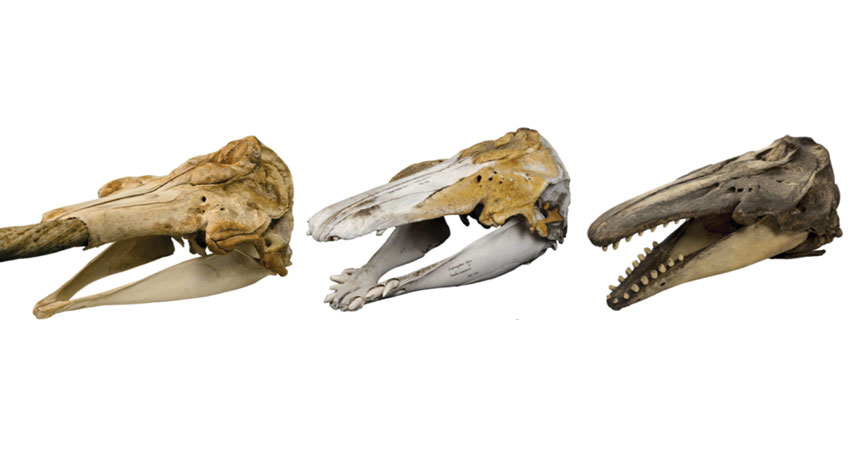
Back in 1987 an Inuit tribe hunted belugas and narwhals in Disko Bay in Greenland. They ended up catching a strange oddity. Locals said they had never seen a stranger looking whale in their lives or since that moment. Past DNA analysis revealed nothing about the mysterious skull and the case remained a mystery, until recently that is. Recently, scientist cracked the case open and started to examine the DNA and structure of the skull and compared it to the skulls of similar marine life in the area, particularly belugas and narwhals. What they found was that the skull was actually a hybrid of both species. After tracking narwhal and beluga mating patterns, the pieces of the puzzle were finally put together. It was determined that Disko Bay was one of the very few places where belugas and narwhals mate. And they also concluded that because female belugas look so much like female narwhals, it is easy to mistake them, even to male narwhals.
beluga, hybrid and narwhal skulls


I find the research interesting in that it took so long to confirm. Just looking at the skulls, it looks like an evolution chart rather than a hybrid comparison. I also think it is interesting how the gene exert a sort of co-dominance in the mouth to show some teeth.
https://www.sciencenews.org/article/dna-confirms-greenland-whale-narwhal-beluga-hybrid
https://www.livescience.com/65757-first-beluga-narwhal-hybrid.html

Thursday, September 26, 2019

Losing Genes Helped Whales Adapt to Underwater Life


Scientists in Germany began to study whales and dolphins and piece together what made them go from land living creatures to water inhabitants about 50 million years ago. They studied the DNA and gene differences between modern day whales and hippos, which are the closest ancestors to 'land living whales' or land living cetaceans. The study found that whales actually "lost" as many as 85 genes that affected physical processes that would be a burden in full time water life. One example dealt with the POLM genes, which regulate the repair of DNA, but is also very damage prone. This is important because DNA gets damaged with cycles of high to low oxygen. So getting rid of an inefficient protein would only help them make that transition from land to sea. Another gene that was lost was SLC4A9, which regulated saliva production. Saliva helps break down food, which unnecessary in water. Also, less saliva helps keep fresh water in the body. This gene would be beneficial to lose in the water.
orca jumping
I think this article really highlights how the environments affects both evolution and genetics. Simply changing environments completely changes how an animal operates and lives. It is important to see how environmental changes affected animals in the past and predict how they can impact others in the future.
https://www.sciencenews.org/article/losing-genes-may-have-helped-whale-ancestors-adapt-life-underwater
https://www.inverse.com/article/59582-whales-and-dolphins-lost-genes-tell-their-story

Tuesday, September 24, 2019

There is No Specific Gene for Homosexuality

A huge study was done to determine if there was a gene of sequence of genes that accounted for sexual behavior, specifically the preference of some individuals. The study was done to either prove of disprove that a single gene can alter someone's sexual preference so much that they completely change their preference. In the study, they polled nearly half a million people, becoming one of the largest studies of its time and toppling other past studies. Scientists took the DNA of people and studied the single nucleotide polymorphisms(SNPs) based on their sexual preference and what their history was. This meaning, if they have had all same-sex or all opposite-sex partners in their lifetime. The study found that there is no direct affect from genes to attraction. There may be indirect causes such as alter scent receptors, but nothing that directly correlates to sexual behavior. Out of all the SNPs studied, less than 1% had a direct association with same-sex attraction.
Image result for gene

I agree with the article in the case that it's not just genes that determine attraction. There is obviously some sort of environmental factor that comes into play when determining attraction. This study is important because it shows that attraction is not one straight forward thing that can be simply altered by a gene. Rather it is a complex mechanism within the human body that is influenced by a number of internal and external sources. I think this article carries a lot of weight politically. This can help people to understand that attraction is not so easily explained or manipulated.

https://www.sciencenews.org/article/no-evidence-that-gay-gene-exists
https://www.scientificamerican.com/article/massive-study-finds-no-single-genetic-cause-of-same-sex-sexual-behavior/

Small Genetic Change May Stop Ebola Virus


During this experiment, scientists used monkeys and changed a single protein in the Ebola virus called VP35, which enables the Ebola virus to block immune responses to infection.  After changing the VP35 protein, it was found that the body's immune system was activated to fight off the Ebola virus.  Not only did this change in protein help fight off the virus, but it also acted as a vaccine in a way and helped to prevent the animal from being infected. After changing this protein, the scientists presented the monkeys with the Ebola virus and the monkeys were completely protected. 


With these findings, scientists want to see if they can make a drug that can change the VP35 protein in humans in order to protect them from getting the Ebola virus.  Of course, just because this method worked in an animal does not necessarily mean that it could work in humans.  They also believe that working with this VP35 protein could also produce immune responses in other diseases as well.

Ebola is a very dangerous virus that has killed a lot of humans.  I am hopeful that this technique in changing the VP35 protein works in humans and that it can help to fight off the Ebola virus, and also prevent it from ever occurring.  Like the article said, perhaps focusing on this virus can also help to prevent or fight off other diseases as well. 

https://www.usnews.com/news/health-news/articles/2019-09-18/tiny-genetic-tweak-may-stop-ebola-virus-in-its-tracks
https://www.thoughtco.com/ebola-virus-373888
https://www.cdc.gov/vhf/ebola/about.html

Sunday, September 22, 2019

Did a Single Genetic Mutation Make Humans the Heart Attack Species?


"Did a Single Genetic Mutation Make Humans the Heart Attack Species?"


By: Cody Cottier


According to researchers from the University of California, they believe a mutation could have occurred 3.3 million years ago that turned off the CMAH gene in humans. This would be a possible reason as to why humans are more prone to cardiovascular issues because this gene protected mammals against that. "Namely, the loss of the gene made our forebears deficient in molecules called sialic acids." An experiment was done where researchers genetically modified mice to be similar to our human state and the atherosclerosis rate doubled compared to the regular. The mice that ate red meat also had an increased rate. This may not be the cause, but this is a factor to consider when researching humans and heart disease.

I think this could be a possible factor as to why humans are more prone to cardiovascular issues, but I also believe our diets are as well. Most people eat meat and we also live longer than many species. The fact that we live longer gives us the option to more issues. There may be a reason as to why we have evolved without this gene and if we had it now we may have other issues that we may have not considered.


Heart-Attack-Woman


http://blogs.discovermagazine.com/crux/2019/09/09/humans-gene-mutation-heart-attack-cardiovascular-disease/

Related Article:
https://www.universityofcalifornia.edu/news/why-are-humans-only-species-prone-heart-attacks

Gene In Worms Promote Age and Reproduction, but Supress Immune Response

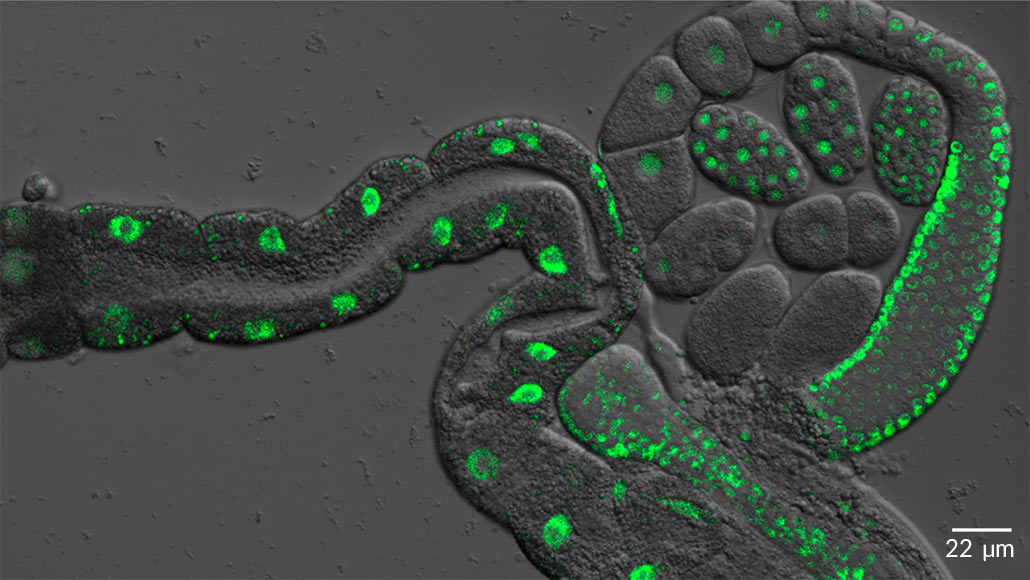
A study is being done by geneticists to see how a gene in worm DNA is affecting the worm's lives. First, they noticed that the worms were producing more offspring and were living longer unless exposed to a disease. They recognized the gene, TCER-1 as responsible for producing the protein that has this affect. At first, they though the gene would increase immune response along with reproductive capabilities. They observed the complete opposite. What was observed was that the worms with the gene produced more offspring but fought off diseases worse. When exposed to Alzheimer's disease protein, which paralyzes worms, worms with the gene survived nearly 1/3 of the time that worms with the genes did. Although, the gene made it possible for sick worms to produce healthy offspring.

protein microscopy

Recently, a similar gene was discovered in humans. While not a worry at the moment, scientists say it is a "warning bell"(Saey). Particularly this could affect anti-aging therapies as some can cause unexpected frailty. Personally, the research is important and is something humans need to keep an eye on. It is especially important now that humans are living longer and longer and as more resistant diseases are beginning to emerge.


https://www.sciencenews.org/article/gene-may-help-worms-live-longer-not-healthier
https://www.nature.com/articles/s41467-019-10759-z

"Exercise Changes Our Gut Microbes, But How Isn’t Yet Clear?" Ashley Yeager


Sara Campbell, an assistant professorship in exercise science, at Rutgers University wondered if exercise could influence the microbes in the gut. Everyone knows all the benefits that come along with exercising, including keeping down inflammation and the enhancement of antioxidant defenses. Campbell realized the symbiosis and mutualism that goes on between the host and the microbes, which led to the beginning of the research process. After creating a research team, Campbell designed an experiment to analyze fecal samples of male mice that were fed a normal or high-fat diet for 12 weeks, while some mice were allowed to exercise and others were not(Yeager 2019). The mice that participated in physical activity generated a "unique microbiome in the guts" and also hosted, "Faecalibacterium, Clostridium, and Allobaculum"(Yeager 2019). In contrast, the mice on the high-fat diet, without any exercise, had inflammation in the gut. Exercising does boost the levels of gut microbes, which also produces butyrate. Which means, "exercise alone, without any dietary changes, is enough to change the composition of gut bacteria"(Sandoiu 2018). Overall, exercise has a larger impact on the human body than ever expected.
Image result for exercise changes gut microbes
Moving more in depth into the research, looking at obese individuals who began to exercise had changes in their gut microbes. Although, lean individuals had different changes, "developed higher levels of Clostridiales, Lachnospira, Roseburia, and Faecalibacterium in their guts, but those microbes returned to baseline levels when the individuals stopped exercising"(Yeager 2019).the difference in changes between lean and obese individuals is still unknown, bur regardless of diet or body composition, change in the gut microbiota is still apparent. Researchers are still unsure of how exercise exactly changes the gut microbes, or if the changes are beneficial to the health, but are determined to find answers.


Promise for Ovarian Cancer


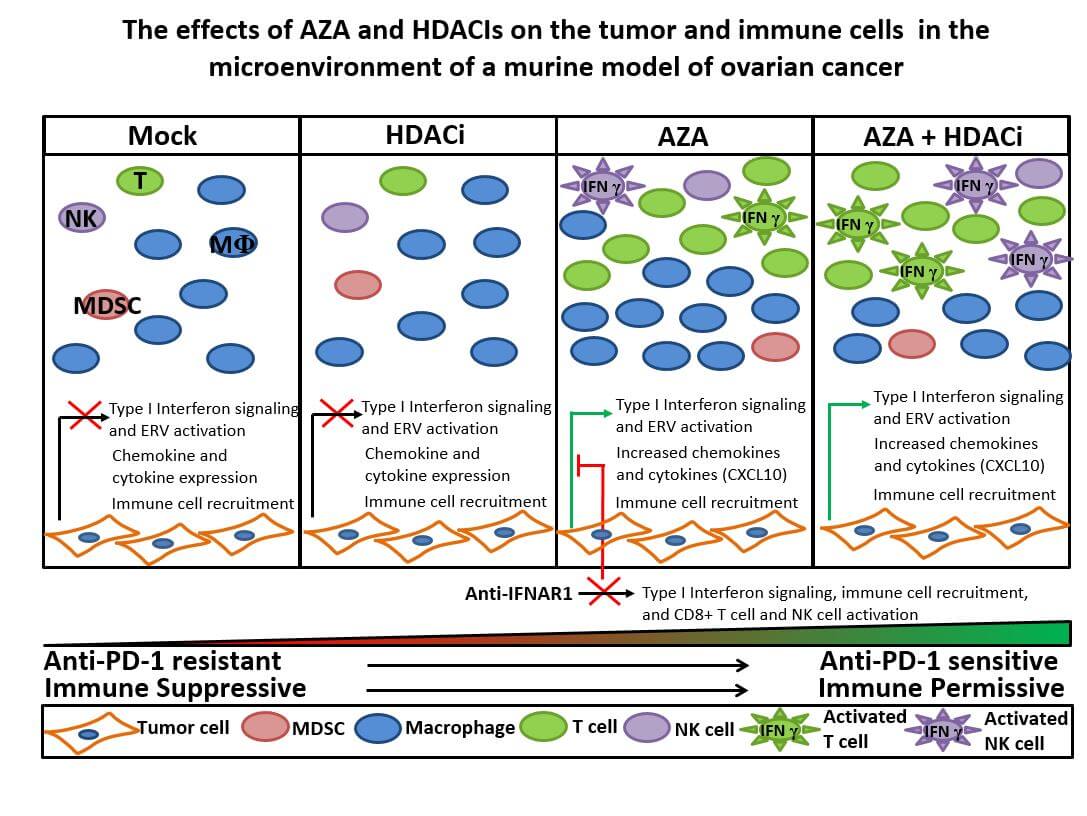
Every year, women are affected by one of the leading causes of death from gynecological malignancies in the United States. This type of cancer called “ovarian cancer.” This disease is caused by cancer cells that form in the tissue surrounding the ovary in the female reproductive system. Ovarian cancer can be severe because it may attribute to other illnesses.It does not cause just one type of symptom, but multiple.  Each patient symptom(s) is different. Four types of cancer staged from 1 to 4. One is being least to four is most dangerous. Over the past years, science has improved, and now researchers give these patients hope toward treatments. For examples, more advanced drug therapies and epigenetic drugs trials. This help the patient continues to live a healthy
life with cancer.


Infographic


This study/article(s) shows how important this research is for patients that are affected and for female as well. Even though ovarian cancer cannot be cure, but it does give female patients who are affected have hope that it may treat. Due to advanced treatments that can help slow down/ and eliminate cancer cells so that patients be able to live with cancer. As a woman, I also think this is important to me as well because ovarian can happen at any age and to any women. Knowing that there are treatments out there that can help.

https://www.hopkinsmedicine.org/news/media/releases/combination_strategy_could_hold_promise_for_ovarian_cancer
https://www.newschannel5.com/news/genetic-research-showing-promise-in-fighting-ovarian-cancer
https://ghr.nlm.nih.gov/art/large/ovarian-cancer.jpeg

Saturday, September 21, 2019

Scientists Try CRISPR To Fight HIV


A study was performed by Chinese researchers in the New England Journal of Medicine where they used CRISPR to try to cure a patient's HIV.  They did this by using blood cells that were altered to resist AIDS.  This was also the first published study where scientists used CRISPR to treat a disease where the DNA that was changed was restricted to that person only.  They tested this on a 27-year-old man who had HIV.  He needed a blood stem cell transplant in order to treat cancer.  In two prior cases, two men were cured of both diseases by transplants from donors who had a gene mutation that actually prevented HIV from ever entering the cells.


Because donors with this resistance to HIV are rare, these Chinese researchers tried to "edit" the genes in order to imitate this mutation.  Although this transplant didn't cure the mans HIV, it did put him in remission and the genes that were "edited" were still working even 19 months later.  Of course, scientists need to continue to work on this to make gene editing more efficient, but one of the upsides to this gene-editing technique was that in multiple different tests, it was shown that gene-editing didn't have any unwanted effects on any other genes.

This study shows how big of an advancement CRISPR could be in curing and preventing diseases if they continue to test it.  What I found the most important in this research was that even though the purpose of curing the HIV virus in this particular study didn't work, it showed that it didn't have any unwanted effects on other genes that weren't being edited.  If that were the case, it could have led to many more issues with different genes being edited that were never meant to be.

https://japantoday.com/category/features/health/a-gene-editing-first-scientists-tried-crispr-to-fight-hiv
http://sites.tufts.edu/crispr/applications/hiv-treatment/
https://www.cbsnews.com/news/gene-editing-crispr-remove-hiv-infection-in-mice/

Turtle Genome Analysis Gives Insight on Turtle Ancestry and Evolution

Data provided by the Joint International Turtle Genome Consortium (led by researchers from RIKEN in Japan, BGI in China and the Wellcome Trust Sanger Institute in the UK) shows that turtles are not primitive reptiles as previously thought. Instead, the turtles belong to a sister-group consisting of birds and crocodiles. By using next-generation DNA sequencers, the institutions have successfully decoded the genome of the green sea turtle (Chelonia mydas) and the Chinese soft-shell turtle (Pelodiscus sinensis). Based on the genomic information provided from the decoded genomes of the two turtles, researchers predict that turtles diverged from archosaurians almost 250 millions years ago.


Data from the turtle genome has also revealed that turtles follow the basic vertebrate embryonic pattern during development, despite having such a unique shell anatomy. Instead of developing directly into the turtle-specific body shape and shell, the turtle embryo first goes through the basic vertebrates' body plan and then enter a turtle-specific development phase. Researchers have found genes in this late-stage developmental phase related to limb-development, suggesting that the shell of a turtle evolved using the genetic program from limbs to develop a shell during embryonic development. Dr. Naoki Irie, who led the study from the RIKEN Center for Developmental Biology, states that "the work not only provides insight into how turtles evolved, but also gives hints as to how the vertebrate developmental programs can be changed to produce major evolutionary novelties."

This study has additionally revealed that turtles have a high number of olfactory receptor genes. More than 1,000 olfactory receptors were found in the Chinese soft-shell turtle, being one of the largest numbers found in a non-mammalian species. This finding also suggests that turtles have the ability to smell and detect a wide number of hydrophilic substances. Genes involved with taste perception, hunger stimulation, and hormone ghrelin (involved with energy homeostasis regulation) were lost in the turtle genome. Loss of these genes suggest this is why turtles have such low metabolism.

Genome sequencing, once again, has provided a plethora of information on the biology of a species. In this case, decoding the turtle genome has helped reveal the turtle's true ancestry, explain how the embryonic shell develops, and how the loss of genes have affected the way the turtle species tastes and processes food through a low metabolic rate. I believe it is important to look at genes from an evolutionary standpoint and to use that knowledge to explain how genes impact the survival and unique biological changes in a species.

Links:
http://www.riken.jp/en/pr/press/2013/20130429_1/
https://phys.org/news/2013-04-turtle-genome-analysis-evolution-turtle-specific.html
https://www.nature.com/articles/ng.2615

Friday, September 20, 2019

Female Ambystoma Salamanders are Gene Thieves

It has been known for about a decade that an all-female species of Ambystoma salamanders were genetic thieves— mating with multiple males under the Ambystoma species and stealing copies of their genomes. The all-female lineage is suspected to be a mutation that occurred 5 to 6 million years ago when a pair of salamanders mated; with the mutation still persisting to this day. It has been recently discovered, however, that the female salamander does not just go around stealing genomes. They use the genetic material collected from males and incorporates all three genomes equally to pass down to her offspring, as well as "discarding" genes she does not need to use. This process is dubbed kleptogenesis (theft of genetic material), and the all-female Ambystoma species is the only animal on the planet performing this act.

Researchers from the University of Iowa were curious about how the female salamander chooses which genes to keep and which ones to throw away. The research team analyzed more than 3,000 genes from a single unisexual Ambystoma female that had three genomes (triploid) from different male Ambystoma species. About 72% of the male genes analyzed were equally expressed, meaning the female chose to use around the same number of genes from each male salamander species. Although the process of how the female salamander picks certain genes is still unknown, lead author Kyle McElroy theorizes that the genes are like a sports team. The sports team has equally competent players with no particular star athlete standing out. If someone gets injured, the competent team won't be affected by it because they are all on the same level. It is suspected that the female salamander doesn't decide which genes to keep individually, but has a balanced ratio of genes from the three different male species that work for her to create a successful hybrid.


I find this species of salamander to be very unique, especially since they are the only female species on the planet to take genes from several different male Ambystoma species. Normally offspring receive chromosomes from one female parent and one male parent, but the offspring for these female salamanders receive genetic traits from the mother and many different fathers. It is very interesting to see how the all-female Ambystoma species adapted to a mutation that happened millions of years ago and that they are still using kleptogenesis to this day.

Links:
https://www.sciencedaily.com/releases/2017/06/170612115339.htm
https://www.livescience.com/59639-salamanders-steal-genes.html

Thursday, September 19, 2019

Seahorses' Odd Biology Explained by Sequencing Genome

Seahorses are unique sea creatures with several oddities such as lacking caudal and pelvic fins, possessing tubular mouths with no teeth, having a body covered with bony plates, grasping tails to latch onto various sea grasses and coral, and the males having a brood pouch to give birth to offspring. Sequencing of the tiger tail seahorse genome was performed using the de novo assembly, the same method used to sequence the Giant Panda genome. The genome and traits of the seahorse was also compared to close relatives such as the pipefish and seadragons.


The seahorse lacks genes called "P/Q-rich SCPP", which allow minerals to collect and form teeth. Since the seahorse lacks this gene, it is likely their tubular mouths formed as a result of being toothless. Seahorses are also missing the gene that is involved in the development of pelvic fins in other fish and legs in humans. This gene, called tbx4, functions in telling the embryo to grow hind limbs or pelvic fins in fish. To make up for the lack of pelvic fins, seahorses swim by beating a small fin on their back rapidly and relying on tiny pectoral fins near the back of their heads to help them steer.

Although finding a lack of certain genes help explain some of the seahorse's unique biology, the exact ability for males to give birth is still unknown. The study was able to find a large number of genes in the male brood pouch under the family astacin metalloproteases. These genes are responsible for embryo hatching and are present in other fish. An evolutionary biologist who was not a part of the study, Kenyon Mobley, states that the genome alone cannot explain the transition of birth responsibility to males from females. However, he said it was possible that paternal care was the byproduct of losing another trait rather than a critical step during evolution.

I find this study to be very interesting, especially since the same technique used to sequence the Giant Panda genome was replicated on the seahorse. Also, seahorses are very unique creatures that have been around for millions of years. By uncovering the genome and looking at the genes the creature does or does not possess, we are able to learn more about the evolutionary biology of seahorses and how they have adapted to survive to this day. I can't wait to see the de novo assembly technique being used more in the future as we sequence the genomes of other species inhabiting our planet.

Links:
https://www.pbs.org/newshour/science/unlock-secrets-seahorses-look-genes
https://www.reuters.com/article/us-science-seahorse/undersea-mystery-seahorse-genetic-secrets-unveiled-idUSKBN1432PY
https://www.nature.com/articles/nature20595#gene-loss

Sperm Can Be Separated Into Male and Female


A team of researchers from Hiroshima University conducted a study using mouse sperm.  They found that there are approximately 500 genes that are active in the X sperm but are not active in the Y sperm.  They also found that 18 of those 500 genes are connected to proteins that stick out of the surface of the cell.  They used a chemical called resiquimod to bind the external receptors together which slowed down the swimming of the X sperm, therefore they were able to separate the male and female sperm pretty accurately.  With the selected sperm they fertilized mice and they ended up with 90% male litters.


This is very interesting because although this could be helpful in certain situations, for instance, the article mentions chickens.  When farming eggs male chickens are almost useless so with gender selection they could eliminate the possibility of having male chickens, instead of just killing off the male chickens later on.  Although, with humans, this is a very controversial topic.  While this could be a breach of ethics, however, with certain situations it could be helpful.  For instance, there are certain medical conditions that are gender-specific that parents could pass onto a child.  Gender-selection could prevent these certain conditions. 

https://www.zmescience.com/medicine/genetic/separating-sperm-male-female-14082019/
https://journals.plos.org/plosbiology/article?id=10.1371/journal.pbio.3000398

Does Our DNA Make Us All Unique or All the Same?


"Does Our DNA Make Us All Unique or All the Same?" Bob Grant


As we know, all human beings look different with almost all the same basic physical features. How is that? It all comes back to human genetics. "The study of human heredity occupies a central position in genetics"(Carson 2019). Therefore, this study is so popular due to the fact that understanding human heredity can allow for scientist and doctors to diagnose and treat any disease that involves genetics; but also humans want to know why they are the way they are. Which ties into Bob Grant's statement, "A better understanding of the genetic diversity among humans could motivate an appreciation of both our similarities and our differences"(Grant 2019). With that being said, finding a better understanding of the genomic tapestry, that makes up the human species, will stem from,"diversifying our cataloging and curation of human genome sequences"(Grant 2019). As research continued on this topic, the Human Genome Project realized that individual genomes varied much greater than originally expected. For instance, "researchers now know that human genomes differ from one another by about 0.6 percent"(Grant 2019). Believe it or not, this is six times greater than originally expected in the early 2000s.
Image result for dna makes us unique


So, are all humans different or the same? As people become ore educated in the genomic science world, people begin to appreciate how unique people really are, thanks to the genitives blueprints that build each individual. Although, research continues to notice the insane similarities in every human's DNA. Therefore, humans are just as much different, as they are the same. Today, researching of the widespread misuses of genetic science include the finding of the specific DNA that makes humans different from one another. For instance, after intensive research, researches discovered, "the genetic ambiguity between “races” far outweighs any clustering of genes capable of defining a particular race"(Grant 2019). Therefore, looking at DNA from this aspect, can really make all individuals seem very different.

On the other hand, looking at the main genetic similarities, that all humans carry, shows that all humans are somehow all related. Fortunately, for the human species, being alike can also bring a whole new development of medicine. Researchers found, "Our sameness can aid us in making therapies that are specific to genomic profiles shared by groups of people"(Grant 2019). Overall, researchers of this topic must come together to help science and medicine as a whole and use this complexity of research to it's advantage. Knowing the genetic commonalities and differences is what will guide the human species going forward.


https://www.the-scientist.com/editorial/does-our-dna-make-us-all-unique-or-all-the-same--66307
https://www.britannica.com/science/human-genetics

Monday, September 16, 2019

Harnessing tomato jumping genes could help speed-breed drought-resistant crops

Researchers from the University of Cambridge's Sainsbury Laboratory and Department of Plant Sciences have discovered that drought stress activates the activity of a family of jumping genes (Rider retrotransposons) previously known to generate fruit’s shape and color in tomatoes. Transposons or jumping genes are capable of changing their location within a genome, creating or reversing mutations, or having no effect at all. Transposons carry huge potential for crop improvement and are not junk at all but play an important role in the evolutionary process. 

“Using the jumping genes already present in plants to generate new characteristics would be a significant leap forward from traditional breeding techniques,
making it possible to rapidly generate new traits in crops that have traditionally been bred to produce uniform shapes, colors, and sizes to make harvesting more efficient and maximize yield. They would enable the production of an enormous diversity of new traits, which could then be refined and optimized by gene targeting technologies.” (University of Cambridge, 2019).

Rider is present in several plant species, including economically important crops such as rapeseed, beetroot, and quinoa. If Rider can be controlled in such a way, plants that currently have mute Rider elements can regain their potential by reactivating or re-introducing those genes to them. This is significant because of its potential to reduce breeding time compared to traditional methods and help to reduce global warming. 


6,000 Antibiotic Resistant Genes Found in Human Gut Bacteria

The human gut inhabits more than a trillion microorganisms, with most of the residents being bacteria. Although most bacteria in our gut are beneficial to us, a recent study has identified more than 6,000 antibiotic resistant genes in the bacteria living within our gut. The study, conducted by the Institut National de la Recherche Agronomique (INRA) in collaboration with Willem van Schaik of the University Birmingham, developed a new method to identify resistant genes in the human gut. The researchers compared 3-D structures of known antibiotic resistant enzymes to proteins produced by gut bacteria. The same method was then applied to a catalogue of several million genes in the human gut and the genes were compared. Comparisons have shown that the antibiotic resistant genes in gut bacteria are extremely different compared to previously identified resistant genes in pathogenic bacteria.

The study highlights that there is an immense diversity in antibiotic resistant genes in the human gut environment. Although these genes have a harmless relationship with the human host (for now), the bacteria can pose a threat for those who are hospitalized or immunocompromised as they do not have the immune strength to combat bacteria resistant to antibiotics. Continuing use of antibiotics may also lead to resistant genes in gut bacteria being transferred to pathogenic bacteria, rendering the effectiveness of antibiotics dramatically. Although the transfer of resistant genes to pathogenic bacteria is rare, it is not impossible and continued overuse can potentially raise the chances of these pathogenic bacteria receiving the genes.


I believe this study is very interesting, especially since I am passionate about antibacterial and antibiotic resistance. The study has stated that the mechanisms of how gut bacteria receive antibiotic resistant genes are still unknown, but results give some insight on how genetics between resistant genes differ from gut bacteria to pathogenic ones. I hope in the future we can find a way to tackle antibiotic resistance, especially through thorough understanding of the genetics and evolutionary biology of bacterial specimens (both good and bad). 

Links:
https://www.birmingham.ac.uk/news/latest/2018/11/antibiotic-resistance-drugs-gut-bacteria.aspx
https://www.genengnews.com/news/the-human-gut-resistome-contains-over-6000-genes/
https://www.researchgate.net/publication/329192381_Prediction_of_the_intestinal_resistome_by_a_three-dimensional_structure-based_method

Fatal Genetic Mutation in Rat Lungs

Recent discoveries in rats has shown one of the causes for pulmonary hypertension, the increase of blood pressure in the arteries of the lungs.  Individuals can be examined to be completely healthy and still be victim towards the disease.  These symptoms originate from a dormant mutation in the genes of rats and becomes active once the rat is effected by another condition.  For example, if the rat is exposed to something as simple as the flu, it can activate the mutation in the gene, leading to pulmonary hypertension.
Scientists have discovered that most individuals with the mutation live completely healthy lives, and only a small percentage (about 20%) of individuals are effected by the mutation.  On the other hand the version of the gene that is most lethal is the mutation on the BMPR2 gene.  The only form of treatment and cure is to have a lung transplant that involves only a 30% chance of survival.
Due to the small chance of survival from the lung transplant, scientist could perhaps work on another pulmonary hypertension preventative.  Perhaps scientist can develop a genetically modified gene that can be directed to decrease the risk or amount of inflammation in the lungs and manually place it into the DNA of humans.
Link to original article: here