Showing posts with label "DNA". Show all posts

Monday, November 17, 2025

The DNA Helix Changed How We Thought About Ourselves

The discovery of DNA was one of the most groundbreaking discoveries in science to date. There were many scientists who played crucial roles in the development of the discovery. Rosalind Franklin who did work on X-ray crystallography, Francis Crick a physicist, and James Watson, who was a geneticist. The discovery of DNA led to the question of how people thought about life before it was discovered. Before the discovery, many people would think of a “mysterious vital force” inside cells. It was apparent that traits were being passed down through generations, but it was not clear how that occurred. Darwin hypothesized that particles came from cells through the body into the sperm and eggs and created the next generation. Gregor Mendel then hypothesized that plants inherit colors and traits in a pretty clear, abundant ratio. Later, scientists envisioned these passed-on traits as genes; some saw genes as merely mathematical, while others thought they were physical molecules. It was also not agreed upon what exactly in the cell was the genetic code. 


    This is when James Watson discovered the shape of DNA. His work showed that DNA was a molecule that was made of two strands around each other, and was made of four molecular units called bases, which were used as a code for writing genes. He also discovered exactly how the DNA splits, and then it was later found by Crick that the code that cells use the encode genes in their DNA to build proteins. From there, it was discovered by other scientists that there are sometimes mistakes in the sequencing of DNA. These mistakes in the sequencing could lead to genetic disorders, and also lead to a molecular basis for evolution from natural selection.

Shortly after, Watson began working as the leader in the US government’s first attempts to sequence the human genome. Watson worked the job for only two years, but his work lives on and served as a brilliant beginning of scientists being able to sequence the human genome much quickly. This was important, and now doctors regularly check the genomes of patients to check for the presence of inherited diseases.

Watson, however, took his public platform to a controversial stance when he included his racial beliefs. He claimed publicly that there were genetic differences that made African American people less intelligent than white people. This was not supported by any study of the genome, but Watson claimed it was. Genetics today proves that race is not a good predictor of genetic variation in human populations.

The complexity and brilliance behind the discovery of DNA are groundbreaking. The breakthrough not only changed science but also how we as humans understand ourselves, and it was important for healthcare as well. It is so important to be able to use the analytics of the human genome to predict patterns of inheritance.

References:

Alberts, B. (1970, January 1). The structure and function of DNA. Molecular Biology of the Cell. 4th edition. https://www.ncbi.nlm.nih.gov/books/NBK26821/

Zimmer, C. (2025, November 7). The DNA helix changed how we thought about ourselves - The New York Times. https://www.nytimes.com/2025/11/07/science/watson-dna-humanity.html


Sunday, November 6, 2022

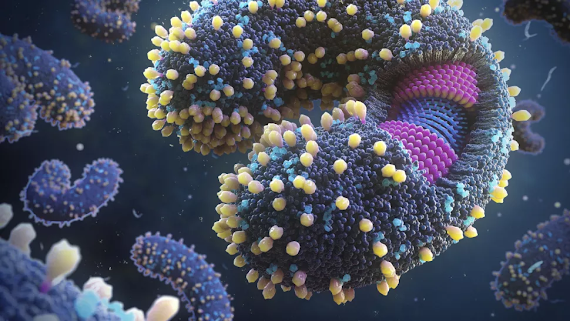
Foe Turned Friend: How DNA from Ancient Viruses Protects Humans Today

 A new study was published detailing research on fragments of aniceint viral DNA that over generations has become incorporated into the human genome. Such strands of DNA are called endogenous retroviruses, and the new research explores there role protecting cells from modern viruses. The study was titled "Evolution and Antiviral Activity of a Human Protein of Retroviral Origin", and was recently published in Science. In the study the researched used 'computational genomics' techniques to scan the entire human genome looking for segments that showed a sequence indicative of a endogenous retroviruse. In total, approximately eight percent of the human genome consists of these endogenous retroviruses. This is an amazing number considering it is four times the amount DNA for genes that make proteins. 

Once a retrovirus finds a cell it uses a envelope protein to bind to a receptor point on the cell's surface to enter the inside of the cell. Once inside the cell the virus can inject its own RNA which is converted to DNA and then incorporated into the cells genome. The study found one thing very important about the retroviruses inside of cells: the envelope proteins they code for are still expressed and will bind to the cell's receptors, blocking other viruses from entering the cell and thereby protecting it from infection. The main retrovirus observed in the study was Suppressyn. Placental-like cells (which are prone to infection) both with and without Suppressyn, were exposed to a virus, but only the ones without Suppressyn became infected. The presence of Suppressyn proved to be enough to block the viruses entry into the cells. 

I thought that this was very significant study with many implications. I had previously never known about endogenous retroviruses but was amazed to learn how prevalent they are in the human genome, and even more so the importance they have developed. I find it pretty interesting that an ancient virus would be the thing to protect us from modern ones. With more study I wonder where this knowledge can go, and if with the right development we can find endogenous retroviruses to block out viruses that are of issue to us in the present. COVID has shown without doubt that there is a need for protection against viruses, and the applications of this study in that field can be very significant.  

Friday, April 15, 2022

Thousands of new Viruses Discovered in the Ocean


In an article published by Live Science, a new study identified more than 5,000 new virus species in the world’s oceans. The researchers in this study analyzed tens of thousands of water samples from around the globe, hunting for RNA viruses. These viruses are understudied compared with DNA viruses, which use DNA as their genetic material, according to the authors.


The diversity of the newly-discovered viruses was so great that reachers proposed doubling the number of taxonomic groups needed to classify these viruses from the existing five phyla to 10 phyla. As stated by Matthew Sullivan, a professor of microbiology at The Ohio State University, the discovery of an entirely new phylum, Taraviricota, in nearly all of the world’s oceans suggests that they’re ecologically important.


Studies of RNA viruses usually just focused on those that cause diseases, according to Sullivan, however, these make up a very small percentage of all RNA viruses on Earth. For the study, the researchers analyzed 35,000 water samples taken from 121 locations in all five of the world’s oceans. The examined genetic sequences were extracted from plankton, which are common hosts for RNA viruses. They homed in on sequences belonging to RNA viruses by looking for an ancient gene called RdRp, which is found in all RNA viruses but is absent from other viruses and cells. Over 44,000 sequences were identified with this gene.


The RdRp gene is billions of years old and has thus evolved many times. Because the gene’s evolution goes so far back, it was difficult for researchers to determine the evolutionary relationship between the sequences. So the researchers used machine learning to help organize them.


Overall, 5,500 new RNA virus species were identified that fell into the five existing phyla as well as the five newly proposed phyla, which were named Taraviricota, Pomiviricota, Paraxenovirivota, Wamoviricota, and Arctiviricota. Virus species in the Taraviricota phylum appeared to be absent from temperate and tropical waters while viruses in the Arctiviricota phylum are abundant in the Arctic Ocean, according to the researchers.


Understanding how the RdRp gene diverged over time could lead to a better understanding of how early life evolved on Earth.


Related article: https://www.nature.com/articles/sdata201817

Monday, August 3, 2020

Vaping Causes DNA Changes Similar to Those in Cancer: Study


Article: https://www.usnews.com/news/health-news/articles/2020-02-17/vaping-causes-dna-changes-similar-to-those-in-cancer-study
Related Article: https://keck.usc.edu/vapers-show-cancer-associated-biological-changes-similar-to-smokers/

    It is no secret that cigarettes have cancer causing agents that can be highly detremental to those who smoke. The newest trend now is vaping nicotine, mostly done by young adults but not limited to. It has been proven that vaping is just as bad if not worse than smoking cigarettes. What has been proven is that vaping has potentially cancer-causing changes in their DNA. This doesnt imply that the individual will get cancer, but it becomes more likely. This was done by taking blood samples and testing them for specific chemical tags attched to DNA that are inportant for proper gene activity and or function. These changes can occur in diseases as cancer. 


Friday, July 31, 2020

African turquoise killifish stop aging?

These African Turquoise Killifish "Press Pause" on Aging
Have you ever wonder if there was a species that is able to stop aging? Researcher have found a fish called African turquoise killifish, that are able to stop their development when they are embryos, which is called Diapause. Researches used the genes of the fish to analyze the aging, and discovered that it was actually halted. Its pretty amazing that they are able to halt there development for five months to two years, and then continue without any consequences. Researcher used to information in order to halt diseases or be able to find a way to preserve human organs for long-term.


Friday, December 13, 2019

When a DNA Test Says You’re a Younger Man, Who Lives 5,000 Miles Away
A patient by the name of Chris Long received a bone marrow transplant four years ago and has discovered that his DNA has been replaced by his donor’s DNA. Even the DNA in his semen had been replaced by the DNA of his donor’s. Now Chris long is referred to as chimera, a person with two sets of DNA. This is very rare and sparks an interest for crime investigators. If Chris Long were a victim or perpetrator investigators would have the DNA of his donor’s instead of his, throwing off the whole case. Even though Chris now has the DNA of his donor’s his brain and personality should remain the same. Where his DNA is going is unimportant to his doctors but not to forensic scientists. A person who is Chimera can commit a crime and mislead crime investigators. 

Links:


Thursday, December 12, 2019

Genetic Estimation of Lifespan of Vertebrates

Genetics can now predict the length of the lifespan of vertebrates. This includes species that are long extinct. The team analyzed genomes of species with known lifespans.. From this they identified 42 genes that can be used to predict lifespan. The method screens the 42 genes for CpG sites which are short regions of DNA whose density is related to longevity. These sites regulate gene expression and control aging. However, aging can also be affected by environmental factors.
Image result for CpG sites"
CpG sites in a genome (green)

DNA methylation can also drive aging to occur by adding methyl groups to the DNA moleculeThis declines the predictability of the CpG sites. These patterns were taken into account in the model. Stil this model most likely overestimates the lifespan of animals in the wild as environmental factors most likely end their lives before their genetics will. When this model was used to predict human lifespan, the results came to 120 years, much higher than the average of 86. Therefore, the human data were excluded from the study.This model is most useful for conservation studies.
I think this could be a useful tool to help scientists involved in conservation efforts or those attempting to help endangered species as it gives them more information about the life of the species they are working with. Obviously, there are some drawbacks as the model is not accurate for all species.


Sunday, December 8, 2019

Bone Marrow Transplants Replacing DNA?

Chris Long (who was the main case study) had a bone marrow transplant. Although the transplant had done its job, it went further. The DNA from the donor was no longer only affecting Long's blood. Traces of DNA not originally belonging to Long was found in mouth swabs as well as semen samples. It was found that both DNA were in his body. Other cases of this have been noted, and it has played a role in a few criminal instances, as the DNA found at a crime scene showed that there were more than one person who committed the crime, or that it was a completely different person. However, many of these cases all involved a bone marrow transplant, which showed more than one DNA profile.

I think that this is pretty odd as the donors DNA literally spread, and in more than one case so this isn't just a random, once in a lifetime situation. I figured the bone marrow transplant would most definitely effect a patients blood, but not spread throughout his body so that he would have more than one strand of DNA. I'm curious to see how this pans out in the future, and if they will run tests on whether this effects the children's DNA and if it would match the original patients DNA.

Four years after the bone marrow transplant, Mr. Long’s semen contained 100 percent of his donor’s DNA.

https://www.nytimes.com/2019/12/07/us/dna-bone-marrow-transplant-crime-lab.html?searchResultPosition=7

https://medicalxpress.com/news/2018-01-bone-marrow-transplant-dna.html

Monday, November 25, 2019

Amarilis Bello-Solano


Scientists are Just Beginning to Understand Mysterious DNA Circles Common in Cancer Cells


      For many years scientists have tried to discover different ways to attack cancer and now a new discovery in DNA may lead scientists to the right direction or at least help understand how to attack them. Researchers are taking an extra close look in the loops that are in DNA. These loops are have been seen in cancer cells and play an important role in them. Since 1960 these circles had been recognized, in these circles there were clumps of DNA that were seen to be unimportant because the tools that were needed to thoroughly examine them were not available. Later on scientists were able to create techniques to examine DNA in the circles. 
        Dr.Chang, Dr. Mischel and their colleagues discovered that the DNA on the circles are much more active than DNA on chromosomes, they were at least three times more active. The cells with the DNA circles also divide differently than healthy cells. The split of the DNA circles are not equal, the amount of circles that end up in each new cell is completely random. One cell may inherit all of the circles while the other cell does not inherit any of them. It was discovered by Dr.Mischel and other researchers that the cells that inherited more circles increased the speed of a cell’s growth. Cancer can grow at a rapid rate because of this. Researchers believe if they find a way to eliminate these circles then it is a way to attack cancer. 
       Studies have also shown that these DNA circles have also been found in healthy cells but there was a difference found between cancer cells and healthy cells. The circles in healthy cells are much smaller and only containing 25,000 base pairs while cancer cells have larger circles with a million base pairs. It is believed that the size of the loops is what determined the threat of cancer. A bigger loop had a higher risk of cancer because it could house a cell that could grow faster.  
          This article was very interesting because it showed how the DNA in the circles were much more active than DNA in chromosomes. I thought it was good that researchers were now able to thoroughly examine the DNA in the circles because now they were a step closer in finding ways to attack cancer cells. This article gives hope that we are on the right track on discovering ways to cure cancer. 
Links:
Scientists are Just Beginning to Understand Mysterious DNA Circles Common in Cancer Cells

Vicious circles: Ring-shaped DNA provides cancer cells with a malignant twist


Tuesday, November 12, 2019

There are many other molecules besides DNA that could be used to store genetic information. A recent study states that there are over one million man made or naturally occurring chemically identical molecules that have the ability to store biological DNA in a similar way that DNA does. This has the possibility to improve pharmaceutical drugs and explain the development of life on Earth and within the solar system.  Image result for dna
The authors of the paper used a computer program to generate chemical formulas that would have the nucleic acid like structure. They theorize that evolution may have tried a number of other molecules before nucleic acid was chosen to hold the genetic data. 
I find it interesting that so many other molecules with the ability to hold genetic data exist. This could be useful in medical fields as some drugs resembling nucleotides are already used in medicine. It is also interesting that this could give more information on the way that life developed on earth or if life could evolve on other planets. 


Friday, November 1, 2019

No "Gay Gene"

With 23andMe becoming more and more talked about, some people have wondered if there is such a thing as a gene that makes someone gay. Based on all the data collected, it is impossible to determine if someone is gay based off of genetics. Sexual preference is similar to food preference, how could we collect someones DNA and know if they prefer apples over oranges? Exactly, we can not. This was a very thorough investigation and there was no evidence that could back up the gay gene theory. 23andMe is a scam considering they say they can analyze someone's DNA and determine if they are gay, but for a price of course. A researcher said it is more likely to be an element of the environment, but not disregarding the fact that someone does not choose to be gay, but it is simply how one feels.

In my opinion, I do not believe genetics is a major contribution to sexual orientation. We are a complex species and one can not help who are what they are attracted to. For someone to say being gay is a choice is the same thing as saying being straight is a choice. We can not help who we are, only the decisions we make. I also think it is unfair how 23andMe is taking advantage of people by saying they can provide answers when they are just providing false claims and making money.

Image result for gay gene

http://blogs.discovermagazine.com/d-brief/2019/08/29/same-sex-attraction-genetic-study-gay-gene/#.Xby_k5NKjjA

Related Article:
https://www.nature.com/articles/d41586-019-02585-6

Monday, October 28, 2019

Neural activity and human longevity are linked together?


Recently, researchers found out that the nervous system’s activity could influence the lifespan of human beings when study with protein REST. Studies show that overactivity linked with longer life, while neural excitation results in a shorter lifespan. Research led by scientists in the Blavatnik Institute at Harvard Medical School based it finding on mice, worms, and human brains from. Protein REST is the key to signaling. This protein protects the aging brain from dementia and other specific stresses that affect the brain. When blocking REST, it led to higher neural activity and caused earlier deaths. When REST increases, it did the opposite.

Image result for neural activity in the brain


This seems like great information to know about because who knows, neural activity and human longevity are linked together? The article gave an example of that stress is an example of overactivity. Now that I thought about it, stress is happening more and more nowadays, and does that mean the life expectancy will lower and lower? I mean, like, I am stressing out right now too about my schoolwork, and will that mean my life expectancy will be lower due to overactivity of thinking??

https://www.sciencedaily.com/releases/2019/10/191016131224.htm

https://www.ibtimes.com/recent-study-discovers-link-between-human-longevity-neural-activity-2855030


Monday, October 21, 2019

New Drug That May Help Slow Down Prostate Cancer?


Recently, researchers tested the drug, called “olaparib,” in a clinical trial with whom are men with prostate cancer. People with prostate cancer tend to have a mutation in one of several genes that are involved in BRCA1 and BRCA2. Both these genes are considered damaged DNA genes. These genes in prostate cancer are also similarly shown in other cancers like breast and ovarian cancer. Since these genes from prostate cancer are similar to other cancers, researchers use the drug Olaparib that is is used to treat breast and ovarian cancer to test it out. Olaparib is a PARP inhibitor. This drug blocks the PARP enzyme that repairs broken DNA. It acts against cancer. The clinical trials involved with 400 men with prostate cancer show that tumors did shrink by 2.3% compared to those men with prostate cancer that use standard therapy. After one year of testing and using olaparib, about 22% show no signs of processing cancer, while on the other hand, those that use standard treatment show 13.5 %. Olaparib drugs are currently being tested and are not FDA approved for prostate cancer use yet.


Image result for prostate cancerThis is a notable finding of how drugs that there is hope for men with prostate cancer that there is treatment in the future that can help them with their health. This article was fascinating to read because I noticed that the FDA only approves olaparib drugs for breast and ovarian cancers, and not prostate cancer. Then I thought about how the drugs might be involved with hormones. The reason I thought about this is that breast and ovarian cancers are female, and prostate cancer is for men.


https://www.sciencenews.org/article/prostate-cancer-drug-olaparib-slow-spread

https://www.kmov.com/experimental-prostate-cancer-therapy-delays-disease-in-landmark-trial/article_b32c4ecc-9670-5da5-8f7d-e1785f6f4a3f.html

Thursday, September 19, 2019

Does Our DNA Make Us All Unique or All the Same?


"Does Our DNA Make Us All Unique or All the Same?" Bob Grant


As we know, all human beings look different with almost all the same basic physical features. How is that? It all comes back to human genetics. "The study of human heredity occupies a central position in genetics"(Carson 2019). Therefore, this study is so popular due to the fact that understanding human heredity can allow for scientist and doctors to diagnose and treat any disease that involves genetics; but also humans want to know why they are the way they are. Which ties into Bob Grant's statement, "A better understanding of the genetic diversity among humans could motivate an appreciation of both our similarities and our differences"(Grant 2019). With that being said, finding a better understanding of the genomic tapestry, that makes up the human species, will stem from,"diversifying our cataloging and curation of human genome sequences"(Grant 2019). As research continued on this topic, the Human Genome Project realized that individual genomes varied much greater than originally expected. For instance, "researchers now know that human genomes differ from one another by about 0.6 percent"(Grant 2019). Believe it or not, this is six times greater than originally expected in the early 2000s.
Image result for dna makes us unique


So, are all humans different or the same? As people become ore educated in the genomic science world, people begin to appreciate how unique people really are, thanks to the genitives blueprints that build each individual. Although, research continues to notice the insane similarities in every human's DNA. Therefore, humans are just as much different, as they are the same. Today, researching of the widespread misuses of genetic science include the finding of the specific DNA that makes humans different from one another. For instance, after intensive research, researches discovered, "the genetic ambiguity between “races” far outweighs any clustering of genes capable of defining a particular race"(Grant 2019). Therefore, looking at DNA from this aspect, can really make all individuals seem very different.

On the other hand, looking at the main genetic similarities, that all humans carry, shows that all humans are somehow all related. Fortunately, for the human species, being alike can also bring a whole new development of medicine. Researchers found, "Our sameness can aid us in making therapies that are specific to genomic profiles shared by groups of people"(Grant 2019). Overall, researchers of this topic must come together to help science and medicine as a whole and use this complexity of research to it's advantage. Knowing the genetic commonalities and differences is what will guide the human species going forward.


https://www.the-scientist.com/editorial/does-our-dna-make-us-all-unique-or-all-the-same--66307
https://www.britannica.com/science/human-genetics