Showing posts with label brain aging. Show all posts

Monday, December 9, 2024

Are Our Brains the Same Age As We Are?

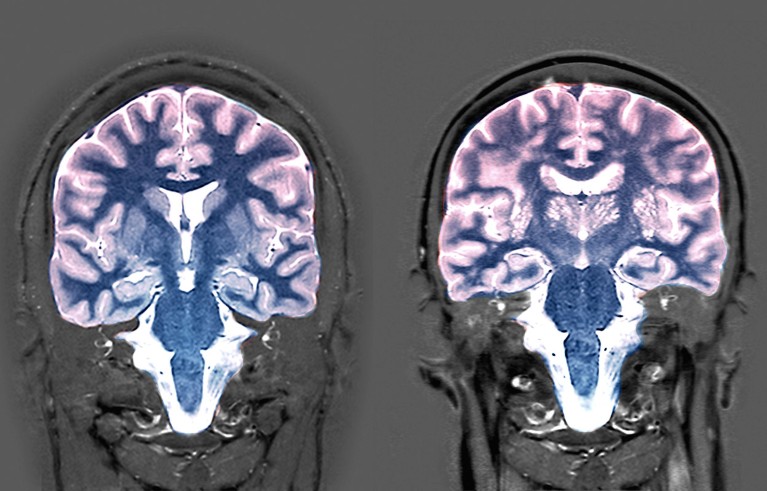
Coloured MRI scans of frontal sections through two brains.
This image shows aging of human brains. Brain of a 25 year old and
 a 74 year old (left to right, respectively) (Naddaf, 2024). 

In a recent study, researchers in China looked into brain scans and blood samples of 10,949 healthy adults of varied ages to estimate brain age gap (BAG). BAG is a measurement between an individual's actual age and their "brain age" (calculated by hundreds of structural features such as: amount of white matter, cortex thickness, brain volume, etc). This measurement can be used to indicate brain health, and on average the participant's brain age was found to be around three years younger or older than their actual age. 

One of their targets for this study was to determine what biomarkers/proteins are associated with accelerated brain aging, for which 8 were identified (and five additional proteins for slower brain aging). Some of these proteins are also known to be involved in brain function, such as movement, cognition, and mental health. One of the proteins, brevican (BCAN), is known to be a key factor in physiological and pathophysiological plasticity processes (Frischknect et. al, 2012). It is noted that higher levels of BCAN are correlated with slower brain aging; interestingly, those with Alzheimer's have less BCAN than healthy individuals. Another interesting finding that was noted is that at ages 57, 70, and 78 years old very distinct brain aging symptoms are noted. 57 year old brains exhibited changes in proteins for metabolism, would healing, and mental health, while at age 70 brains proteins showed changes that heightened risks for dementia and strokes. Lastly, at 78, it was seen that proteins associated with immunity and inflammation were changed. 

These are extremely interesting findings when thinking in context of our genetic predisposition for certain brain disorders. Neuroscientist Mark Mattson commented that our next step is to answer where the proteins are coming from (and discovering the mechanisms in which they coded for). However, this study opens the door to identifying the genes and proteins that should be targeted for those with age-related brain disorders. Also, because they identified the proteins associated with these brain disorders, we may be able to diagnose individuals with disorders long before symptoms are seen, based on the amount of proteins that they have (especially if it is a hereditary condition that their families have a history of). I found this article especially interesting because of how complicated the human brain is. The possibility of us understanding another part of our complex brains is exciting, especially when it is through genetic research!

How DNA Impacts Brain Health: Genetics & Neurology

Sources used:

https://www.nature.com/articles/d41586-024-04055-0

https://www.nature.com/articles/s43587-024-00753-6

https://www.sciencedirect.com/topics/biochemistry-genetics-and-molecular-biology/brevican  

Monday, October 28, 2019

Neural activity and human longevity are linked together?


Recently, researchers found out that the nervous system’s activity could influence the lifespan of human beings when study with protein REST. Studies show that overactivity linked with longer life, while neural excitation results in a shorter lifespan. Research led by scientists in the Blavatnik Institute at Harvard Medical School based it finding on mice, worms, and human brains from. Protein REST is the key to signaling. This protein protects the aging brain from dementia and other specific stresses that affect the brain. When blocking REST, it led to higher neural activity and caused earlier deaths. When REST increases, it did the opposite.

Image result for neural activity in the brain


This seems like great information to know about because who knows, neural activity and human longevity are linked together? The article gave an example of that stress is an example of overactivity. Now that I thought about it, stress is happening more and more nowadays, and does that mean the life expectancy will lower and lower? I mean, like, I am stressing out right now too about my schoolwork, and will that mean my life expectancy will be lower due to overactivity of thinking??

https://www.sciencedaily.com/releases/2019/10/191016131224.htm

https://www.ibtimes.com/recent-study-discovers-link-between-human-longevity-neural-activity-2855030


Saturday, January 31, 2015

Want to keep your wits as you age? Let’s hope you have the gene for it.

A new study has reported that a gene variant, KL-VS, is believed to play a role in longevity with individuals with the gene, as well as ensuring that they retain their intelligence. People that carry this gene variant have a larger volume in a front part of the brain that is involved with decision making and planning. They also perform better on tests that revolve around working memory and the brain’s processing speed, which usually slows down with age.

The specific gene involved is called KLOTHO, and it provides the coding for a protein, klotho, produced in the kidney and brain that regulates many processes. The KLOTHO variant, KL-VS, has been found to increase klotho levels, longer lifespan, and better heart and kidney function. Researchers conducted a study where they analyzed the brains of several individuals. They found that those with one copy of the variant gene had 10% more volume in the brain region called the right dorsolateral prefrontal cortex; on the other hand, the brain region shrank with those containing two copies of the variant gene or without the variant altogether. 

Another study with mice demonstrated the same results. Mice with one copy of the gene variant lived longer and were smarter at baseline. Altogether, studies have indicated that KL-VS promotes slower aging of brain function enabling individuals to lead longer and healthier lives. There is also some evidence that this gene variant may perhaps lead to treatments that slow brain aging and help individuals who suffer from dementia. 


Given the results and evidence provided by professional studies involving KL-VS, it is fascinating to see how a single gene can allow someone to live a longer and healthier life. Of course, environmental factors also contribute to how long one lives; however, a gene that can slow brain aging and boost structure and function might counter the effects of diseases affiliated with the brain and help give more effective treatments to people suffering from those diseases.

Original Article click here.
Related Article click here.