Showing posts with label "neuroscience". Show all posts

Thursday, March 13, 2025

Reprogramming Skin Cells into Neurons: A Breakthrough in Cell Therapy

A recent study from MIT has made a major breakthrough in cell therapy by finding a way to convert skin cells directly into neurons, without having to convert them to stem cells first. Typically, this process is slow and inefficient, but researchers have refined it by using a specific combination of transcription factors, making the success rate much higher than before. In mouse cells, this method produced over ten neurons per skin cell. What's even more promising is that when these neurons were implanted into brains of mice, they integrated with the exisiting brain tissue. If this method can be optimized for human cells, it could provide a new ways to treat with spinal cord injuries and neurodegenerative diseases like ALS.
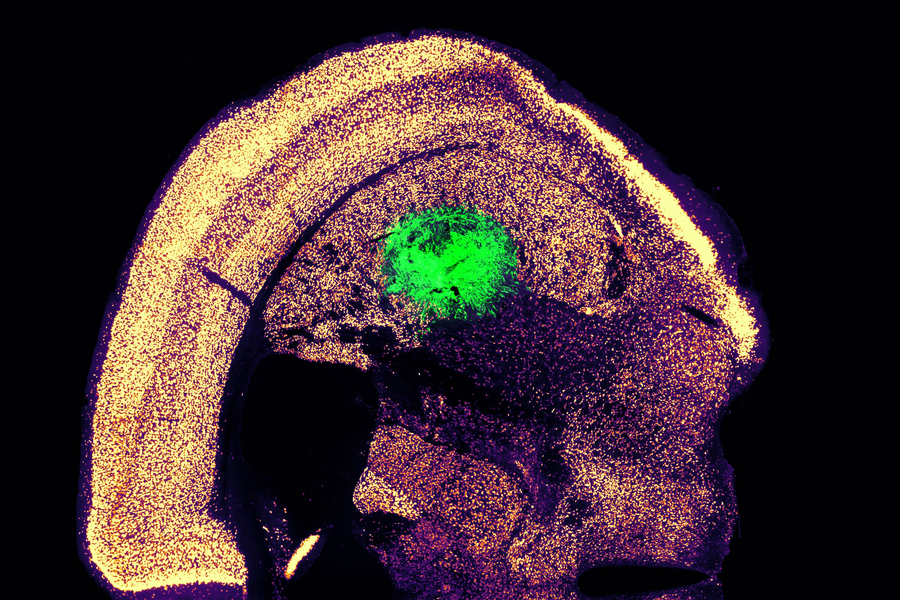

             This discovery could be huge for cell therapy by offering a faster way to create neurons for treatment and research. If it is perfected in humans, this could provide significant help for people with nerve damage or neurodegenerative diseases. However, before this technique can be used in humans, like all new techniques more testing and refining is required to improve efficiency and safety before clinical use. 

Monday, December 9, 2024

Are Our Brains the Same Age As We Are?

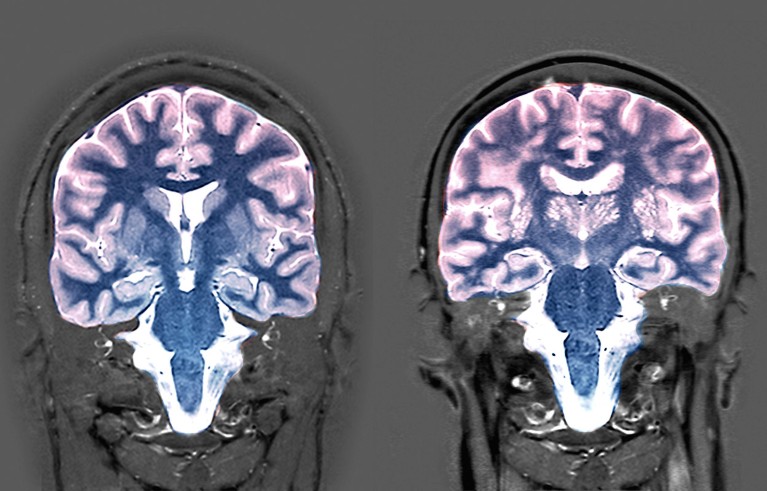
Coloured MRI scans of frontal sections through two brains.
This image shows aging of human brains. Brain of a 25 year old and
 a 74 year old (left to right, respectively) (Naddaf, 2024). 

In a recent study, researchers in China looked into brain scans and blood samples of 10,949 healthy adults of varied ages to estimate brain age gap (BAG). BAG is a measurement between an individual's actual age and their "brain age" (calculated by hundreds of structural features such as: amount of white matter, cortex thickness, brain volume, etc). This measurement can be used to indicate brain health, and on average the participant's brain age was found to be around three years younger or older than their actual age. 

One of their targets for this study was to determine what biomarkers/proteins are associated with accelerated brain aging, for which 8 were identified (and five additional proteins for slower brain aging). Some of these proteins are also known to be involved in brain function, such as movement, cognition, and mental health. One of the proteins, brevican (BCAN), is known to be a key factor in physiological and pathophysiological plasticity processes (Frischknect et. al, 2012). It is noted that higher levels of BCAN are correlated with slower brain aging; interestingly, those with Alzheimer's have less BCAN than healthy individuals. Another interesting finding that was noted is that at ages 57, 70, and 78 years old very distinct brain aging symptoms are noted. 57 year old brains exhibited changes in proteins for metabolism, would healing, and mental health, while at age 70 brains proteins showed changes that heightened risks for dementia and strokes. Lastly, at 78, it was seen that proteins associated with immunity and inflammation were changed. 

These are extremely interesting findings when thinking in context of our genetic predisposition for certain brain disorders. Neuroscientist Mark Mattson commented that our next step is to answer where the proteins are coming from (and discovering the mechanisms in which they coded for). However, this study opens the door to identifying the genes and proteins that should be targeted for those with age-related brain disorders. Also, because they identified the proteins associated with these brain disorders, we may be able to diagnose individuals with disorders long before symptoms are seen, based on the amount of proteins that they have (especially if it is a hereditary condition that their families have a history of). I found this article especially interesting because of how complicated the human brain is. The possibility of us understanding another part of our complex brains is exciting, especially when it is through genetic research!

How DNA Impacts Brain Health: Genetics & Neurology

Sources used:

https://www.nature.com/articles/d41586-024-04055-0

https://www.nature.com/articles/s43587-024-00753-6

https://www.sciencedirect.com/topics/biochemistry-genetics-and-molecular-biology/brevican  

Sunday, December 8, 2024

Can Kidney Cells Make Memories?


Not quite. Kidney’s can make memories on a molecular level but not the type of memories we commonly think of. Kidney cells, like neurons, can store information and recognize patterns. The researcher, Nikolay Kukushkin, says that this does not contradict current knowledge on memories, it simply adds to current knowledge because they do not act like neuron memories. Other cells, like neurons, need to keep track of stuff that is going on which they do using a protein central to memory process called CREB. For a little background in memory in neurons, a chemical signal passed through them which then begins CREB production. CREB activated more genes which change the cell and start the molecular memory machine.

Through their experiment of inserting embryonic kidney cells with a glowing gene found in fireflies, they activated memory instructions in the kidney cell. The kidney cell responded to artificial chemical pulses which are like the signals which trigger memory in neurons. Different lengths of pulses triggered various levels of responses, or lighter. It is believed the newfound idea that cells can be given more complicated memory tasks, that this has a potential to introduce new potential drugs to treat disease, specifically memory loss related.

This has enormous potential, and I would love to see where it goes. It is currently just a thought and a small step in proving potential of this finding. I do not see why other cells could not mimic the process of neurons because at a simple level neurons are just specialized cells, so it makes sense that these kidney cells could perform this. It would be interesting to see this application in medicine or aiding those with memory loss.

Links

https://www.sciencenews.org/article/brain-kidney-cells-memory

https://www.hopkinsmedicine.org/health/wellness-and-prevention/inside-the-science-of-memory


Tuesday, November 28, 2023

CACQDs Therapy: Potential to Prevent Neurodegenerative Diseases

A research team at the University of Texas El Paso has found that Caffeic-Acid based Carbon Quantum Dots (CACQDs) have the potential to protect neurons from severe neurodegenerative disease damage. In general, neurodegenerative disease treatments are only symptomatic, meaning that these treatments aren’t cure-oriented. Many of these disorders in their early stages can contribute to other diseases and the aggregation of amyloid-forming protein fragments, leading to plaques or fibrils in the brain. The research team observed that CACQDs are able to remove free radicals (harmful molecules contributing to disease) or prevent them from causing damage and inhibit aggregation of those fragments without causing significant side effects. 

Although not of much help in more advanced stages, this research provides important insight into curing several neurodegenerative diseases. In general, a CACQDs treatment can be effective in preventing diseases like Alzheimer’s when addressed in the early stages. Additionally, considering that CACQDs is a derivative of coffee grounds, harvesting it is also very eco-friendly.

For more information, view the news article here and the published journal article here.

Sunday, November 26, 2023

GWAS Shows Correlation of Cannabis Use Disorder with Lung Cancer

 The Genetic Basis of Cannabis Use Disorder and Lung Cancer

    A recent GWAS from Nature shows a correlation between lung cancer susceptibility and cannabis use disorder. This study was a meta-analysis between nearly 1 million individuals of European, African, mixed American, and East Asian ancestries and it examined single nucleotide polymorphism (SNP) heritability. Using this data, the researchers found that 22 loci were associated with the susceptibility of lung cancer, but in each group, the expression of the SNPs was different. For instance, the East Asian sample group's SNPs were intronic to the semaphorin 6D-encoding gene, whereas the American group was an intergenic region downstream of leucine-rich repeats containing the semaphorin 6D-encoding gene. They used a comparative analysis of psychiatric symptoms and found many overlapping associations between cannabis use disorder and the likelihood of developing lung cancer. This association comes from a likelihood of becoming a smoker and resorting to cigarettes, which would most likely, in turn, result in a greater risk for lung cancer in those populations.

    I found this study to be very interesting and it definitely shines some light on the addictive manner of cannabis and cannabis-containing products. The biological mechanism of cannabis and the cannabinoids involved are still not fully known, which I think is a long-term danger in regards to smoking/consuming cannabis products. Furthermore, those with cannabis use disorder being at a greater likelihood for developing lung cancer is scary to think about and could considerably be an element of medicine/psychiatry to dig deeper to in the meantime. Nevertheless, going forward I think we should be more conscientious of what we are breathing in and consuming, because with lung cancer being the top cause of death, that should be enough to scare us into treating our bodies better. 

Links:

1. https://www.nature.com/articles/s41588-023-01563-z 

2. https://www.news-medical.net/news/20231123/Genome-study-unveils-genetic-ties-between-cannabis-use-disorder-and-lung-cancer-risk.aspx 

Monday, October 9, 2023

Promising Brain Assembloids Advance Genetic Understanding of Neuropsychiatric Disorders

Assembloids and Neurological Medical Treatment


       Dr. Sergiu Pasca, a professor of psychiatry at Stanford University, recently published research that advances the field of neuroscience and psychiatry immensely. Previously, much of the neurological information regarding conditions such as autism, epilepsy, and schizophrenia, were known, but directions for treatment have been unclear and also unspecific to neural pathways and genetic causes. Thus, Dr. Pasca's research unlocked promising details into the world of psychiatric or neurodevelopmental disorder treatment. He created brain organoids or "assembloids" as they are referred to, using stem cells to grow nervous system models similar to a brain, in which they used CRISPR gene editing techniques to target interneurons and distinguish the roles they play in various neural networks. An example of this would be which neurotransmitters are involved or inhibited (excitatory vs inhibitory), and what this could mean for psychiatric and neurodevelopmental disorders in addition to their treatment. As a result, this use of an assembloid is quite promising for medical treatments going forward, due to a particularly useful model.

      I really liked this article, and thought it was fascinating to see the overlap of cell cultures and genetic techniques using CRISPR gene editing. I also believe that from a medical standpoint, this is quite advanced, especially because there is so much we do not know about neurological conditions such as autism and schizophrenia, which has created a lot of stigma. I would hope that further research in treatments for these conditions could help diminish the stigma surrounding them, but also because treatments can improve the quality of life for people, especially in a neurological sense. I also enjoyed seeing the implications of genetics in neuroscience research because neuroscience is something I particularly enjoy learning about. The brain is such a fascinating organ and any new advancements about its function are always pleasant to read about, especially when it further applies to medicine, as that is the field I hope to join after Stockton!


Links:

https://www.npr.org/sections/health-shots/2023/10/02/1202749791/new-tool-study-genetics-autism-schizophrenia-brain-disorders 

https://www.nature.com/articles/d41586-021-02628-x

Monday, December 3, 2018

New method for studying gene expression could improve understanding of brain disease


The brain contains millions and millions of neurons, many different types that most people do not realize. The more recent years of studying the brain have included classifying the different types of neurons, to be able to "understand how the brain works." Scientists are most interested in understanding the molecular distinction between the different types, in different species, to see if the cell types are different or similar in varying species, in order to be able to "identify cellular abnormalities."

A scientist, Nathaniel Heintz, suggests that neurons from a mouse are similar to those of a humans: as far as shape and size. However, the similarity may be hiding the true difference in function. In order to test this, Heintz and his team used "cell-specific antibodies to purify nuclei (of particular brain cells) to analyze which genes they expressed." The researchers discovered that human neurons expressed many genes and the mouse did not. "The genes that a neuron expresses determine how the cell responds to stimuli, how it is affected by disease, and how it reacts to medications," the researchers concluded.
An extension to this study, on the expression of genes over a lifetime, showed that "older neurons express genes in different proportions than younger (genes)." In other words, it is possible that older cells are "more vulnerable to disease." Aging is just one of the factor that affects gene expression, but it is a stepping stone to knowing more about diseases in specific, specialized cells in the brain.
This is great research in the field of neurology, neuroscience, and brain diseases. Knowing the root of a potential life-threatening brain disease comes from, molecularly, could be great information to have for researchers and doctors.

https://www.sciencedaily.com/releases/2018/11/181127131603.htm
https://www.dictionary.com/browse/stimuli
https://qbi.uq.edu.au/brain/brain-anatomy/what-neuron

Monday, March 19, 2018

Bad Memory? Might be Due to Genetics


Bad Memory? Might be Due to Genetics

More than 100 genes have been identified to play a role in memory processing in the human brain. This study is a part of a relatively new field called “imaging genetics” it focuses on how genes determine structural and functional organization in the brain. Past studies that tried to link behavior and genes but lacked neural markers which can be essential to link to the two. The memory genes were able to be identified by using genotyping and brain imaging. The study used RNA in post- mortem brain tissue and intracranial EEG (iEEg) data from epilepsy patients alone with analyses from fMRI data linking resting- state brain behavior to specific genes. The RNA allowed researcher to determine gene expression. The iEEG data from epilepsy patients performing episodic memory task while electrodes would localize seizures essential inhibits function of specific parts of the brain. Interestingly some memory genes overlap with several genes associated with autism which bring about new research opportunities. I found this article to be interesting because it is combining genetics with cognitive neuroscience which I have not heard of before. Usually cognitive neuroscience is focused on what brain structure performs what function or what role does a certain neurotransmitter play. Now researchers are looking at the origin of these components which reflex upon the advancements of technology and understood knowledge. Also, I believe this study could continue and eventually help people who experience memory loss whether the loss is due to age, amnesia, or Alzheimer’s disease.