Showing posts with label Brain Protein. Show all posts

Monday, December 9, 2024

Are Our Brains the Same Age As We Are?

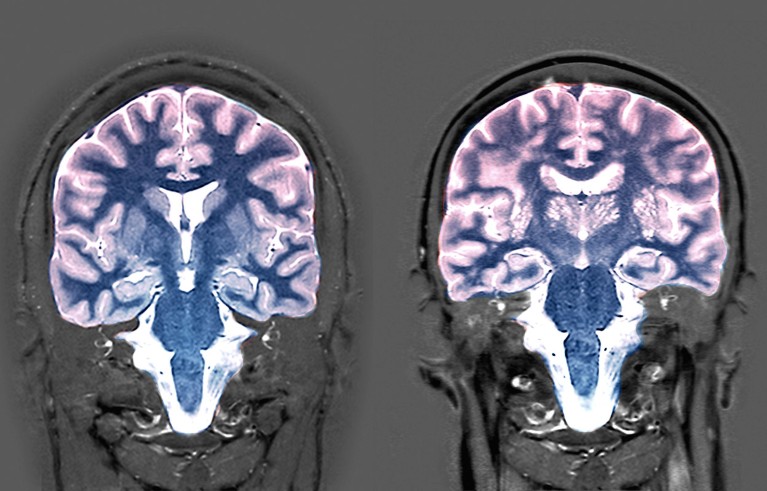
Coloured MRI scans of frontal sections through two brains.
This image shows aging of human brains. Brain of a 25 year old and
 a 74 year old (left to right, respectively) (Naddaf, 2024). 

In a recent study, researchers in China looked into brain scans and blood samples of 10,949 healthy adults of varied ages to estimate brain age gap (BAG). BAG is a measurement between an individual's actual age and their "brain age" (calculated by hundreds of structural features such as: amount of white matter, cortex thickness, brain volume, etc). This measurement can be used to indicate brain health, and on average the participant's brain age was found to be around three years younger or older than their actual age. 

One of their targets for this study was to determine what biomarkers/proteins are associated with accelerated brain aging, for which 8 were identified (and five additional proteins for slower brain aging). Some of these proteins are also known to be involved in brain function, such as movement, cognition, and mental health. One of the proteins, brevican (BCAN), is known to be a key factor in physiological and pathophysiological plasticity processes (Frischknect et. al, 2012). It is noted that higher levels of BCAN are correlated with slower brain aging; interestingly, those with Alzheimer's have less BCAN than healthy individuals. Another interesting finding that was noted is that at ages 57, 70, and 78 years old very distinct brain aging symptoms are noted. 57 year old brains exhibited changes in proteins for metabolism, would healing, and mental health, while at age 70 brains proteins showed changes that heightened risks for dementia and strokes. Lastly, at 78, it was seen that proteins associated with immunity and inflammation were changed. 

These are extremely interesting findings when thinking in context of our genetic predisposition for certain brain disorders. Neuroscientist Mark Mattson commented that our next step is to answer where the proteins are coming from (and discovering the mechanisms in which they coded for). However, this study opens the door to identifying the genes and proteins that should be targeted for those with age-related brain disorders. Also, because they identified the proteins associated with these brain disorders, we may be able to diagnose individuals with disorders long before symptoms are seen, based on the amount of proteins that they have (especially if it is a hereditary condition that their families have a history of). I found this article especially interesting because of how complicated the human brain is. The possibility of us understanding another part of our complex brains is exciting, especially when it is through genetic research!

How DNA Impacts Brain Health: Genetics & Neurology

Sources used:

https://www.nature.com/articles/d41586-024-04055-0

https://www.nature.com/articles/s43587-024-00753-6

https://www.sciencedirect.com/topics/biochemistry-genetics-and-molecular-biology/brevican  

Friday, March 13, 2015

Possibly New Alzheimer's Treatment


Alzheimer's disease affects more then five million Americans across the country; with no cure, approximately every 67 seconds someone new develops the disease. To date, there are no treatments but at Michigan State University there is progress being made towards a new natural treatment to slow the progression of the disease. The newly researched compound, from the Ashwagandha plant, works by protecting the cells that the disease begins to destroy. Alzheimer's disease begins with a specific protein begins to break and create fragments that kill the cell. The proteins continue to kill cells in the frontal lobe of the brain erasing all memories. The researched compound works by preventing the bad proteins from entering the cells that eventually damage the cells and erase memories.

Overall, I believe this is a very interesting article. I personally do not have anyone close to me affected by this disease however I do have many friends with grandparents that are affected or have died from the disease. Unfortunately there is no cure, which makes for the family and the person affected suffer with the many unfortunate effects. I believe with this newly conducted research and the treatment headed toward clinical trials it will give many families hope of what is to come for their loved ones affected. 


found at: http://www.sciencedaily.com/releases/2015/03/150311124643.htm

Monday, April 15, 2013

Trisomy 21 Linked to Brain Protein Loss

From an article from BBC News Health, researchers have found that trisomy 21, commonly known as Down’s syndrome, has been found to cause protein loss in the brain, specifically the SNX27 protein. The SNX27 protein is what activates some glutamate receptors in the brain and is important for brain function according to the research found in Nature Medicine. In the study, the researchers reinstated the protein in mice affected with Down’s and found that their cognitive abilities increased. After this finding, the researchers studied the brains of humans with Down’s and found the same lack of the SNX27 protein. This seems to be a very hopeful study to get further insight into the condition known as Down’s syndrome and may one day be able to improve cognitive function in people affected. Still, much more research seems needed to be done in order to figure out a safe way to restore this protein level in humans, if there is one. Also, the has been no human tests to date, so no one knows exactly how it could react in humans. While this study has found a very important effect of trisomy 21, much more research will need to be done to figure out whether or not a treatment to restore this protein in humans is feasible and safe.