Showing posts with label #brain. Show all posts

Tuesday, April 7, 2026

Brain Circuit linked to Schizophrenia

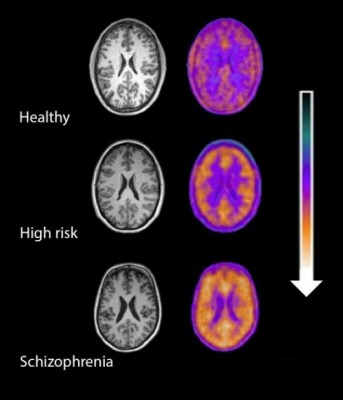
    Massachusetts Institute of Technology researchers found a potential cause for a common symptom that individuals with schizophrenia experience. People with schizophrenia exhibit a sense of lost reality often not knowing the difference between what is reality and what is fake. These researches proposed a possible cause for these experiences. A mutation in a gene impairs a function in the brain that updates thoughts based off of new information. A person with schizophrenia can take medication to target the mutation of the gene called grin2a to help with the brain circuit impairments. Researchers found that the most affected region of the brain was the mediodorsal thalamus. This region is responsible for decision making and control. Schizophrenia has a strong genetic component; the chances of having schizophrenia increase 1%-10% if a parent or sibling are affected. Many gene variants that are affected are in non-coding regions making it difficult for researchers to study. 

Figure 1. Graphic of the Symptoms of Schizophrenia

    This research provides evidence that can lead to medications to help combat this cognitive impairment. Schizophrenia is an interesting disorder because of the large genetic component. Scientists are discovering the reasoning behind these abnormal behaviors and thoughts which provide more insight on why affected individuals have these different beliefs. I am happy about this research discovery. Hopefully with this new information, scientists find a way to correct the brain circuit that is responsible for updating the brain to believe new information so people with schizophrenia no longer hallucinate. 

Link: 
https://news.mit.edu/2026/brain-circuit-incorporates-new-information-may-be-linked-schizophrenia-0318

Additional link discussing schizophrenic hallucinations:
https://goodhealthpsych.com/blog/types-of-hallucinations-in-schizophrenia/


Sunday, November 23, 2025

Do we need language to think?

     A few neuroscientists argue that language is primarily used for communication, rather than reasoning. Many years ago, philosophers also discussed the purpose of language. The ancient Greek philosopher, Plato, believed that language was essential for thinking. Eveline Fedorenko, a cognitive neuroscientist, used brain scans to find how the brain makes language. She did 25 years of research and found that language is not needed for reasoning. 

    In Fedorenko's perspective, reason and thought are distinct things that the brain processes separately. The biggest level of cognition can go on without the help of any words or language. Scientists have worked with populations that do not use language, like infants or animal species, and it is possible to give instructions nonverbally. Some people have aphasia, and were able to do fine on cognitive tasks that were tested on them. So, these examples show that language is not needed for reasoning. 


The highlighted area shows the regions of the brain that get activated when the brain retrieves words from memory and when it is following language-related tasks. 


References: 

https://www.nytimes.com/2024/06/19/science/brain-language-thought.html

https://www.scientificamerican.com/article/you-dont-need-words-to-think/

Sunday, October 26, 2025

The Gene That Made Mice Squeak Strangely

The Gene That Made Mice Squeak Strangely

Scientists have always wondered how language developed and came to be. A study conducted in February 2025 revealed that approximately 250,000 to 500,000 years ago, a gene called NOVA1 underwent an evolutionary change in the population of that time. NOVA1 is an RNA-binding protein found in the central nervous system that is crucial for function and brain development. Erich Jarvis, who is a neuroscientist and also a co-author in the study, stated that the NOVA1 gene by itself did not cause the language change, but it is also due to the mutation of numerous genes. NOVA1 first caught the eye of scientists in 2012, when it was first mentioned on a special list of genes that made proteins that were the same in most mammals but were made differently in humans. 

The biological effects of 1197v in NOVA1 were investigated by examining NOVA1, which is found in humans in mice. When they did that, the mice started to make complex noises. 

They did this to spot molecular changes in the regions of the brain, specifically regions that are related to vocal behavior and that can recognize changes in vocal patterns in baby mice and adult mice. These results found that when humans were evolving, the 1197v substitution in the NOVA1 gene protein could have played a role in the growth of neural systems that are involved in vocal communication.  

This is the mouse’s brain, and the green area is making the NOVA1 gene protein

References: 

  1. https://www.nytimes.com/2025/02/18/science/language-genes.html

  2. https://www.nature.com/articles/s41467-025-56579-2

Thursday, March 13, 2025

Reading Abilities Change Brain Anatomy

 On February 11, 2025, an article was published by the Genetics Literacy Project about how brain structure can be used to understand reading skills. The article explains that a study published by Mikael Roll in Neuroimage found that brain anatomy was different in people of varying reading abilities; specifically, two parts of the brain in the left hemisphere. One part of the brain is the left temporal pole which associates and categorizes information through visual, sensory, and motor information. The other part of the brain is the Heschl’s gyrus which is a fold on the upper temporal lobe that is home to the auditory cortex. This is responsible for phonetic understanding, which leads to higher reading ability. 

The temporal lobe. From Spinalcord.com

Roll found that thicker Heschl’s gyri were found in individuals who study language, and individuals who study phonetics typically have multiple left Heschl’s gyri. Reading more can increase the size of the Heschl’s gyrus and temporal pole. As an avid reader I find it interesting to now know what parts of the brain are used when reading. Even just reading for fun can help improve brain function and increase the ability to interpret information quickly.


Friday, November 22, 2024

Genetics of Alzheimers Disease

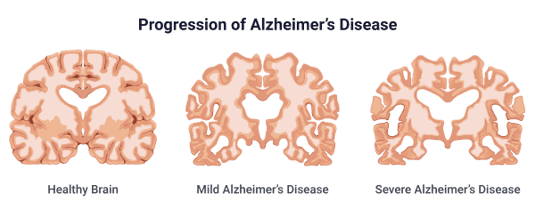
 Alzheimer’s disease is a common cause for dementia. It is a disease that affects the brain by causing brain cells to die and causes the brain to shrink. Common symptoms of this disease are memory loss and decreasing ability to do everyday tasks. There is no cure for Alzheimers and in serious cases of this disease complications like infection and poor nutrition can lead to death. 

This article covers the many different genetic factors of Alzheimer’s and it talks about the use of  Genome-Wide Association Studies which allows researchers to identify genes that are linked to Alzheimer’s disease. The authors highlight the use of studying various ethnic groups in order to fully comprehend the genetics of this disease. Certain environmental factors were discussed in this article. It was considered that these factors may play a role in the risk of this disease. 


This document provides a direction of where Alzheimer’s research can go. Using the genetic research of this disease, it is possible to identify biomarkers as well as therapeutic targets for Alzheimer’s disease which would allow for a better treatment of this disease. This disease is extremely detrimental to the brain and therefore this is a very influential article. 


Links:

https://www.mdpi.com/1422-0067/24/4/3754


https://www.mayoclinic.org/diseases-conditions/alzheimers-disease/symptoms-causes/syc-20350447


Friday, April 26, 2024

Mutation Helps Those at Higher Risk of Dementia avoid Alzheimer's


    In a recent article written by Dennis Thompson in the U.S. News and World Report, he describes a genetic mutation that helps to protect people from Alzheimer's even if they carry the gene that puts them at a higher risk of the disease known as APOE4.

    The mutation of the gene, called P3S-Humanin, enables cells to produce a more powerful version of humanin, a protein that it important to cellular function. Humanin produced by this mutation also was more effective in clearing amyloid beta, a signature of Alzheimer's, from lab mice with the APOE4 gene. the P3S-Humanin mutation is found in Ashkenazi Jews.

    Humanin is important because it has been shown to protect brain health as well as reduce inflammation and stress. Furthermore, the study conducted testing on nearly 500 centenarians. This testing included brain function tests. In these tests those centenarians who possessed both the P3S-Humanin and APOE4 genes outperformed those with just the APOE4 gene. This demonstrated the powerful impact humanin can have on brain function.

    In my opinion this article is importance because it demonstrates ways to treat Alzheimer's which is especially importance considering it is a genetic disease with no known cure. This research has the ability to profoundly impact those at higher risk for the disease as well as their families by providing an extended period of cognitive function to those afflicted by the disease.

Saturday, November 4, 2023

Scientists take next big step in understanding genetics of schizophrenia


Researchers, led by the UNC School of Medicine, have made impressive findings in unraveling the genetic underpinnings of schizophrenia. They initially identified around 5,000 genetic variants associated with schizophrenia through genome-wide association studies (GWAS). To see which of these variants has a direct causal impact on the development of the condition, the team employed a specialized technique known as Massively Parallel Reporter Assay (MPRA). By introducing these variants into human brain cells in a controlled environment, they identified 439 genetic variations that have biological effects, capable of altering gene expression linked to schizophrenia. This study has discovered new genetic variations that could be involved in schizophrenia's genetic basis, helping us understand its complexity better.

Schizophrenia is known for its complicated interplay of genetic and environmental factors, and significant progress has been made in identifying potentially causal variants, but the condition remains versatile. The research emphasizes the need for further investigation into the genetic structure that contributes to an individual's liability for schizophrenia. In the end, what we've learned might help create better treatments or help get close to that step. This is very important because there aren't many good treatments available for this serious mental disorder.

Saturday, August 5, 2023

Is Alzheimer's Genetic?

 Alzheimers is a disease that effects roughly 6 million Americans over the age of 65. Researchers have discovered that are genes (genes :APOE-2, APOE-3, and APOE-4) that are directly associated with the increased risk of developing Alzheimer's, as well as genes that directly cause the disease (genes: APP, PS1, and PS2). 40-65% of people diagnosed with the disease are found to have the APOE-4 gene, meaning that only 1% of people with Alzheimers actually inherit the disease. Alzheimer's happens because the brain is made of billions of neurons that communicate through charges from one neuron to another, Inside the neuron, there is a tau protein which helps provide nutrients to the cell. In Alzheimer's, it is believed that there is abnormal tau proteins causing an inability of the nutrients reaching the cell which then causes cell death. With the death of so many cells, the brain eventually shrinks. There is no known way to cure or prevent Alzheimer's, but it is believed that life style changes such as, quitting smoking, controlling blood pressure, maintaining a healthy weight, reducing alcohol consumption, etc. can reduce the risk of Azheimer's. 


Monday, September 19, 2022

Gene in Brain Linked to High Human Intelligence


A team of European scientists conducted studies on a gene within the human brain, known to be connected with the high intelligence of humans when compared to other species. The scientists inserted the gene, ARHGAP11B, into organoids of chimpanzees which are the closest living relatives to humans. An organoid is a lab-grown group of cells or tissues that have some of the functions of an organ. Organoids were used for the study since scientific experiments involving altering genes have been banned in Europe out of ethical concerns. The chimpanzee organoids introduced to the ARHGAP11B gene showed an increase in neurons and brain stem cells related to brain growth. The scientists in the study found that the gene could enlarge a primate's brain but say further study is needed to determine the size of a role in human brain evolution. Likewise, they also found that when the gene was removed or inhibited in human organoids, the functioning of the cells decreased to the level of a chimpanzee. 

This study showed just how important the ARHGAP11B gene is to the development of the human brain. I think that this study gave great incites into how the human brain evolved and the genes responsible for its high-functioning. I am glad that we have the technology like organoids to develop experiments that we can use to study genes like this, and I how that more studies on this gene are done in the future. I'm sure there is a lot to learn from this gene and even medical applications it has concerning brain development, functionality, and disorders. 


Thursday, May 5, 2022

A very specific kind of brain cell dies off in people with Parkinson’s


Parkinson's Disease Pathophysiology


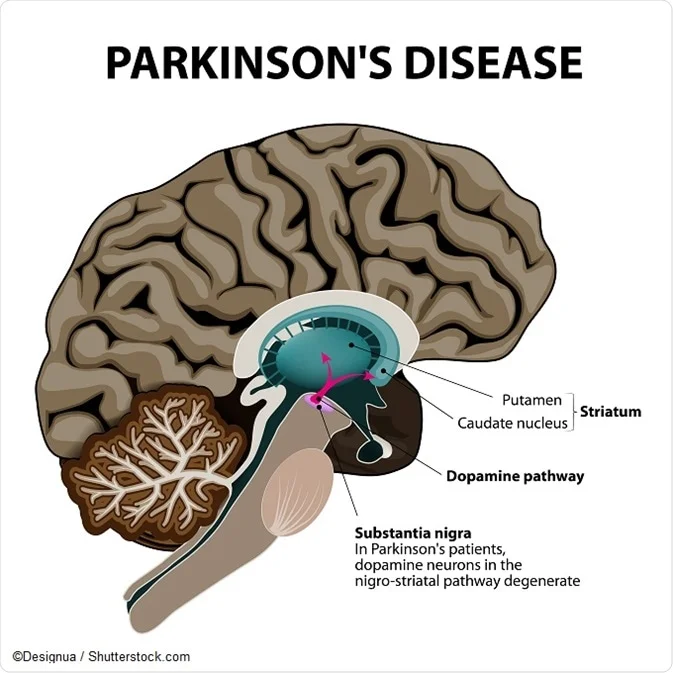
What is Parkinson's Disease? it is a progressive nervous system disorder that affects a person's movement. Symptoms gradually begin slowly because at first, it is barely noticeable but later on, a tremor will occur. How? well, in the early stages of Parkinson's, a person's face may show no expression at all, and also their speech will become slurred, but let us look at this in a deeper context. Researchers from the University Feinburg School of Medicine in Chicago looked at brain cells that seem to be affected by this disease. There is also a way of stopping Parkinson's' and it is by "A single-cell genomic profiling of human dopamine neurons identifies a population that selectively degenerates in Parkinson's disease. The loss of dopamine neurons is a pathological hallmark of this disease. Parkinson's steals the ability from people so they won't be able to move slowly, have balance problems, and have tremors. In the US, almost 1 million people are estimated to have this disease. Scientists even predict that for decades these symptoms come with the death of the nerve cells in the substantial nigra. A psychiatrist and neuroscientist at Massachusetts General Hospital in Boston have looked into substantial nigra neurons in the brain, in people who have passed away from this disease or are related to low body dementia, thus they have discovered that one of the 10 cell types was drastically destroyed. Both psychiatrists have come to the conclusion that they can perform a new study that involves a small number of brains, that have been affected with Parkinson's and learn much more concepts and seek into dopamine making neurons in the brains of those who have parkinson's. 

Monday, December 3, 2018

New method for studying gene expression could improve understanding of brain disease


The brain contains millions and millions of neurons, many different types that most people do not realize. The more recent years of studying the brain have included classifying the different types of neurons, to be able to "understand how the brain works." Scientists are most interested in understanding the molecular distinction between the different types, in different species, to see if the cell types are different or similar in varying species, in order to be able to "identify cellular abnormalities."

A scientist, Nathaniel Heintz, suggests that neurons from a mouse are similar to those of a humans: as far as shape and size. However, the similarity may be hiding the true difference in function. In order to test this, Heintz and his team used "cell-specific antibodies to purify nuclei (of particular brain cells) to analyze which genes they expressed." The researchers discovered that human neurons expressed many genes and the mouse did not. "The genes that a neuron expresses determine how the cell responds to stimuli, how it is affected by disease, and how it reacts to medications," the researchers concluded.
An extension to this study, on the expression of genes over a lifetime, showed that "older neurons express genes in different proportions than younger (genes)." In other words, it is possible that older cells are "more vulnerable to disease." Aging is just one of the factor that affects gene expression, but it is a stepping stone to knowing more about diseases in specific, specialized cells in the brain.
This is great research in the field of neurology, neuroscience, and brain diseases. Knowing the root of a potential life-threatening brain disease comes from, molecularly, could be great information to have for researchers and doctors.

https://www.sciencedaily.com/releases/2018/11/181127131603.htm
https://www.dictionary.com/browse/stimuli
https://qbi.uq.edu.au/brain/brain-anatomy/what-neuron

Tuesday, November 21, 2017

Scientists discover enzyme that supports brain tumor growth


        A group of researchers from the University of Texas MD Anderson Center in Houston has discovered an enzyme that is found to assist in the growth of brain tumors. This finding can possibly be a big help to scientists trying to come up with new potential tumor treatment approaches. The observation here was that a specific enzyme - acetyl CoA synthetase 2 (ACSS2) is responsible for providing tumors with a route to survive. The ACSS2 allows production of cellular structures which aid tumor development.

        The head researcher, Zhimin Lu, Ph.D., (professor of neuro-oncology) and his colleagues used a gene editing tool called CRISPR to see what ACSS2 does in histone acetylation by generating acetyl CoA from acetate inside the nucleus of the cell. Just to clarify, "histones," are proteins that act as "spools" for DNA to wind around and are vital for gene regulation. Histone modification using a metabolic enzyme was found to be significant for cells to remain stable and for the development of tumors. 

    In the words of Dr. Lu, "These findings elucidate an instrumental interplay between reprogramming of metabolism and gene expression in cancer cells. Inhibition of both ACSS2's nuclear function and the metabolic pathway, known as glycolysis, which converts glucose to tumor-feeding energy, appears to be an efficient approach for cancer treatment." 

        This research and the enzyme discovery provides new information regarding nuclear translocation. It is very important and an exciting finding because it shows how ACSS2 can potentially be a player in new therapeutic approaches for treating cancer. With each new discovery, we are getting closer to finding the cure for cancer, making every single finding another step in the right direction! 

https://www.medicalnewstoday.com/articles/317654.php?sr
http://neurosciencenews.com/acss2-enzyme-brain-cancer-6775/