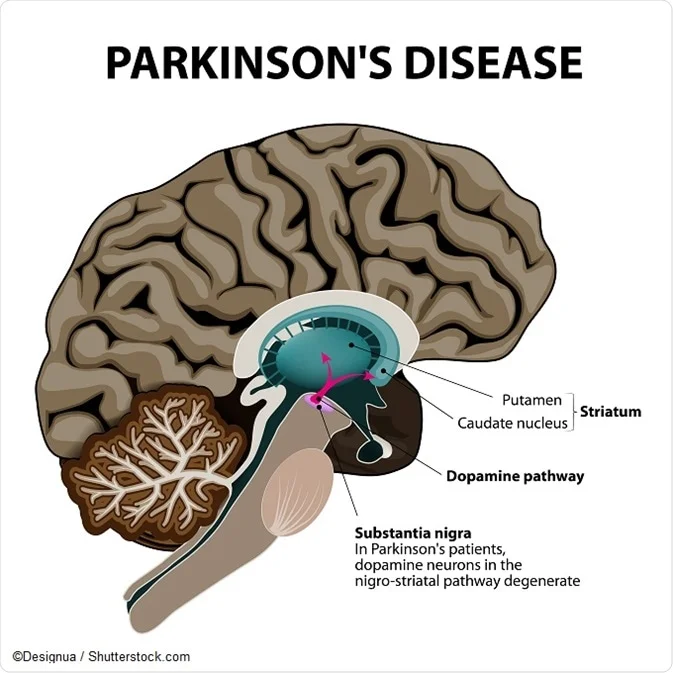
Showing posts with label #parkinsonsdisease. Show all posts

Tuesday, May 5, 2026

Improving the Quality of Life in Progressive Supranuclear Palsy

 Therapeutic targets to enhance the livelihood of those diagnosed with Progressive Supranuclear Palsy.

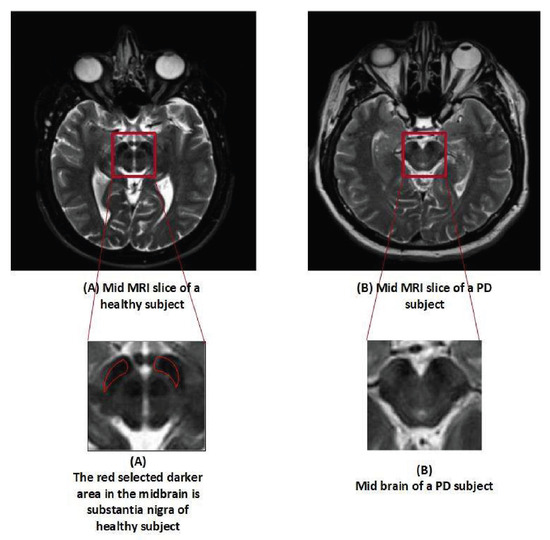
Figure: In a 2014 MRI scan of a patient diagnosed with Progressive Supranuclear Palsy, the "hummingbird sign" is present, imitating how a stroke would present on this type of scan.

    Progressive Supranuclear Palsy (PSP) is a neurodegenerative disease that affects one's walking, balance, body movements, and eye movements over time, a type of atypical Parkinsonism. The onset of this disease is typically in their late 60s, eventually leading to complications of pneumonia, choking, and head injuries from falls. There is no current treatment that effectively slows or stops the progression of this disease. 

    However, new research coming out of the University of Florida has promising potential. This team found that toxic buildup of protein tau is a primary molecular mechanism of this disease. Using CRISPR gene-editing technology, the team suppressed PERK-B, a variant associated with the PSP disease. By doing this, the researchers found differences in four proteins, reducing DLX-1 and protein tau levels. These findings could eventually be useful in developing gene therapies for the disease to alleviate symptoms.

Sources:

https://www.jneurosci.org/content/46/13/e1727252026

https://www.ninds.nih.gov/health-information/disorders/progressive-supranuclear-palsy-psp

https://mbi.ufl.edu/2026/02/23/new-study-reveals-potential-targets-to-treat-progressive-supranuclear-palsy/

Thursday, December 11, 2025

Neuron zapping help us understand Parkinson's

    Scientists at Johns Hopkins Medicine have taken an important step toward watching neurons communicate in real time. Using a clever “zap-and-freeze” approach, the research team was able to stop brain tissue—first in mice, then in human, at the exact moment one neuron sends a message to the next. Their findings, published in Neuron, give a rare glimpse into the split-second events at the synapse, the junction where most forms of Parkinson’s disease are thought to originate. Because synaptic disruptions drive the majority of Parkinson’s cases, being able to capture this process as it unfolds could bring researchers closer to understanding how communication starts to break down.

                       Freeze-Frame Look at Brain Activity

    To test the method, the team stimulated neurons with a tiny electrical pulse and immediately froze the tissue, preserving every structure for analysis. Remarkably, samples taken from patients undergoing epilepsy surgery showed the same rapid recycling of synaptic vesicles that appeared in mice—including the presence of Dynamin1xA, a protein that enables ultrafast membrane recovery. This parallel between species reinforces the value of mouse models for human brain research. The researchers now hope to use zap-and-freeze on tissue from individuals with Parkinson’s disease, with the goal of pinpointing exactly how these shift in affected neurons and ultimately guiding new ideas.

Monday, December 8, 2025

Clinical Trials Show Promise for Parkinson's Cell Therapy


Stem cell therapy for Parkinson's disease has reached a critical turning point, with multiple clinical trials demonstrating that transplanting dopamine-producing neurons into patients' brains can be done safely and may alleviate the motor symptoms that define this progressive neurological disorder. Two major phase 1 trials published in Nature during 2025 tested different stem cell sources, one using induced pluripotent stem cells derived from adult blood in Japan, and another using human embryonic stem cells in a collaboration between researchers at UC Irvine, Memorial Sloan Kettering Cancer Center, Weill Cornell Medicine, and the University of Toronto. Both studies involved surgical transplantation of early stage dopamine-producing cells directly into the putamen, a brain region critical for movement control. The trials enrolled a total of 19 participants with Parkinson's, all of whom received varying dose of the cellular therapy. Remarkably, after 18 to 24 months of follow-up, neither study reported serious adverse events related to the cell transplants, no tumor formation, and no dyskinesias induced by the transplanted cells; complications that had plagued earlier attempts at cell therapy decades ago. 

Beyond establishing safety, both trials showed preliminary evidence of therapeutic benefit. In the Japanese trial using induced pluripotent stem cells, brain imaging revealed an average 44.7% increase in dopamine activity in the putamen, with participants in the higher-dose group experiencing the most substantial gains. Most participants demonstrated measurable improvements in movement symptoms whether they were on or off their regular Parkinson's medications. The North American trial using human embryonic stem cells reported similar findings: imaging studies confirm that transplanted cell survived and integrated into brain tissue even after immunosuppression medications were discontinued at 12 months, and participants receiving higher doses should an average 23-point improvement in their Parkinson's rating scale scores when off medication. While these improvements varied among individuals and require validation in larger studies, the consistency of results across different stem cell sources suggests the underlying biological principle is sound.

The genetic and regenerative medicine implications of this work extend well beyond Parkinson's treatment. These trials represent some of the most advanced applications of pluripotent stem cell technology in human neurodegenerative disease, demonstrating that scientists can guide stem cells to differentiate into specific neuron types and successfully integrate them into complex neural circuits. The University of Wisconsin's preliminary work using autologous induced pluripotent stem cells, cells derived from patient's own tissue, offers an additional advantage by potentially eliminating the need for long-term immunosuppression, though this approach requires personalized cell manufacturing for each patient. At phase three trials prepared to launch later in 2025 including UC Irvine's Alva Clinic the field stands at the threshold of potentially transforming Parkinson's from a disease management medications that lose effectiveness over time into one where neural networks can be rebuilt through a single surgical procedure the shift from symptomatic management to regenerative repair represents a fundamental reimagining of how neurodegenerative diseases might be treated in the coming decades.

Sources:

“Cell Therapy for Parkinson’s Shows Promise.” School of Medicine and Public Health, 16 Oct. 2025, www.med.wisc.edu/news/cell-therapy-for-parkinsons/.

“Stem-Cell Therapy Is a ‘big Leap’ for Parkinson’s Treatment.” UCI Health, 16 Apr. 2025, www.ucihealth.org/about-us/news/2025/04/parkinsons-study-nature.

“Two New Trials Explore Stem-Cell Therapy for Parkinson’s.” Parkinson’s Foundation, 8 May 2025, www.parkinson.org/blog/science-news/cell-replacement.


Wednesday, November 26, 2025

New Link Between Sleep Apnea And Parkinson's


A new study reported by The New York Times in Sleep Apnea Linked to Parkinson’s Disease, New Study Finds found that people with untreated Obstructive Sleep Apnea (OSA) face a much higher chance of later developing Parkinson's Disease (PD). Researchers reviewed over 11 million U.S. veterans’ health records and found that individuals with OSA, after about six years, were nearly twice as likely to be diagnosed with Parkinson’s compared with those without OSA, even after accounting for factors like age, obesity, and high blood pressure.  Study links obstructive sleep apnea to Parkinson's disease by The Washington Post  shows that patients were not helpless to their statistics as they found OSA patients who started treatment early with a CPAP machine largely decreased their risk for Parkinson’s. This does not prove OSA causes Parkinson’s but suggests that disrupted breathing, oxygen deprivation, and poor sleep might contribute to long-term brain vulnerability. 


This emphasizes how something we often dismiss as “just sleep issues” may actually have long term implications for brain health. If untreated sleep apnea significantly increases the odds of developing Parkinson’s, it adds another compelling reason to take sleep disorders seriously especially since OSA is fairly common and treatable. The fact that early CPAP treatment seems to offer a protective effect is hopeful, because it points toward a way people might reduce their risk. The research could have expanded their study as it relied on veteran’s health record and couldn’t verify how often or well CPAP was used. So, while this is important work and a wake-up call about the value of good sleep, more research, especially in more diverse populations, is needed before drawing definitive conclusions.


Monday, November 3, 2025

How a Street Drug Accident Helped Rewrite Parkinson’s Research, Blog#2


 https://www.nytimes.com/2004/02/10/health/parkinson-s-research-focuses-on-links-to-genes-and-toxins.html

https://www.nih.gov/news-events/nih-research-matters/tracking-spread-parkinsons-proteins-gut-brain

Tuesday, December 5, 2023

Fruit Fly Brains

Ana Marija Jakšić Shapes Fruit Fly Brains

     Ana Marija JakÅ¡ić investigated the evolutionary differences in drosophila, when exposed to high or low temperatures. The most heavily impacted portion of the drosophila were their brains and the neural genes, expressed in one temperature versus another. The strongest and most consistent response was that of the dopamine-producing neurons, which dampens the expression of several neural signaling based genes. This caused the drosophila to develop higher levels of spontaneous locomotor activity (measured by how fast they scaled the walls of a vial, when startled). JakÅ¡ić began to investigate whether different genotypes are better able to “ameliorate” the locomotor changes, by artificially altering the levels of the drosophila’s dopamine. She hopes to apply this data to human conditions where dopamine imbalances cause uncontrollable movements, like Parkinson's disease. This particular article delves into the research done by JakÅ¡ić, in a general summary, while also linking her papers. This research could help develop better treatments for Parkinson’s and other similar diseases.


Link to the article:

Thursday, November 23, 2023

Inheritance of Parkinson's Disease

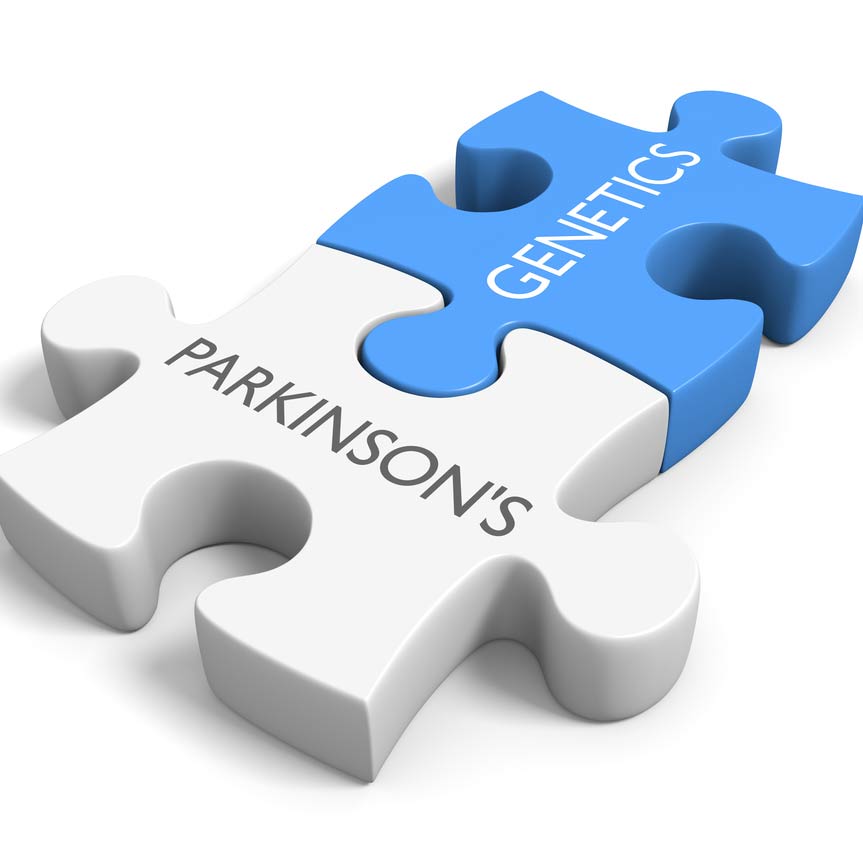
                   Two puzzle pieces joined together representing parkinson's and genetics

Parkinson's disease is a progressive disorder that affects the nervous system and the parts of the body controlled by the nerves. There are 28 chromosomal regions related to Parkinson’s and six contain genes with mutations conclusively. About 15% of people with the disease have a family history of the condition with a mutation link along the family lineage. SNCA, PARK2, PARK7, PINK1, AND LRRK2 are the genes that the inheritance patterns depend on. If LRRK2 and SNCA are involved, then the inheritance is autosomal dominant; if the other 3 genes are involved, it is autosomal recessive. Both parents passed on the altered gene but may not have even presented with any signs of having Parkinson's disease themselves.


Sources

https://www.hopkinsmedicine.org/health/conditions-and-diseases/parkinsons-disease/the-genetic-link-to-parkinsons-disease

https://www.ncbi.nlm.nih.gov/pmc/articles/PMC3253033/

https://medlineplus.gov/genetics/condition/parkinsons-disease/#inheritance


Monday, November 20, 2023

Blood Test Might Help Diagnose Parkinson's Disease Much Earlier

 Blood Test Might Help Diagnose Parkinson's Disease Much Earlier 


    Parkinson's cannot be diagnosed using any kind of blood test or brain scan as of right now. However, a new blood test shows promise and this can change if it continues to. DNA damage in the mitochondria of cells is more prevalent in those with Parkinson's, and this new blood test measures exactly that. This test also found high levels of damaged DNA in those who contain the genetic mutation LRRK2, which also leads to an increased risk of Parkinson's. Study author Laurie Sanders states, “We were able to see this marker in people who carry a genetic mutation but don’t have Parkinson’s disease yet... This is something that may be happening very early in the disease process, and we may be able to screen people who are at high risk and intervene earlier. A simple and cheap blood test could let people know if they should seek further care.”. Sanders and her team also tested therapy that targets the LRRK2 gene. The cells that received it had lower levels of mitochondrial DNA damage.
    I think that this discovery is amazing as there is no test out there that can pre-diagnose Parkinson's. The only way to be diagnosed is by checking off a series of physical symptoms. This is a great advancement because something so simple as a blood test can tell us whether a person will develop such a previously complicated disease. I think this will be a great help as people can then start preventative treatment earlier to maybe fight this disease before it starts to show. Their approach is also interesting because they might be able to determine if certain forms of therapy will help a person or not.

LINKS: 

A Very Specific Kind of Brain Cell Dies Off in People with Parkinsons

 A Very Specific Kind of Brain Cell Dies Off in People with Parkinsons


A very specific kind of brain cell dies in people with Parkinson’s | Science News

Parkinson's disease - Symptoms and causes - Mayo Clinic

United States Population (2023) - Worldometer (worldometers.info)

By: Laura Sanders


    After reading this article about the kind of cell that removes in people with Parkinson's disease. Parkinson's disease affects the nervous system and any part of the body where the nerves controls. According to Mayo Clinic, the symptoms for this disease are tremors, rigid movements, bradykinesia, speech & writing changes, and impaired balance. There is no reported cure for Parkinson's except for medications that improves the symptoms. In the U.S. 1 million people are likely to have Parkinson's disease compared to a total population of 340 million according to World Meters. The article talks about how the dopamine cells in the substantia nigra that is categorized into ten different groups. Scientists found out that one of the cell types was diminished after examining a dead patient with Parkinson's. I found this article very interesting and learned so much about this disease that people unfortunately face. 

Thursday, October 26, 2023

A Decreased Risk of Alzheimer's and Parkinson's in Your Genes?

Alzheimer's, Parkinson's, and The DR4 Gene


    A recent Stanford led medical study about Parkinson's disease (PD) and Alzheimer's disease has revealed that people with a mutation of the DR4 gene have a decreased risk of PD and Alzheimer's. About 1 in 5 people carry the mutation of the DR4 gene, which was discovered to reduce the chance of developing PD or Alzheimer's by 10%. Researchers also believe the tau proteins involved in Alzheimer's may also be involved with PD, hence the close relatedness of decreased risks that we see in this article and the gathered genomic-based conclusions. Other studies have shown that the DR4 mutation protects against PD, and combining the new research, it is believed that it may pose the same effect in preventing Alzheimer's. The data suggested that in people with DR4, there were fewer neurofibrillary tangles, which as associated with the tau proteins that aggressively effect the brains of those with Alzheimer's disease as it progresses, creating the plaque that impairs cognition.  There are immunological connections with DR4 as well, and they are promising enough to possibly initiate the creation of a vaccine that can attack and destroy the fibers that create the tau proteins coating the brain.

    With a significant increase in patients with both PD and Alzheimer's, this idea of a vaccine could be very promising and useful in the near future. Also, the fact that the scientists at Stanford were able to discover and pinpoint the exact gene is also very exciting as well. As we continue to make these advances in science and medicine, many things are looking up in our future and the future of middle aged individuals that will soon be susceptible to deteriorating and life altering diseases and conditions. Overall, this article was exciting to read because of how relevant this is to the conditions we are facing in the medical field, and have been, over the past two decades. With this in mind, what these scientists and Stanford University are doing is amazing, and I am ecstatic to be in the field of biology at this time in our world!


LINKS:

1) https://med.stanford.edu/news/all-news/2023/08/stanford-medicine-led-study-finds-genetic-factor-fends-off-alzhe.html 

2) https://www.sciencealert.com/a-single-gene-variant-protects-from-both-alzheimers-and-parkinsons 

Thursday, May 5, 2022

A very specific kind of brain cell dies off in people with Parkinson’s


Parkinson's Disease Pathophysiology


What is Parkinson's Disease? it is a progressive nervous system disorder that affects a person's movement. Symptoms gradually begin slowly because at first, it is barely noticeable but later on, a tremor will occur. How? well, in the early stages of Parkinson's, a person's face may show no expression at all, and also their speech will become slurred, but let us look at this in a deeper context. Researchers from the University Feinburg School of Medicine in Chicago looked at brain cells that seem to be affected by this disease. There is also a way of stopping Parkinson's' and it is by "A single-cell genomic profiling of human dopamine neurons identifies a population that selectively degenerates in Parkinson's disease. The loss of dopamine neurons is a pathological hallmark of this disease. Parkinson's steals the ability from people so they won't be able to move slowly, have balance problems, and have tremors. In the US, almost 1 million people are estimated to have this disease. Scientists even predict that for decades these symptoms come with the death of the nerve cells in the substantial nigra. A psychiatrist and neuroscientist at Massachusetts General Hospital in Boston have looked into substantial nigra neurons in the brain, in people who have passed away from this disease or are related to low body dementia, thus they have discovered that one of the 10 cell types was drastically destroyed. Both psychiatrists have come to the conclusion that they can perform a new study that involves a small number of brains, that have been affected with Parkinson's and learn much more concepts and seek into dopamine making neurons in the brains of those who have parkinson's. 

Friday, March 29, 2019

Smelling Parkinson's

Discover Magazine posted an article about a woman who has a nose that is able to sniff out Parkinson's. She claims to be a "super smeller" and states she had smelled that her husband had Parkinson's years before he was diagnosed. To diagnose Parkinson's is not easy, it can take years after physical symptoms arise. There is a test that is multiple images of brain to check and see if the cells are damaged. This testing is hard to do and usually is done too late. The woman who is able to smell the Parkinson's says she it is something very musky. Scientists believe that the smell comes from the sebum found on your face and back not something that is smelled by sweating. The woman's ability to smell the disease is a way to potentially find a cure or treatment for Parkinson's.

Although, the science behind this research is based on a woman's nose, she was born with a mutated gene related to odorant receptors to be able to be a super smeller. This could be a break through for all of the other people who are super smellers, they could potentially lead to finding a cure or treatment for Parkinson's since the smell can be caught as soon as it is brought on. I think many people would be skeptical but if they can truly smell it, then it does not hurt to have the chance to know if you are effected years before other testing could find out.

Sunday, November 18, 2018

Stem Cells Implanted into Patient with Parkinson’s Disease

Parkinson's is a neurodegenerative condition caused by the death of cells called dopaminergic neurons, which make a neurotransmitter called dopamine in certain areas of the brain. Scientist at Kyoto University have been developing iPS cells that produce the neurotransmitter dopamine. It is first important to understand what iPS cells are and how they function. iPS cells, short for induced pluripotent stem cells, are adult skin or blood cells that have been reverted back to their embryonic form. This is done by introducing genes that are important for maintaining the essential properties of embryonic stem cells into the skin cells. This then reverts them back into a pluripotent state. As many know, stem cells can give rise to any type of cell in the body through differentiation. Thus, after these iPS cells are made, they are introduced with DNA to give rise to these dopamine producing neurotransmitters. Previous trial had been run on monkeys with their own from of Parkinson's disease to test the viability of the iPS neurotransmitters. After two years of review, the monkeys did not show any adverse effects and their cells did not degenerate. The first human trial was conducted this past October; Dr. Takayuki Kikuchi implanted over 2.4 million dopamine precursor cells into a patient in his 50's. These cells were implanted in 12 different sites known to be centers of dopamine activity. As of November, the patient is doing well and there have been no adverse effects. If all goes well in the preliminary trials, this could be used as a treatment as early as 2023.


This was an interesting article to read. I found it interesting that they used so many of these iPS cells, presumably they must have identified how many they need to actually create a difference in the body. It is also important to understand that they can not administer too many of these cells because very high level of dopamine can make these patients psychotic, however to low of levels won't show a change. This just shows how quickly medicine is advancing and how important the understanding of the genome is because without it, creating these artificial cells wouldn't be possible.

Wednesday, November 14, 2018

Scientist Confirm the Role of ‘Molecular Switch’ in Parkinson’s Disease

Parkinson’s disease is a brain disease that “arises from the loss of dopamine-producing cells in the brain” which in turn affects behavior, sleep, thinking, and memory. Parkinson’s disease makes simple everyday tasks such as talking and walking more difficult as time progresses and other symptoms that also arise from this disease includes fatigue and depression. Each year in the United States alone, about 60,000 people are diagnosed with Parkinson’s disease and by 2020, almost 1 million people will be considered diagnosed with Parkinson’s disease.

Recently, a study had been done where a “protective cell mechanism can be disrupted in the brains of people with Parkinson’s disease to protect cells against damage caused by faulty mitochondria.” The research found that “when an enzyme, PINK1 detect defective mitochondria in cells, it switches on another enzyme called, Parkin. This results in the disposal of faulty mitochondria and protects the cells.” After doing a test on mice, researchers confirmed that the PINK1-Parkin switch operates in the brain and that people with Parkinson’s disease have faulty PINK1-Parkin switches.

 The research and results that these scientist have gathered is a huge step in the medical field because now scientist can work hard in to find a possible type of medicine or cure in order to address the faulty “PINK1-Parkin” switch in those with Parkinson’s disease.