Showing posts with label LRRK2 gene. Show all posts

Thursday, November 23, 2023

Inheritance of Parkinson's Disease

                   Two puzzle pieces joined together representing parkinson's and genetics

Parkinson's disease is a progressive disorder that affects the nervous system and the parts of the body controlled by the nerves. There are 28 chromosomal regions related to Parkinson’s and six contain genes with mutations conclusively. About 15% of people with the disease have a family history of the condition with a mutation link along the family lineage. SNCA, PARK2, PARK7, PINK1, AND LRRK2 are the genes that the inheritance patterns depend on. If LRRK2 and SNCA are involved, then the inheritance is autosomal dominant; if the other 3 genes are involved, it is autosomal recessive. Both parents passed on the altered gene but may not have even presented with any signs of having Parkinson's disease themselves.


Sources

https://www.hopkinsmedicine.org/health/conditions-and-diseases/parkinsons-disease/the-genetic-link-to-parkinsons-disease

https://www.ncbi.nlm.nih.gov/pmc/articles/PMC3253033/

https://medlineplus.gov/genetics/condition/parkinsons-disease/#inheritance


Monday, November 20, 2023

Blood Test Might Help Diagnose Parkinson's Disease Much Earlier

 Blood Test Might Help Diagnose Parkinson's Disease Much Earlier 


    Parkinson's cannot be diagnosed using any kind of blood test or brain scan as of right now. However, a new blood test shows promise and this can change if it continues to. DNA damage in the mitochondria of cells is more prevalent in those with Parkinson's, and this new blood test measures exactly that. This test also found high levels of damaged DNA in those who contain the genetic mutation LRRK2, which also leads to an increased risk of Parkinson's. Study author Laurie Sanders states, “We were able to see this marker in people who carry a genetic mutation but don’t have Parkinson’s disease yet... This is something that may be happening very early in the disease process, and we may be able to screen people who are at high risk and intervene earlier. A simple and cheap blood test could let people know if they should seek further care.”. Sanders and her team also tested therapy that targets the LRRK2 gene. The cells that received it had lower levels of mitochondrial DNA damage.
    I think that this discovery is amazing as there is no test out there that can pre-diagnose Parkinson's. The only way to be diagnosed is by checking off a series of physical symptoms. This is a great advancement because something so simple as a blood test can tell us whether a person will develop such a previously complicated disease. I think this will be a great help as people can then start preventative treatment earlier to maybe fight this disease before it starts to show. Their approach is also interesting because they might be able to determine if certain forms of therapy will help a person or not.

LINKS: 

Wednesday, October 15, 2014

Researchers Discover New Evidence that High-Risk Parkinson's Mutation are Reversible

Researchers, led by Dr Kurt De Vos and Dr Alex Whitworth, from the Department of Biomedical Sciences at the University of Sheffield have discovered vital new evidence on how to target and reverse the effects caused by one of the most common genetic causes of Parkinson’s. Specifically, it is known that mutations in the LRRK2 gene carry a well-established link for Parkinson’s disease; however, the basis for this link still remains unclear today.


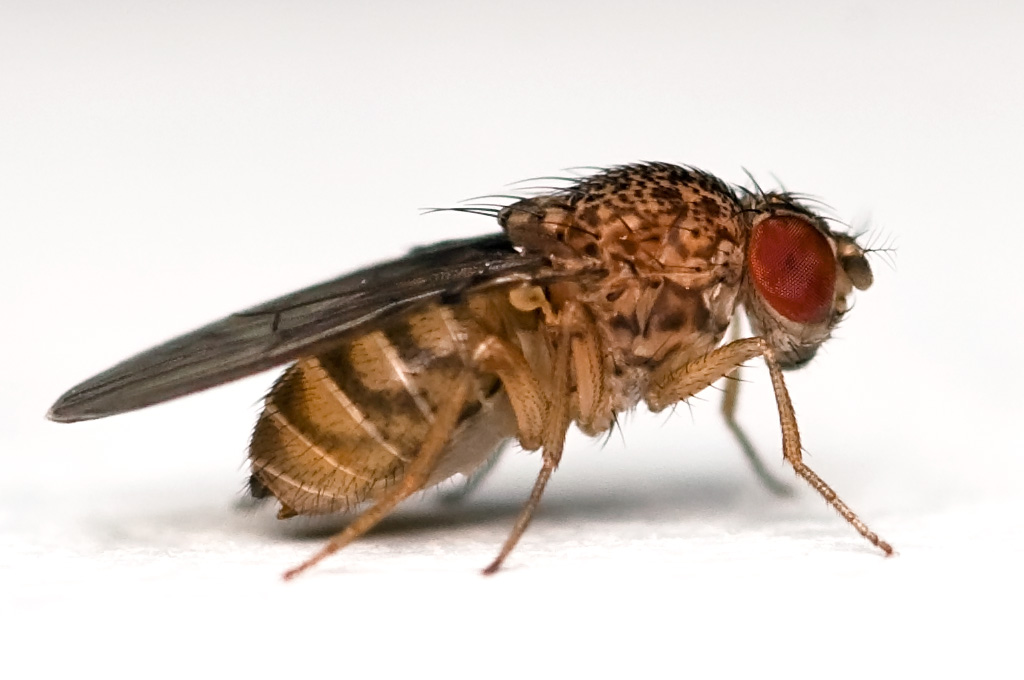
The team of researchers, through their research with Drosophila (fruit flies), found that certain drugs, deacetylase inhibitors, can fully restore movement problems observed in the flies carrying the LRRK2 Roc-COR Parkinson's mutation. Specifically, these drugs target the transport system and reverse defects that are caused by faulty LRRK2 within nerve cells.


Dr. Whitworth was quoted as saying: “By targeting the transport system with drugs, we could not only prevent movement problems, but also fully restore movement abilities in fruit flies who already showed impaired movement marked by a significant decrease in both climbing and flight ability."

The LRRK2 gene produces a protein that affects multiple processes in the cell; this protein binds to microtubules which are the cells transport tracks. Defects in the transport system have been linked to be contributing factors for Parkinson’s disease. The researchers investigated this link and found that certain LRRK2 mutations affect transport in nerve cells. The mutations led to observed movement problems in the fruit flies. The group of researchers used several approaches which showed that preventing the association of the mutant LRRK2 protein with the microtubule transport system rescued the transport defects in nerve cells which in turn alleviated the movement deficits in fruit flies.

Certainly there needs to be more significant research done before more definitive results can be drawn from this research. However, the research results are very promising especially since there are currently no cures for Parkinson’s disease. Therefore, any research, albeit small at the movement, provides encouragement that there will one day be a cure for this degenerative neurological condition.


Thursday, April 17, 2014

How Parkinson's Disease Causes Cell Death and Dyskinesia


Scientists at Johns Hopkins University may have figured out how Parkinson's Disease is able to destroy and damage nerve cells in patients. This discovery in turn may lead to new treatments that can make life easier for both the patients and their families. The nerve damage is caused by mutations in the LRRK2 gene. These mutations "tag" the proteins that make up ribosomes, which causes them to work in overdrive and synthesize so much protein that the cell they are in dies. PD affects nerve cells, especially ones in a brain region called the substantia nigra, which controls the release of dopamine. Because dopamine is important in movement, people affected by PD have difficulty controlling their movements and develop dyskinesia. The most common mutation to the LRRK2 gene has been found to be the cause of 30 to 40 percent of all cases affecting people of north African and Arabic descent. Using both rats and fruit flies as test subjects, scientists used the LRRK2 gene as a type of "bait" to find which proteins the mutation normally tags. The mutation causes increased tagging of the s11 and s15 proteins. It also causes the s15 protein to be phosphorylated more often. This is a process that helps cells function regularly, but too much of it can also lead to cell death. This is what scientists believe is the cause of most PD related cell death. Hopefully, controlling the phosphorylation of the s15 in the future will provide a new way to treat people with this disease.

Secondary Article: http://www.medicalnewstoday.com/info/parkinsons-disease/