Showing posts with label #neurobiology. Show all posts

Tuesday, May 5, 2026

Improving the Quality of Life in Progressive Supranuclear Palsy

 Therapeutic targets to enhance the livelihood of those diagnosed with Progressive Supranuclear Palsy.

Figure: In a 2014 MRI scan of a patient diagnosed with Progressive Supranuclear Palsy, the "hummingbird sign" is present, imitating how a stroke would present on this type of scan.

    Progressive Supranuclear Palsy (PSP) is a neurodegenerative disease that affects one's walking, balance, body movements, and eye movements over time, a type of atypical Parkinsonism. The onset of this disease is typically in their late 60s, eventually leading to complications of pneumonia, choking, and head injuries from falls. There is no current treatment that effectively slows or stops the progression of this disease. 

    However, new research coming out of the University of Florida has promising potential. This team found that toxic buildup of protein tau is a primary molecular mechanism of this disease. Using CRISPR gene-editing technology, the team suppressed PERK-B, a variant associated with the PSP disease. By doing this, the researchers found differences in four proteins, reducing DLX-1 and protein tau levels. These findings could eventually be useful in developing gene therapies for the disease to alleviate symptoms.

Sources:

https://www.jneurosci.org/content/46/13/e1727252026

https://www.ninds.nih.gov/health-information/disorders/progressive-supranuclear-palsy-psp

https://mbi.ufl.edu/2026/02/23/new-study-reveals-potential-targets-to-treat-progressive-supranuclear-palsy/

Friday, November 24, 2023

Neuroimmune Crosstalk Role in Heart Tissue Repair

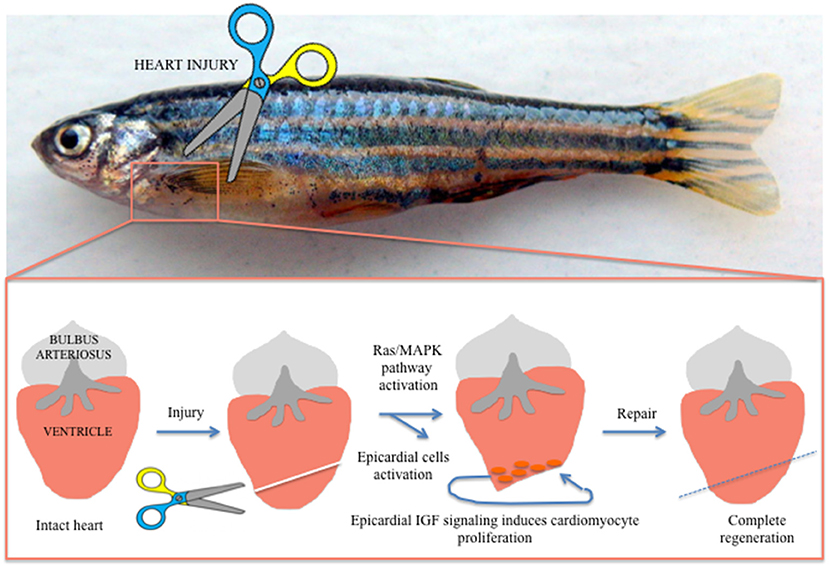
Researchers at the Max Delbrück Center have discovered that zebrafish regenerate heart tissue using communication signals between their nervous and immune systems. In general, myocardial infarctions happen when blood vessels supply blood and nutrients to the heart, resulting in portions of the afflicted heart tissue dying. Since humans are unable to grow new heart cells to reduce the damage, they instead form scar tissue that weakens the pumping power of the heart overtime. Unfortunately, even stem cell research has been proven to be unsuccessful here.

Interestingly enough, signals between the autonomic nervous system (ANS) and immune system were found to play pivotal roles in scarring cand tissue regeneration. To observe this communication, researchers induced an injury into the hearts and several macrophage receptors of zebrafish larvae. After noticing that ANS adrenergic signals resulted in macrophages multiply and regenerating heart muscle, the research team genetically engineered the fish larvae so that the signal couldn’t enter the macrophage cell. The research study found that interrupting the adrenergic ANS signal deactivated the macrophages and induced heart scarring. In difference, when macrophages are activated by these signals, they communicate with fibroblasts and promote regeneration at the damaged site, creating an environment conducive for the growth development and growth of blood, lymph, and heart vessels.


A rather interesting study, this research’s findings provide an insight into how the regeneration of human heart muscle tissue can be made foreseeable. By better understanding the differences in signaling between zebrafish and humans, biologists can better understand why cardiac tissue does not regenerate, find methods to navigate a path to initiating the regeneration process, and even how to better treat heart attack patients’ conditions.

For more information, the news article has been linked here and the published journal article has been linked here.

Wednesday, August 2, 2023

Genetics of ADHD And Other Disorders That Can Coexist


    ADHD is a neurodevelopmental disorder known as attention-deficit/hyperactivity disorder.  The diagnosis consists of a pattern including hyperactive, inattentive, and impulsive behaviors.  This paper goes into depth about several different topics that relate to ADHD coexisting with other disorders and phenotypes.  ADHD can coexist with other disorders causing disruptions in adulthood with interpersonal relationships, academics, and performance at work. There are psychiatric disorders and non-mental conditions that can accompany ADHD.  Around 70-80% of individuals that have ADHD also have comorbid psychiatric disorders that accompany it.   ADHD can come out in different symptoms for everyone and every person with it can have other coexisting issues that are different.  There is an important role that genetics plays in the co-curring traits and ADHD. Twin studies proved that ADHD is from a genetic background.  These studies provided information on the heritability of ADHD and proved that the heritability is very similar in males and females for certain traits. 


    This image shows a representation of genetic correlations between ADHD and other psychaitric disorders as well as behavioral and cognitive traits. This visual can provide an overview of percentages of individuals with ADHD that are affected by these other disorders. This study goes into a lot of information on quantitative genetic twin and family studies as well as genome molecular studies of rare and common variants.  All of this information proving the genetics behind ADHD affecting peopole the way it does. 


https://www.sciencedirect.com/science/article/abs/pii/S0149763423002828

 https://www.ncbi.nlm.nih.gov/pmc/articles/PMC2713155/ 

Tuesday, April 26, 2022

The Science of ADHD


According to " Chadd.Org" Research has demonstrated that ADHD has a very strong neurobiological basis. Although precise causes have not yet been identified, there is little question that heredity makes the largest contribution to the expression of the disorder in the population. In instances where heredity does not seem to be a factor, difficulties during pregnancy, prenatal exposure to alcohol and tobacco, premature delivery, significantly low birth weight, excessively high body lead levels, and postnatal injury to the prefrontal regions of the brain have all been found to contribute to the risk for ADHD to varying degrees. 

Research does not support the popularly held views that ADHD arises from excessive sugar intake, excessive television viewing, poor child management by parents, or social and environmental factors such as poverty or family chaos. Of course, many things, including these, might aggravate symptoms, especially in certain individuals.  But the evidence for such individual aggravating circumstances is not strong enough to conclude that they are primary causes of ADHD.  A related problem that has some accumulating evidence is sensitivity to food or additives such as colorings and preservatives.  Several controlled double-blind studies suggest that these might be important for a minority of children with ADHD, and a couple of controlled studies suggest a small effect on all children whether or not they have ADHD.  Further research on this connection is warranted.


Thursday, May 2, 2019

The loss of vision can be a devastating condition, and there are few options for those affected. According to the article “With single gene insertion, blind mice regain sight,” over 170 million people around the globe face macular degeneration, and the only viable treatment option is an electronic implant. A team at the University of California Berkeley, however, has sought to advance the technology and procedures available to treat vision loss. After having tried for over a decade to devise an effective treatment, the researchers found that inactive viruses could be used as vessels to insert useful genes. Specifically in mice, insertion of opsins, or photosensitive protein-coupled receptors, into living tissue layers of the eye led to the recovery of a limited, but useful amount of vision. Although the result is not yet perfect, trials with the mice showed that they could distinguish parallel from horizontal lines, navigate through a maze just as easily as mice without vision impairments. In addition, the researchers were surprised to find that their sensitivity to light was developed enough to be able to recognize the light from an Ipad rather than brighter LEDs used in other less successful trials.

Through the hope gained through this trial, the team at UC Berkeley have set their sights on helping people regain color vision, and also gaining approval to test their new method with opsins in humans in the coming years. Other studies are concurrently being done to understand which genes are specifically responsible for the loss of vision in children, and by gaining a better grasp of this there can potentially be further advances in gene therapy to mitigate this issue.