This study showed just how important the ARHGAP11B gene is to the development of the human brain. I think that this study gave great incites into how the human brain evolved and the genes responsible for its high-functioning. I am glad that we have the technology like organoids to develop experiments that we can use to study genes like this, and I how that more studies on this gene are done in the future. I'm sure there is a lot to learn from this gene and even medical applications it has concerning brain development, functionality, and disorders.
Showing posts with label #humans. Show all posts
Monday, September 19, 2022
Gene in Brain Linked to High Human Intelligence
Sunday, September 22, 2019
Did a Single Genetic Mutation Make Humans the Heart Attack Species?
"Did a Single Genetic Mutation Make Humans the Heart Attack Species?"
By: Cody Cottier
According to researchers from the University of California, they believe a mutation could have occurred 3.3 million years ago that turned off the CMAH gene in humans. This would be a possible reason as to why humans are more prone to cardiovascular issues because this gene protected mammals against that. "Namely, the loss of the gene made our forebears deficient in molecules called sialic acids." An experiment was done where researchers genetically modified mice to be similar to our human state and the atherosclerosis rate doubled compared to the regular. The mice that ate red meat also had an increased rate. This may not be the cause, but this is a factor to consider when researching humans and heart disease.
I think this could be a possible factor as to why humans are more prone to cardiovascular issues, but I also believe our diets are as well. Most people eat meat and we also live longer than many species. The fact that we live longer gives us the option to more issues. There may be a reason as to why we have evolved without this gene and if we had it now we may have other issues that we may have not considered.

Related Article:
https://www.universityofcalifornia.edu/news/why-are-humans-only-species-prone-heart-attacks
Labels:
"genetic mutation",
"Heart Disease",
#humans,
CMAH gene
Saturday, September 15, 2018
The 'Zombie Gene' That May Protect Elephants From Cancer
This past Summer an article was released revealing the findings of Dr. Vincent J. Lynch and other scientists from the University of Chicago. These scientists have discovered a rare mutation in the genes of elephants while looking for a reason behind their small probabilities of cancer. This rare mutation starts in the p53 gene. The p53 gene, in short, is a tumor suppressant gene that inhibits the formation of tumors. p53 makes a protein that senses damaged DNA and responds by either repairing or by destroying the damaged cells.
The evolved p53 gene in elephants reacts differently because when the protein senses damaged DNA, it does not even think about fixing it, the protein just automatically destroys them so they will not have a chance to reproduce their mutation. Not only do their p53 genes immediately eliminate the problem, but they also have so many more than humans. Humans only have one copy of p53 while elephants have 20 copies.
The variation in the p53 gene sparked scientists to look a little deeper, which unearthed a very interesting mutation that explains why elephants are not as prone to cancer. Both humans and elephants have a gene called LIF. While humans have only one LIF gene, elephants seem to contain 10. After looking closer into these LIF genes scientists discovered one LIF6 gene, which is a gene that has been seen before in animals, but has been thought to have become extinct up until this discovery in modern day elephants. LIF6 has seemingly 'resurrected' itself, which is why scientists are referring to it as the 'Zombie Gene'.
Normally when the proteins are released from the p53 gene, LIF genes are instructed to stop each damaged cell's production of proteins. However, LIF6 mutated in order to be able to read the protein made by p53, which makes LIF6 able to go in and actually kill the damaged cells instead of just impeding their ability of making proteins. LIF6 kills the cell by attacking the mitochondria, which turns out to be very poisonous to the cell. The mitochondria is ripped open, poisons the cell, and ultimately kills the cell.
Although there are still many factors to look into, I think it is a wonderful beginning to a major study on the way the LIF6 gene works. To be able to see this gene live and in action could be very beneficial to discovering what we can do as far as medication in humans. I think this study could be the catalyst to many others in order to see what can be done to manipulate the gene in order to possibly take down one of the biggest forms of disease in our world today.
Article Link
Related Article
The evolved p53 gene in elephants reacts differently because when the protein senses damaged DNA, it does not even think about fixing it, the protein just automatically destroys them so they will not have a chance to reproduce their mutation. Not only do their p53 genes immediately eliminate the problem, but they also have so many more than humans. Humans only have one copy of p53 while elephants have 20 copies.
The variation in the p53 gene sparked scientists to look a little deeper, which unearthed a very interesting mutation that explains why elephants are not as prone to cancer. Both humans and elephants have a gene called LIF. While humans have only one LIF gene, elephants seem to contain 10. After looking closer into these LIF genes scientists discovered one LIF6 gene, which is a gene that has been seen before in animals, but has been thought to have become extinct up until this discovery in modern day elephants. LIF6 has seemingly 'resurrected' itself, which is why scientists are referring to it as the 'Zombie Gene'.
Normally when the proteins are released from the p53 gene, LIF genes are instructed to stop each damaged cell's production of proteins. However, LIF6 mutated in order to be able to read the protein made by p53, which makes LIF6 able to go in and actually kill the damaged cells instead of just impeding their ability of making proteins. LIF6 kills the cell by attacking the mitochondria, which turns out to be very poisonous to the cell. The mitochondria is ripped open, poisons the cell, and ultimately kills the cell.
Although there are still many factors to look into, I think it is a wonderful beginning to a major study on the way the LIF6 gene works. To be able to see this gene live and in action could be very beneficial to discovering what we can do as far as medication in humans. I think this study could be the catalyst to many others in order to see what can be done to manipulate the gene in order to possibly take down one of the biggest forms of disease in our world today.
Article Link
Related Article
Monday, April 16, 2018
Mutant ferrets' shine a light on human brain evolution
People are honored with moderately expansive brains. What's more, amid the previous 7 million years; a brief span traverse in trans-formative terms — the measure of our brains has tripled.
The cerebral cortex, the convoluted and collapsed external layer, is especially so in people. Precisely why and how our brains turned out to be so darned extravagant is a state of much level headed discussion and the confirmation is as of now sparse.
Discovering intimations as to hereditary and organic moves that happened a huge number of years back is like searching for a needle in a bundle on the opposite side of the universe. From time to time, be that as it may, Lady Serendipity favors researchers.
As of late, analysts from various establishments, including the Howard Hughes Medical Institute in Chevy Chase, MD, Yale University in New Haven, CT, and Boston Children's Hospital in Massachusetts, directed a progression of concentrates taking a gander at microcephaly.
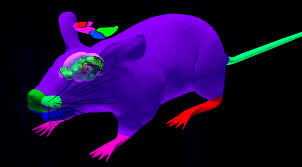
Their examinations were productive and assist our comprehension of microcephaly, yet they additionally crawled us nearer to that needle in the far off bundle. Their discoveries were as of late distributed in the diary Nature.
Mouse brains are, as you may expect, minor. Likewise, mice despise an indistinguishable different determination of mind cells from people, and their cortex is much smoother.

The quality most usually engaged with microcephaly is one that codes for a protein known as Aspm. At the point when this quality is changed, a human's mind will associate with a large portion of the typical size.
Notwithstanding, in mice without the quality — called Aspm knockout mice — their brains shrivel by only one tenth. This scarcely perceivable change is of little use to researchers.
On the chase for a superior model of microcephaly, the specialists — who were driven by Dr. Walsh and Byoung-Il Bae, from Yale University — swung to ferrets.
The cerebral cortex, the convoluted and collapsed external layer, is especially so in people. Precisely why and how our brains turned out to be so darned extravagant is a state of much level headed discussion and the confirmation is as of now sparse.
Discovering intimations as to hereditary and organic moves that happened a huge number of years back is like searching for a needle in a bundle on the opposite side of the universe. From time to time, be that as it may, Lady Serendipity favors researchers.
As of late, analysts from various establishments, including the Howard Hughes Medical Institute in Chevy Chase, MD, Yale University in New Haven, CT, and Boston Children's Hospital in Massachusetts, directed a progression of concentrates taking a gander at microcephaly.
Mouse brains are, as you may expect, minor. Likewise, mice despise an indistinguishable different determination of mind cells from people, and their cortex is much smoother.
Notwithstanding, in mice without the quality — called Aspm knockout mice — their brains shrivel by only one tenth. This scarcely perceivable change is of little use to researchers.
On the chase for a superior model of microcephaly, the specialists — who were driven by Dr. Walsh and Byoung-Il Bae, from Yale University — swung to ferrets.
Labels:
" "Genes,
"Brain",
"ferrets",
"genetics",
"Mice Genome",
"mutation",
#evolutionarygenetics,
#humans,
#science,
microcephaly
Sunday, July 30, 2017
Very first edited embryos through DNA modification.
A research team from Oregon Health and Science University have accomplished edited DNA embryos, the first of its kind. According to U.S. News, Dr. Shoukhrat Mitalipov and his team used CRISPR which is a gene editing technology that modifies genes indefinitely and changed the DNA of single-cell embryos that are likely born into living humans. There has been research about edited human embryos however there were issues towards modified embryos but Mitalipov had found a solution to the "off-targeting" issue when using CRISPR and DNA. This achievement could change genetics and the future of human diseases for generations to come. While this is terrific news, it could also bring controversy. Gene modification is said to be a factor towards possible weapons of mass destruction and the so called "designer babies" but the National Academy of Medicine has approved of this and said that it this new discovery needs "serious consideration"
Saturday, April 29, 2017
Sediments Provide Stable Environment for DNA
New research and careful study of cave sediments has yielded
new methods in extracting DNA. These methods have proven the presence of DNA,
even in the absence of skeletal remains. Many cave sites across prehistoric
sites in Europe and Asia were sampled and tested in order to see if DNA
fragments were present. Findings consisted of ancient human and mammalian DNA
fragments, focusing on fragments of mitochondrial DNA as well. The sediment
factors that bind with the DNA preserve the DNA to a point where analysis can
be conducted. Researchers at the Max Planck Institute for Evolutionary Anthropology
in Leipzig, Germany conduct research identifying DNA in particular sediments
and challenging the “wear and tare” of these particular findings. The fact that
sediments are able to yield and protect DNA is astounding, and to test the findings by
challenging what we know in order to understand that room temperature sediments
also yield DNA is groundbreaking. What is the most interesting within these
sites, is the fact human remains and artifacts are not found, yet DNA is.
Extinct mammalian DNA was discovered relating to species such as the woolly mammoth and the
cave hyena. Extinct human DNA was found consisting of two species, Neanderthal mitochondrial DNA and Denisovan DNA. With further research, researchers hope to date these findings in order to understand the populations and habitations of these cave sites.
Labels:
#ancient,
#denisovan,
#evolution,
#extinctDNA,
#humans,
#neanderthals,
#prehistoric,
#sediments
Subscribe to:
Posts (Atom)