Showing posts with label Tumors. Show all posts

Friday, October 19, 2018

Researchers Explore a Cancer Paradox

          Cancer is one of the most widely studied diseases in the world, not just because it is so deadly, but because it affects so many people and families all around the world. Tumors are associated with cancer, however, not all tumors are cancerous. In the article they describe tumors as cells with an abundance of genetic mutations and states that in order for a cell to become cancerous, at least five to ten cells in the tumor must be genetically mutated. 
          Genetic mutations are not always made by the fault of cell division. Mutations can occur due to the environmental surroundings such as exposed to an excess amount of radiation, smoking or being exposed to cigarettes, and being exposed to ultraviolet rays for a prolonged period of time. Because mutations are such a huge factor in cancer, more recently researchers have been studying these mutations to try and comprehend how the mutations appear in healthy cells and what causes these once healthy cells to develop into cancer. 


          Through research scientists have discovered that our so called, 'healthy cells', are riddled with different mutations and some of these mutations were previously thought to be the leading causes of cancer. For the fact that we did not have this type of technology up until recently, the mutations that were detectable had to be very common, which is why we also find these common mutations in our healthy cells. The hidden story lies behind the rare types of mutations which is what these scientists sought to unearth. 
          A study done in 2015 on epithelial cells that were left over from cosmetic surgeries (specifically the eyelid) were put under a microscope and genetically tested. They took 74 genes that are known to be cancer causing and used them as a list to look for. The scientists found that mutations that were found in the cancerous cells were also found in these healthy skin cells too. Statistically they said, "one in every four epithelial cells carried a mutation on a cancer-linked gene" which would in turn speed up the growth of the cell. 
          Because the scientists found so many cancerous cells in the epithelial cells, they decided to dig deeper into the body and study the cells of the esophagus and see if the same would be for them. What the scientists discovered is that they did turn out the same, and because of this, these scientists are lead to believe that the cause of cancer lies with age. With age, they say, comes more mutations and more loss of the original genetic information as the cells are divided over and over again.
          Since finishing the study, scientists have not come up with a proper way to cure or treat it. In this case, the study that was done opens up a new can of worms for cancer studies. What generation of cells is more susceptible to cancer? Is genetic modification the cure to these cancerous cells and if so, what will this do about aging if this theory is true? I think this is a wonderful beginning of a new way to look at cancer. For years we have been focused on it as an overgrowth of cells with mutations and now we are more focused on what those mutations are and how are those mutations created inside the human body. I'm very excited to hear about the next study that these scientists will conduct, I wonder if it will open up yet another door into the unknown world of the cancer cell. 

Friday, October 5, 2018

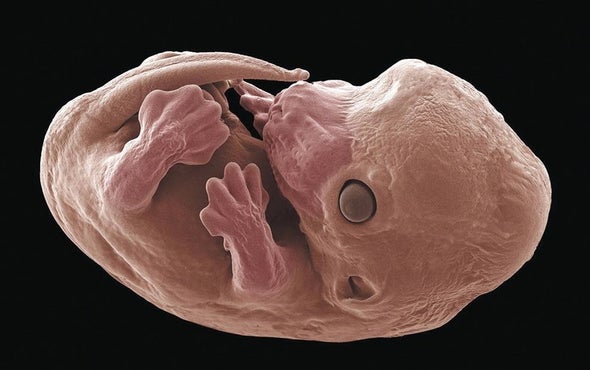
Breakthrough Discovery Linking Embryos to Tumors.


Developmental biologist Dr. Alberto Rosellió-Díez, from Medicine Institute at Monash University and Dr. Isaac S. Kohane, from MIT-Harvard Division of health Sciense, have been trying to understand how tissue growth, during embryonic development, is related to the cancerous tumors. Studies post in the Scientific American recently linked these two processes together stating that “cancer cells are the same programmed genetic instructions active during various stages of embryonic and fetal development.” Kohane believes that by observing these growth processes, they will be able to have a better understanding of how embryonic development contributes to cancer growth later on in life.

First, to better understand how genetic instructions program tumors to grow in adults, Díez and his team needed to study tissue growth during the embryonic development. In order to do this the team created a model in mice, using prior knowledge of cell modification, to come up with a mechanism that inhibited cell growth. Using this mechanism, the team injected the rear limb of a mouse with a growth inhibitor and watched to see how the rest of the embryo reacted. During this process the rear limb stopped growing and the rest fetus reacted by slowing down its growth as well. It turned out that when the scientists stopped the rear limb from growing, the placenta also reacted by signaling the other limbs to stop growing as well, allowing the slower one to catch up. The placenta, which acts basically as an immune-endocrine organ, mediated the growth process of the other limbs allowing for symmetrical growth of all the limbs. The growth inhibitor allowed the scientists to see for the first time how tissue growth is turned on and off by instructions, programmed during embryonic development. An article in Scientific American discusses these findings in further detail. The results obtained by Díez and his team seem to be promising and they may even help doctors like Kohane explain the effects that these embryonic instructions have on cancer. Kohane, who is currently working with tumors, discovered that gene signatures during the third trimester mirrored growth rates in cancer. Among some of these tumors that exhibited these signatures were ardenocarcinoma, T cell lymphomas, and thyroid cancer. Using these signatures and the research from embryonic development, Kohane hopes to be able to see early warning signs of cancer. Tumors, which are generic terms for neoplasms usually grow rapidly and are able to invade surrounding tissue. Scientists and doctors have observed a remarkable similarity between the behavior of embryos and tumors. Lloyd J. Old, a chairman of the Ludwig Institute for Cancer Research, stated “If you’ve ever seen the trophoblast invading the uterus, it invades, spreads, creates a blood supply. It also suppresses the maternal immune system… All of those are characteristics of cancer.” These new discoveries and observations have given us a much better understanding of embryonic development and its relationship to cancer. However, the research is still in its infancy stage and there is still a lot of speculation on how things work, but with breakthroughs like Dr. Rosellió-Díez and Kohane's research, it might not be long until we can treat cancer much more effectively.  

Saturday, September 15, 2018

The 'Zombie Gene' That May Protect Elephants From Cancer

          This past Summer an article was released revealing the findings of Dr. Vincent J. Lynch and other scientists from the University of Chicago. These scientists have discovered a rare mutation in the genes of elephants while looking for a reason behind their small probabilities of cancer. This rare mutation starts in the p53 gene. The p53 gene, in short, is a tumor suppressant gene that inhibits the formation of tumors. p53 makes a protein that senses damaged DNA and responds by either repairing or by destroying the damaged cells.


          The evolved p53 gene in elephants reacts differently because when the protein senses damaged DNA, it does not even think about fixing it, the protein just automatically destroys them so they will not have a chance to reproduce their mutation. Not only do their p53 genes immediately eliminate the problem, but they also have so many more than humans. Humans only have one copy of p53 while elephants have 20 copies.
          The variation in the p53 gene sparked scientists to look a little deeper, which unearthed a very interesting mutation that explains why elephants are not as prone to cancer. Both humans and elephants have a gene called LIF. While humans have only one LIF gene, elephants seem to contain 10. After looking closer into these LIF genes scientists discovered one LIF6 gene, which is a gene that has been seen before in animals, but has been thought to have become extinct up until this discovery in modern day elephants. LIF6 has seemingly 'resurrected' itself, which is why scientists are referring to it as the 'Zombie Gene'.
          Normally when the proteins are released from the p53 gene, LIF genes are instructed to stop each damaged cell's production of proteins. However, LIF6 mutated in order to be able to read the protein made by p53, which makes LIF6 able to go in and actually kill the damaged cells instead of just impeding their ability of making proteins. LIF6 kills the cell by attacking the mitochondria, which turns out to be very poisonous to the cell. The mitochondria is ripped open, poisons the cell, and ultimately kills the cell.
          Although there are still many factors to look into, I think it is a wonderful beginning to a major study on the way the LIF6 gene works. To be able to see this gene live and in action could be very beneficial to discovering what we can do as far as medication in humans. I think this study could be the catalyst to many others in order to see what can be done to manipulate the gene in order to possibly take down one of the biggest forms of disease in our world today.

Article Link
Related Article


Monday, April 10, 2017

The dirt in your backyard may hold the key to isolating cancerous tumors


University of Iowa researchers have found a gene in a soil-dwelling amoeba that functions similarly to the main tumor-fighting gene found in humans, called PTEN. When healthy, PTEN suppresses tumor growth in humans. But the gene is prone to mutate, allowing cancerous cells to multiply and form tumors. PTEN mutations are believed to be involved in 40 percent of breast cancer cases, up to 70 percent of prostate cancer cases, and nearly half of all leukemia cases, according to a review of the literature by the UI researchers. After some searching, the team found that an amoeba, Dictyostelium discoideum has the gene ptenA, which mutates similarly to the human PTEN gene and causes behavioral defects in the cell. The researchers hypothesized that ramping up the presence of lpten, making it the star on the court, could overcompensate for the mutated ptenA. If their hypothesis holds accountable, it can lead to new ways to treat cancer. Read more here 
more information

Wednesday, November 18, 2015

photograph by cufflink photography


It all started when Peter Way, an engineer in Fort Collins, found that his black Labrador, Prince, developed melanoma in his mouth after turning ten.  He enrolled prince in a clinical trial at Colorado State University’s Flint Animal Cancer Center. Researchers were testing a subcutaneous delivery method for interleukin12, which is under study for treating cancers in people.  The drug initially boosted Prince’s ability to fight off the melanoma giving him eight more months to live but then the cancer came back and the dog had to be put down. They are hoping more pet owners will follow Mr.Way to help out cancer research.  Dogs are a main focus of research in the cancer community, after the preliminary mapping of the canine genome in 2005 and advances in veterinary medicine. They now have a vaccine for melanoma and have several more in development.  Researchers are now looking at inherited genes that make certain breeds more susceptible to specific cancers. No medicine developed first in dog has yet to cross over to human use. We can use human developed drugs and use them to treat canine cancer.
We found out my Pit-bull, Rex, had cancer a little bit before Christmas last year when we saw he wasn’t eating and his lymph nodes were budging under his neck. We didn’t put him through chemo because we were told it would be really painful for Rex, it might not work, and it would be really expensive without pet insurance. If I knew about clinical trials, as long as I knew Rex wouldn’t be in more pain then he was, I would have tried it. I would have done anything to keep him around a bit longer. It makes me happy that they are working towards curing cancer not only for dogs but for humans also. 

Tuesday, April 7, 2015

Scientists Reveal Genetic Root of Prostate Cancer

Prostate Cancer

New research published in Nature as part of the International Cancer Genome Consortium has led scientists to better understand how tumors spread from the prostate to other parts of the body. Tumor samples were taken from 10 men and analyzed to see what genetic changes occurred as the cancer developed. They called this a "family tree", because they were tracking generations of cancer cells, but clearly could not be looked at from the traditional pedigree view. Cancer cells from other parts of the body were also examined, and it was found that they all shared a "common ancestor" in the prostate cancer cells. The researchers found that although the genetic diversity is high within the cancer cells of the prostate, the cells that traveled away from the prostate shared genetics faults that were unique to the man with the cancer. Many of these shared mutations in these cells are in tumor suppressor genes, so it is very important to hone the study in on these mutations. Doing so may give researches unprecedented knowledge on treatment of prostate cancer through a genetic approach.

Friday, October 17, 2014

Gene is found that could stop cancer in its tracks

Researchers from the University of Iowa have found a gene in amoeba that dwells in soil that could be found in your backyard that potentially has a similar function to a main tumor-fighting gene called PTEN that is found in humans.

PTEN is prone to mutation, but when the gene is healthy, it is able to suppress tumor growth in humans. However, when this gene is mutated, it allows cancerous cells to multiply and form tumors. This gene is believed to be involved in 40% of breast cancer cases, 70% of prostate cancer cases, and nearly half of all leukemia cases. PTEN is most generally the mutated gene involved in all cancers.  This mutation is not preventable, but researchers have been working to find another gene that may be able to substitute for the PTEN in humans.

The amoeba they found is called Dictyostelium discoideum, and it has a gene called ptenA that mutates like PTEN that also causes behavioral defects in the cell. Another close relative to ptenA that was found is, Ipten. This gene acts like ptenA as well.
 
Dictyostemlium discoideum
Researchers believe that if they are able to ramp up the presence of Ipten, it would overcompensate for the mutated ptenA gene. Once it was tested, they found that when the Ipten is over-expressed, it can fully overcompensate for all the defects that the ptenA mutant experiences.

If the same happens in human cells, researchers may be able to find a way to cure cancer. If they are able to find a drug that could activate the promoter of one of PTEN’s close relative genes, the patient could take the drug to over-express the related PTEN gene, and potentially stop cancer in its tracks.

Tuesday, October 14, 2014

New discovery on treating cancer, it has the potential to halt cancer!

The researchers in the University of Iowa made a discovery that could be beneficial, in containing cancer and preventing it from spreading. The found an amoeba in soil that shares the same characteristics as PTEN (phosphatase and tensin homolog. This protein-coded gene is essential to fighting tumors.  According to David Sol, “If you look at tumors across the board- and that doesn’t mean just breast cancer pr prostate cancer- you find that PTEN is the most generally mutated gene. And when you mutate PTEN in mice, you cause tumors.” The PTEN genes can be found in a large Varity of cancer such as; breast and prostate cancer, that means it worth looking into if they all share a common linked to this gene. Although there is a drawback, the PTEN is only beneficial in a healthy state, if the gene were to mutate then it would cause more harm then good. If the PTEN were to mutate which is likely to occur, then the cancerous cells would spread more rapidly and accelerate the tumor process.

A normal PTEN gene (top) as compared to a mutated PTEN gene (bottom)    

I believe that this is remarkable work that is a large step forward to having cancer cells under control. By using our own body gene that is found in the Homo sapiens, to prevent cancer cell from spreading, and could possibly lead to the next step of being able to remove theses cells if possible. What more remarkable is the fact that these ameoba were always present and it was just only a matter of time until researchers would discover them, which lead you to think what else the human body can do that scientist are not aware of yet.   


Article:http://medicalxpress.com/news/2014-10-cancer-biologists-gene-tumors-tracks.html
Related Articlehttp://www.futurity.org/cancer-amoeba-genes-782162/