Showing posts with label study. Show all posts

Sunday, November 17, 2024

Aging in bacteria

 The evolutionary Demography research group at Freie Universitat Berlin studied the differences in the aging process in different samples of E. coli across more than 100 generations, with genetically identical bacteria and identical environment. They discovered a difference in the aging process of these bacteria and found that the aging process from mother to daughter cell. The study found a specific pole at the end of the rod shaped bacteria that got darker as the bacteria aged, meaning that the organism produced less proteins over time, but this behavior did not necessarily take place in the daughter cells, or the cells surrounding it in the same environment, meaning that these E. coli groups have different individualistic aging processes.

An article for the American Society for Microbiology pivots this topic in a different direction, showing that E. coli age in a different way by losing symmetry during multiple instances of binary fission. Showing that parent cells have a tendency to perform the essential reproductive functions over many different generations in comparison to the daughter cells. Eventually, leading for different kinds of mutations that make them die off, but also increasing population fitness.

I think that understanding the process of aging in bacteria is tremendously important when we attempt to understand the way that microbial communities and bacterial communities exist and distribute themselves throughout different periods of time. Do communities that exist in semiaquatic systems age and disappear because of the way they function? Just some thoughts that come into my head. I don’t know if understanding bacterial aging is as helpful to understanding human aging since they are functionally different, understanding stress factors and the way that both kinds of organisms are affected by it is a different kind of question. Overall nice findings and it is very interesting to know that there are scientists studying and reproducing these groundbreaking experiments with simple set ups but objective observations.


https://asm.org/articles/2024/september/do-bacteria-age

https://phys.org/news/2024-11-unexpected-differences-genetically-identical-bacteria.html


Monday, October 4, 2021

Crime Genes: A Myth Perpetuated to the Deficit of the Community


        According to data taken in a study from the American Journal of Criminal Justice this past year, many people misunderstand genetic concepts and have attributed the appearance of criminal behaviors to the work of genetic factors. However, this has been tested over and over again with the result always being that this is false. Flying in the face of this conclusion, analysis of a sample of white respondents found that this false concept was still prevalent in a small portion of the population. While this number was found to lie in the ~5% range, it is still a substantial amount of the respondent population. Thankfully, the overall population that was genetically literate was found to not believe in a 'crime gene'. This should hopefully ease tensions of racially-directed concepts of 'born criminals'.

While I don't have much particular interest in criminal justice, I find that fighting against prejudice and ignorance with science is quite exciting. Hopefully this is a sign that we are progressing rather than backsliding into the hideousness of the past.

Thursday, August 5, 2021

Study Reveals HAND2 Gene Might Be Responsible for Initiating Human Labor


                        National Institute of Health. “Scientists Seem to Be Studying the Same Genes, over and over.” Newsroom.uw.edu, UW Medicine, 21 Sept. 2018, newsroom.uw.edu/media-coverage/studying-same-genes-decades. 

          For years, scientists have been working to understand how women go into labor from a molecular level, but the molecular mechanisms behind labor are poorly understood. Scientists have attempted to study pregnancy in animal models to understand it better. Still, the problem they have encountered in trying to do so is that pregnancy in animals is too different from humans to be very helpful. Yet, understanding the differences between animal and human pregnancy can give more insight into how labor is initiated. Mirna Marinić, a developmental biologist, and her research team studied twenty-seven species and compared gene expression profiles in the endometrial tissue that forms the maternal-fetal barrier. The team was looking for differences in gene expression linked to the evolution of different reproductive systems. The team found one hundred forty-nine genes that evolved to be expressed in the endometrial tissue of placental animals. One of these genes, HAND2, was of particular interest to the researchers. HAND2 is a transcription factor that is involved in readying the lining of the uterus for implantation and repressing estrogen signaling.             The researchers combed through available data and found that the expression of the HAND2 gene decreased as pregnancy progressed in humans. Mirna Marinić and the team performed an experiment in which they blocked the HAND2 gene from being expressed in human endometrial tissue. From this experiment, they pinpoint changes in gene expression patterns involved with protecting the fetus from the mother's immune system and premature birth. The team's findings heavily imply that HAND2 plays a role in starting labor. Mirna Marinić and her team's work will help scientists better understand how pregnancy and childbirth operate on a molecular level. By understanding how pregnancy and labor function on a molecular level, researchers can learn more about what causes premature birth and study it more in-depth.


Link to Article: https://www.the-scientist.com/the-literature/gene-offers-clue-to-how-human-labor-starts-69023

Link to Supporting Study: https://elifesciences.org/articles/61257


Tuesday, August 3, 2021

Researchers Find Genetic Mechanisms Behind Fractal Formation in Romanesco Cauliflower


 Elij. “Romanesco Cauliflower.” Jioforme.com, 2021, www.jioforme.com/strange-fractal-romanesco-cauliflower-begins-life-as-a-failed-flower/585921/.


      The science behind the fractal formation of the Romanesco cauliflower has been a mystery to scientists for a long time. The Romanesco cauliflower is unique as the head of the plant is made up of fractals, layers of swirling cones. Recently, found what genetic components cause this fractal structure to form and have even replicated the plant Arabidopsis thaliana. Christophe Godin and his colleagues utilized computer simulations and lab-grown plants to search for what caused the fractal patterns to form. The researchers manipulated three genes and, by doing so, were able to replicate the fractal pattern in the Arabidopsis thaliana plant. The research team found that two of the genetic manipulations caused shoot growth and hindered the development of flowers. Rather than a flower growing, a shoot grew, and another grew on that shoot in a chain reaction. The third gene manipulated by the research team resulted in the expansion of growing space at the end of each shoot. This increase in area provided room for the “spirling conical fractals” to form. Godin and the research team intend to altar the three genes in the cauliflower for further study. By further researching how plant structures develop, we can better understand the underlying genetics and mechanisms beneath different plants' beautiful and unique structures.


Link to Article:https://www.sciencenews.org/article/romanesco-cauliflower-fractal-spiral-genetics-biology


Link to Supporting Study: https://science.sciencemag.org/content/373/6551/192


Saturday, July 31, 2021

Study Suggests Tardigrades Might Be Limited to Black and White Vision


    Image Citation: Gulli, Cathy. “Water Bear.” Maclean's, Maclean's, 26 Nov. 2015, www.macleans.ca/society/science/meet-the-water-bear-the-worlds-toughest-animal-and-genetic-marvel/#gallery/week-in-pictures-november-27-2015/slide-1. 


 Tardigrades, also known as water bears, are microscopic animals with eight legs and are highly resistant to extreme conditions. Radiation, the vacuum of space, and harsh temperatures are no match for the tardigrades' ability to survive. A recent study involving these tough creatures suggests that they might not be able to see in color due to lacking proteins called opsins, which are light-sensing proteins. A research team in Japan, led by James Fleming, utilized genetic analysis to verify if opsins are activated in two tardigrade species, Ramazzottius variornatus, and Hypsibius exemplaris. The team found that Ramazzottius variornatus has active opsins. However, this species of tardigrade lacks eyes, making the idea of this species "seeing" difficult for researchers to understand. The researchers suspect opsins have a purpose in this species, although that purpose remains a mystery as of now.

On the other hand, the second species of tardigrade, Hypsibius exemplaris, does have eyes, which are very simple and cannot detect images, but lacks opsins that react to multiple different types of light. The ability to detect numerous different types of light is an essential feature in detecting light of different colors. More research is needed to determine whether tardigrades are completely colorblind or not, as the research team leader noted that, "Color vision in general is a very messy topic." It was also pointed out in the article that directly testing the eyes of water bears would help researchers know for certain whether or not tardigrades are completely colorblind or not. By researching and expanding our knowledge on tardigrade eyes, we can better understand these animals and how they function. By doing so, we can gain a better understanding of life in the microscopic world.


Link to Article: https://www.sciencenews.org/article/tardigrade-water-bear-vision-color-light


Link to Supporting Study: https://academic.oup.com/gbe/advance-article/doi/10.1093/gbe/evab164/6320065


Thursday, July 15, 2021

A Study Finds a New Mutation That May Have Led To the Coronavirus Transmitting to Humans


(“Food Safety and the Coronavirus Disease 2019 (COVID-19).” U.S Food & Drug Administration, FDA, www.fda.gov/food/food-safety-during-emergencies/food-safety-and-coronavirus-disease-2019-covid-19. )

        A recent study shows that the strain of coronavirus that swept the world in a devastating pandemic may have been able to infect humans via one mutation. This mutation, called T372A, is predicted by researchers to cause sugars that generally coat the virus's spike proteins not to be present. Researchers also indicated that the sugars obstructed the virus from getting into cells. The T372A mutation seems to enable the spike proteins of the Covid-19 virus to stick to ACE2 (a human version of a host protein). This mutation replaces the amino acid threonine with the amino acid alanine. This change led to the sugars of the spike protein no longer appearing on the protein's surface. The virus can utilize the ACE2 protein to infect humans.

Moreover, researchers found that viruses with this mutation could latch onto human cells more efficiently than the non-mutated version of the virus. Lab studies conducted by researchers found that the virus could replicate more efficiently in lab-grown human lung cells compared to the non-mutated version of the virus. While this discovery is a critical step to understanding how the virus was transmitted from humans and its origin, scientists note that it's likely a combination of mutations led to this occurring. By understanding what changes in the genetic sequences of the coronavirus led to its high transmission rate and its jump to infecting humans from animals, it can be treated more efficiently, and spread can be stopped to prevent another pandemic.

Link to the article: https://www.sciencenews.org/article/coronavirus-mutation-pandemic-covid-genetics-bat-human

Link to the study: https://www.cell.com/cell/fulltext/S0092-8674(21)00833-3


Friday, April 16, 2021

Drug Shows Promise Against Rare Condition That Stunts Kids' Growth


This article writes of a new medication said to aid children with achondroplasia, which is a rare bone disorder that results in disproportionate trunk and limb size. Their maximum height is on average 4' 6. There were 120 children who were administered this new drug, vosoritide. The hope was that it will give the possibility of greater height and improved proportions. They were administered this drug for two years with excellent results. The patients ranged from ages 5 to 18. Before this study, these children averaged 1.67 inches in height within a year. Then with one year into the trial, the children had gained an average height of 2.23 inches. The next year added an extra 2.19 inches of height, on average. The drug also aided in improving body proportions and did not disappear over time. 

I chose this article because of its positivity. I was happy to hear that this study was in fact a success and nothing waned over time. I am sure people with achondroplasia become sad at times, and having the possibility of this new drug as treatment is amazing!

Friday, November 22, 2019

Discovering the Genes Behind Sleep


 Scientists have been trying to uncover the mechanism and purpose of sleep for decades. We know that all animals must sleep to survive and that there is a circadian rhythm which prepares the body for rest. What we do not yet know is how the body determines how much sleep it needs. Three genes have recently been identified as being related to sleep. These genes were identified by looking for matching mutations within a family who's sleep cycle is set 4 hours ahead of most of the population.
Image result for sleeping
While these three genes do not change much on their own, this is a step towards improving our health. Currently the only measure of whether or not you are getting enough sleep is how sleepy you feel. The hope is that after all sleep genes have been identified, we will have a more quantifiable answer to that question. After studying the sleep genes, scientists will be able to determine how much sleep you need, what is a disorder vs what is habit, and when your body is best able to go to sleep. Some people feel well rested with less sleep than others, seemingly reducing the harmful effects of deprivation. Understanding the genes that cause this may open the way to for medication that helps people feel well rested.

As someone who has never been able to get sound sleep at a reasonable hour, I would like to know if it is because of lifestyle choices or a genetic predisposition. I hope this project gets completed quickly and accomplishes everything it set out to because I, and almost half of all Americans, do not get enough sleep.


Links:
https://www.nytimes.com/2019/11/19/magazine/will-science-ever-give-us-a-better-nights-sleep.html?searchResultPosition=3
https://www.sciencemag.org/news/2019/08/genetic-mutation-makes-people-feel-rested-just-6-hours-sleep

Wednesday, March 20, 2019

The Genes Behind Thrill-Seekers


A connection between genetics and daredevil activities was always predicted, but never proved until a study done by Canadian scientist Cynthia Thomson. This scientist brought together two sample sizes of people: one sample size being about 100, and the second being about 400. The second sample was a replication of the first one. In each sample, the test subjects were given two questionnaires to fill out, and their DNA was swabbed. One questionnaire tested for daredevil tendencies, and the other questionnaire tested for standard personality traits. A high combined scored on the questionnaires would indicate more risky character. It was found in the highest-scoring individuals that many had a variant in the DRD4 gene, which is believed to be connected to the dopamine receptors in the brain and affects risky behavior. It was therefore found that individuals with a variant in the DRD4 gene have a tendency to seek more thrill than others, because they need more stimuli in order to reach their optimal level of excitement.

Image result for skydiving pictures

It seems that a lot of things can be explained by genes. The fact that some people are thrill-seekers, and the fact that others aren’t--this can be explained by the DRD4 gene. It makes me wonder if a penchant for spicy food or horror movies can be explained by genes as well. I find it amazing how so many parts of our lives can be explained by genes. What would have previously been thought of as a personality trait is actually something passed down through generations. To be honest, it scares me to think that so many of the things humans do are explained by genes. People would want to think that they are the way they are because they are uniquely themselves, and that they are mostly responsible for the person they are. While things such as overall personality, beliefs, and speech patterns are solely the creation of each individual, it is daunting to believe that many aspects of one’s life are out of one’s control.

Friday, October 19, 2018

Researchers Explore a Cancer Paradox

          Cancer is one of the most widely studied diseases in the world, not just because it is so deadly, but because it affects so many people and families all around the world. Tumors are associated with cancer, however, not all tumors are cancerous. In the article they describe tumors as cells with an abundance of genetic mutations and states that in order for a cell to become cancerous, at least five to ten cells in the tumor must be genetically mutated. 
          Genetic mutations are not always made by the fault of cell division. Mutations can occur due to the environmental surroundings such as exposed to an excess amount of radiation, smoking or being exposed to cigarettes, and being exposed to ultraviolet rays for a prolonged period of time. Because mutations are such a huge factor in cancer, more recently researchers have been studying these mutations to try and comprehend how the mutations appear in healthy cells and what causes these once healthy cells to develop into cancer. 


          Through research scientists have discovered that our so called, 'healthy cells', are riddled with different mutations and some of these mutations were previously thought to be the leading causes of cancer. For the fact that we did not have this type of technology up until recently, the mutations that were detectable had to be very common, which is why we also find these common mutations in our healthy cells. The hidden story lies behind the rare types of mutations which is what these scientists sought to unearth. 
          A study done in 2015 on epithelial cells that were left over from cosmetic surgeries (specifically the eyelid) were put under a microscope and genetically tested. They took 74 genes that are known to be cancer causing and used them as a list to look for. The scientists found that mutations that were found in the cancerous cells were also found in these healthy skin cells too. Statistically they said, "one in every four epithelial cells carried a mutation on a cancer-linked gene" which would in turn speed up the growth of the cell. 
          Because the scientists found so many cancerous cells in the epithelial cells, they decided to dig deeper into the body and study the cells of the esophagus and see if the same would be for them. What the scientists discovered is that they did turn out the same, and because of this, these scientists are lead to believe that the cause of cancer lies with age. With age, they say, comes more mutations and more loss of the original genetic information as the cells are divided over and over again.
          Since finishing the study, scientists have not come up with a proper way to cure or treat it. In this case, the study that was done opens up a new can of worms for cancer studies. What generation of cells is more susceptible to cancer? Is genetic modification the cure to these cancerous cells and if so, what will this do about aging if this theory is true? I think this is a wonderful beginning of a new way to look at cancer. For years we have been focused on it as an overgrowth of cells with mutations and now we are more focused on what those mutations are and how are those mutations created inside the human body. I'm very excited to hear about the next study that these scientists will conduct, I wonder if it will open up yet another door into the unknown world of the cancer cell. 

Tuesday, November 8, 2016

Results of a Defect in the MC4R Gene

A study was conducted to link obese individuals with the MC4R gene. Obese individuals usually enjoy indulging in foods with high fat content. High fat content will lead to an excess in caloric intake which may lead to weight gain.A study was conducted with lean and obese individuals. However, some of the obese individuals possessed the defective MC4R gene. The individuals were taken to an open buffet. The buffet served chicken with similar tastes, but each entrée contained a different percentage of fat content. The result was that the obese individuals with the defective gene ate significantly more of the higher fat content chicken than the lean and obese individuals. The defect in the gene causes individuals to enjoy eating the higher fatty foods than an individual with an unaffected gene. Another experiment was conducted, but this time the test was sugar content. The obese individuals with the defective gene ate remarkably less of the higher sugar content in this desert. The lean and obese individuals liked the desert with the higher sugar content. The calories obtained per gram of fat is double the amount produced by carbohydrates and proteins. The individuals with the defective gene are preferring to eat foods with higher fat content which further allows for a problem with weight gain. This article was very interesting to read because obesity is such a big problem in this country. For many individuals it is difficult to lose weight and this gene is most likely the cause of the problem. It would be very interesting if the same gene in an unaffected individual was cloned and administered to the genome of an individual with the defective gene. It is possible that this would allow an obese individual with the defective gene to have less desire to eat such unhealthy, high fat content foods.


Sunday, May 1, 2016

Who Gets Hooked On Drugs?

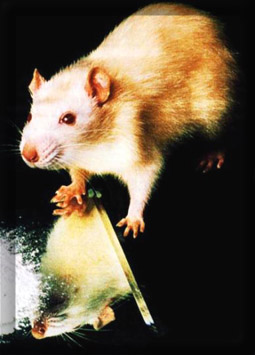
A rat study done at the University of Michigan found genetic markers that influence addiction. 

People may ask why some people get addicted to cocaine after one try, while others will try it and be able to leave it alone. You may ask why some people are able to stay clean after rehab while others relapse. These questions may have a lot to do with the genetic factors that vary from person to person. Of course, we know that animal factors cannot explain all of the factors that lead to differences in addictions in human bodies, but the findings revealed information about the roles played by both inherited traits and addiction related changes in the brain.

The researches looked in rats' brains for the genetic instructions needed to make a key "pleasure receptor" called D2. It allows brain cells to receive signals sent by the brain chemical dopamine, or cocaine. They found that more addiction-prone rats had lower levels of D2 instructions to begin with when compared to the other rats, in an area of the brain known to play a major role in addiction.


The addiction-prone rats also were more likely to carry a specific mark on their DNA called an epigenetic tag. This tag called H3K9me3 kept their brain cells from reading the gene for D2 receptors, but after they became hooked on cocaine, the addiction-prone rats had the same levels of D2 as the less addiction-prone ones. When the cocaine was taken away for a while these rats were more likely to relapse to addictive behavior if they had started out with the epigenetic tag that kept their cells from reading the D2 gene.


I have always asked the question why people get addicted to drugs and others do not, but I have never thought it was a genetic factor in the brain. I always thought it was how you were raised or what influences from your environment affected you. I never thought to assume it was a genetic issue.

Thursday, April 14, 2016

How exactly do scientists find out what genes are found in causing a disease?

One of the toughest problems in genetics involves figuring out which genes cause illness and what turns those genes on or off. Researchers at the Johns Hopkins University school of Medicine and the Karolinska Institute in Sweden reported a way to evaluate a one-gene regulation system which involves chemical tags that tells genes to be active or not.


The test case in this research were patients who had rheumatoid arthritis, which is an autoimmune disease that affects 1.5 million Americans. This research involved an investigation of epigenetics, which is an area of biology that looks at modifications in genes that may determine disease risk.

The setup of this study involved 354 newly diagnosed rheumatoid arthritis patients and 337 healthy people who served as controls. The purpose of the experiment was to examine both groups' white blood cells. They research also involved examining DNA for chemical tags-methyl groups-that could attach themselves to genes to turn them on or off. These chemical tags are what make the research so difficult. The chemical tags can be affected by the environment, medications, or other distant groups.

The researchers involved sifted through hundreds of chemical tags but only four were found to be related to the disease. Those four tags control the immune response which is known to affect the risk of rheumatoid arthritis. The tags were located in a gene called C6orF10.

I found this article to be an interesting read because I never knew how geneticists went about figuring out which genes are responsible for certain illnesses. It always seemed like a difficult process and this article does nothing to change that. Hopefully, as technology advances, geneticists can pinpoint the genes involved in certain illnesses and find a way to use that information to help treat or prevent them.


Monday, November 24, 2014

Study About Memories Being Passed to Offspring

A study was done with mice where they were trained to fear the smell of cherry blossoms in a Nature Neuroscience Study. This test affected the sperm production in these mice which sent a signal to the brain and altered the DNA. The Emory University School of Medicine looked at what happened to the sperm and it showed that a section of DNA responsible for sensitivity to the scent were made more active in the sperm. Then the offspring of the mice were sensitive to the smell of cherry blossom and avoided the scent even though they never personally encountered it.


This study showed that the experience of a parent even before reproducing does influence genes, the structure of the  brain, and the nervous system in the following generations. This provides evidence of transgenerational epigenetic inheritance and should be something that is looked at more in humans. This study also helps scientists understand more about neuropsychiatric disorders and other health problems.
Transgenerational epigenetic inheritance was something that I used to wonder about a lot and wondered how it affected offspring and the differences in them. Athletic ability used to be one of those that I thought could influence offspring but most of the time I heard that the idea of that was ridiculous. If mice can be scared of a scent for no reason other than their grandparents being scared of it, then it makes me wonder what other experiences previous generations can pass on to offspring.

Article: http://www.bbc.com/news/health-25156510

Friday, April 29, 2011

Depression in your genes.

A recent study has determined that a depression risk is linked to genetics. A gene has been identified that is linked to depression risk. Scientists took patients that were depressed and compared the genomes of each. They then compared them to genomes of people who have never been depressed. What they found was a gene called SLC6A15. This gene codes neuronal amino acid transporter protein. It has been confirmed in over 15,000 patients with major depression. Scientists are hoping to use this study to help with therapy and future treatments of depression.