Showing posts with label influence. Show all posts

Monday, March 24, 2025

Are we born political?

 Dr Leor Zmigrod has made a discovery, the politics a person associated with is correlated to biological factors. She has found that the brain structures of a person differ based on the types of politics a person follows and if their thinking is "flexible" or "rigid". For example, people with conservative beliefs have a larger amygdala, when compared to people with liberal ideologies. The amygdala being the part of the brain that processes fear and disgust. 

On a genetic level, it was found that people who are more cognitively flexible, have genetic markers that indicate greater amounts of dopamine in their prefrontal cortex, and less in the striatal regions of the brain. Dopamine has been known to be a genetic factor in personality, like extraversion traits. 


This can be a scary concept, as biological determinations for politics take away from hope that people can adapt their beliefs, as well as fear of interfering with a person's genetics/brain composition in order to change beliefs. These findings also emphasize how some individuals are more susceptible to political influences like propaganda. 

Dr Zmigrod mentions that she plans to do a longitudinal study, to determine if the brain's structure influences politics, or if politics influences the makeup of the brain later in life. 

Article

More on Dopamine and Personality

Sunday, April 16, 2017

Genetics play a significant role in immunity


In a recent research by King's College London, they have found that nearly three quarters of our traits that grant us immunity are from our genetic makeup. Researchers found that adaptive immune traits in our immune system are influenced heavily on our genes. This finding could help greatly for future research on treatments for different diseases in the human body. They also noted that environmental influences play a key role as well on shaping our innate immune system.

This finding can be key to us in the future for discovering new ways to treat certain diseases like arthritis.


Sunday, May 1, 2016

Who Gets Hooked On Drugs?

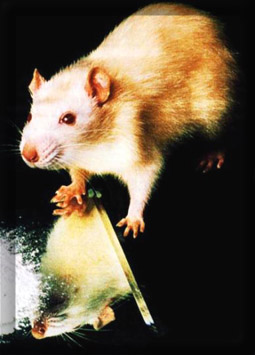
A rat study done at the University of Michigan found genetic markers that influence addiction. 

People may ask why some people get addicted to cocaine after one try, while others will try it and be able to leave it alone. You may ask why some people are able to stay clean after rehab while others relapse. These questions may have a lot to do with the genetic factors that vary from person to person. Of course, we know that animal factors cannot explain all of the factors that lead to differences in addictions in human bodies, but the findings revealed information about the roles played by both inherited traits and addiction related changes in the brain.

The researches looked in rats' brains for the genetic instructions needed to make a key "pleasure receptor" called D2. It allows brain cells to receive signals sent by the brain chemical dopamine, or cocaine. They found that more addiction-prone rats had lower levels of D2 instructions to begin with when compared to the other rats, in an area of the brain known to play a major role in addiction.


The addiction-prone rats also were more likely to carry a specific mark on their DNA called an epigenetic tag. This tag called H3K9me3 kept their brain cells from reading the gene for D2 receptors, but after they became hooked on cocaine, the addiction-prone rats had the same levels of D2 as the less addiction-prone ones. When the cocaine was taken away for a while these rats were more likely to relapse to addictive behavior if they had started out with the epigenetic tag that kept their cells from reading the D2 gene.


I have always asked the question why people get addicted to drugs and others do not, but I have never thought it was a genetic factor in the brain. I always thought it was how you were raised or what influences from your environment affected you. I never thought to assume it was a genetic issue.

Sunday, December 13, 2015

Observing Bad Behavior can Cause Bad Behavior

Teens witness bad behavior through all types of ways. Whether they see it through video games, movies, or any type of social media they are exposed to it. Research was conducted to see if whether teens seeing bad behavior, such as drug or alcohol use, causes them to behave badly. The research was conducted by the Duke University lab. Most people understand bad behavior being copied, but it is not common though that the child may have a gene causing them to do so. The research found that there is a risk-taking gene that is associated with a sensitivity to substance abuse exposure.

I was surprised by the research. I knew that there are inherited traits when it comes to alcoholism, and addiction, but not just be observance. I think that it is interesting to learn that a gene can cause oversensitivity to topics such as seeing someone do drugs or drink. I knew that children from “broken” families tend to act out, but again I did not think there was a gene associated with that behavior. I would like to see more on this research as it advances.  

Monday, November 24, 2014

Study About Memories Being Passed to Offspring

A study was done with mice where they were trained to fear the smell of cherry blossoms in a Nature Neuroscience Study. This test affected the sperm production in these mice which sent a signal to the brain and altered the DNA. The Emory University School of Medicine looked at what happened to the sperm and it showed that a section of DNA responsible for sensitivity to the scent were made more active in the sperm. Then the offspring of the mice were sensitive to the smell of cherry blossom and avoided the scent even though they never personally encountered it.


This study showed that the experience of a parent even before reproducing does influence genes, the structure of the  brain, and the nervous system in the following generations. This provides evidence of transgenerational epigenetic inheritance and should be something that is looked at more in humans. This study also helps scientists understand more about neuropsychiatric disorders and other health problems.
Transgenerational epigenetic inheritance was something that I used to wonder about a lot and wondered how it affected offspring and the differences in them. Athletic ability used to be one of those that I thought could influence offspring but most of the time I heard that the idea of that was ridiculous. If mice can be scared of a scent for no reason other than their grandparents being scared of it, then it makes me wonder what other experiences previous generations can pass on to offspring.

Article: http://www.bbc.com/news/health-25156510