Showing posts with label #obesity. Show all posts

Friday, May 8, 2026

New Study Rewrites Decades of Fat Science


Scientists have discovered that a protein called HSL not only breaks down fat, but also helps regulate cell health and metabolism. This is why people (and mice) missing this gene develop something called lipodystrophy. This rare condition causes people to lose healthy fat tissue, rather than become obese, despite the fact that HSL breaks down fat. These findings could lead to new approaches for treating metabolic diseases. The information from this research calls for more targeted therapeutic strategies for conditions like obesity, insulin resistance, and type 2 diabetes. The work also reinforces the idea that metabolic enzymes can have multiple functions and provides a deeper understanding of cellular metabolism/energy balances. 


Sources:

Monday, October 13, 2025

Obesity Prediction Could Be Guided by Genetic Risk Scores

 In an article written by the NY Times, there was a study conducted to see if there was a correlation between obesity and one’s genetic makeup. Many believe that your genetic component is stronger than your environment. Dr. Hiroschorn, an author for Nature Medicine states that genetics offers indications of who is and isn’t at risk of being obese. “Finding a genetic footprint for obesity has proved challenging. With rare exceptions, there’s not one gene or even a few that are the culprits. Instead, obesity is spurred by thousands of gene variants acting in concert. Each variant exerts a tiny effect”.

With the data given from these genetic variants, it could help the providers give the patients the proper guidance and support to live a healthier lifestyle in anticipation of weight-related health dangers. The scores given can give us an idea of when young children could get obesity as adults. This would provide a lot of help for the future generations of kids and prevent issues such as heart disease (elevated cholesterol and blood pressure). Aside from genetic factors, there are also environmental factors that greatly affect the individual but genetic composition is definitely important.


https://www.nytimes.com/2025/07/21/health/obesity-genetic-risk-score.html?searchResultPosition=2 

https://obesitymedicine.org/blog/obesity-and-genetics/ 


Thursday, April 24, 2025

Blame it on the Genes: Why Labrador's are Always Hungry

     Labrador Retrievers are known for their love for food which causes them to be overweight. A study published on March 6th discovered why some labs are more likely to be overweight than others. The researchers found that genes play a huge role in why most labs are obese. In the past, researchers identified a gene called POMC, this gene makes some labs more likely to over eat, but its not that simple. Scientists studied 241 British Labs, looking at their DNA, body condition, behaviors with food, and how we could manage their weight/diet. There is another gene other than POMC that is liked to obesity in labs called the DENND1B. The labs that had the DENND1B gene contained around 8% more of body fat compared to the labs lacking that gene. This gene not only plays a role in dog obesity but humans as well, impacting how the brain responds to food. Researchers used the information they gathered from the study and created the "risk score",  which helped predict how much more likely a lab is to become overweight. The dogs that were always begging for food, getting into human food, and or just obsessing over food were the dogs with "obesity-prone" genes. There are ways to help the dogs that struggle with their weight, such as strict feeding schedules and not giving them table food. You don't need to pay a bunch of money to genetically test your dog for these genes- just paying attention to their behaviors with food can tell you a lot. 


    Working at a vet hospital, I really do see more overweight labs than any other breed. Not only are they beggars but they're notorious for eating foreign objects. It's really interesting to see how genetics gives us an explanation for why so many labs are relentless when it comes to food. I think it's important for everyone, not just people who work in the veterinary field to know there is gene like DEEND1B making labs biologically more food driven. It helps us be more empathetic towards owners that are truly trying to put their dogs on diets and stick to a feeding schedule. There are resources that can help guide owners when it comes to putting their dog on a diet to better maintain a healthy lifestyle for them. 

Monday, April 7, 2025

Genetic Drive to Overeat Found in Labradors and Humans


A recent article by Victoria Gill in BBC News discusses how humans share a genetic mechanism that is similar to how dogs become obese. Obesity is a critical global health crisis that can be linked to numerous health conditions, like diabetes, heart disease, and certain cancers. A UK scientist discovered that some dogs have genetic mutations that could make them feel chronically hungry, causing them to overeat. Similarly, genetic changes were also found in humans, which helped explain why it could be more difficult for some to control their weight compared to others.

Through particular gene alterations of chemical signals, it sends cues to the brain saying that the body has not had enough to eat. This research discovers an understanding of why one might struggle with their weight more than others and offers hope to scientists to find new treatments that target hunger-related genes. Also, as scientists continue to develop into the genetics of obesity, we may uncover additional factors that contribute to understanding weight gain and how to combat it. 

Tuesday, March 11, 2025

The Genetic Drive to Overeat

 On March 6, 2025, BBC News published an article about how some labradors and people have a gene that inhibits the body's ability to regulate appetite, leading to obesity. The article explains that a study published in the journal Science found that the DENND1B gene was associated with higher body mass in labradors. They then looked at human genetics and found that this same gene was associated with higher body mass in people. This gene is what alters the body’s ability to regulate how hungry it feels and how much energy to burn off. Now that they know what can be a cause of obesity, medications and treatments targeting that gene can be manufactured. 


After hearing all my life that obese people “just aren’t dedicated enough” or that they don’t want to better themselves, it is interesting to read that it’s not all due to motivation; some people are just genetically more prone to weight gain. Even the most motivated individuals can’t see results and have to work even harder than most other people because of their genetics. I think it’s really important to know this information in order for medications and treatments to be most effective.


Thursday, November 21, 2024

Many Labradors Become Obese and Research Shows Why


In a recent study at University of Cambridge’s Department of Physiology, Development and Neuroscience conducted on one of Americas most popular dog breeds, the Labrador Retriever a closer look into there genes has shown that obesity is a genetic issue not necessarily lifestyle. A genetic mutation can be found in some members of this breeds genetic make up that not only makes them feel hungrier all the time but it also makes it so they burn fewer calories. 

The genetic mutation discovered is found on the gene known as POMC. This gene is responsible for hunger signals and energy usage. In this study 25% of Labradors and 66% of flat coated retrievers were found to have the POMC mutation. It was shown that dog with the mutation are prone to overeating more, and it also shown that dogs with this mutation burn 25% less energy then dogs without it. 

The mutation which effects the POMC gene prohibits the dogs ability to produce two chemical messengers, one being beta-melanocyte stimulating hormone (β-MSH) and the other being beta-endorphin, these are both important in determining hunger and moderating energy use in the dog. 

This study consisted of 87 Labradors all who were either at a healthy weight or were entering being overweight. These dog were fed canned dog food every 20 minutes. Now all these dogs ate relatively the same amount proving that dogs with mutation have the ability to feel full. On another day of the study these dogs were fed breakfast then 3 hours later offered a container with food in it which allowed the dogs to see and smell the food but not access it. Dogs with this mutation tried significantly harder then those without it. This indicated that dogs with this mutation become hungrier between meals. The last phase of this study was having the dogs sleep in a specialized chamber which allowed the gases exhaled to be measured and analyze metabolism. Dogs who has the POMC mutation burned 25% fewer calories. 

 This study helps provide insight on how to help maintain healthy weight. Currently no medication are available for dogs with this mutation but the use of probiotics and calorie monitoring has shown to be effective in preventing obesity.  

I think this study is a big breakthrough, as someone who works in the veterinary medicine field I have seen so many owners struggle with their Labradors weight. I have had owners tell me there dog can eat forever or they are always hungry. Obesity leads to so many health issues in dogs so having a study to figure out what factors play a role in common dog breed obesity cases is crucial in preventing it. 

Links: 

https://www.usnews.com/news/health-news/articles/2024-03-07/many-labradors-become-obese-and-research-shows-why

https://www.sciencedaily.com/releases/2024/03/240306150433.htm#:~:text=The%20mutation%20is%20in%20a,food%20and%20risk%20of%20obesity.


Monday, November 18, 2024

The Epigenetic Impact of Obesity: Do Fat Cells Have Memories?


A recent study looking into the fat cells of mice and humans has rewritten our current understanding of weight-loss on a molecular level. In fact, the commonly known "yo-yo effect", the inability to lose weight without it coming back, may finally be explained. 

To begin, epigenetics refers to how the environment and our behaviors may influence gene activity. Researchers at ETH Zurich analyzed the fat cells of overweight mice who had recently lost weight, and quickly noticed that obesity leads to distinct epigenetic changes in the nucleus of these cells, even after losing the weight. When eating the same diet, the once overweight mice gained weight at a faster rate than mice who had never been obese. This memory mechanism was also found in the fat tissue of humans, who had undergone weight-loss surgeries. 

At this time, it is not possible to medically erase the epigenetic memory of fat cells or to tell how long these cells remember obesity in general; however, we do know that fat cells live for about ten years. To mitigate against the "yo-yo" effect, it is recommended to be mindful of your health and avoid obesity to begin with. 

This research is intriguing to me because I am interested in going into the field of pharmaceutical research; therefore, I am eager to see if a new breakthrough of medication to combat the memory of these fat cells is possible. I also found it fascinating that almost all other cells in our body have been found to have memories. As someone who enjoys fitness in my personal life, I have always heard the term "muscle mass" thrown around and have wondered if it had any scientific basis, which it does!


https://www.sciencedaily.com/releases/2024/11/241118125210.htm

Sunday, April 7, 2024

Is Genetics and Obesity Linked?

    It is well known that obesity is the leading cause of preventable, premature death. So in this article we will explore ways in which genetics may be a contributing factor to the rise in obesity. Obesity occurs when an individual consumes more calories than their body burns. Other factors that may contribute to this is an individual's environment in which it may promote inactivity and/or unhealthy eating habits. Many of these factors include food deserts, poverty, lack of education, and lack of access to gyms. Although these factors do contribute to obesity that does not mean that every individual who is put under these conditions will result in the same outcome. This is where genetics come into play while looking at individuals who may be more susceptible to obesity. A person's metabolic rate affects their ability to digest food under a certain amount of time making it easier to lose more weight than others or an increased tendency to store body fat. Studies have identified variants in several genes that may contribute to obesity by increasing hunger and food intake. Although very little is known about a specific gene that may contribute to obesity, there have been studies that found rare forms of obesity caused by a mutation in a single gene, known as a monogenic mutation. This mutation contributes to appetite control and energy homeostasis carried on chromosome 18. In more “common obesity” types they tend to be polygenic, meaning it is affected by multiple genes. In 2007, researchers identified the first obesity-related gene variant called FTO found on chromosome 16. People who carry this variant tend to be at a 20-30 percent higher risk of obesity. Even though in these articles it shows that some people may be predisposed to obesity that does not mean that obesity is destiny. Meaning there are changes that can be made on a day to day basis to prevent obesity or obesity-related diseases. It is important to learn from any previous family medical history in order to prevent obesity-related diseases.

Sources:

1)  https://www.cdc.gov/genomics/resources/diseases/obesity/index.htm

2) https://www.hsph.harvard.edu/obesity-prevention-source/obesity-causes/genes-and-obesity/

Why are Labrador and Flat Coated Retrievers prone to obesity?


    In a recent article in the U.S. News and World Report Dennis Thompson describes the results of a recent study examining the causes of obesity in Labrador Retrievers. This British study found that nearly 25% of Labrador Retrievers and 66% of Flat Coated Retrievers have a gene that makes them more likely to be obese. This mutated gene, called POMC, causes dogs to feel hungrier and burn less calories. Dogs with the POMC gene got hungry faster between feedings, despite not needing to eat more at meal times in order to feel full. Furthermore, the study found that these dogs also burn 25% less energy while resting than dogs without the gene, meaning they should actually be fed less. The POMC gene prevents dogs from making beta-melanocyte stimulating hormone and beta endorphin, which are both important in hunger and energy usage.

    The study found that when fed a meal Labs with the mutation did not eat more then Labs without the mutation. This indicated to scientists that dogs with the mutation did not need to eat more to feel full. However, in between mealtimes a sausage was placed in a box with a perforated lid, and dogs with the POMC mutation tried significantly harder to get the sausage. This indicated to scientists that they got hungrier between meals than dogs without the mutation. Drugs are currently in development for the POMC mutation can also occur in humans.

    In my opinion this article is important because it helps to inform owners of Labrador and Flat Coated Retrievers of a health condition that could be affecting their dogs. It allows them to make more informed decisions that will affect the health of their four legged companions. This article informs others who may want to get a Lab or Flat Coated Retriever about the health needs of the dog they may get. Furthermore it also makes clear to the audience that obese dogs are not always caused by negligent owners.


Thursday, December 7, 2023

Genetic Variant to Prevent Obesity

Human genetic variations may affect people's susceptibility to weight gain. Genetic variants are differences in DNA sequence which occur between individuals naturally within a population. In a study done with mice, researchers tested them with a human genetic variant in the glucose-dependent insulinotropic polypeptide (GIP) receptor. This is associated with a lean body mass index because the way they act in the cellular level impacts metabolism and weight regulation. In the research, they found that mice were better at processing sugar and staying leaner than mice with a different more common variant of the receptor. Since the GIP receptor communicates with a hormone released in response to glucose levels after meals, if someone were to have at least one copy of the GIP receptor variant, they would have an altered metabolism that reduces their risk of developing obesity. The research team used CRISPR-Cas 9 technology to genetically engineer mice with a variant that encodes the GIP receptor. This study found that female mice with the variant were leaner than females without the variant. But they also found that male mice with the variant didn’t have much differences and had the same weight as other male mice without the variant, but did not suffer from weight gain when fed a high-fat diet as opposed to the other male mice without the variant, who did become obese. One of the researchers stated that the GIP hormone binds to the receptor which moves from the surface of the cell, to inside the cell, and this causes the GIP hormone to detach from the receptor, causing the receptor to return to the cell surface. 

It is interesting as well as very important to know that people with different genetic variants in the GIP receptor can have different impacts on their metabolism. According to the article, over 100 million adults in the US are affected by obesity. The GIP receptor is the reason some people are leaner than others. This research could give more insight and information on how to treat obesity. As of now, there are drugs that are also talked about in the article which mimic hormones that are found within the body that interact with the GIP receptor. But the goal is to develop a drug that is more precise and that matches to a specific genetic variant. This could be a much better approach for weight loss than the drugs that are now created and this opens doors to creating more solutions to many other health problems that people deal with.


Sources:

https://www.sciencedaily.com/releases/2023/12/231207161355.htm

https://www.nature.com/articles/s41576-021-00414-z


Tuesday, July 2, 2019

Cocoa Bean Shells May Reverse Obesity-Related Problems

It is commonly heard that chocolate is unhealthy for you and can cause heart issues and weight gain because of the sugars and saturated fat. What is not commonly heard is that dark chocolate is healthy because it has fewer sugars and saturated fats than milk chocolate. Cocoa beans contain antioxidants called flavanols which can reduce cell damage which can cause cancer and decrease heart disease and high blood pressure. Flavanols are found 2-3 times more in dark chocolate than milk chocolate and can even increase insulin production which can lead to a reduced risk of diabetes.

The University of Illinois research team suggests that phenolic compounds found in cocoa beans have a positive and powerful effect on the fat and immune system of mice and potentially reverse inflammation and insulin resistance that is associated with obesity.

Cocoa bean shells contain high levels of three beneficial bioactive chemicals that are also found in coffee and tea. A water-based extract was created and contained the three bioactive chemicals and tested their effects on adipocytes and macrophages as well as studied the individual effects on the cells.  They found that the damaged mitochondria in the cells were repaired and less fat accumulated when they treated the adipocytes with the bioactive chemicals. When adipocytes accumulate too much fat, the growth of macrophages is promoted in which the two interact negatively and cause inflammation in tissues which in turn lead to insulin resistance. During their study, the noted that the treated adipocytes the cells underwent browning and became a form of fat tissue that contains "greater mitochondria and enhanced fat-burning efficiency".


This topic really interests me because obesity is a growing problem and is the second leading cause of death in the United States. I didn't know that obesity-related problems were related back to the adipocyte and macrophages interaction and I definitely did not know that cocoa bean shells contained phenols that could reverse the tissue inflammation and insulin resistance that is seen with obesity. I don't believe that this study is a "go ahead" for eating more chocolate, but I think it sheds light on the beneficial properties of cocoa beans and lets chocolate have a chance to redeem itself from having a bad reputation.


Saturday, April 20, 2019

Obesity Caused by Genetic Mutation


A result of a couple studies investigated that weight control is related to genetics and not will power as must of us believe. The study was realized on people that have been thin their entire life. Their opinion on the subject was that they “did not care much about food”. These individuals only ate small amounts of food. The gene MC4R was used by Dr. Sadaf Farooqi, professor of metabolism and medicine at the University of Cambridge and Nick Wareham, and epidemiologist at the same university. Researchers from Britain found that some people carry a “genetic alteration” that mutes appetite. This includes a low chance of getting heart disease or diabetes. The study used data from the U.K biobank. These included half million people aged 40-69; their DNA samples and medical records was helpful information that enable researchers to track their health. The same data was used for a second study, which was used to make predictions as early as childhood. According to the researchers, there are biological reasons why some people struggle with overweight and others do not. This is related more towards appetite and not metabolism.


Image result for genetic mutation

Obesity can be a cause of a genetic mutation, but personally I think many of the individuals who suffer from obesity is because they were introduced to junk food in their early childhood usually from parents. Lack of physical activity plays an important role as well, technology keeps the kids and adults entertained. Another cause could be stress in adults due to family issues or work.

Thursday, April 18, 2019

Genetics of Obesity in Humans


According to the EndocrineReviews Journal, genetics plays a large role of obesity in humans. Although not maintaining a healthy diet and not preforming enough physical activity triggers and leads to obesity, it is important to take in consideration the hereditary factor that influences weight gaining. A study was done on parents and their offspring, as well as, twins and adopted children. The study was done in order to investigate the genetic contribution of the body weight throughout the family. As a result, the studies reported around 40%-70% for heritable traits for the most part. Form this, it was able to know that indeed, weight can be considered a heritable trait, that is only slightly less than the trait of height in humans. So far, evidence demonstrates that obesity is the result of a mixture of both environmental and genetic factors. I found this article to be very interesting because I always had in mind that humans gain weight and lead to obesity because of the type of diet that they follow.

Tuesday, April 16, 2019

Fighting Obesity

 An article  by University of Illinois at Urbana-Champaign explains how Scientists have developed new purple corn hybrids with differing combinations of phenols in the pericarp that fight obesity, inflammation and insulin resistance, a new study in mice suggests. The pericarp also provides the food industry with a new source of colorants and farmers with a new value added product for their crops.


The National Center for Health Statistics estimates that, for 2015-2016 in the U.S., 39.8% of adults aged 20 and over were obese (including 7.6% with severe obesity) and that another 31.8% were overweight. Obesity rates have increased for all population groups in the United States over the last several decades.
More than 100 million U.S. adults are now living with diabetes or pre-diabetes, according to a new report released today by the Centers for Disease Control and Prevention (CDC). The report finds that as of 2015, 30.3 million Americans, 9.4 percent of theU.S. population have diabetes.

Tuesday, March 26, 2019

Is your physique not quite summer ready? You can blame your genes.


In January 2019, while most Americans are fulfilling their new year resolutions, U.S. News & World Report published an article which was originally composed by HealthDay News that may relieve some pressure to have that perfect beach body this summer. Robert Preidt wrote this article based on a study performed by Wellcome-MRC Institute of Metabolic Science at the University of Cambridge. Sadaf Farooqi lead the study which debunked the myth that all people who are overweight are lazy and do not care about their health. There have been similar studies done in the past which focused on obese people and how their genes may be effecting their weight. This new study differs by focusing on a broader scope of individuals and comparing their genetic make up. The group of people being analyzed included those who are underweight, healthy weight and obese. Genetic variants were discovered present in each weight category. This data was calculated to determine what impact ones genes has on the outcome of their physique. It was concluded that the individuals with specific genetic variants had a higher chance of being obese. Accordingly, thinner people showed an absence of those same genes.

We are often quick to judge others for anything and everything but most commonly their weight. People who are "too skinny" must have an eating disorder or self image issues. Those who are "overweight" must have no self control and never exercise. These thoughts are not only offensive but simply incorrect. I believe the media should focus on increasing awareness of these types of studies. This does not mean that your physique is out of your control. It just means that we all need to be a little more gracious towards one another and realize we are not all cut from the same mold.

Sunday, November 18, 2018

Genetic Predisposition to Obesity Linked with Depression

Read the full articles by clicking on the links below!
Link 1
Link 2


Being overweight can cause depression, specialists say, with the impacts thought to be to a great extent mental.

Image result for obesityWhile past investigations have discovered that individuals who are corpulent will probably have discouragement, it has been hazy whether that is down to melancholy driving weight changes or the turn around.

Presently, in the biggest investigation of its sort, specialists say having hereditary variations connected to a high weight record (BMI) can prompt misery, with a more grounded impact in ladies than men. Additionally, they say the examination recommends the impact could be down to variables, for example, self-perception.

"Individuals who are more overweight in a populace are more discouraged, and that is probably going to be in any event halfway [a] causal impact of BMI [on] melancholy," said Prof Tim Frayling, a co-creator of the investigation, from the University of Exeter therapeutic school.
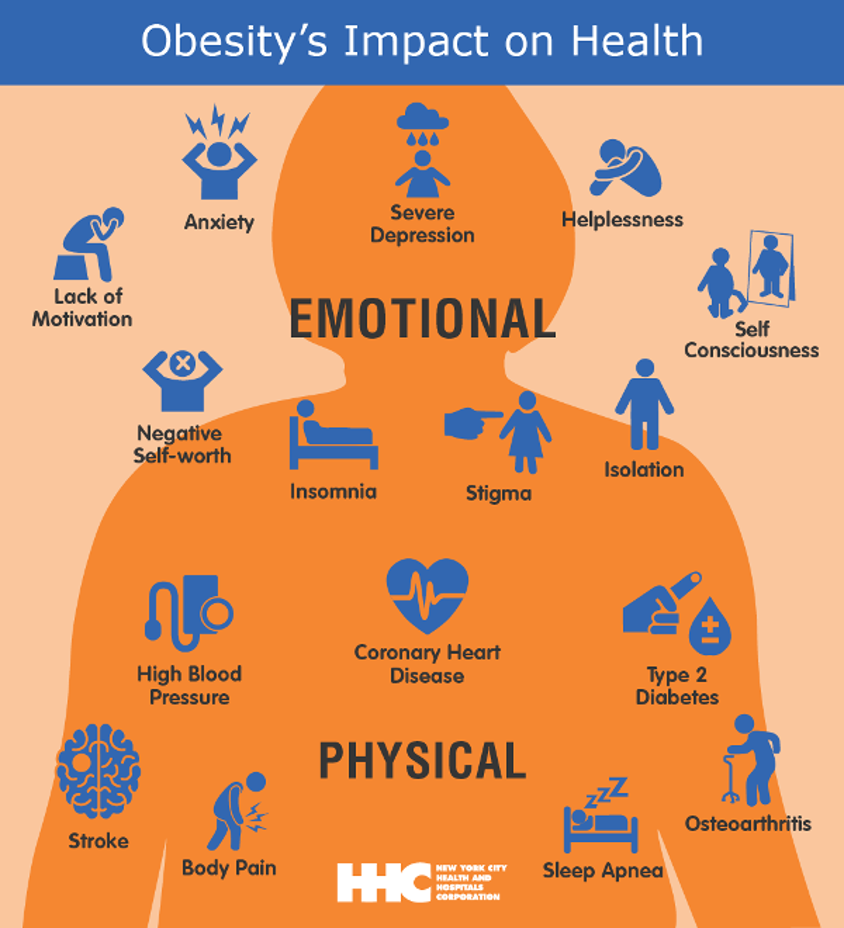
Image result for obesity and depressionWriting in the International Journal of Epidemiology, the analysts from the UK and Australia portray how they utilized information from the UK Biobank, an exploration try including 500,000 members matured somewhere in the range of 37 and 73 who were enlisted in 2006-10.

The scientists took a gander at 73 hereditary variations connected to a high BMI that are likewise connected with a higher danger of ailments such diabetes and coronary illness. They likewise took a gander at 14 hereditary variations connected to a high level of muscle versus fat however which were related with a lower danger of such medical issues. While the previous gathering could be connected to gloom through natural or mental systems, the last would just be required to have a mental impact.

The group at that point took a gander at members' doctor's facility information and answers from a large group of surveys – including self-reports of seeing a GP or specialist for nervousness or sadness. The group recognized around 49,000 members whom they were sure had discouragement.

Generally speaking, the group discovered that individuals with a higher BMI will probably be discouraged.

Thursday, April 12, 2018

Surprising Discovery: Sweet Tooth gene connected with less body fat

The Faculty of Health and Medical Sciences at the University of Copenhagen have discovered a "sweet tooth gene" that could be caused by genetic variation. Not only that however, people with this particular gene disposition leads to overall less body fat. This newfound information seems contradictory to what we as people know today, but this research not only surprises the majority of the public and baffles researchers themselves, but could lead to further research in developing drugs for obesity and diabetes in preventative measures or to lower risks. As what we hear most of our lives, from weight loss programs, advertisements, and our own health care providers, sugar is one of the leading causes to weight gain and developing stages of diabetes. However, in this new finding, the information gathered challenges that preconception. The "sweet tooth gene," scientifically called the FGF21 gene, is known to be the reason we have that craving for something sweet and sugary, and many times that sensation we feel in our mouths was always considered to be a bad thing. But now, researchers have found a specific gene for that sensation, and how it connects to overall body fat. Even though the difference between someone with the FGF21 gene and someone who does not possess it is very small regarding body fat, this is still a scientific breakthrough, because it supplies more information to the growing problem in society that is obesity and development of diabetes.
This research study does not only serve to make the public scratch their heads at this slightly interesting yet funny topic, but it brings more light on the big problem our country has in regards to obesity. This new information could bring the medical world closer to finding a way to create preventative drugs, and to help those with weight issues and health issues to better their own personal health and well-being. In my opinion, this is a great step in the right direction for the health and wellness world as well, as possible new drugs are developed to manipulate the FGF21 gene, the more the general public will feel more in health, and strive to continue improving their overall health and wellness. This is a fascinating article, and makes you realize just how many ways there are to fix a problem that is affecting society, and this is one that hits right at home, because everyone wants to feel happy with themselves personally, and feel the best they've ever been in their lives.

For more information on this article: https://www.sciencedaily.com/releases/2018/04/180411111013.htm
For more information on the Faculty of Health and Medical Sciences at the University of Copenhagen and their other research projects: http://healthsciences.ku.dk/

Tuesday, March 27, 2018

Obesity and Taste Buds

Researchers at Cornell University found that mice who were obese had 25% fewer taste buds than mice who were not obese. They fed one group of mice a high fat diet to achieve rapid weight gain while another group of mice were fed a healthy diet. Then the researchers counted the taste buds on a spot on the tongue that is known to have large clusters of taste buds for each group of mice. The lean mice were found to have more taste buds than their rotund counter parts. Taste buds are known to constantly regenerate by 50 to 100 cells. The average life span of a taste bud is 10 days and complete turn over of taste buds takes about 4 weeks. The researcher noticed in the obese mice that cell death sped up and regeneration of taste buds slowed down. The researchers turned to fatty foods to see if that was the culprit for the loss in taste buds. After controlling for mice who were genetically resistant to obesity the researchers came to the same conclusions.
Obesity is known to cause chronic inflammation in the body so researchers turned to a common inflammatory molecule called TNF-alpha. Mice specifically bred to not have TNF-alpha were fed a high fat diet, became obese but did not loose taste buds. When TNF-alpha was injected into the tongues of lean mice, the mice lost taste buds. From their data the researchers concluded that inflammation caused by obesity increases the loss of taste buds. They theorize that people who become obese continue to do so because they have to keep eating higher fat foods to be satisfied. This study is interesting because it shows how important of a role inflammation plays in obesity. Hopefully this research can used to help others achieve and maintain a healthy weight.
https://www.nytimes.com/aponline/2018/03/20/health/ap-us-med-obesity-taste.html
https://www.webmd.com/rheumatoid-arthritis/how-does-tnf-cause-inflammation#1

Tuesday, March 13, 2018

Gaining Weight and Don't Know Why? Might Be in Your Genes...


Many believe obesity is attributed to simply the overconsumption of unhealthy foods and lack of exercise. However, a recent study done by the Research Triangle, at Duke University, shows there may be a gene contributing to those who are obese, predetermining weight gain, in humans. The gene is called Ankyrin-B, and it is carried by millions of Americans.
            Originally discovered by Dr. Vann Bennet, more than thirty years ago, was recently reopened for research, by an MD/PhD student, Jane Healey. She created an experiment, using mice carrying variants of the Ankyrin-B gene. It was found that the mice carrying the gene stored their calories in their fat tissue, instead of using it, as a form of energy; using fat as a source of energy is what those not carrying the gene do. Even with regular exercise and a healthy diet, the mice’s gained weight, with their fat cells doubling in size.
            This experiment showed that the abnormal accumulation of fat in the mice’s tissues were a marker for type II diabetes. By eliminating the Ankyrin-B gene, glucose could normally flow into cells, without storing it in tissues. In the future, this study can be used to predetermine those at risk for type II Diabetes and those at risk to gain weight. Additionally, this study shows that some individuals are just prone to gaining weight. Some people may have a difficult time losing weight, because they may be carrying a gene they did not know they had.

Article:
Image: