Showing posts with label #Inheritance. Show all posts

Sunday, December 8, 2024

Frog Fungal Pandemic

     A killer sweeping across the world is destroying the lives of many frogs and its name: chytrid fungus Batrachochytrium dendrobatidis. Many scientists around the world are worried about the fungi potential to cause mass extinction of frog species all around the world which has presumably already taken 90 species from the world. The way the fungi attacks the frogs system is it targets the frogs skin and can choke the frogs supply of electrolytes unfortunately causing fatal heart attacks. Its spread around the world is theorized from the pet trade and conservation efforts have been only temporary solutions to only individual problems that haven't tackled the whole populations. Without a long term solution frogs may fall off the face of the earth causing a gigantic rift within ecosystems and the food chain. No frogs leads to higher populations of insects that are left unchecked without natural predators to manage their numbers.

   Areas across the Northern Californian wilderness have been heavily affected by the spread of the fungi that had pushed the Sierra-Nevada yellow-legged frogs to the brink of extinction. But recently they have bounced back in a way that from observations they have gained immunity in a way. Researchers at the University of California, Berkley, believes that the answers for a long term solution lie within its genetic code. Erica Bree Rosenblum, a molecular geneticist at the University of California, has recently found a pattern within the frogs who survived better in their ecosystems. She saw that frogs with certain genetic variations and mutations that were not present in those in areas untouched by the fungi epidemic. One of the genes that stood out was that of a blueprint for glycoproteins that bind to pathogens and present them to white blood cells. This discover goes to show that through natural processes species will thrive in unlikely circumstances and adapt to new situations without the help of human interactions and this case is a prime example of natural selection running its course.

Source:

https://www.sciencenews.org/article/frog-survive-fungal-pandemic-bd-fungus

https://www.scientificamerican.com/article/frog-saunas-could-protect-species-from-devastating-fungal-disease/


Thursday, November 23, 2023

Lung cancer cells' 'memories' suggest new strategy for improving treatment


A common type of cell lung cancer that is mutated by the KRAS gene is called lung adenocarcinoma and researchers at Memorial Sloan Kettering Cancer Center have found new strategies for improving the treatment for it. Tuomas Tammela who is a cancer scientist who led the study found alveolar type 1 (AT1) cells which have a "memory" of their beginning as healthy cells. Also known as "AT1-like" cells which are cancer cells that remain while the KRAS inhibitor treatment is going on. The cell's presence is a negative thing since it leads to treatment resistance and can aid in the cancer coming back. The second article also supports the findings from the Science Daily article. 

The results from this study hope to help scientists come up with new improved strategies for lung cancer treatments and find a solution against the resistance of KRAS inhibitors. I believe that if they do more research and spend more time understanding the movements and functions of the AT1 cells they will find more meaningful discoveries which would help with the treatments. The researchers also plan to identify which surface proteins are different from AT1 cells and then create a therapeutic treatment that will bind both of them and kill them. 

Links 

Lung cancer cells' 'memories' suggest new strategy for improving treatment | ScienceDaily

Lung cancer cells' 'memories' suggest new strategy for improving treatment (medicalxpress.com)

Saturday, August 5, 2023

Is Alzheimer's Genetic?

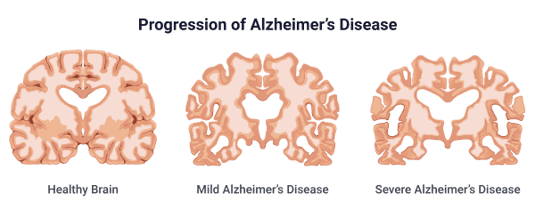
 Alzheimers is a disease that effects roughly 6 million Americans over the age of 65. Researchers have discovered that are genes (genes :APOE-2, APOE-3, and APOE-4) that are directly associated with the increased risk of developing Alzheimer's, as well as genes that directly cause the disease (genes: APP, PS1, and PS2). 40-65% of people diagnosed with the disease are found to have the APOE-4 gene, meaning that only 1% of people with Alzheimers actually inherit the disease. Alzheimer's happens because the brain is made of billions of neurons that communicate through charges from one neuron to another, Inside the neuron, there is a tau protein which helps provide nutrients to the cell. In Alzheimer's, it is believed that there is abnormal tau proteins causing an inability of the nutrients reaching the cell which then causes cell death. With the death of so many cells, the brain eventually shrinks. There is no known way to cure or prevent Alzheimer's, but it is believed that life style changes such as, quitting smoking, controlling blood pressure, maintaining a healthy weight, reducing alcohol consumption, etc. can reduce the risk of Azheimer's. 


Sunday, November 20, 2022

New research Conveys that Hibiscus Tea may serve as a Treatment for Alzheimer’s Disease


            Researchers from the Pohang University of Science and Technology found evidence linking the flavonoid found in hibiscus tea to activate an immune response against Alzheimer’s disease, which is often noted as a hereditary disease. The procedural methods of the experiment consisted of the observation of mice who were positive for Alzheimer's disease. The mice received an injection of the flavonoid and hibiscus tea and were observed to have improved cognitive behaviors upon injection. The research from the experiment concluded that the Hibiscus tea flavonoid, known as gossypetin, can stimulate microglia, the main cell responsible for cognitive function within the central nervous system. The stimulation of microglia was noted by researchers in the study to help alleviate build up and production of the amyloid beta protein noted to be the primary cause of the cognitive decline often associated with Alzheimer’s disease. The research findings proposed from the experiment can be very beneficial for future research directed towards Alzheimer’s disease, which continue to affect millions of people throughout the world.   


Sources Used:


Wednesday, December 11, 2019

Scientists Pinpoint a Gene that is Linked to Left-Handedness


Scientists have officially found four spots in our DNA that are associated in determine whether we write with our right and left hand. Of the four gene regions, three of them deal with proteins involved in brain development and structure. This was deduced from a study of genetics analysis across 400,00 people in the United Kingdom. Of these 400,000, 38,000 of these people were left handed. This study also found that these people that were left handed communicated between the language regions of their right and left brain more efficiently than those in the study that are right handed. This means that they have some sort of "advantage" in verbal tasks. Also, various studies of twins show that genes account for 25% of the variation in left or right handedness. Another study found that the link between left handedness and their respective genetic regions also deal with Parkinson's disease and and schizophrenia. Left handed individuals have a slightly reduced risk of Parkinson's disease, but also have a slightly increase risk for schizophrenia. I think this is a remarkable discovery and is a surprise to me, considering that I believed right or left handedness was simply based upon which hand your parents helped to teach you to write with, or whichever had you took and immediate preference to.

Original Article: https://www.usnews.com/news/health-news/articles/2019-09-05/scientists-id-genes-tied-to-left-handedness
Supporting Article: https://geneticliteracyproject.org/2016/08/29/left-handedness-genes-and-a-matter-of-chance/

Monday, November 18, 2019

Gene that results in uncombable hair?

so much hair


3 Genes are resulting in kids having "uncombable hair syndrome

The name "uncombable hair syndrome" is in fact its official name. This is when individuals (in most cases children) have frizzy, tangles hair and is pretty much nearly impossible to get a brush through, and it is extremely rare. Fortunately in most cases this occurs in children and is grown out of. Very few cases are permanent. What causes the hair to have so many tangles is the structure of the hair follicle and its shaft. In normal hair, the shaft appears to be completely smooth, whereas in someone with uncombable hair syndrome, the shaft appears to have rough ridged throughout. Scientists have concluded that the origin of this syndrome is genetic, due to the fact that there family members that express the same trait. This can be tracked using a pedigree. Though scientists knew that this was definitely a genetic factor, nobody could determine what gene was being mutated to cause this syndrome. That was until Regina Betz, a scientist who works for the Institute of Human Genetics at the University on Bonn in Germany decided to launch a study. She and her team of researchers gathered many affected kids from across Europe and sequenced their DNA along with individuals who are unaffected to compare the two. After analyzing them next to each other, the found that there are a total of three genes that contribute to having uncontrollable hair. Betz determined that a mutation on just one of these genes is enough to cause someones hair to become uncombable. Next Betz decided to conduct an experiment to determine why these mutations are resulting in a change in an individuals hair by growing cells with and without mutation. She found that the genes that contribute to someone possession strong hair tare the same genes that are creating a protein that forms messy clumps. To further the research, they tested the grown cells with the mutation on mice. The same result occurred in mice, mice with the mutated gene had hair that was not smooth, and normal mice possessed smooth hair.


Thursday, April 12, 2018

Surprising Discovery: Sweet Tooth gene connected with less body fat

The Faculty of Health and Medical Sciences at the University of Copenhagen have discovered a "sweet tooth gene" that could be caused by genetic variation. Not only that however, people with this particular gene disposition leads to overall less body fat. This newfound information seems contradictory to what we as people know today, but this research not only surprises the majority of the public and baffles researchers themselves, but could lead to further research in developing drugs for obesity and diabetes in preventative measures or to lower risks. As what we hear most of our lives, from weight loss programs, advertisements, and our own health care providers, sugar is one of the leading causes to weight gain and developing stages of diabetes. However, in this new finding, the information gathered challenges that preconception. The "sweet tooth gene," scientifically called the FGF21 gene, is known to be the reason we have that craving for something sweet and sugary, and many times that sensation we feel in our mouths was always considered to be a bad thing. But now, researchers have found a specific gene for that sensation, and how it connects to overall body fat. Even though the difference between someone with the FGF21 gene and someone who does not possess it is very small regarding body fat, this is still a scientific breakthrough, because it supplies more information to the growing problem in society that is obesity and development of diabetes.
This research study does not only serve to make the public scratch their heads at this slightly interesting yet funny topic, but it brings more light on the big problem our country has in regards to obesity. This new information could bring the medical world closer to finding a way to create preventative drugs, and to help those with weight issues and health issues to better their own personal health and well-being. In my opinion, this is a great step in the right direction for the health and wellness world as well, as possible new drugs are developed to manipulate the FGF21 gene, the more the general public will feel more in health, and strive to continue improving their overall health and wellness. This is a fascinating article, and makes you realize just how many ways there are to fix a problem that is affecting society, and this is one that hits right at home, because everyone wants to feel happy with themselves personally, and feel the best they've ever been in their lives.

For more information on this article: https://www.sciencedaily.com/releases/2018/04/180411111013.htm
For more information on the Faculty of Health and Medical Sciences at the University of Copenhagen and their other research projects: http://healthsciences.ku.dk/

Sunday, October 29, 2017

New study with gene therapy suggests that it can stop ALD with no side effects


Adrenoleukodystrophy (ALD) is a rare genetic disorder that causes neurons in the brain to die, resulting in horrible conditions such as complete lose of mobility and the ability to talk. ALD is an X-linked disorder since it comes from the X chromosome. That also makes this disorder predominately occur in males since there is both an X and Y chromosome in males. If the X chromosome has the mutation, then they will have the disorder. Females can be affected, but it is much more rare because they have two X chromosomes. So if one chromosome has the mutation for ALD and the other does not, then they are able to function normally. Instead, they will just be carriers of the disorder.

Though there is no current cure for ALD, there is some hope that one might be on the horizon. The only treatment as of today is a bone marrow transplant or an umbilical cord blood transplant (blood saved from the umbilical cord after birth). According the article, there has been a new study involving gene therapy, that has been so successful that there have been no side effects with the treatment. Gene therapy is an experimental form of treatment that uses genes in order to cure diseases and disorders by inserting genes into cells of the infected individual. However, this treatment can only be done when there are only signs of the disorder after a brain scan. Despite all of this, the most fascinating part of this entire study was that the treatment is to insert a disabled form of HIV into the cells of the infected individual. Somehow, the disabled HIV was able to stop the brain degeneration.

This is a huge break though for gene therapy, as it is expanding the different diseases and disorders that are able to be cured with this treatment. It is also a breakthrough for scientists researching for other diseases, since this gene therapy can become a possible form of treatment. I personally find for this to be very exciting, as now we can cure diseases and disorders a lot more efficiently with more research into gene therapy.