Showing posts with label #adaptation. Show all posts

Tuesday, April 28, 2026

A Mutation That Makes Horses Athletic

     Horses are known to be very fast animals. Johns Hopkins Medicine researched and discovered how horses are so quick. Horses override a genetic "stop" sign which allows them to generate high energy to provide them with oxygen during exercise.  This method has only ever been seen before in viruses.

    The researchers discovered a mutation in the KEAP1 gene in horses, donkeys, and zebras. This mutation introduced a stop codon. However, if the codon appears early in a gene, the protein produced may not function correctly. Horses are able to recode the stop codon and allow their KEAP1 protein to be fully functional.

    Horses have an adaptation in their KEAP1 gene that makes the protein more reactive to oxygen which makes their NRF2 protein more active. The researchers concluded that this adaptation and mutation are the reason horses are able to fuel their body with enough oxygen when performing intense exercise.

Figure 1. Horse Running 

    This research does not only prove why horses are able to run so fast for so long, but it allows scientists to better understand chronic diseases, age related diseases, and exercise physiology.  Premature stop codons, like the stop codons seen in horses, account for 11% of inherited diseases such as cystic fibrosis and muscular dystrophy.  

    Overall, this study provided insight on the genetic make up of horses and how they are athletic but it also helps the future of inherited and age related diseases. I learned a lot about how horses function when exercising and how stop codons and be bypassed because of mutations from this article. I did not expect that this information on horses can be helpful in understanding chronic diseases. Hopefully this research allows scientists and doctors to better know their patients functions of genes to help treat their diseases. 

Wednesday, December 11, 2024

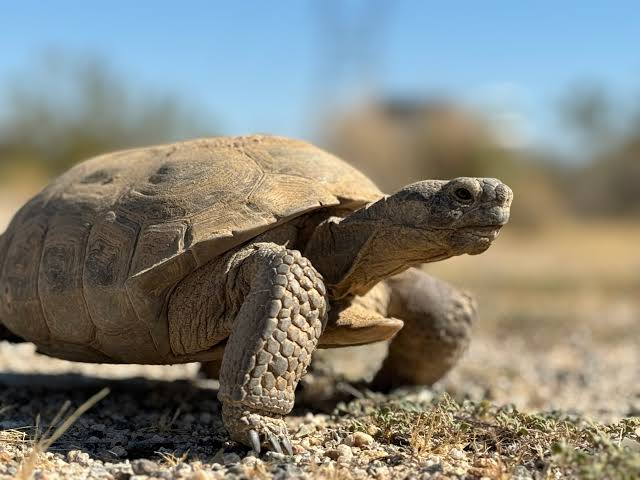
Discoveries Between Desert Relatives Gives Insight to Unique Trait Differences

The study of specific genetic traits and their utility in adaptation to specific climates has been a consistently evolving field of study. Recently, a genetic difference between the Sonoran and Mojave tortoises has been identified which might indicate the adaptational differences necessitated by each climate and how the two organisms interact distinctly with the weather differences and similarities. While the Mojave is exceedingly dry and arid, the Sonoran desert receives winter rains and summer monsoons that make temperature regulation strategies uniquely different depending on the species and their location, even when each desert is in such close proximity. By identifying these genetic differences, researching them allows us to further understand organisms commonly adapting genetically expressed strategies for survival in other climates. 


The identification of specific genes and their roles in trait expression has continued to become a more increasingly relevant topic. Genetic modification of both food and organisms opens massive new windows into dozens of genetic utilities, currently most commonly seen methods being reducing climate change and improving sustainability. By furthering the study of organisms and their unique genetic traits and expression, we can better understand how to “improve” other organisms as a whole. 


Links: 

Sunday, December 8, 2024

Frog Fungal Pandemic

     A killer sweeping across the world is destroying the lives of many frogs and its name: chytrid fungus Batrachochytrium dendrobatidis. Many scientists around the world are worried about the fungi potential to cause mass extinction of frog species all around the world which has presumably already taken 90 species from the world. The way the fungi attacks the frogs system is it targets the frogs skin and can choke the frogs supply of electrolytes unfortunately causing fatal heart attacks. Its spread around the world is theorized from the pet trade and conservation efforts have been only temporary solutions to only individual problems that haven't tackled the whole populations. Without a long term solution frogs may fall off the face of the earth causing a gigantic rift within ecosystems and the food chain. No frogs leads to higher populations of insects that are left unchecked without natural predators to manage their numbers.

   Areas across the Northern Californian wilderness have been heavily affected by the spread of the fungi that had pushed the Sierra-Nevada yellow-legged frogs to the brink of extinction. But recently they have bounced back in a way that from observations they have gained immunity in a way. Researchers at the University of California, Berkley, believes that the answers for a long term solution lie within its genetic code. Erica Bree Rosenblum, a molecular geneticist at the University of California, has recently found a pattern within the frogs who survived better in their ecosystems. She saw that frogs with certain genetic variations and mutations that were not present in those in areas untouched by the fungi epidemic. One of the genes that stood out was that of a blueprint for glycoproteins that bind to pathogens and present them to white blood cells. This discover goes to show that through natural processes species will thrive in unlikely circumstances and adapt to new situations without the help of human interactions and this case is a prime example of natural selection running its course.

Source:

https://www.sciencenews.org/article/frog-survive-fungal-pandemic-bd-fungus

https://www.scientificamerican.com/article/frog-saunas-could-protect-species-from-devastating-fungal-disease/

Tuesday, April 2, 2024

Are Dogs Becoming Herbivores Through Their Genes?

Source https://www.petage.com/studies-show-genetics-evolution-have-enabled-dogs-to-thrive-on-plant-based-diets/

Additional Resource https://vcahospitals.com/know-your-pet/nutrition-general-feeding-guidelines-for-dogs

Although it is commonly known that dogs have an omnivorous diet as a result of their common ancestor, the wolf, being a carnivore, and being able process plants and other meats now. The article, “Studies Show Genetics, Evolution have Enabled Dogs to Thrive on Plant-Based Diets” created by Pet Age Staff, stated that recent studies revealed that dogs can transition their diet to thrive on a properly formulated herbivorous diet. 

Experts have identified that domesticated dogs have developed 10 genes that have allowed them to process starch- rich plant foods and thrive on herbivorous diets. They have completed a study and found that those dogs maintained great health marks after eating a plant based diet for one year. Also, as stated from the article, “Properly formulated plant-based foods have many health benefits for dogs. Most plant proteins are hypoallergenic, and new studies show they may also improve gut health and digestion, increase longevity, and improve overall health and well-being” (Pet Age Staff 2024). This study also revealed a dog's plate based diet can improve the environment as well as animal agriculture contributes significantly to greenhouse emissions and water and air pollutants. 

Although this is an interesting article, I am wondering how accurate this information is. Being a dog owner myself, I can’t imagine feeding my dog an entirely plant based diet because I’m afraid she won’t get the nutrients she needs. I am interested to hear more about this topic and  if more studies will be performed to determine the long term health effects for dogs being on this diet. 


Tuesday, November 21, 2023

Animals Aren't Evolving Fast Enough for Climate Change

Animals on Earth are constantly evolving, but many animals are struggling to keep up with the drastic changes in the climate. Although the animals are evolving to have genes that are better suited for the new environments, many animals are not able to reproduce fast enough. From a study of 19 different bird and mammal species all have one factor that determines how well the future generations will thrive. Some animals take years to reach maturity and produce offspring, and by that time the genes that helped it survive will not be as beneficial to its offspring. 

In another research, it was tested how well the fast life cycle animals could adapt to increasing temperatures. Both small fish and copepods were able to thrive and adapt for the first few temperature increases. After a certain temperature, genetic mutations in the populations occurred at a very slow rate compared to how fast the temperatures were increasing. The population could not adapt to the environment due to not having enough genetic mutations to keep up with the temperature. 

Although some species are able to keep up with the climate change, the species may still be endangered. When a genetic mutation occurs, not every individual in the next generation will have it. When the mutation is as important as surviving climate change, the individuals without the trait will not survive to produce viable offspring. This reduces the number in the population and inbreeding will occur. Even a reverse mutation may occur, where the trait for better survivability in climate change would be reverted back to what it was before. 

The rate that mutations must occur for the species to adapt is extremely high. I believe that even though many species are currently adapting to climate change, they cannot continue at such a high rate. This could put many animal species to become endangered or extinct. With the number in populations decreasing, it encourages inbreeding. Inbreeding would lead to less genetic diversity in the population and decrease the chances of the population being able to continue adapting. 

Sources:

The Conversation

Wired

Friday, November 11, 2022

Sex Switching in the Animal World

    In the animal kingdom, species are frequently adapting as their environment changes to ensure their survival. There are many techniques that they can use to enhance their survival, like camouflage, migration, and mimicry. An equally important and lesser-known skill is the ability to switch their sex. There are some animals that have both male and female reproductive organs and can produce both gametes, while others can switch between the sexes depending on their environment. Nevertheless, this shows that genetics is not the only contributor that determines sex. This article takes a look at the phenomenon of sex switching of some species in different situations. 

    In some species, sex is determined not during, but after fertilization. Turtles in particular undergo temperature-dependent sex determination. This means that the temperature at which the developing eggs are kept at will be a determining factor of sex. Eggs incubated in cooler temperatures will be male while warmer temperatures will be female. Increase in temperatures due to climate change can cause an imbalance in turtle populations with significant increase in female hatchlings. Clownfish are born as males but carry the reproductive organs of both males and females (they are hermaphrodites). They also have the ability to switch from a male to a female permanently, which is known as protandrous. In the event that the dominant female dies, a breeding male will change its sex to become a female. When this occurs, the male loses its testes and forms ovaries.  

    Factors such as temperature and environmental pressures have been observed to influence the sex of organisms as seen in the turtles and clownfish populations aforementioned. 

Monday, November 26, 2018

Tropical Dish and their adaption to cold temperatures


According to scientist, they have discovered tropical fish can control their gut microbes allowing them to to have higher survival rates in extreme temperatures both cold and hot. Host microbe interactions can play an important role in the fitness of the host, demonstrating the concept of hologenome - in which an organism is not based as an individual but as a community. When analyzing the results of the tropical fish study, scientist noticed that the fish tend to select microbes that were more tolerant to the cold themselves which I found very interesting and also demonstrative of the idea of hologenome.


Image result for gut microbiome


References:

https://www.sciencedaily.com/releases/2018/11/181120125843.htm

https://www.ncbi.nlm.nih.gov/pmc/articles/PMC4290017/

Monday, November 13, 2017

How We Found Out Human Immune Genes Are Almost Identical to Chimpanzees


In the article Fish Provide Insight into the Evolution of the Immune System, it explains the new findings that enhance the idea of chimpanzees having the almost same exact immune genes as humans do.  What has been done at the University of East Anglia in UK and Dalhousie University in Canada, is research about how immune systems can evolve resistance to parasitic threats.  These Universities teamed up to use guppy fish and study their Major Histocompatibility Complex (MHC genes) to see how they adapt and survive. MHC genes and their proteins are found in all higher vertebrates, so comparing the fish to humans is very beneficial. The guppies fine-tune these MHC genes in every location that is necessary for them to stay alive against extreme environmental changes.  This study had the ability of enhancing the way that scientists understand how related species do the same thing as the guppies while sharing similar functions.  These MHC genes are an important line of defense in vertebrates, especially humans, so the ability to have immune genes that are highly diverse is essential so the vertebrates can protect themselves from parasitic infections.  I believe that this study expands scientists steps forward in understanding evolutionary genetics of the immune system.  Especially that of humans and chimpanzees since so many people love to compare the two species.

https://www.sciencedaily.com/releases/2017/11/171106100142.htm
https://www.britannica.com/science/major-histocompatibility-complex