Carbon Dioxide is a major greenhouse gas that contributes to trapping heat leading to climate changes. The amount of carbon in the atmosphere has been increasing due to human activity such as the of burning fossil fuels. With the increased carbon in the atmosphere comes with effects like increasing the pH of oceans and increasing temperatures around the world. In order to combat these effects scientists have been working on projects to remove carbon from the atmosphere.
There are a couple of ways to remove carbon from the atmosphere, the easiest and cheapest option is planting more trees. Trees and plants naturally pull carbon out of the atmosphere and is used in photosynthesis. Another newer approach is increase the ocean's pH by pouring sodium hydroxide in it. This is part of the LOC-NESS project, as teams of scientists have been pouring sodium hydroxide in the Atlantic ocean off the coast of Massachusetts. The idea is that with the increased pH level the ocean will absorb more carbon from the atmosphere. Hopefully these tactics will allow for the control of greenhouse gases and maintain the Earth's climate.Friday, April 25, 2025
Thursday, November 21, 2024
Increasing the Efficiency of Photosynthesis
There are two types of photosynthesis
that occur within plants- C3 and C4 photosynthesis. C3 photosynthesis is
believed to have evolved first, and this photosynthesis occurs in mesophyll
cells. C4 photosynthesis is believed to have evolved after C3 and fixed some of
the inefficiencies of C3 photosynthesis by using bundle sheath cells along with
mesophyll cells. This allows plants with C4 photosynthesis to conserve more
energy and water. C4 photosynthesis is 50% more efficient than C3
photosynthesis, but 95% of plants use C3 photosynthesis. New research has
discovered that C3 and C4 plants have the genes and transcription factors required to perform C4 photosynthesis. Gene expression in rice (a C3 plant) and
sorghum (a C4 plant) was measured and it was found that the genes to make
bundle sheath cells in both species are controlled by a transcription factor
family called DOFs. The DOFs were binding to the same regulatory element in
both species, and this regulatory element in C4 plants was associated with both
bundle sheath identity genes and was turning on the photosynthesis genes. This
suggests that C4 plants at some point added the regulatory elements for bundle
sheath genes onto photosynthesis genes, allowing both to be turned on at the
same time by the DOFs and explaining how bundle sheath cells in C4 plants
gained the ability to photosynthesize.
In my opinion, this is an extremely
important discovery. Since we now know that C3 plants have both the genes and
the transcription factors required to perform C4 photosynthesis, it may be
possible to genetically engineer C3 plants to express C4 photosynthesis. Plants
could be engineered to better survive increasing temperatures and climate
change. The ability to do this would be an extreme benefit to many people, as
this could increase the production of so many major sources of food, including
rice. This could potentially help reduce hunger worldwide. I think that this is
something that needs more attention and focus upon because this is something
that could have major benefits for so many people in the future if successful.
Wednesday, November 20, 2024
2 Million-Year-Old DNA Reveals Secrets of an Ancient Arctic Ecosystem
Scientists have made an incredible discovery: the oldest DNA ever found, dating back more than 2 million years, has been unearthed in Greenland. This ancient DNA, preserved in sediment from the Kap København Formation, offers a fascinating glimpse into an Arctic ecosystem that once included reindeer, hares, mastodons, and plants like birch and poplar trees. This finding provides a unique snapshot of how life thrived in the challenging environments of the Pleistocene epoch.
To piece together this ancient world, researchers used advanced techniques to extract and study environmental DNA (eDNA) from soil samples. Instead of identifying individual species, they reconstructed entire ecosystems, showing how plants and animals coexisted. This research not only helps us understand the distant past but also provides insights into how life adapts to major climate changes, a topic that feels more important than ever.
A related study in Nature shows the broader potential of eDNA, showing how it can unlock secrets from Earth’s ancient history and even predict future biodiversity patterns. Scientists are now exploring other locations, like polar ice cores and deep-sea sediments, to uncover more hidden stories about the planet’s past.
I think this discovery is a game changer for understanding our planet’s history. It’s mind blowing that scientists can reconstruct ecosystems from millions of years ago using tiny fragments of DNA. What really stands out to me is how this research connects the past to the future. By learning how ancient life adapted to extreme climate shifts, we can gain insights into how today’s ecosystems might respond to climate change. This isn’t just about studying history, it’s about using those lessons to protect our future.
SITES USED
https://www.the-scientist.com/scientists-unearth-the-oldest-dna-ever-found-70820
https://www.nature.com/articles/d41586-022-04376-y?utm_
Tuesday, November 21, 2023
Animals Aren't Evolving Fast Enough for Climate Change
Animals on Earth are constantly evolving, but many animals are struggling to keep up with the drastic changes in the climate. Although the animals are evolving to have genes that are better suited for the new environments, many animals are not able to reproduce fast enough. From a study of 19 different bird and mammal species all have one factor that determines how well the future generations will thrive. Some animals take years to reach maturity and produce offspring, and by that time the genes that helped it survive will not be as beneficial to its offspring.
In another research, it was tested how well the fast life cycle animals could adapt to increasing temperatures. Both small fish and copepods were able to thrive and adapt for the first few temperature increases. After a certain temperature, genetic mutations in the populations occurred at a very slow rate compared to how fast the temperatures were increasing. The population could not adapt to the environment due to not having enough genetic mutations to keep up with the temperature.
Although some species are able to keep up with the climate change, the species may still be endangered. When a genetic mutation occurs, not every individual in the next generation will have it. When the mutation is as important as surviving climate change, the individuals without the trait will not survive to produce viable offspring. This reduces the number in the population and inbreeding will occur. Even a reverse mutation may occur, where the trait for better survivability in climate change would be reverted back to what it was before.
The rate that mutations must occur for the species to adapt is extremely high. I believe that even though many species are currently adapting to climate change, they cannot continue at such a high rate. This could put many animal species to become endangered or extinct. With the number in populations decreasing, it encourages inbreeding. Inbreeding would lead to less genetic diversity in the population and decrease the chances of the population being able to continue adapting.
Sources:
Sunday, July 9, 2023
Sea Turtle genes could help them adapt to a changing environment.
The genetic foundations of sea turtles that enable them to thrive in oceans are something that scientists have yet to figure out. A team of researchers at the University of Massachusetts Amherst revealed surprises in the genetic map that might show us the key to how turtles will survive in our rapidly changing ocean—and why some species may not.
The researchers used a new technique, long-read sequencing, which made it possible to sequence genomes accurately from any living species. The sea turtle genomes were sequenced, and the results were surprising. Green and Leatherback turtles have incredibly similar genomes and share a common ancestor from about 60 million years ago. The differences in their genomes were found in the micro-chromosomes and affect immunity. Green turtles evolved more genes, which were dedicated to immunity. This development is key for the longevity of the species, as they are better prepared for the changes in their oceans. The Leatherback turtles also show lower genetic diversity, which is not favorable for evolution, because, despite their resilience thus far, they may not be able to evolve with the harsh environments caused by human activity. Conservation biologists, with this knowledge, are able to make more informed decisions based on the animals at higher risk of extinction genetically.Friday, April 29, 2022
The Impacts Of Adaptive Capacity On Transcriptional Plasticity
With climate change on the horizon, it is important to understand the consequences this will have on our oceans. The marine copepod, Acartia tonsa, was selected as a model organism in a study conducted by Brennen et al. This study aimed to clarify the relationship between adaptation and transcriptional plasticity. The study compared species found in their home environment with that those under experimental future projections. Different groups were kept in either one condition or the other, while others started in one and were kept for 20 generations before transitioning to the alternative. The results revealed that A total of 1876 genes were differentially expressed between control and experimentally evolved replicate lines. These genes are primarily related to stress response, gene expression regulation, actin regulation, developmental processes, and energy production.
It was revealed that there were faster losses of plasticity during rapid adaptation than theory would predict. The results showed that although plasticity did not impede adaptation, adaptation eroded plasticity. Losing plasticity does not stop organisms from somewhat reverting back to their ancestral conditions; however, it does result in a trade-off of losing adaptive genetic variation.
The use of experimental evolution is very important to understanding adaptive mechanisms. Since these are going to be the conditions future organisms will exist in, Understanding future mechanisms is just as important as understanding the current mechanisms in order to create comprehensive conservation strategies. These strategies require foresight to ensure their efficacy for the ecosystems of the future. It also revealed possible implications should we cut out emissions and revert back to cooler and less acidic conditions, which can further aid the formulation of such strategies.
Wednesday, April 13, 2022
Baby whale genetic testing may help save species, study says
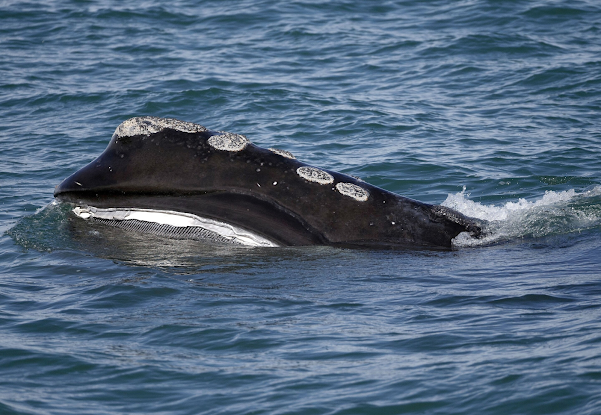
In an article posted by ABC News, a team of scientists led by researchers at the New England Aquarium in Boston studied critically endangered North Atlantic right whales. The scientists analyzed decades of data about the whales and found that they had more success tracking the animals’ survival, growth rates, and life histories when they had access to genetic samples. The results of this study were published in Mammalian Biology.
The scientists focused on 13 right whale calves identified via genetics and were able to determine the ages of 12 of the whales and match 11 with their mothers. They even found that four believed to be dead were actually still alive. Right whales have been historically tracked using photo ID. According to Philip Hamilton, the senior scientist at the aquarium, the photographic archive is still important but it is even more helpful when used alongside genetic data.
Right whales were once abundant off the East Coast but their populations were decimated during the commercial whaling era. The whales are now vulnerable to ship strikes and entanglement in fishing gear. Climate change is also a new danger that has been forcing whales to flee coastal areas in search of food, which puts them at risk to the other dangers previously mentioned.
A greater reliance on genetic data can help fill in the gaps about these whales. Relying on genetics in addition to photo or acoustic data adds another layer of complexity that can help scientists further understand this very endangered and complex species. The researchers learned that it’s possible for mother right whales to be seen without their calves in feeding grounds for short periods. Previously, calves were assumed to be dead if their mothers were alone on feeding grounds during the birth year, according to the study.
Samples used in the biopsy were sent to Saint Mary’s University in Halifax, Nova Scotia, for genetic analysis. According to Timothy Fraiser, a biology professor at the university who was involved in the research, integrating the genetic samples with field research yields data that is more comprehensive than the sum of its parts. This leads to a much richer understanding of right whales than either approach could provide on its own.
Related article: https://www.nature.org/en-us/newsroom/florida-north-atlantic-right-whales-fight-for-survival/
Monday, April 11, 2022
Pavona decussata transcriptome analysis provides insight into the mechanisms behind coral bleaching recovery
Zhang et al. analyzed the scleractinian coral Pavona decussata, in conjunction with its obligate symbionts, at four stages during a natural bleaching event. The four conditions were healthy, healthy-looking, bleached, and recovered coral fragments. Each fragment was used for RNA sequencing as well as zooxanthellae density and chlorophyll a content analysis. The overall goal was to examine the transcriptomic response at different stages to better understand the mechanism behind recovery.
It was revealed that symbionts were under oxidative stress after a bleaching event. This was the result of an imbalance between photosystem I and photosystem II. This stress caused harm to the coral through stress and metabolic decline. The symbiont expulsion may also be attributed to induced apoptosis as an immune response from the host coral. Comparison between the recovered and bleached tissues revealed recovery of the immune system, activation of cell proliferation, and reparation of damaged DNA as the most significant changes during the recovery; however, many more changes were identified.
Although Pavona decussata was able to recover on a transcriptomic level during this study, I still fear that as the duration between bleaching events becomes more frequent, the time it takes to progress between recovery stages will lengthen. If the coral cannot reach a recovered state fast enough due to constant stress, the coral will not be able to recover.
At this point, since the rate of warming, which causes bleaching events, has increased so rapidly, the use of biotechnology is essential. Understanding which genes are expressed during different stages of recovery can help with conservation efforts. For instance, knowledge of the mechanism of recovery can lead to more precise gene manipulation to help increase resistance to oxidative stress or reduce apoptosis. At this point, since the rate of warming, which causes bleaching events, has increased so rapidly, the use of biotechnology is unavoidable.
Tuesday, February 8, 2022
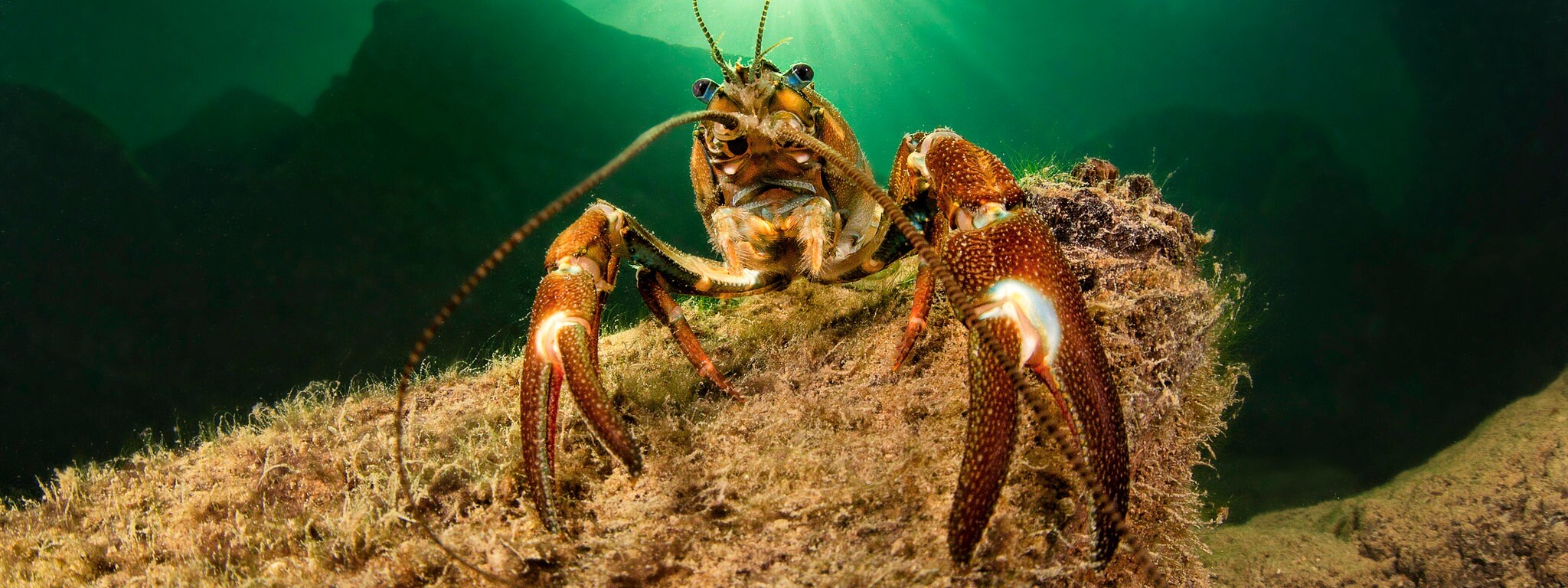
Assessment of Genetic Variation and Species Distribution Modeling Used to Formulate a Conservation Plan for the Keystone Species Astacus astacus
Anthropogenic impacts have decreased the genetic diversity of Astacus astacus, the noble crayfish. It is expected that only 13 percent of the crayfish will survive, excluding the most genetically diverse populations.
Mitochondrial and nuclear DNA variations among crayfish were assessed to determine genetic diversity across multiple populations. The mitochondrial DNA revealed that six genetic lineages exist. Using the nuclear DNA, 175 alleles were observed across the 15 microsatellite loci, with an average of 12 alleles per locus.
Species distribution modeling showed the current and future susceptibility of habitats to climate change. The information collected was then used to predict invasive species that cause disease in the indigenous populations' future migration patterns. The results also showed that many crayfish populations were isolated from gene flow.
The conservation plan recommended assisted migration and repopulation to protect this keystone species. By creating a population with multiple genetic lineages and ensuring that the new locations are less susceptible to invasive species, assisted migration and repopulation have a higher chance of success.
Genetic diversity is essential for increasing the adaptive capability of a population. A disease that affects one individual is likely to have the same effect on individuals that share similar genetic information. As such, crayfish should be prioritized for protection since the indigenous crayfish population is especially vulnerable due to its lack of genetic diversity.
There is still diversity across the different populations which allows for recovery; however, introducing species from one population to another should be done with caution. Previous studies have shown that genetic erosion can occur when introducing domesticated organisms to wild populations. Although, in this case, it would be the introduction of one wild population to another, the same principle still applies since genetic variation exists. It is vital to consider every outcome and test potential impacts before implementing conservation efforts since it is harder to reverse actions than to take them in the first place.
Thursday, January 27, 2022
Genetic Differences In Dinoflagellates Could Help Coral-Symbiont Pairs Become More Resilient Against Climate Change
As climate change increases stress on coral and their symbionts, extinction is on the horizon. Reefs are given shorter and shorter intervals to recover naturally which can be seen most easily as the effect of coral bleaching. The coral bleaching effect is a result of symbiotic dinoflagellate expulsion from the main coral body. The dinoflagellates provide essential nutrient processing to coral bodies, such as photosynthesis, so their expulsion causes the coral to die.
An article about how Symbiodiniaceae, a genus of dinoflagellate, meets the challenges of life during coral bleaching explains the specific impacts climate change has on the Symbiodinium genome. Symbiodiniaceae first alters at transcriptomic levels potentially mediated by second messenger systems, followed by proteomics and metabolic reprogramming. By pinpointing specific changes and differences among the 7 Symbiodinium clades, identification of stress-specific or stress-independent genes could be utilized for trait improvement using genetic engineering.
Hope is found in research that is being conducted on the implementation of Type I RuBisCO as opposed to the Type II RuBisCO currently found in Symbiodiniaceae. The Type I RuBisCO found in cyanobacterium provides a more heat-resistant form which will help maintain the rate of the Calvin-Benson Cycle during photosynthesis. Increasing heat resistance will help maintain the integrity of the symbiotic relationship.
Although genetic engineering is frightening in the sense that it can induce a monoculture, at the rate the planet is heating up, coral reefs are already vulnerable. It is paramount for each variety of genetically engineered coral to maintain a level of genetic diversity to lower its vulnerability to environmental factors not mitigated by targeted genetic alterations. I do not believe that any one genetically modified coral-symbiont combination should be the stopping point. It is only a good first step in preserving biodiversity, so one of the most genetically diverse ecosystems does not cease to exist in the coming years.
What to read next: Thermal tolerance of the hermatypic coral Acropora tenuis elucidated by RGB analysis and expression of heat shock proteins in coral and symbiotic dinoflagellates
Wednesday, November 24, 2021
Scientists are finding new ways to make corals more tolerant of heat

Coral bleaching is becoming a big issue in our world's oceans. Coral bleaching is caused by an increase in water temperature, and as the average temperature of the Earth's atmosphere gradually increases, so does the ocean's. Coral reefs are home to more than 25% of all marine life, and are very diverse ecosystems. Without coral reefs, many marine species would go extinct.
Scientists have found ways to combat this, though. Scientists have discovered a gene for heat tolerance in corals. The researchers used CRISPR genome editing as a way to better understand the gene that helps corals survive higher temperatures. During another research project, researchers found a way to develop heat resistant corals with their symbiotic micro algae. The micro algae that lives within the coral's tissue provides nutrients to the corals via photosynthesis. The micro algae is a key component to bleaching events, because it is the first to die off. The researchers exposed the algae to progressively higher temperatures over several years, and then reintroduced them to coral larvae. By manipulating the micro algae to be more tolerant of heat, it made them better at photosynthesizing, and improved the heat response of the corals.
Wednesday, March 17, 2021
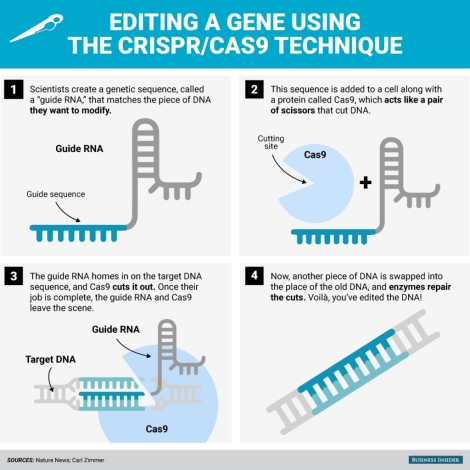
CRISPR may Solve Certain Climate Change Problems
Tuesday, February 9, 2021
Climate Change Drove Woolly Rhinoceros to Extinction: DNA Study
Researchers have analyzed a complete nuclear genome and mitochondrial genomes from Coelodonta antiquitatis otherwise known as the extinct woolly rhinoceros. Their findings concluded that the population of the woolly rhinoceros remained stable until temperatures began to rise too high for the cold adapted species. This species first appeared 350,000 years ago and became extinct 14,000 years ago. Initially it was thought that humans were the cause of the woolly rhinoceros disappearance because data showed that humans first appeared in Siberia right around the time the population went extinct. Recently several discoveries showed much older human occupation sites. So the decline of woolly rhinoceros doesn't coincide with humans appearance. Professor Dalen and his colleagues wanted to investigate the woolly rhinoceros demographic history so they studied DNA from 14 individuals.
Sunday, November 29, 2020
Genetically modified wheat and barley to help in the future
This article discusses the new variations seen within wheat and barley genomes respectively, that will allow for the future of agriculture to thrive based on the ability to modify these organisms. The various research groups conducting the projects discuss the difficulty behind these specific genomes is due to their complexity unlike corn or rice, along with the fact that there are various genomic structures that are associated with various traits. The various groups working on the project has allowed for the discovery of hidden genetic variation within these crops, and the research will allow for the production of these next generation crops. The traits discussed allow for various acclimations the plants would not normally have, such as cold resistance, yield, and drought tolerance, and with these additions now these crops may have the ability to keep up with other major crops in terms of production. The reason this is interesting is because while maize is known to already be modified in other various ways to support life in different environments, I did not know that these specific grains were relatively more difficult. It is very interesting to see that while something may appear simple in nature by proxy, it is not and I think the information with regards to these grains specifically will be incredibly helpful for the future of food. With the ability to produce in changing climates, production may not decrease with the changing climate and the article provides a sense of hope in that regard for the future to come.
https://www.sciencedaily.com/releases/2020/11/201125114358.htm
https://www.nature.com/articles/s41586-020-2961-x
https://www.nature.com/articles/s41586-020-2947-8
Wednesday, July 17, 2019
Gene Identified That Will Help Develop Plants to Fight Climate Change
Wednesday, March 27, 2019
rebuilding coral reefs
Saturday, January 26, 2019
Decades Old Mystery Solved
Thursday, November 1, 2018
Using CRISPR to Save Coral Reefs
Saturday, July 21, 2018
White Clover Can Be an Annoying Weed. It May Also Hold Secrets to Urban Evolution.
What may seem like an ordinary garden weed is actually one of the most quickly evolving species of flora that will tell scientists a lot about the evolutionary processes in environments that are rapidly changing. In this unplanned experiment that is happening throughout the world, the white clover has learned how to survive in the toughest of climates at a fast rate. Although some may believe these plants to be just a stubborn weed, others see these plants as a refuge for bee recovery as well as Nitrogen nourishment within the soil. In a study under the Global Urban Evolution Project or GLUE, the white clover has been examined in several cities including Ontario, Canada all the way to London. Researcher Marc Johnson believes that cities work great to test cases for evolution. The white clover makes for a good test species because it is seen to flourish in even the toughest of climates such as Norway to southern India. Tuesday, April 25, 2017
The Genes That Affect Spawning Season In Herring
Researchers from Uppsala University, Stockholm University and Dalhousie University have been conducting a study comparing spring and autumn spawning in Atlantic herring from the east and west side of the North Atlantic to explore genetic factors affecting which time of year the herrings spawn. It is of course crucial for all animals to reproduce at the time of year that provides their offspring with the most resources and best chances for survival. Their study compares 25 herring populations to look at the different genes associated with the timing of their reproduction. They found that the gene variants associated with autumn or spring spawning were shared between populations on both sides of the Atlantic. Since both sides were so genetically similar they presume there is great gene flow between the population, however they were able to identify an obvious genetic difference between those herring who spawn in the spring and those who do in autumn.
A key gene in knowing when to reproduce comes from the TSHR gene, or thyroid-stimulating hormone receptor which is thought to allow birds and mammals to detect changes in day length so they know to reproduce in the spring. Unfortunately climate change impacts this because as it gets warmer and spring starts earlier so does reproduction so it is now becoming more common for some species to reproduce before the usual time when there is the highest peak or abundance of their prey. Luckily it is thought that because the herring experience extensive genetic variation they are able to adapt genetically to moderate climate change and rightfully adjust spawning time. The adjustment of spawning time in turn affects commercial fisheries and the herring is the fifth largest commercial fishery in the world. I think that it would have been easier to study this before the 1900s when there wouldn't have been so many environmental factors to take into account because the genetics have always been there but now they have to take into account how the herring who genetically looked like they reproduced in autumn now reproduce in spring because over-fertilizaion has caused a huge increase in plankton production that time of year.
For additional information on commercial fishing of Atlantic herring, habitat, and background knowledge:
http://www.mass.gov/eea/agencies/dfg/dmf/recreational-fishing/atlantic-herring.html#hab
Article:
http://www.uu.se/en/research/news/article/?id=8534&area=2,5,10,16&typ=artikel&lang=en


.jpg?itok=_-QKdG3F)