Showing posts with label Transcription Factor. Show all posts

Friday, December 6, 2024

"Out of one, many"

     It is a well known fact that an alteration to a gene sequence, whether it be a mutation, deletion, or substitution, can have varying effects on the final product of that sequence. Sometimes it doesn't affect the sequence at all while other times the results are catastrophic. So it may seem mundane when a research team in the University of Pennsylvania observed such adverse effects when they changed a single gene within a sequence. However, it was what they were aiming to achieve that makes this so interesting.

    A led by plant biologist Aman Husbands from the University of Pennsylvania were studying a group of HD-ZIPIII transcription factors, TFs, when they realized that despite using the same materials, these TFs interpreted sequences completely differently. To further study this, they chose two different TFs, CORONA, CNA, and PHABULOSA, PHB. They found that these two TFs would bind to the same region on the DNA but noticed a difference in their START domains, the lipid-binding region of the TFs. Concluding that these START domains dictated how these TFs interpreted the sequence, they decided to switch the START domains of CNA and PHB. By mapping out the results, the researchers found that the START regions regulated what genes the TF could bind to, ultimately changing the final product. Aman Husbands, parodying a Latin phrase, called this "Out of one, many" referring to how a single change in the START domain creates a brand new template for binding sites, one change, many possibilities.


    As with most discoveries, the possible medical use for this is immense. While this type of experimentation is new, the researchers are trying to see what different kinds of changes to the START domain will cause. It would be interesting if this could be used to fix genetic disorders caused by mutations or if it could be used to suppress harmful disorders.


Thursday, November 21, 2024

Increasing the Efficiency of Photosynthesis


There are two types of photosynthesis that occur within plants- C3 and C4 photosynthesis. C3 photosynthesis is believed to have evolved first, and this photosynthesis occurs in mesophyll cells. C4 photosynthesis is believed to have evolved after C3 and fixed some of the inefficiencies of C3 photosynthesis by using bundle sheath cells along with mesophyll cells. This allows plants with C4 photosynthesis to conserve more energy and water. C4 photosynthesis is 50% more efficient than C3 photosynthesis, but 95% of plants use C3 photosynthesis. New research has discovered that C3 and C4 plants have the genes and transcription factors required to perform C4 photosynthesis. Gene expression in rice (a C3 plant) and sorghum (a C4 plant) was measured and it was found that the genes to make bundle sheath cells in both species are controlled by a transcription factor family called DOFs. The DOFs were binding to the same regulatory element in both species, and this regulatory element in C4 plants was associated with both bundle sheath identity genes and was turning on the photosynthesis genes. This suggests that C4 plants at some point added the regulatory elements for bundle sheath genes onto photosynthesis genes, allowing both to be turned on at the same time by the DOFs and explaining how bundle sheath cells in C4 plants gained the ability to photosynthesize.

In my opinion, this is an extremely important discovery. Since we now know that C3 plants have both the genes and the transcription factors required to perform C4 photosynthesis, it may be possible to genetically engineer C3 plants to express C4 photosynthesis. Plants could be engineered to better survive increasing temperatures and climate change. The ability to do this would be an extreme benefit to many people, as this could increase the production of so many major sources of food, including rice. This could potentially help reduce hunger worldwide. I think that this is something that needs more attention and focus upon because this is something that could have major benefits for so many people in the future if successful.


Tuesday, October 3, 2017

Breakthrough in Gene Regulation

"Rendering of DNA"

In an article published by Science Daily, structures that resemble a microscopic footballs were discovered to play a crucial role in gene regulation. Transcription factors are not in fact single molecules, however are around 7-10 molecules in size, and work together to express certain genes. The discovery was made at the University of York utilizing super-resolution microscopy, and researchers watched the transcription happen in real time. Professor Mark Leake, who led the project, was quoted saying "We had no idea that we would discover that transcription factors operated in this clustered way. The textbooks all suggested that single molecules were used to switch genes on and off, not these crazy nano footballs that we observed." Gene regulation, and the process of turning genes on and off is crucial to life and health. And although currently the research is being done in yeast cells, it will soon be applied to humans and advancing knowledge in medicine and beyond.

I feel this is an incredible breakthrough in how genes are regulated, and its exciting to know this could be the next big thing in health and medicine.

Monday, December 14, 2015

Pair of Genes Responsible for Wing-Shaped Fin Development in Batoids

Researchers at the University of Chicago have identified a pair of genes responsible for the wing shaped fins of skates and rays.  Rays, skates and other batoids have some of the most unique fin shapes of all aquatic species.  In an attempt to further understand how limbs in all animals develop researchers at the university of Chicago investigated the genetic and molecular cause of the unique shape of fins found in batoids.  The team accomplished this by studying gene expression in the embryos of batoids. In the developing limb, there are genes and growth factors arranged in a specific order which help to create the apical ectodermal ridge (AER).  The AER is a region that stimulates cell proliferation along the growing edge of the limb which is responsible for elongation and proper development.  They discovered that early in development batoids mirror limb development of other fish and tetrapod species. However unlike other fish and tetrapods which only have one AER, the batoids posses a second AER.  The presence of this second AER allows for development of the pectoral fin towards the tail and the head of the ray.


The researchers also found that different groups of genes control the two different regions of the fin.  The 5' Hox family of transcription factors and the Fgf10 growth factor are commonly found among fish species was also found and active in the batoids, this group of genes was responsible for growth towards the tail.  The region growing towards the head was controlled by 3' Hox transcription factors and the Fgf7 growth factor.  In species other than the batoids, the 3' Hox and Fgf7 are found at the base of the growing limb, the presence of these genes in the anterior portion of the growing pectoral fin of batoids suggests that this is a unique adaptation of the batoid species and is responsible for the second AER, giving them their fin shape.

Interestingly, although the two regions of the rays fin are nearly identically the gene expression in these regions is totally different.  This group of species have different mechanisms that control fin development compared to other fish species giving them their unique fin shape.

Tuesday, October 27, 2015

Genes Identified Could Help Restore Hearing


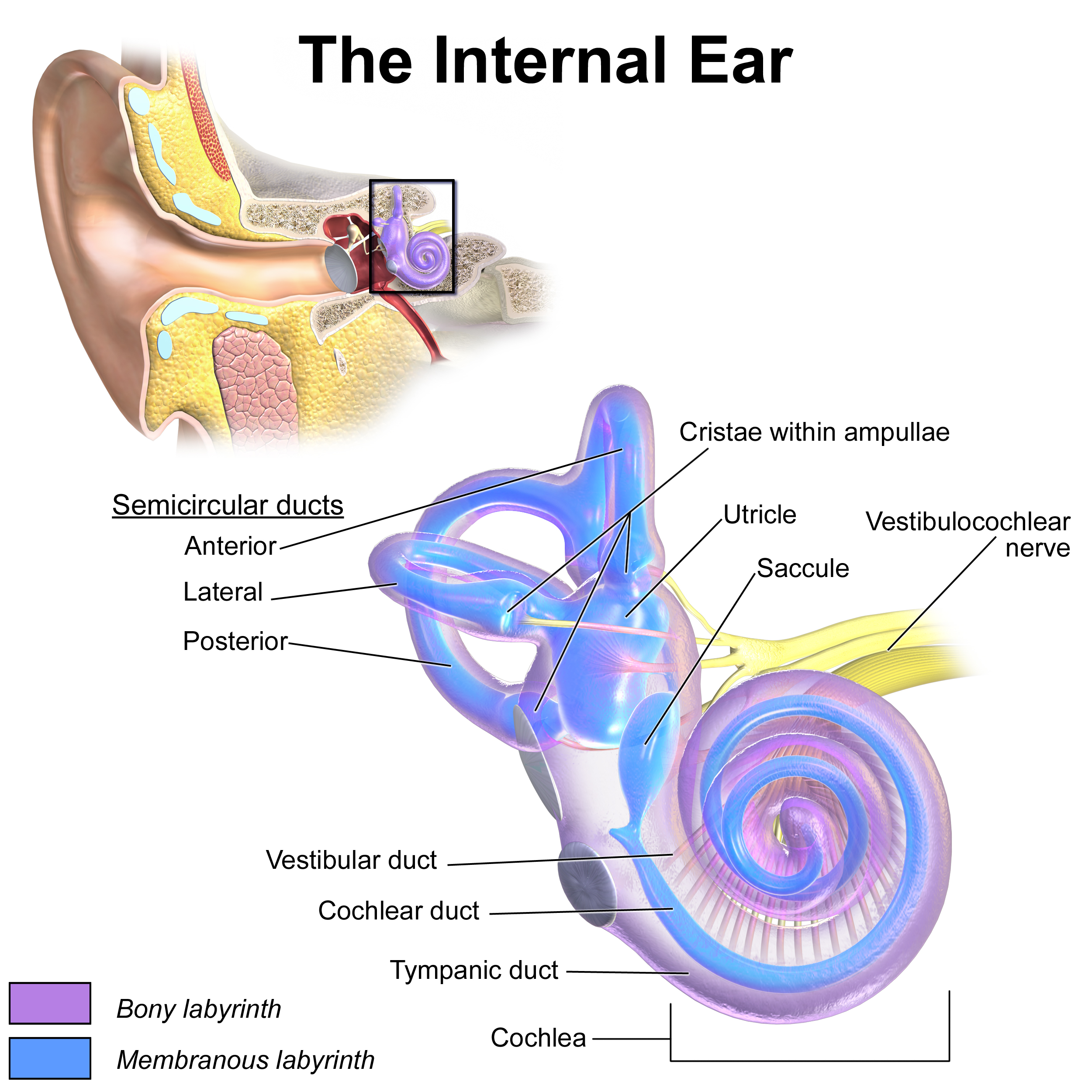
A majority of the time, hearing loss occurs due to damage to hair cells or auditory nerve cells located in the inner ear. The hair cells are named due to their hair-like extensions, and they are formally called stereocilia. These cells convert vibrations into electrical signals and the auditory nerve carries them to the brain, producing sound. Stereocilia can be damaged through various means such as aging, medication, trauma, or loud noises. These hair cells grow during fetal development, but this growth stops after birth, which also prevents regeneration later on.

A new study has identified two genes that are responsible for the growth of these hairs. Dr. Ksenia Gnedeva observed the gene expression in an inner ear structure called the utricle. The utricle is lined with these hair cells, as is the cochlea. Gnedeva identified the Sox4 and Sox11 transcription factors. They are highly active during development, but they become dormant after birth. The study was done with mice. The mice that were developing had their genes turned off to observe the results. The inner ear as a whole did not develop normally. The mice that were already developed had their genes switched on and were able to regenerate the stereocilia. 

The overall goal of this study is to turn these genes back on in animals to allow them to regenerate their hair cells in the inner ear. If this is successful, it could potentially mean that humans who suffer from hearing loss could regain it eventually. One issue with this therapy could be if the hearing loss is caused by auditory nerve cell damage. This would only help people affected with hair cell damage. If there is a mix of the two, it is possible for the person to regain some of their hearing but not all. There is still work to be done before use as a therapy for hearing loss. 

Wednesday, September 16, 2015

Green Apples and Green Tomatoes May Help Prevent Age-Related Muscle Loss

A study conducted by researchers from the University of Iowa states that there may be a correlation between eating foods that contain ursolic acid or tomatidine and preventing muscle loss due to aging. Ursolic acid is found in green apples while tomatidine can be found in green tomatoes. The study states that the protein ATF4 is responsible for muscle aging. ATF4 is described as a “transcription factor" that influences the expression of certain genes in skeletal muscle”. The expression of these certain genes results in a decrease in strength, mass, and production of muscle protein. 
The study was conducted over a two month period using elderly mice. Half of the mice were given diets that contained the natural compounds, ursolic acid and tomatidine. While the other half of the mice were not given either of the natural compounds. After two months, researchers found out that the mice who had ursolic acid and tomatidine incorporated into their diets had almost a 10% increase in muscle mass and a 30% increase in muscle strength. These levels seen in the elderly mice  just about matched the levels seen in young adult mice. Researchers concluded that ursolic acid and tomatidine are natural compounds capable of deactivating a group of genes that are normally activated by the protein ATF4. The group of researchers then engineered mice that did not contain the ATF4 protein in their skeletal muscle. The researchers found that muscles in the mice that did not contain ATF4 were resistant to any age-related muscle loss.

The researchers stated that they have come together with a biotech company to further look into the idea of adding ursolic acid and tomatidine to various foods or creating supplements containing either of these natural compounds.

I was really surprised by the results that the researchers came across after adding urosolic acid or tomatidine to the diets of the mice. It is interesting to see that these natural compounds have the ability to resist muscle loss and even increase muscle mass and muscle strength. It will also be interesting to see if these same affects will be seen in humans as well.  

Monday, April 13, 2015

Scientists Pinpoint Molecule That Controls Stem Cell Plasticity by Boosting Gene Expression

A team of researchers from the Rockefeller University has identified a protein, Sox9, which can control stem cell plasticity by boosting gene expression in the hair follicles. Sox9 makes the genes needed by stems cell to become active and later recruit other proteins to give the genes a boost. Also, a less common, yet more powerful version, the super-enhancer was identified by scientists. Super-enhancers contain a large number of transcription factors, histones, DNA packaging proteins, and epigenetic marks. Scientists found 377 super-enhancers in the hair follicle stem cells and many of them were bound by five transcription factors, usually to Sox9.

During the research, scientists took an epicenter from the super-enhancer and linked it to a gene, which would glow green when transcription factors were present. They found that in living mice, all of the hair follicle stem cells glowed green, but did not when the cells were removed from the follicle and placed in culture. Also, scientists found that some of the stem cells glowed green during a wound-repair when culture. The scientists concluded that Sox9 was the only transcription factor expressed in culture and living tissue and it is needed to prevent the death of the stem cells.

The study shows how stem cells response to different environments (culture or repairing wounds) as it maintains plasticity. Researchers studying Sox9 can use it to further the study of male pattern baldness. It could also aid in hair growth methods people who are balding. 

Original link: http://www.newswise.com/articles/scientists-pinpoint-molecule-that-controls-stem-cell-plasticity-by-boosting-gene-expression2
Related Link: http://link.springer.com/referenceworkentry/10.1007%2F978-3-642-16483-5_5492

Monday, December 1, 2014

Bitter Food but Good Medicine from Cucumber Genetics


Chinese medical tradition and high tech genetics have come together. Indian and Chinese medication have used wild cucurbits plants such as cucumbers and squash to treat liver disease. Resent research has looked into the genes of wild cucumbers.

Scientist have identified a gene responsible for the bitter taste in wild cucumbers. The bitter taste helps protect the plant from predators. The bitter flavor in the wild cucurbits is due to compounds called cusurbitains. Resent research has found that cusurbitains can be beneficial, they were found to be able to kill or suppress the growth of cancer cells. The bitterness is known to be controlled by two genetic traits "Bi" which creates bitterness on the whole plant and "Bt" which leads to the bitterness of the fruit. 

Sanwen Huang at the Chinese Academy of Agricultural Sciences and Colleges used the latest in DNA sequencing technology to identify the exact changes in the DNA associated with bitterness.  They identified nine genes involved in making cucurbitacin and show that the trait can be traced to two transcription factors in leaves or fruit to produce cucurbitacin.

This study is interesting because of the possible medical benefits. By learning how cucurbitacin is produced in the plant it could make it easier for humans to produce it in large quantities. By having large quantities of this substance it can be used in clinical trails to determine if it works. If it does work it could potential be developed into a medicine.

Article:http://www.sciencedaily.com/releases/2014/11/141127212342.htm
Related article:http://www.ncbi.nlm.nih.gov/pmc/articles/PMC3612419/

Tuesday, November 25, 2014

Understanding Circadian Rhythms through Transcription Factors


In most recent discoveries pertaining to the study of Circadian Rhythms and genetics, researchers from the Perelman School of Medicine at the University of Pennsylvania have found the secret to how cellular clocks are in time with different circadian phases during different times of days.

Sciencedaily.com states something very eyeopening in this article, "Most of us wake in the morning, sleep in the evening, and eat in between. Body temperature, metabolism, and hormone levels all fluctuate throughout the day, and it is increasingly clear that disruption of those cycles can lead to metabolic disease." By understanding these molecular clocks that are affected by DNA-binding proteins called transcription factors that control these oscillation factors that make the clock work, one can question the connection between different circadian peaks and how the clock keeps in time with other cycles.

Mitchell Lazar (MD, PHD), a Sylman Eisman Professor of Medicine, and his group of researchers have collected a survey of "genome-wide" circadian rhythm survey and enhancers (regulatory elements) that control the expression of genes. What Lazar's team did was use high-density DNA sequencing to measure activity of enhancers in mice (in their liver) and discovered that these enhancers also have a daily oscillation rate are grouped up in a way that is timed in sync with different transcription factors. Loss of a factor throws the system out of balance and thus causes metabolic disease. Out of balance circadian rhythms can also cause cancer as found in this article.

I found this article and subject matter most interesting because the research being done on circadian rhythm and synchronization that could lead to new ways to make more effective metabolic medicine is staggering. Through understanding these pathways and transcription peaks, medicine can be tailored to be taken at a certain time of day as Lazar says with also the possibility to reduce unwanted side effects. Overall, metabolic drug treatment will be revolutionized by these important discoveries.
Original Article: http://www.sciencedaily.com/releases/2014/11/141120123019.htm
Supporting Article: http://www.sciencedaily.com/releases/2014/06/140624110714.htm


Tuesday, October 28, 2014

Creating Brain Cells From Human Skin Cells to Help Huntington's Patients

Stem cell development is a promising area of research, and holds a lot of secrets to cell development. However stem cells are highly controversial, which limits the possibilities for research in these areas. Stem cells allow for the potential of  being able to create needed cells for the body that cannot be produced on their own, such as brain cells. With diseases like ALS (Lou Gehrig's) and Huntington's, brain cells degenerate and the brain is unable to recreate those lost cells.

Brain with and without Huntington's


At Washington University in St. Louis, researchers have just discovered a new way to create brain cells needed for Huntington's patients. This method avoids using stem cells, which makes it less controversial, and also avoids creating multiple cell types that usually comes with stem cell research. These cells were created from human skin cells and converted directly into brain cells.The types of brain cells created are medium spiny neurons, and they are the cells that degenerate in a Huntington's patient. They are responsible for controlling movement, which causes uncontrollable, jerky movements in a patient who has degeneration of those neurons. These brain cells were then transplanted into mice, where they were found to have lived at least 6 months. These cells also behaved similarly to native brain cells of the mice.

Medium Spiny Neurons


The DNA in any cell of a person's body contains the instructions on how to be any type of cell seen in the body. The researchers found two microRNAs that are used in packaging the part of the DNA that codes for brain cells. These cells, when exposed to these 2 microRNAs, were able to be changed into neurons. These neurons could then be changed into specific neurons, such as medium spiny neurons, by being exposed to transcription factors specific to those neurons. Without the microRNAs, the transcription factors alone were not enough to create the neurons. This new method of creating brain cells is planned to be tested with Huntington's patients, and also being tested on mice with a model of Huntington's.

This research break-though is astounding. Patients diagnosed with Huntington's typically are diagnosed with a death sentence of 15-20 years. Usually patients either die by infection or commit suicide. This research gives those with degenerative brain diseases hope. With this research there is the potential to repair crucial cells that have been destroyed. It also allows for hope in families with the disease that even if it is passed down to their children that there may be a way to keep the disease from ever being debilitating.

Source: Human Skin Cells Reprogrammed Directly Into Brain Cells

Saturday, April 20, 2013

Healing by the Clock: In Fruit Flies, Intestinal Stem-Cell Regeneration Fluctuates With the Time of Day


One of the circadian clock's transcription factors, proteins that regulate gene activity, is called period. Stem cell biologist Phillip Karpowicz, HMS research fellow in genetics, actually found period in the gut of a fly when working in the lab of Norbert Perrimon, the James Stillman Professor of Developmental Biology in the Harvard Medical School Department of Genetics. He studied flies to see how the intestine regenerates cells when they are injured, and found that gene period was needed and that gut healing fluctuates according to the time of day.

The whole report can be found here, at cellreports.com, and goes into the details of the experiment.

Wednesday, November 16, 2011

New Gene Variant Seems to Double Risk of Familial Melanoma

Researchers have identified a new gene variant that seems to double the background risk of familial melanoma. This mutation results in a change in the amino acid sequence of microphthalmia-associate transcription factor, or MITF for short. This same protein has already been known to be over-expressed or otherwise mutated in melanoma tumors. This change in the amino acid sequence gives rise to the increase transcription of certain genes. Wide genomic studies of melanoma have resulted in the discovery of two genes linked to familial melanoma, CDKN2A and CDK4. However, additional studies have led researchers to identify another gene related to melanoma and other skin related diseases: MITF E318K. This gene has been shown to be linked with the increased expression of pigmentation genes, but it is not completely clear yet whether or not this increased pigmentation is a result of the MITF E318K or simply of the increased MITF activity itself. The increased risk of melanoma in regards to the MITF variant has been compared to that of a severe sunburn.

http://www.genengnews.com/gen-news-highlights/scientists-identify-gene-variant-that-doubles-background-risk-of-melanoma/81245947/ (Article Link)


Melanoma