Friday, November 4, 2022
Do Identical Twins Have Identical DNA?
Saturday, April 9, 2022
Ethical Debate Surrounding the Protection of "CRISPR babies"
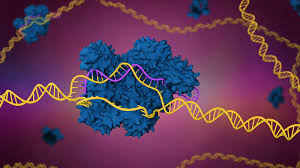
There are discussions in China’s bioethics community to set up a research center to ensure the well being of the first children born with edited genomes. He Jianki announced that he had created babies with altered genomes in 2018, and these discussions began following the possibility of his release from prison. In the latest proposal, researchers have said that these children would need special protection as they are a “vulnerable group”. Gene editing could create errors in their genome which could potentially be passed to their children, and their genome should be sequenced regularly just to ensure that there aren’t any abnormalities. Because there are no updates on the children’s current condition, it’s difficult to make recommendations.
He implanted embryos in which he used CRISPR-Cas9 to edit CCR5 in an effort to make them resistant to HIV. As a result of this, twins were born in 2018. The parents agreed to this because of the fact that the father was HIV positive. In 2019 He was sentenced to 3 years in prison. The children are toddlers now, and are the only children with an edited genome. Despite promising that these children would have medical insurance, they were born prematurely which interfered with that promise and were initially denied medical insurance. He stepped in to pay.
This article brings up the issue of excessive surveillance. While these children are vulnerable, there are also social and psychological risks to be accounted for in the recommendations on how to properly protect them. These children would have to endure medical testing regularly throughout their life, which could have an effect on their mental health and a variety of other components of their lives. It is interesting to see the ethical side to certain medical situations, as the editing of their genome could have a long term effect on their psychological health.
Sunday, December 12, 2021
All identical twins may share a common set of chemical markers on their DNA
Identical twins share many things, including DNA but new research suggest there is a signature of the twinhood. Part of the epigenome, which are chemical markers that influence genes without altering sequence. These signatures could be used to identify a twin who might have lost their sibling in the womb or separated at birth. It is known that monozygotic twins form from the same zygote splitting into two embryos during development, but it is not clear why it happens is unclear. Scientists begin to look at the epigenetic differences along 450,000 sites of the genome of roughly around 6,000 monozygotic twins and dizygotic. 834 sites in identical twins were highly similar, from young to old twins, and from geographically different locations. These markers were very common among the twins that as of now, there is an 80% accuracy of identifying a twin who might have lost their sibling without even knowing that were a twin.
Wednesday, November 24, 2021
Embryos appear to reverse their biological clock early in development
Aging does not carry over to the next generation of progeny. There is no inheritance of the age of your parents and the germ-line cells are responsible. Once thought to be ageless or immortal but found to be untrue, the germ-line cells now are thought to possess a function that acts as a reset on their age. In a new study, scientists report that both mouse and human germ-line cells reset their age early in embryo development. The biological clock of a mouse embryo being studied was constant and unchanging but after 6 to 8 days, the age had taken a dip. The understanding of this process and the ability to control it could lead to further advances on battling age-related diseases like arthritis or Parkinson's. It is still unknown what the mechanism behind the age changes in these early developmental cells and further research will be necessary to uncover it.
Tuesday, April 13, 2021
Mouse Embryo Grown in a Glass Womb
Mammals develop in the uterus of its mother, forming from one cell into trillions. Researchers have found a new method to observe the development of mice embryos without have to cut open the mother's womb. A "glass embryo" was created by using a beaker filled with a nutrient rich solution, an environment identical to a female mouse's uterus. The embryo survived for 11 out of the usual 20 days it takes for the embryo to fully develop.
Although the pup did not survive the entire time, researchers were able to observe the development of multiple systems. This could lead the way to observing development in other organisms. The new method is pretty special and it must be amazing to see the development of a lab-grown embryo.
Websites:
https://www.the-scientist.com/news-opinion/lab-grown-mouse-embryos-form-limbs-and-organs-68565
https://www.nytimes.com/2021/03/17/health/mice-artificial-uterus.html
Monday, December 2, 2019
Designer Babies
In my opinion, I do not think genetically modifying embryos should be allowed with the purpose of a "designer baby." I think it is acceptable to modify in the interest of the health and well being of a child, but to completely change their characteristics should not be okay. If somebody wants to change the way they are, it should be decided by them, not their parents. Also all life should be accepted the way it is, parents should be happy with the way their baby looks without genetically modifying them. I hope this is never something that is available to the public when it does become successful.

https://www.usnews.com/news/health-news/articles/2019-11-21/designer-babies-a-long-way-off
Related Article:
https://embryo.asu.edu/pages/ethics-designer-babies
Tuesday, July 31, 2018
Who's a good... Wolf?
The loyal dog's we know today, are relatives to the wolf. They are our trusty companions but why? Where did the floppy eared, big eyed, goof we know today come from (yes there are dogs that are bread to have ears sticking up as well)? Evidence points to dogs being our longest and oldest companions being domesticated not only from a single area but from multiple points all around the world.
Many have hypothesized how wolfs ended up becoming domesticated. Some believe that we actively tried to domesticate them to be used for hunting, helping our ancestors and acted on their own accord. Others believe that the wolf (some) began to follow our trail of scraps left behind in search of food themselves and that they had a trait in their genome that was more tame that would allow for us to allow for them to approach us.
From studies done we know that the Eurasian grey wolves around 10,000 to 40,000 years ago were domesticated. Dogs that we know of today like the Doberman, Maltese, Pitbull, Pomeranian, and ect. were not what the early traits were sought out for physical aesthetics but rather only that they do not hurt us and are friendly. It should be known that the traits for behavior and physical attributes are linked in a way. They are the NCC or neural crest cells, and biologist have focus in on these as they believe this is what was the catalyst for the domestication syndrome.
"NCCs are stem cells found in every embryo that show up first at the crest, or top edge, of the neural tube, which will eventually become the brain and spinal cord. As the embryo develops, a number of different genes signal NCCs to activate and move, along specific paths, to different areas of the body to perform different tasks. the range of activities that NCCs do it enormous: the adrenal and pituitary systems, which are involved in aggression, fear and other behaviors, are derived from NCCs, but these cells are also involved in regulating physical traits such as pigmentation of skin and hair."(1)
The group of scientists involved in this study decided to look into 429 different genes in forty three wild village dogs from four different continents. Focusing on genes that act in early embryogenesis. They then compared these village dogs to "ancient dogs older than 5,000 years" (1). What they found was a similarity in their genome sugesting that these traits were the result of original domestication. This shows that the later attempts of domestication to different specific breads was not the cause for the tame like trait we see in dogs.
"Selecting for behavioral traits such as reduced fear of humans, a key element of tameness, favored certain genetic signatures. In turn, those genetic signatures changed how the NCCs they activated actually migrated around the body and performed."(1)
Even with this new information we do not know how domestication took place but we do have more insight into it. We may never know why or how specifically this domestication of our fury friends happened, but what we do know is that they were part of our journey so far and are not going anywhere in the near future. The dogs we know of today will continue to change in features as we deem to be necessary/aesthetically pleasing.
P.s DO NOT try to domesticate wild wolves.
references:
1- http://blogs.discovermagazine.com/d-brief/2018/06/27/dog-genes/#.W2ELUtJKhPY
2- https://bmcbiol.biomedcentral.com/articles/10.1186/s12915-018-0535-2
Sunday, July 8, 2018
Rhino Embryos Made in Lab to Save Nearly Extinct Subspecies
Friday, October 13, 2017
U.S edits Embryo DNA for first time
Without a doubt, I found this article very interesting. Scientist have successfully edited embryos so that they could grow and develop if placed into a mother's womb. This is the first time this is happening in the U.S. The gene altering technology is referred to as CRISPR. By injecting CRISPR into the embryo about the same time that is it getting fertilized by the sperm it reduces the risk of "off target editing"(Newman). This is extremely valuable in the world of medicine. It will help correct genes that are dangerous to future generations. They could also eventually alter inherited diseases to help those. Although these are all positive factors, I do believe this technology should be evaluated to fit culture appropriation.
Personally, I think its great to see technology improving, specifically in genetics. When thinking of this article the idea of "Designer babies" popped in my head. People may want to pay to have their embryos genes altered making the baby ideal phenotypically. Many will argue that this is morally wrong and should only be used for medical needs. I think it may become a main focus causing a nationwide debate when the technology improves more.
Article: https://www.usnews.com/news/national-news/articles/2017-07-27/scientists-edit-the-dna-of-embryos-for-first-time-in-united-states
Monday, August 7, 2017
Gene Editing
Article
Friday, August 4, 2017
Breakthrough in Science Finds a Way to Edit Mutations in Human Embryos
Article
Monday, May 1, 2017
First US Success of Nonhuman Primate Gene Editing
CRISPR has allowed scientists to move forward with great advances in gene editing in various species other than the commonly used mice. Such is the case of a study led by Michigan State University who have shown the effectiveness of gene editing in Rhesus monkey embryos using CRISPR/Cas9 technology. This is the first time this has been demonstrated in the U.S. This work is so important because mice are the usual model but they are not as ideal because their anatomy and physiology are so different from ours. However, a monkey would react more similarly to humans in regards to improved health and symptoms. Nonhuman primates are perfect models for diseases such as dementia, Alzheimer's or autism and would be favorable for looking at outcomes of surgical procedures, and implants. A big problem presented by the study is the cost of raising nonhuman primates because it can cost around $15,000 which of course is an enormous difference compared to rats. Nonetheless, the high-efficiency of gene editing they are now able to preform makes it worth it. I think this is a great step forward for gene editing and it's efficiency but I try not think about what is done to the monkey's for these scientific advances.
https://www.neb.com/tools-and-resources/feature-articles/crispr-cas9-and-targeted-genome-editing-a-new-era-in-molecular-biology : For more information on CRISPR/Cas9 and genome editing.
https://www.sciencedaily.com/releases/2017/05/170501112525.htm :Article
Thursday, April 6, 2017
Three Person Embryo's
Saturday, November 26, 2016
HIV Resistant Embryos
To make the embryos resistant to HIV infection, researchers had to introduce a mutation that shut down the gene CCR5. This mutation is found in some humans, which explains why they are resistant to HIV. This mutation does not allow the infection to enter blood cells, preventing HIV. The scientists were among the first to introduce this mutation by using a system called CRISPR. Some scientists argue that this experiment just made headway with this way of manipulating cells, they did not make any significant scientific findings in working with human embryos.
There are still others that argue that there are things wrong with the way the experiment was conducted. The research was done on human embryos. Although they were embryos with extra chromosomes, making them not viable, there is still a question about ethics. Some scientists wonder if this experiment was necessary. While others wonder where this information can lead us to. There are a few that see nothing wrong with the experiments with embryos.
With this research on the table, there is no saying where embryo experiments can start, what types of eggs they use, and when they end. Will it get to the point that scientists can create a genetically modified human? Only time, and evolution of laws and ethics, can tell.
Saturday, November 19, 2016
Red-Eye Tree Frog Embryos Escape Danger
Tuesday, May 3, 2016
Saving The White Rhino
Saturday, April 30, 2016
Male Sensitivity Written in the Genes
Monday, December 14, 2015
Pair of Genes Responsible for Wing-Shaped Fin Development in Batoids
The researchers also found that different groups of genes control the two different regions of the fin. The 5' Hox family of transcription factors and the Fgf10 growth factor are commonly found among fish species was also found and active in the batoids, this group of genes was responsible for growth towards the tail. The region growing towards the head was controlled by 3' Hox transcription factors and the Fgf7 growth factor. In species other than the batoids, the 3' Hox and Fgf7 are found at the base of the growing limb, the presence of these genes in the anterior portion of the growing pectoral fin of batoids suggests that this is a unique adaptation of the batoid species and is responsible for the second AER, giving them their fin shape.
Interestingly, although the two regions of the rays fin are nearly identically the gene expression in these regions is totally different. This group of species have different mechanisms that control fin development compared to other fish species giving them their unique fin shape.
Wednesday, November 25, 2015
Human Development Influenced by Ancient Viral Molecules
| An artists rendering of a virus. |