Showing posts with label reproduction. Show all posts

Monday, October 28, 2024

New Anatomical Discoveries in the Female Reproductive Tract of Fruit Flies

Drosophila melanogaster, commonly known as the fruit fly, has been used as a model organism for decades thanks to its unique anatomical traits that make it perfect for research in genetics. Having been thoroughly studied, its physiology and anatomy are well understood. However, a recent study further analyzing the female reproductive anatomy in fruit flies has found new developments in how localized cellular specialization influences gene expression and ultimately reproduction as a whole within the species. The study found that the uterine lining of fruit flies is made of eleven unique cell types that likely correspond to certain gametes and reproductive fluids. The study intends to provide a foundation for further molecular research of fruit fly reproductive anatomy.


https://www.sciencedaily.com/releases/2024/10/241025165753.htm
https://www.pnas.org/doi/10.1073/pnas.2409850121

Saturday, November 13, 2021

The Genes Associated with the Functions Found in the Hypothalamus


A recent study has been able to identify the genes involved with various functions from the hypothalamus. In the news article “Researchers Use Model of Hypothalamus to Implicate Genes Associated with Sleep, BMI, Puberty, and More,” a research study was conducted by the Children’s Hospital of Philadelphia to determine the genes that are responsible for functions like sleep, BMI, and puberty within the brain. The hypothalamus is located in the center of the brain and is part of the limbic system. It is responsible for releasing hormones throughout the body, body temperature, reproduction, sleep, hunger, thirst, etc. Since it is located in the middle of the brain it can be difficult to  study the genes that work to provide proper function to the body. In order to find these specific genes, a model had to be used to be able to further examine the different components of the hypothalamus. 

The research team used an embryonic stem cell model to investigate the gene expression in the hypothalamus. It provided them with the information on the genes before the hypothalamus has developed and even afterwards. The team was able to discover that the gene BDNF is responsible for body mass index while the gene PER2 is involved with sleep regulation. This particular research will help us understand the many functions of the hypothalamus but also the abnormalities that can occur within this part of the brain. 

https://www.chop.edu/news/researchers-use-model-hypothalamus-implicate-genes-associated-sleep-bmi-puberty-and-more 

https://www.webmd.com/brain/what-to-know-about-hypothalamus 

Thursday, October 14, 2021

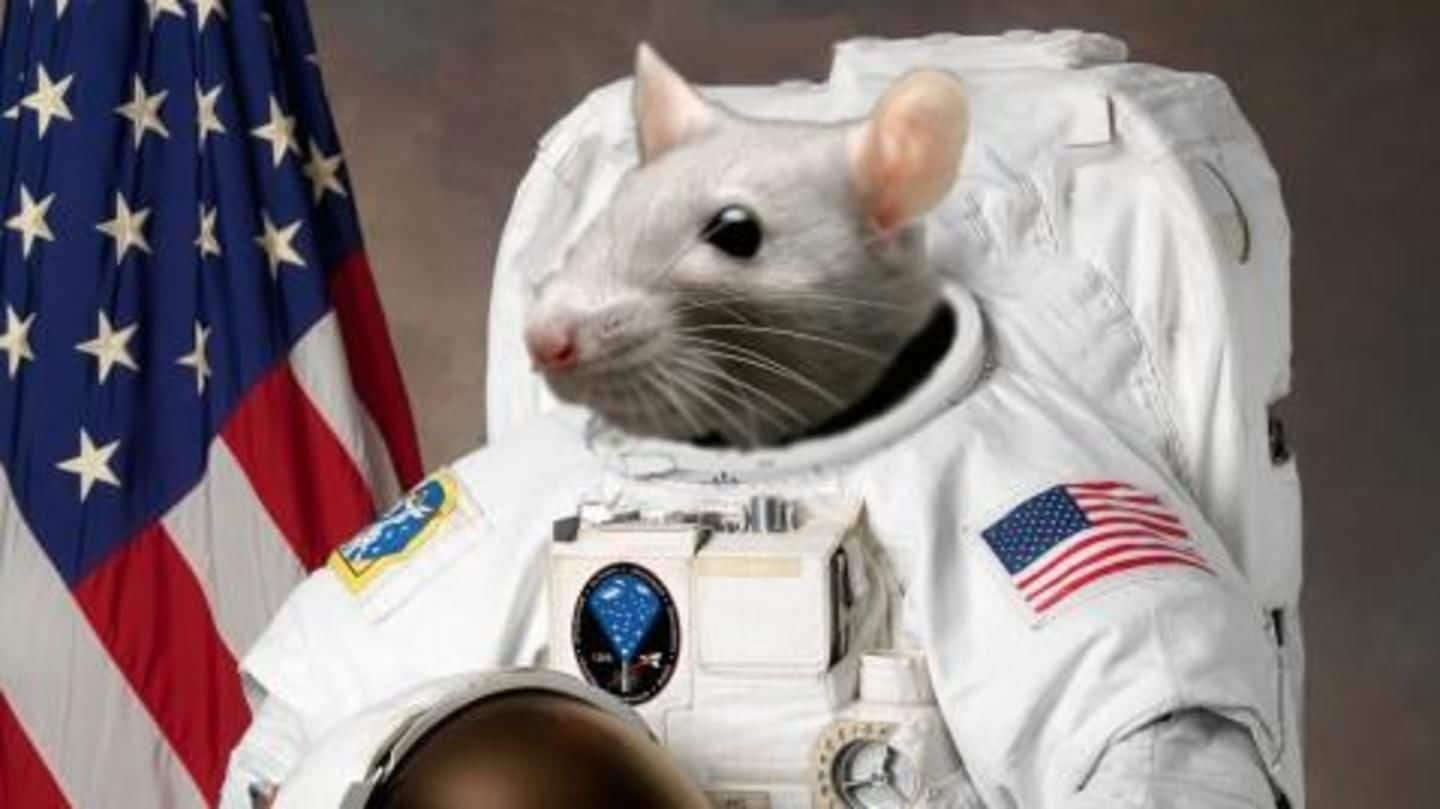
Mice in space don't have kids: Ionizing Radiation alters the reproductive health and clock genes of mice.


    The circadian rhythm and clock genes of mice have been found to be negatively affected by ionizing radiation in a recent study. More particularly, the effect of this radiation lowers the motility of sperm in male mice, reducing their ability to reproduce. The clock genes are harmed by reducing the expression of mRNA, causing the metabolism and sleep cycle of the mice to fail, reducing energy and causing lethargy. This circadian rhythm failure will lead to further reproductive harm. These effects can become exacerbated over long periods, and may eventually result in sterility. The harm that is caused by IR puts strain on the concept of long term interplanetary or intergalactic travel, as the ability to produce the next generation of astronauts while in space may come with several issues.

I personally believe that not enough is known about what genes are harmed while traveling in space, and that more conditions and diseases will come from a mixture of low gravity, high radiation, and eventually shallow gene pools aboard interplanetary vessels. In this way (and many others), I think that space travel should continue as a concept for the foreseeable future, as these issues cannot even be solved in our current setting on earth. Adding more variables will only cause more confusion.

Thursday, September 23, 2021

Lack of maternal gene expression leads to sterility in Golden Hamsters (Mesocricetus auratus)


Recent findings show that the lack of maternal expression of the Piwi RNA genome defense system in Golden Hamsters will lead to sterility in the male offspring. The data shows a sudden drop in male fertility as the gene is not expressed. Simply put, the male hamsters that do not develop the Piwi RNA system for germ development have lowered sperm count, significantly smaller testes, and will most likely not reproduce as well as males with parents who expressed these genes. This is concurrent with findings in both plants and animals, which share these same Piwi genes, and as such will have little luck reproducing.

While I am personally interested in hamsters more directly, this is an interesting concept to be applied to other organisms, such as plants. Researchers often use mice for genetic analysis, as well as hamsters due to their analogous physical features to humans (as well as being mammals). I would be particularly interested in what effects the Piwi gene has in plants, as the method of reproduction in many plants is by flowers.

https://www.biorxiv.org/content/10.1101/2021.01.27.428354v2.full (Article link if link is broken)

https://animaldiversity.org/accounts/Cricetinae/ (Hamsters defined if link is broken)

Wednesday, April 28, 2021

An immune system quirk may help anglerfish fuse with mates during sex

 Male deep-sea anglerfish

    In this article, we learned that some deep-sea species often lack genes involved in the body’ response against pathogens or foreign tissues. In the picture above the male deep-sea anglerfish can be seen fused to a much larger female during mating. This male called Melanocetus johnsonii is attached to the belly of the female. Scientists believe that the loss of key immune system genes may explain how fish pull off the feat. When they reproduce they do not only share sperm but blood and skin. The deep-sea anglerfishes sex resembles a mismatched organ transplant that does not reject the other’s immune system. Boehm and colleagues isolated DNA from 31 preserved anglerfish representing 10 deep-sea species. This was done in order to compare anglerfishes that don’t fuse to their mates with species that fuse are missing genes that help produce new antibodies that get better at binding to perceived threats in future encounters. They realize that not having antibodies may actually be helpful for a female that is exposed to multiple males throughout life. Even when they lack the genes needed to make the parts of T cells that help identify foreign tissue and pathogens. No further experiments were performed to confirm how the missing genes might affect the immune system’s behavior.  This article caught my attention because it is interesting to see the diversity of immune systems within these different species.

links:

1. https://science.sciencemag.org/content/369/6511/1608

2.https://www.sciencenews.org/article/anglerfish-fuse-mates-sex-immune-system-genes


Thursday, April 15, 2021

Cloning and Conservation


Cloning has been a very controversial topic in the genetic community for some time. Whether it's due to the animal not being fit for the time period or for it being ethically wrong, there have always been questions surrounding cloning. But some good can come from cloning, in this case it is bringing back a species that became extinct. A Colorado Facility cloned a black footed ferret and it was born on 12/10/2020. This ferret was known to become extinct in the 1980’s and the reason they were able to successfully clone one was since one of the ferrets were kept frozen after they died.


The purpose of cloning this ferret was to bring more genetic diversity to the ferret community. "Advanced reproductive technologies, including cloning, can save species by allowing us to restore genetic diversity that would have otherwise been lost to time,” says Ryan Phelan, executive director of Revive & Restore. This successful clone has caused conservations to second guess cloning. While this is a very expensive practice, it does work in bringing back endangered/extinct species. Some people feel that the best fit animals should remain on Earth and others think that extinct species should come back. I think the point of this argument is that cloning can save endangered species, but it would be at an extremely high cost.


How can cloning help conservationists save extinct species? | Living (euronews.com)


What is Cloning (utah.edu)

Chernobyl and Honey Bees


Chernobyl was an ecological disaster that happened In Ukraine in 1986. Aside from the ecological issues that the chemical plant explosion caused, genetic issues also arose. The problem was that radiation was all over the environment after the chemical plant explosion. Radiation causes many immediate and long lasting health effects to organisms including; burns, cancer, cardiovascular disease, and damage to blood. Since some of the immediate health effects from radiation has already been discovered, this article goes over a study about long lasting health effects. 


The University of Sterling did an experiment on Honey Bees and high radiation exposure. The study showed that less Queen Bees were produced, meaning there was stress in the colony. Another thing that was noted was that the experimental bumble bee colonies grew at a slower rate. These studies show that future bee populations around the Chernobyl area will begin to decline from the radiation levels. This is a good study to look at for the future so that we know the long lasting effects of a future chemical plant explosion.


Saturday, July 20, 2019

Researchers Found the Genes Responsible for Changing Ground Beetle Genitalia

Japan's Carabus male beetles mate with females by inserting their chitin-covered appendage. Two pieces of the appendage break off: a sperm delivery tube and a copulatory piece. Researchers identified several genes that control the size of the male beetle's "piece" and the female beetle's pocket. Initial hypotheses demonstrated that the male and female's genes for genitals should be connected through coevolution which should show in their genome. In other words, the size and shapes of genitalia in species should be analogous because the same genes influence male and female dimorphism. However, researchers found that there is much genetic diversity between the genes that determine these beetle's genitalia sizes. The discovery is a significant case in speciation because it contributes to an old speciation model called the "Lock-and-Key Hypothesis".

The Lock-and-Key Hypothesis is a method of reproductive isolation, specifically mechanical isolation which separates a species from mating. For example, the beetles described in the article have such a large genetic diversity contributing to genitalia that some of the male appendages do not fit into females. The article states, "Out-of-sync sizes can cause ruptures, snap-offs and generally low numbers of offspring." Talk about painful! These beetles are now contributing to hybridization which can eventually evolve into a whole other species altogether. Genetic hybrids tend to be infertile, but researchers found that the hybrids of two different beetle species in Japan can produce offspring.


beetlesImage result for carabus maiyasanus

It is truly interesting to see evolution in motion especially with the Lock-and-Key Hypothesis. It's no secret that genitalia in male species may not fit into a female in either the same species or another. The Lock-and-Key Hypothesis was proposed over a hundred years ago, but it's often overlooked because other reproductive isolations such as gametic isolation or chromosomal differences are better modes of preventing hybridization. The discovery here is fascinating because genetic diversity actually prevented some of these beetles from mating within their own species.

Sources:
https://www.sciencenews.org/article/ground-beetle-genitals-genetics-evolution-battle-sexes
https://advances.sciencemag.org/content/5/6/eaav9939

Friday, April 5, 2019

Gene Edited Lizard


Using CRISPR technology graduate students and faculty members at the University of Georgia were able to create the first gene edited lizard. In the past CRISPR-case9 has been used to sequence and edit the genomes of a various species. However, until now no gene edited lizards have come about. In the picture below the gene edited lizard is the albino lizard on the right.

Researchers found that the key step in editing the genes of the lizard was first understanding the reproduction system and cycle of reptiles. The genes had to be targeted while still being developed inside of the mother. The gene coding for Albinism was chosen because of its obvious phenotype. Out of a batch of 146 gene edited eggs 3 came out Albino. These researchers will continue to look into why this happens. Hopefully, they come up with more substantial results because this could've been a genomic mutation. In the future if they're able to produce a larger number of Albino gene edited lizards or try another gene to edit then the result would be even more creditable I think further testing should happen like researchers already plan to do.

Tuesday, November 6, 2018

Gene Drives to Eradicate Diseases

   Scientists are currently in the works of developing a gene drive to ultimately force a population into extinction, being known as a crash drive.  The technique of gene drives occur when specific genes, such as fertility genes, are made to be resistant to certain diseases, pesticides, or even reproduction itself.  With each gene only having a 50% chance of inheriting a specific trait, from either its father or mother, gene drives increase this percentage drastically but also have the ability to reduce reproductive rates.  Basically, through many populations within one type of organism, traits could be altered and could reflect beneficial results into the ecosystem.
    Pest populations such as insects and rodents can also be hypothetically decreased if the gene that is being altered results in lower fertility rates or higher death rates. The population currently being experimented on is mosquitoes in hopes of the rate of contracting malaria to decline.  In order to do this, scientists construct a Y chromosome which drives the X chromosome to disintegrate during the mosquitoes’ embryonic stages, resulting in only male offspring.  Or, since there are three sites at which could affect the fertility of female mosquitoes, two of the three could be impacted to result in less and less mosquito offspring being born.  An additional experiment could be to make malaria-resistant genes within the mosquitos themselves, which would be passed down from one generation to the next.
    What is hopefully expected is the amount of females in the population diminishing rapidly until the entire population eventually dies off.  This is because there is no possible  way for the males to reproduce sexually if there are no females.  Since the only mosquitoes that pierce skin to suck blood are female, the spread of malaria is hoped to also decrease since there are less of that gender. 
    While the amount of wild mosquitos in the population will be almost completely eradicated, this does not mean that the species will be lost from the world forever. Scientists would develop a way which mosquitos could be introduced into the world without being able to contract the disease which is being tested for, in this case it is malaria. 
    This will be the first gene drive which is to be released into nature, however, it is unknown what exactly the results of this experiment will conclude.  Gene drives also will only work on sexually reproducing organisms which produce at a fast rate, because if generation rates are extremely slow, the experiment will render to be useless.  With this new technique, common diseases such as malaria, lyme, yellow fever, and others could be almost completely eliminated if this experiment works correctly.  If done on plants to be made resistant to pesticides, this plays into the crops being genetically modified which is continually argued about in today’s world.  While it will be beneficial to reduce the amount of pesticides being released into the natural ecosystems and poisoning the soil and waterways, the concept of eating crops with these resistant traits is believed by some to cause similar characteristics in the person eating them.  However, when mixed with the spread of diseases through insects and rodents, I believe that it will be very helpful as our medical and technological advancements continue to improve.

Tuesday, July 25, 2017

Link Between Reproduction and Heart Disease

Researchers believe they may have found a reason for the persistence of coronary artery disease. After examining genetic variants associated with the disease, it was found that the illness spread rapidly in humans within the last 10,000 years. This lead to the belief that these genes must have recently began to provide an evolutionary advantage. The researchers then reviewed 143 studies and noticed a link between these genes and reproductive functions, like fertility and fetal development and survival. It is thought that the genes associated with coronary artery disease have lasted in the population due to those with it having more children. In the last thousands of years it was probable that having enhanced reproductive functionality was advantageous, as infectious disease increased mortality rates during this time. People with the genes for this heart disease most likely had more children, even if they were to develop the disease later in life. Our body has a way of compensating for enhanced survival whether we are aware of the enhancement or not. I believe it is best to let nature do as it intends, instead of tampering with possible advantages that would otherwise be lost through things like excessive gene therapy.

Article

Friday, April 14, 2017

Scientists Find Genes That Let These Bees Reproduce Without Males


Female Cape honeybees that live in the Fynbos ecoregion of South Africa have a unique behavior than your ordinary honeybee. Scientists have discovered that these female Cape honeybees are capable of reproducing asexually, meaning they do not need a male to reproduce. These female workers would lay their own eggs in their home colony once their queen dies. They can also invade other colonies and lay their eggs without being detected from the other bees. Researchers show that when comparing the genome of a Cape honeybee to a regular honeybee there were some areas that were unique, which explains the difference in reproduction. Furthermore, they explained that this behavior is a evolutionary advantage for the survival of their specie but can be a threat as well.

Read More Here
Tech Times Here


Thursday, April 6, 2017

Three Person Embryo's

This seems very interesting, and it's a great way for mothers to be able to carry their own healthy child, and not have to rely on a surrogate or an adoption to have a healthy baby. It still seems a little confusing to me, but I think this would be an amazing thing for mothers who are worried about passing on bad genes, since it says mostly every embryo the mother passes would have those mutated genes. The child would still have the looks but wouldn't have the mutations of the mother.


This article was from a few years ago, but this one is just from last month, their latest update.

Monday, October 31, 2016

Zika causes changes within male mice reproduction

The Zika virus has now been shown to have reproductive consequences.  The study has only been performed within mice, but researchers believe that it could correlate to humans.  After injecting the Zika virus within male mice, a week later their testes began to shrink and many of the cells were dying.  After three more weeks, many cells were dead and the testes had shrunken to 1/10 their size. This can be seen within the picture below.
Even after six weeks, the testes stayed the same and did not return to their original size.  Because of this, there was a large decrease in the amount of sperm and the levels of testosterone being produced. With less sperm, male mice that had been affected with the Zika virus in the past or present, were less likely to impregnate a female.  
After the male mice no longer contained the virus within their bloodstream, the consequences remained.  Researchers believe that this damage is irreversible.  The virus destroys the Sertoli cells, which are used to nourish the sperm cells and act as a barrier.  Unfortunately, these cells are not capable of regenerating.  
Human males that have had the Zika virus did not report any decrease in testosterone, sperm, or smaller testes, but that does not mean that it is not happening within their bodies.  Men will not realize their decrease in reproduction rates until they want to have children, and that could be years.  Also, the shrinkage in size of their testes may be so small that it is not noticeable to themselves.  This reproductive affect from Zika could be a major problem within the future.  More research needs to be performed on how Zika affects males, not just pregnant females.  

Monday, April 18, 2016

Not Magic, CADM2 is Why You Lost Your Virginity

Just today, Nature Genetics posted a "HUUUUGGEE" article as bernie would say with "25,000 participants, aged 40 to 69, from the UK Biobank, a national project that collected the DNA and personal information of half a million people in the UK from 2006 to 2010."

What did they find?  38 genetics variants that aren't magical at all, but are inherited and play a role into when people have sex for the first time. Contrary to previous belief, not all of them are linked with puberty.

Genes, such as CADM2, a risk taking gene has been found as a determinant factor in timing of one's first event so to speak. These genes is correlated with the age when Women had their first child as well as amount of children they had over their lifetime.
Environmental influences are not discredited by any means, as this study does acknowledge their role.

I found this interesting, because the argue of who we are because of nature vs nurture is not one which I believed to be applicable in the case of losing one's virginity. 
There are many cultural expectations with reproductions, which may be derived from genetics. This is a fascinating preliminary genetic analysis of a behavior that has taken place from the beginning of time.

This study will definitely advance a new viewpoint of science research, supplying answers in the form of genes for common practices that may be viewed as 

Perhaps now, genetics of rituals or other practiced mannerisms may be viewed analytically for genetic causation? Or does the persist of cultural behaviors weed out genes that don't possess similar genes deemed "right" by the society? 

Nature vs. Nurture, man..... 

Sunday, November 1, 2015

Genes Determine the People You're Attracted to

According to a study by researchers at the University of California, San Francisco, a person tends to be attracted to people with similar DNA, specifically with specific genetic ancestry. The phenomenon known as assortative mating suggests a similar theory. According to the study, people typically select mates based on genetic ancestry, outweighing "other socioeconomic factors, such as education levels, which itself has shown to be a powerful predictor of attraction in previous research". The study further concluded that mates were often, on average, the "genetic equivalent of between third and fourth cousins". The specific statistics and collected data pool can be seen in the recent release of Proceedings of the National Academy of Sciences. In 2014, a study was conducted by the University of Colorado, Boulder, in which single-nucleotide polymorphisms were examined among a population. To their surprise, "married individuals were like to be more genetically similar than two individuals randomly selected from the same population". Lots of evidence from multiple studies around the country have confirmed that genetics play a large role in the selection of a mate.
I find this article interesting because I had always assumed that attraction was completely psychological. I hadn't imagined that genetics could be a factor in attraction to others. It is an interesting discovery that I believe needs further scientific investigation, but nonetheless is very interesting and likely an evolutionary adaptation.

Saturday, October 3, 2015

Can We Extend Reproductive Life?

    Genetic variation affects at what age a woman enters puberty and menopause. The variability of the genes is half of the reason women experience these changes and the other half is due to environmental factors such as smoking. A new study is being conducted at the University of Exeter Medical School in Exeter, England. The team hopes that studying genes that link the age of women to menopause could one day help them closely predict the age a woman will enter menopause. Nowadays menopause is occurring when women are around 50, and if a woman smokes she will be closer to 40 when she enters menopause. With predicting the age of menopause, geneticists could also be able to tell when women become infertile. Infertility increases about 10 years before menopause occurs.
     So far the study has shown over 50 genetic variations that could link the age of a woman and the age when menopause occurs. A good amount of those genetic variations are used for repairing DNA. This could explain why geneticists believe that eggs are lost prior to menopause due to damage in DNA within the egg. By now knowing a little bit more of why and when menopause occurs, the team hopes to be able to delay menopause in order to extend reproductive life. Increasing the fertility of women by delaying menopause would give women over the age of 50 a chance to have children. They also hope this study can give insight on why women who go through menopause late have a higher risk of breast cancer. 
      I think it is great that this study could extend reproductive life. Some women are unable to find a man or do not settle down until later in life due to bad luck, career ambition, or simply because they did not want to. This study could give women a chance later on in life to have children. Some women feel that they have finally found a man that they see a future with and wish that they could have children, with the help of this research it may give couples another chance! Although I think this research is great and groundbreaking I could not imagine being 50 or older and bearing a child. I would imagine at least 50 to be hoping for grandchildren instead of children. 
     I am excited to see what this study will find about the linkage between late menopause and increased risk of breast cancer. Hopefully they will be able to speed up menopause, much like delaying it, to decrease the risk of breast cancer. 
For the full article, visit here!
Here is an article about women over 50 giving birth!


Saturday, November 22, 2014

Some females in certian species of animals are actually badass when protecting their offspring.

New research is beginning to elucidate the importance of promiscuity among females. Previous research has shown than infanticide occurs more commonly among social animal groups that are dominated by a one or two males. An infamous example of this would be lions. Infanticide by males occur because the males want to ensure that the females rear for their offspring. In such cases some females beginning exhibiting paternity dilution were they mate with multiple partners. This prevents males from killing the offspring because they risk killing their own offspring. Researchers studying mouse lemurs found that the testes of males began to increase when females where more promiscuous. This because the males began producing more sperm so competition was occurring after copulation instead of before. Genetically females become more incline to exhibit paternal dilution and less inclined to mate with males that kill their offspring.


This seems like an arms races of the sexes because I know that after a male lion has defeated the leader of the pride the first thing he does is kill the young of the previous male. Maybe later on females might try to mate with the male before he kills any of spring. I seems that reproduction is love as well as war.

Main article: http://www.sciencedaily.com/releases/2014/11/141113142002.htm

Related article: http://www.sciencemag.org/content/346/6211/841

Wednesday, November 19, 2014

Aggressive male Chimpanzee's will father more offspring

Research has found that male chimpanzee’s that are more aggressive toward females tend to father more offspring over time. Joseph Feldblum and his colleagues from Duke University conducted the research in a chimpanzee community that was living in Tanzania’s Gombe National Park that has been under close observation for the last 50 years. The community was so well watched that, it was know that who mated with who and also who the biological fathers of almost all of the chimpanzees born since 1995 were, because of the genetic tests done.

When examining the aggressive males, they looked at two different periods that the female chimpanzees go through. A period of time when they were sexually receptive and swollen compared to a period when they were not. Following the observation, their analyses showed that the males that were aggressive with the females during the swollen period were more likely to mate, but they did not have a greater paternity success. As for the high-ranking males that were aggressive with the females during the period when they were not swollen, they produced more offspring. Therefore, the results show that long-term patterns of intimidation give high-ranking males a higher number of offspring. This is the first example of genetic evidence of sexual coercion that is used as an adaptive strategy in any social mammal.

I found this article interesting because the title made me curious on how intimidation could help a male produce more offspring. However, after reading the article I understand how common aggressive male-female relationships are in chimpanzee populations. Therefore, it totally makes sense that in order to mate and reproduce with the females, it is necessary to be more intimidating and aggressive in order to be more successful. 


Wednesday, October 22, 2014

Sexual Selection and Fruit Flies

The article I read talks about wing color in male fruit flies. The transparent wings of fruit flies flash colors when against a dark background. The amount of color they flash is dependent on the width of the wing. They discovered this a couple of years ago. However, what they did not know was that the color of the males fruit fly wings actually play a part in how the female fruit fly chooses a reproductive partner. Professor Erik Svensson from Lund University says, "Our results will hopefully stimulate more research on wing interference patterns in other species, and increase interest in the role that the light environment plays in mate choice," So, hopefully there is more knowledge on fruit flies and sexual selection to come.


This article caught my eye because it was talking about fruit flies and how the females choose reproductive partners. Obviously, I found this interesting since we did a lab experiment involving fruit flies and reproduction. After reading this article it made me wonder if the color of the males wings may have skewed our data and results at all. They could have possibly changed the results since we assumed the mating was random and it may not have been. Also, I find it fascinating how such a simple creature can do such complex things like, thoughtfully choose a mate.