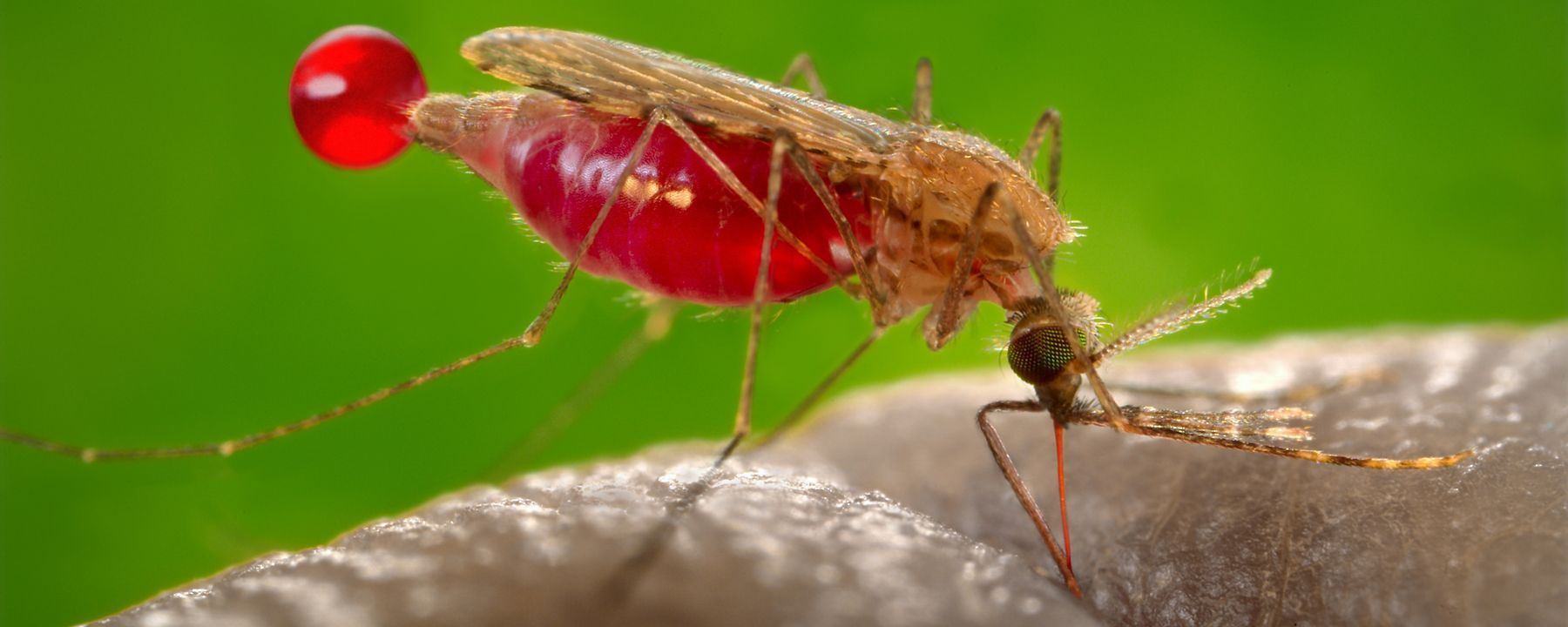
Mosquitoes can be classified as major pests, especially with their potential to spread vector-borne diseases. These pests are especially potent in third-world countries, specifically Africa where malaria kills more than 400,000 people each year (Stein). After attempting to hack the mosquito genome to prevent mosquito populations from increasing for almost 8 years, two geneticists have finally achieved some promising results in 2011. Austin Bart and Andrea Crisanti, researchers at Imperial College London, inserted a gene that reached more than 85% of mosquito descendants within a population in a short amount of time. This new technology was the first ever engineered gene drive.
A gene drive is defined as a genetic modification designed to spread through a population at a higher than normal rate compared to inheritance. The gene drive relies on a fairly recent technology called CRISPR and some bits of RNA to alter or silence a specific gene or to insert a new one entirely. Within the next generation, the whole drive copies itself onto its partner chromosome so that the genome no longer has the natural version of a chosen gene. Instead, the generation will have two copies of the gene drive. With the gene drive in place, the gene is passed up to 100% of the offspring; compared to 50% of the offspring through standard inheritance.
Gene drives have a lot of potential, including the ability to reduce or eliminate insect-borne diseases, controlling invasive species, and reversing insecticide resistance in pests. Although gene drive technology is promising, many questions still remain on how effective it will be when introduced to the wild. Some even question if it will even work, especially since some experiments with fruit flies have indicated resistance to the edited gene drive. However, Bart and Crisanti remain hopeful with their experiments on Anopheles gambiae (a vector for malaria) resulting in the inability for female mosquitoes to bite and lay eggs. It is key for geneticists to target the right gene, as some are highly conserved and would not do well with any mutations. Bart and Crisanti created a drive that would disrupt the doublesex gene in the A. gambiae species. This doublesex gene is crucial for fertility, so the gene is resistant to any kind of mutation. No eggs were produced by the females within 8 to 12 generations, essentially wiping out an entire population of potential malaria-spreading mosquitoes.
Even if the gene drives do prove successful, some ethical issues also rise. Is it just to wipe out entire populations of pests and going against mother nature through accelerated extinction? Is it right to test and release these mosquitoes in developing countries where the consequences are not yet known? What will happen when the gene drives do wipe out entire communities of pests? Fredros Okumu, director of science at Ifakara Health Institute in Dar es Salaam, Tanzania, believes it is important for people to spread information on the technology and to prepare them for what the gene drive will do to mosquito populations in their countries. Okumu also wants African scientists to work with and test gene drives locally, so a trust can be developed between scientists and locals (Scudellari).
Of course, gene drives will need many more tests before they can be fully introduced to the wild. Only a small fraction of mosquito species in the wild actually transmit disease, so the potential to wipe out the few hundred species of disease-carrying mosquitoes is ground-breaking. Not only will it prevent the spread of disease, it will save the lives of hundreds of thousands of people.
Links:
https://www.nature.com/articles/d41586-019-02087-5
https://www.npr.org/sections/goatsandsoda/2018/09/24/650501045/mosquitoes-genetically-modified-to-crash-species-that-spreads-malaria
https://www.ncbi.nlm.nih.gov/pubmed/21508956?dopt=Abstract
Showing posts with label "gene drive". Show all posts
Saturday, September 7, 2019
Tuesday, November 6, 2018
Gene Drives to Eradicate Diseases
Scientists are currently in the works of developing a gene drive to ultimately force a population into extinction, being known as a crash drive. The technique of gene drives occur when specific genes, such as fertility genes, are made to be resistant to certain diseases, pesticides, or even reproduction itself. With each gene only having a 50% chance of inheriting a specific trait, from either its father or mother, gene drives increase this percentage drastically but also have the ability to reduce reproductive rates. Basically, through many populations within one type of organism, traits could be altered and could reflect beneficial results into the ecosystem.
Pest populations such as insects and rodents can also be hypothetically decreased if the gene that is being altered results in lower fertility rates or higher death rates. The population currently being experimented on is mosquitoes in hopes of the rate of contracting malaria to decline. In order to do this, scientists construct a Y chromosome which drives the X chromosome to disintegrate during the mosquitoes’ embryonic stages, resulting in only male offspring. Or, since there are three sites at which could affect the fertility of female mosquitoes, two of the three could be impacted to result in less and less mosquito offspring being born. An additional experiment could be to make malaria-resistant genes within the mosquitos themselves, which would be passed down from one generation to the next.
What is hopefully expected is the amount of females in the population diminishing rapidly until the entire population eventually dies off. This is because there is no possible way for the males to reproduce sexually if there are no females. Since the only mosquitoes that pierce skin to suck blood are female, the spread of malaria is hoped to also decrease since there are less of that gender.
While the amount of wild mosquitos in the population will be almost completely eradicated, this does not mean that the species will be lost from the world forever. Scientists would develop a way which mosquitos could be introduced into the world without being able to contract the disease which is being tested for, in this case it is malaria.
This will be the first gene drive which is to be released into nature, however, it is unknown what exactly the results of this experiment will conclude. Gene drives also will only work on sexually reproducing organisms which produce at a fast rate, because if generation rates are extremely slow, the experiment will render to be useless. With this new technique, common diseases such as malaria, lyme, yellow fever, and others could be almost completely eliminated if this experiment works correctly. If done on plants to be made resistant to pesticides, this plays into the crops being genetically modified which is continually argued about in today’s world. While it will be beneficial to reduce the amount of pesticides being released into the natural ecosystems and poisoning the soil and waterways, the concept of eating crops with these resistant traits is believed by some to cause similar characteristics in the person eating them. However, when mixed with the spread of diseases through insects and rodents, I believe that it will be very helpful as our medical and technological advancements continue to improve.
Thursday, October 11, 2018
Study: Gene Drive Wipes Out Lab Mosquitos
The article “Study: Gene Drive Wipes Out Lab Mosquitos” discussed a gene drive that completely wiped out a population of malaria-carrying mosquitos in a lab. A gene drive is a genetic component that ensures its own inheritance. In this study, the gene drive led to the self-destruction of the mosquito population. This is big news and will hopefully lead to more discoveries in combatting malaria in the future. This breakthrough proves that gene drive can work and holds promise that we will be able to fight this horrible disease. The team that performed the study targeted a region of the gene called doublesex. This gene is responsible for the development of female mosquitos. Female Anopheles mosquitos that contain two copies of the doublesex gene are unable to produce eggs and after 8 generations of breeding, the gene drive made its way throughout the entire generation and no eggs were being laid.
This is an awesome development, but this gene drive would likely not work well in the wild due to a resistance likely forming. Some scientist involved in the study believe that the gene drive, although not completely resistance, is very promising to combat malaria-carrying mosquitos in the wild. The scientist say it will be another 5-10 years of studies and testing before that release any mosquitos containing the gene drive into the wild. First before that happens, they will need test the gene drive in mosquitos in much larger containers where the mosquitos can act more naturally to what they would be like in the wild. Although there is still plenty more test to be done, this is a big achievement in the genetics community that will hopefully help to save many lives in the future. If we could prevent malaria-carrying mosquitos from laying eggs in the wild, we will be able to gradually stop the spread of the disease. This research can be used to continue our understanding of gene drive and how we can use it for the good of mankind.
Monday, September 24, 2018
Giving Malaria a Deadline
In the New York Times article, "Giving Malaria a Deadline," Nicholas Wade explains the new malaria fighting technique scientists have come up with. Malaria has been a growing problem in Africa, and people have been trying to help those affected for decades. In just 2016, malaria caused 445,000 deaths in Africa alone. Scientists have been looking for a way to alter mosquitoes genetics for a while now, and think they are closer than ever. By altering the mosquitoes' sexual development and making the female mosquitoes infertile, Andrea Crisanti found that the laboratory mosquitoes were extinct within about 11 generations. The technique involves altering a specific gene so that it affects all of its offspring, rather than only half. The location of this placement is known as doublesex, and it does not vary in each mosquito. The gene drive makes the females unable to bite and reproduce, therefore ending the transmittance of malaria by them. The male mosquitoes will therefore only be able to spread the disease for as long as they are alive, and then after a few generations the mosquitoes will die out.
This idea seems like it would work to fight against malaria, and would most likely help those suffering in Africa, however, wiping out a majority of a species doesn't seem like a great idea to me. I think the scientists should consider all the risks before letting this out into the wild, and make sure that they have a plan for whatever can go wrong. It was mentioned in the article that the main concern they have right now is that the gene drive will somehow be transferred to other species, such as bees or other insects that help their environment in substantial ways. The scientists are not positive whether or not it will be able to be passed through different species, so I think that is something that needs to be studied closely before they release the gene drive. Other than that, I think this technique could help people out a whole lot, and may actually lead to the eradication of malaria. Maybe this technique will lead to a vaccine or medication for humans and will be able to help people everywhere, without destroying every species of mosquito.
https://www.medicalnewstoday.com/articles/150670.php
https://www.nytimes.com/2018/09/24/science/gene-drive-mosquitoes.html
This idea seems like it would work to fight against malaria, and would most likely help those suffering in Africa, however, wiping out a majority of a species doesn't seem like a great idea to me. I think the scientists should consider all the risks before letting this out into the wild, and make sure that they have a plan for whatever can go wrong. It was mentioned in the article that the main concern they have right now is that the gene drive will somehow be transferred to other species, such as bees or other insects that help their environment in substantial ways. The scientists are not positive whether or not it will be able to be passed through different species, so I think that is something that needs to be studied closely before they release the gene drive. Other than that, I think this technique could help people out a whole lot, and may actually lead to the eradication of malaria. Maybe this technique will lead to a vaccine or medication for humans and will be able to help people everywhere, without destroying every species of mosquito.
https://www.medicalnewstoday.com/articles/150670.php
https://www.nytimes.com/2018/09/24/science/gene-drive-mosquitoes.html
Subscribe to:
Posts (Atom)