Showing posts with label "mosquito". Show all posts

Monday, November 18, 2024

Deaf Male Mosquitoes Cannot Mate


    Mating between mosquitoes usually takes place within a few seconds in midair and happens fairly frequently, but not in this one study where it was discovered that deaf male mosquitoes cannot mate. Male mosquitoes are constantly searching for potential mates and are attracted by the sound of the flapping of the females’ wings at about 500 Hz. They generally give of a sound at about 800 Hz and generate this sound when females are around. Scientists suspected that sound played a crucial role in the mosquito mating process, so they used CRISPR-Cas9 to remove the trpVa gene from Aedes aegypti mosquitoes. The absence of the trpVa gene alone caused these mosquitoes to completely lose interest in mating, effectively killing their libido. If they cannot hear the sound of the females’ wings, they have no interest in mating, as they are not sexually aroused. It was found that the effect of the loss of the trpVa gene in females was minimal in comparison, as they were still able to mate.

    This is an important discovery in my opinion, as many behaviors such as mating in most organisms are dependent on multiple factors instead of just one. The fact that changing only a single gene can halt mating and reproduction in this organism completely is profound. This is something that can be extremely useful in further research. The ability to cease mating completely within an organism has the potential to be used to control and manipulate the population of that organism for a variety of uses, and can have a wide range of impacts upon the population and its surrounding ecosystem.


Wednesday, October 25, 2023

How male mosquitoes compensate for having only one X chromosome

 How male mosquitoes compensate for having only one X chromosome

    Dr. Claudia Keller Valsecchi's research team at IMB in Mainz discovered the master regulator, SOA, responsible for balancing X chromosome gene expression in male mosquitoes. This understanding is crucial for equalizing gene expression between male and female mosquitoes, which might lead to new malaria prevention strategies. Only female mosquitoes spread malaria, making understanding the molecular differences between mosquito genders essential. The study found that SOA binds to X chromosome genes, increasing their expression in males, while females produce a non-functional version.

The groundbreaking research led by Dr. Claudia Keller Valsecchi's team at IMB in Mainz is truly commendable and shows how research on small organisms like mosquito genetics can be applied to humans. Discovering the role of the SOA protein in balancing X chromosome gene expression opens the door to a deeper understanding of mosquito biology. Targeting the molecular differences between mosquito sexes could revolutionize our approach to combating this deadly disease. In the second article, Omar Akbari and his team at the University of California are using CRISPR genetic engineering to combat mosquito-borne diseases. They've developed techniques that either block viral transmission in mosquitoes or cause mosquito lethality. A notable approach being explored is pgSIT, which makes the mosquitoes sterile, preventing the need for insecticides in population control.


Links: 

https://www.sciencedaily.com/releases/2023/10/231006104515.htm

https://www.the-scientist.com/news-opinion/combating-mosquito-borne-diseases-with-crispr-70607


Monday, July 20, 2020

From a Female Mosquito to a Non Biting Male Mosquito


From a Female Mosquito to a Non Biting Male Mosquito

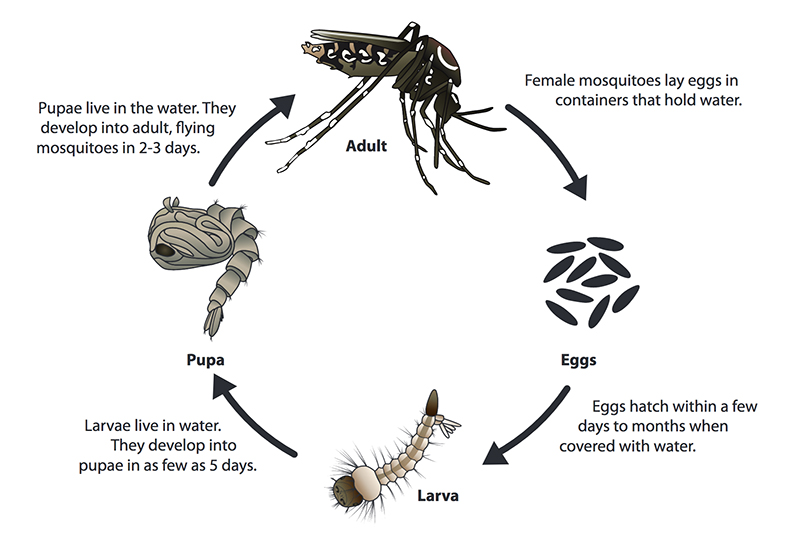
Researchers have specifically found a gene that has proven to convert female mosquitoes into male mosquitoes. An interesting fact about mosquitoes that I learned from reading the article was that female mosquitoes bite and the males do not. Only the females bite so they can take the blood for the production of eggs. 

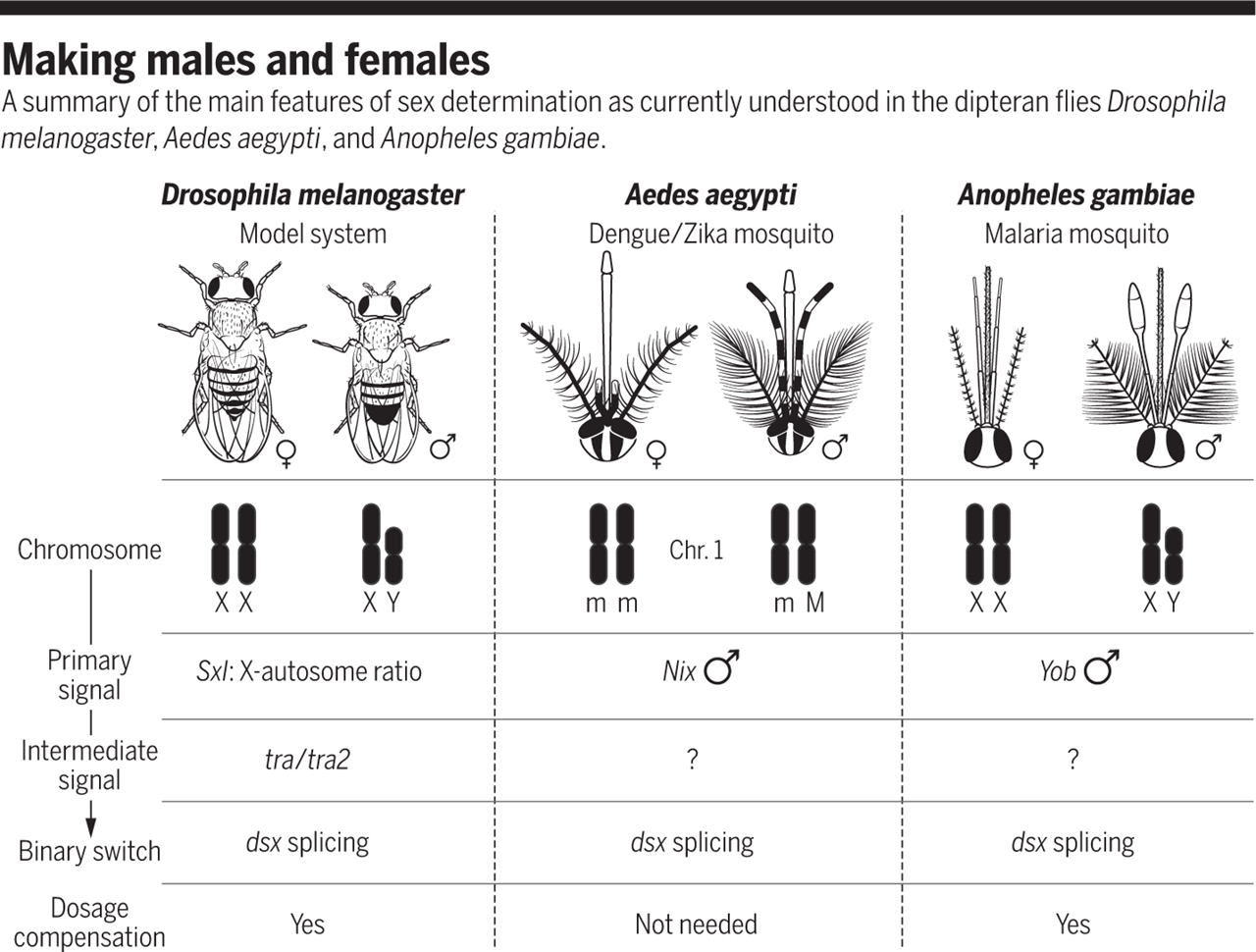
Nix, which is a male determining gene, can be inherited by the female mosquitoes in the chromosomal region. Although the females can be converted to male mosquitoes, there is one problem. The female mosquitoes that were converted to males can not fly because another gene called the myo-sex gene, was not inherited as well. This gene is needed to properly function as a male mosquito. Without this gene, the mosquitoes are not able to fly and as a result they will not be able to mate. 

Although researchers have a long way to go in perfecting the strategies to fully convert a female mosquito to a functioning male mosquito, huge milestones have been met. These small steps are only the beginning to being able to do the same process to different species, animals, and insects. 


Saturday, September 7, 2019

Genetic Modification of Mosquitoes leading to Self-destruction

Mosquitoes can be classified as major pests, especially with their potential to spread vector-borne diseases. These pests are especially potent in third-world countries, specifically Africa where malaria kills more than 400,000 people each year (Stein). After attempting to hack the mosquito genome to prevent mosquito populations from increasing for almost 8 years, two geneticists have finally achieved some promising results in 2011. Austin Bart and Andrea Crisanti, researchers at Imperial College London, inserted a gene that reached more than 85% of mosquito descendants within a population in a short amount of time. This new technology was the first ever engineered gene drive.

A gene drive is defined as a genetic modification designed to spread through a population at a higher than normal rate compared to inheritance. The gene drive relies on a fairly recent technology called CRISPR and some bits of RNA to alter or silence a specific gene or to insert a new one entirely. Within the next generation, the whole drive copies itself onto its partner chromosome so that the genome no longer has the natural version of a chosen gene. Instead, the generation will have two copies of the gene drive. With the gene drive in place, the gene is passed up to 100% of the offspring; compared to 50% of the offspring through standard inheritance. 


Gene drives have a lot of potential, including the ability to reduce or eliminate insect-borne diseases, controlling invasive species, and reversing insecticide resistance in pests. Although gene drive technology is promising, many questions still remain on how effective it will be when introduced to the wild. Some even question if it will even work, especially since some experiments with fruit flies have indicated resistance to the edited gene drive. However, Bart and Crisanti remain hopeful with their experiments on Anopheles gambiae (a vector for malaria) resulting in the inability for female mosquitoes to bite and lay eggs. It is key for geneticists to target the right gene, as some are highly conserved and would not do well with any mutations. Bart and Crisanti created a drive that would disrupt the doublesex gene in the A. gambiae species. This doublesex gene is crucial for fertility, so the gene is resistant to any kind of mutation. No eggs were produced by the females within 8 to 12 generations, essentially wiping out an entire population of potential malaria-spreading mosquitoes.

Even if the gene drives do prove successful, some ethical issues also rise. Is it just to wipe out entire populations of pests and going against mother nature through accelerated extinction? Is it right to test and release these mosquitoes in developing countries where the consequences are not yet known? What will happen when the gene drives do wipe out entire communities of pests? Fredros Okumu, director of science at Ifakara Health Institute in Dar es Salaam, Tanzania, believes it is important for people to spread information on the technology and to prepare them for what the gene drive will do to mosquito populations in their countries. Okumu also wants African scientists to work with and test gene drives locally, so a trust can be developed between scientists and locals (Scudellari).

Of course, gene drives will need many more tests before they can be fully introduced to the wild. Only a small fraction of mosquito species in the wild actually transmit disease, so the potential to wipe out the few hundred species of disease-carrying mosquitoes is ground-breaking. Not only will it prevent the spread of disease, it will save the lives of hundreds of thousands of people.

Links:
https://www.nature.com/articles/d41586-019-02087-5 
https://www.npr.org/sections/goatsandsoda/2018/09/24/650501045/mosquitoes-genetically-modified-to-crash-species-that-spreads-malaria
https://www.ncbi.nlm.nih.gov/pubmed/21508956?dopt=Abstract

Tuesday, April 30, 2019

The Only Bad Thing About Summer

An article was published by Science Daily, which summarizes a research study where a discovery was made which could save thousands of lives. The study was conducted by a team of researchers from the University of Arizona led by Jun Isoe. The report was published in PLoS Biology January 8th 2019. During this study, the researchers searched for genes which were exclusive to mosquitoes. To execute this task they utilized a technique known as bioinformatics. Through this process they discovered proteins which were unique to only mosquitoes. This was a crucial discovery due to the current pesticides on the market being non specific and killing off beneficial insects such as honey bees. 40 proteins were discovered, however only one contained the capability of effecting reproduction. They named this protein Eggshell Organizing Factor 1 (EOF-1). The name stemmed from its function during eggshell synthesis. RNA interference was used as a means of inhibiting this protein function which led to a unsuccessful eggshell formation resulting in death of the embryo. After further testing it was confirmed that the creation of a drug which targets EOF-1, would be an effective pesticide which could prevent the occurrence of diseases spread by mosquitoes.
It is safe to say we all hate mosquitoes. Unlike virtually any other insect, there are no friends lovers of mosquitoes. However, there is information which could pursued one to not wish to completely eradicate them. Although pests and even deadly to humans, certain plants and animals utilize mosquitoes for survival. That being said, I believe funding and research should be increased in this area especially for the purpose of eliminating the mosquitoes which are vectors for disease. 

Monday, April 1, 2019

Potential Mosquito Repellent

In a recent article by Science Daily, a promising new method of repealing mosquitos is described. It is known that female mosquitos use various senses to find people to bite. For instance, they rely on body odor, carbon dioxide levels, heat, and sweat. The key gene for human detection is an olfactory coreceptor called Ir8a. Researchers state that without a functional version of the Ir8a gene, mosquitos are much less attracted to people. Scientist Matthew DeGennaro says that removing the gene reduces "host-seeking activity" by approximately 50%. When thinking of creating a stronger mosquito repellent, it would be ideal to create an odor that masks the pathway of the Ir8a gene. Additionally, the same ideology could be used to lure mosquitos into traps. It was discovered that the disruption of the Ir8a gene can be beneficial to humans when DeGennaro's team used CRISPR gene editing technology to edit the specific gene.


I think the research done by DeGennaro is promising and may prove to be very helpful in the future. Mosquitos carry many deadly diseases such as Malaria and Zika. The insect is responsible for hundreds of thousands of deaths every year. If a repellent can be developed that significantly reduces the mosquito's affinity towards people, I think it would help many. It is important to continue to develop a solution to the mosquito problem. 

Tuesday, November 20, 2018

Genetically Modified Mosquitoes


Aedes aegypti is a type of mosquito that spreads Zika, dengue fever, yellow fever, and chikungunya virus.
Zika virus is a mosquito-borne flavivirus that was first identified in Uganda in 1947 in monkeys. It was later identified in humans in 1952 in Uganda and the United Republic of Tanzania. Zika virus disease is caused by a virus transmitted primarily by Aedes mosquitoes, which bite during the day.
Symptoms are generally mild and include fever, rash, conjunctivitis, muscle and joint pain, malaise, or headache. Symptoms typically last for 2–7 days. Most people with Zika virus infection do not develop symptoms. Zika virus infection during pregnancy can cause infants to be born with microcephaly and other congenital malformations, known as congenital Zika syndrome. Infection with Zika virus is also associated with other complications of pregnancy including preterm birth and miscarriage. An increased risk of neurologic complications is associated with Zika virus infection in adults and children, including Guillain-BarrĂ© syndrome, neuropathy, and myelitis.
Using genetically modified mosquitoes can help to eliminate the population of mosquitoes. Oxitec is a biotechnology firm based in Key West, Florida. They are trying to introduce genetically modified Aedes aegypti males into the local mosquito population, if they succeed the population of mosquitos will be wiped out from there and help protect people from Zika transmission.
Oxitec’s plan is to inject mosquito eggs with DNA that contains lethal genes, then release the genetically modified males from that batch of eggs so they can mate with wild females. Male mosquitoes do not bite; so, releasing only males is a way to make sure the release of these insects does not contribute to the spread of disease. The offspring of these lab-tweaked males and wild females, having inherited the altered DNA, cannot survive to adulthood.
Oxitec claims its method of mosquito reduction would be more effective than traditional insecticide and would cost about the same or possibly less.
To get rid of all mosquitoes many more things must be done, this requires getting rid of standing bodies of water, putting up window screens, and doing house-to-house insecticidal spray. In my opinion using genetically modified mosquitoes could help to reduce the danger of getting zika virus and other illnesses from them, which could save many lives, specially of pregnant women that get bit by them and the fetus is prone to be born with congenital malformations.
Sources:
https://www.theatlantic.com/technology/archive/2016/04/genetically-modified-mosquitoes-zika/479793/ Genetically Modified Mosquitoes: What Could Possibly Go Wrong? ADRIENNE LAFRANCE

Tuesday, November 6, 2018

Gene Drives to Eradicate Diseases

   Scientists are currently in the works of developing a gene drive to ultimately force a population into extinction, being known as a crash drive.  The technique of gene drives occur when specific genes, such as fertility genes, are made to be resistant to certain diseases, pesticides, or even reproduction itself.  With each gene only having a 50% chance of inheriting a specific trait, from either its father or mother, gene drives increase this percentage drastically but also have the ability to reduce reproductive rates.  Basically, through many populations within one type of organism, traits could be altered and could reflect beneficial results into the ecosystem.
    Pest populations such as insects and rodents can also be hypothetically decreased if the gene that is being altered results in lower fertility rates or higher death rates. The population currently being experimented on is mosquitoes in hopes of the rate of contracting malaria to decline.  In order to do this, scientists construct a Y chromosome which drives the X chromosome to disintegrate during the mosquitoes’ embryonic stages, resulting in only male offspring.  Or, since there are three sites at which could affect the fertility of female mosquitoes, two of the three could be impacted to result in less and less mosquito offspring being born.  An additional experiment could be to make malaria-resistant genes within the mosquitos themselves, which would be passed down from one generation to the next.
    What is hopefully expected is the amount of females in the population diminishing rapidly until the entire population eventually dies off.  This is because there is no possible  way for the males to reproduce sexually if there are no females.  Since the only mosquitoes that pierce skin to suck blood are female, the spread of malaria is hoped to also decrease since there are less of that gender. 
    While the amount of wild mosquitos in the population will be almost completely eradicated, this does not mean that the species will be lost from the world forever. Scientists would develop a way which mosquitos could be introduced into the world without being able to contract the disease which is being tested for, in this case it is malaria. 
    This will be the first gene drive which is to be released into nature, however, it is unknown what exactly the results of this experiment will conclude.  Gene drives also will only work on sexually reproducing organisms which produce at a fast rate, because if generation rates are extremely slow, the experiment will render to be useless.  With this new technique, common diseases such as malaria, lyme, yellow fever, and others could be almost completely eliminated if this experiment works correctly.  If done on plants to be made resistant to pesticides, this plays into the crops being genetically modified which is continually argued about in today’s world.  While it will be beneficial to reduce the amount of pesticides being released into the natural ecosystems and poisoning the soil and waterways, the concept of eating crops with these resistant traits is believed by some to cause similar characteristics in the person eating them.  However, when mixed with the spread of diseases through insects and rodents, I believe that it will be very helpful as our medical and technological advancements continue to improve.

Sunday, May 6, 2018

The Fight Against Malaria

In any hot and humid environment, a person can run come into contact with many flying insects, particularly with mosquitos. These pesky insects cause havoc from this bites, causing itches, and even sickness. Mosquitoes, however, have been known transmit and infect many with Malaria.


The disease, however, has been genetically identified. Scientists used piggyBac - transposon insertional mutagenesis to identify the genes that were associated with malaria. Parasites carrying malaria can now be readily identified and can potentially be treatable. Such a step can be help patients who are in dire straits when dealing with the diseases. Still, drug resistance is still a major problem, but using such a gene technique can allow for even better drug resistance and at the source. 


Saturday, November 25, 2017

GM Mosquitoes Closer to Release in U.S.


Recently, the FDA has granted permission to the EPA to take responsibility for overseeing the approval of genetically altered mosquitoes. These mosquitoes could be released to the wild as early as next year in the US. The intent is to stop the transfer of disease such as Zika and other viral diseases. The mosquitoes are modified with a gene that is self limiting, meaning it will kill the insects at a young age before they are able to reproduce. They will release males to mate with wild females in hopes that the gene will spread quickly. One proposed release site is in the Florida Keys which spends 1.1 million dollars a year to control mosquito populations using conventional insecticides. The Florida Keys Mosquito Control District has already partnered with the parent company that created the genetically modified mosquitoes and is awaiting regulatory approval. Hopefully the goal of this operation can be obtained without any environmental ramifications.


https://www.the-scientist.com/?articles.view/articleNo/50636/title/GM-Mosquitoes-Closer-to-Release-in-U-S-/

https://www.npr.org/sections/health-shots/2016/11/20/502717253/florida-keys-approves-trial-of-genetically-modified-mosquitoes-to-fight-zika


Scientists create yellow, three-eyed, wingless mosquitoes by using gene editing tool


Researchers in California have created mosquitoes that express the Cas9 enzyme. The addition of this enzyme aids researchers in using CRISPR to edit the mosquitoes' genes. They started by disrupting "cuticle, wing, and eye development, producing yellow, three-eyed and wingless mosquitoes". The research in gene editing is new and the researchers at UC Berkley have a long-term goal of suppressing the insects while avoiding resistance. Past attempts to edit the mosquitoes' genome have been unsuccessful, yielding low mutation rates, poor survival rates, and inefficient transfer of the gene to offspring. Researchers now state that this was the first step to controlling mosquito population and the spread of disease. 
I think science has come very far and now that the editing of an animals genome is possible, just about anything is possible. Controlling the mosquito population will definitely aid in saving thousands of lives from diseases like malaria, west nile virus, and yellow fever.

https://www.sciencedaily.com/releases/2017/11/171114142325.htm
https://www.cdc.gov/niosh/topics/outdoor/mosquito-borne/default.html