Showing posts with label " "Genes CRISPR. Show all posts

Thursday, April 23, 2026

Could Gene Editing One Day Treat Down Syndrome?

Down syndrome is a genetic condition caused by having an extra copy of chromosome 21, which leads to developmental differences and can increase the risk of conditions like early-onset Alzheimer’s disease. In a recent study, researchers explored a new gene-editing approach using a modified version of CRISPR to potentially “silence” this extra chromosome. Instead of targeting individual genes, scientists attempted to insert a gene called XIST, which naturally turns off one X chromosome in females, into the extra chromosome 21. This would essentially deactivate it and reduce the harmful effects caused by having too many active genes.

The researchers found that their improved CRISPR method made inserting the XIST gene much more efficient (about 30 times better than previous attempts). While this is still only being tested in cells in a lab (not in humans yet), it represents an important proof of concept that entire chromosomes might be controlled through gene editing. Scientists emphasize that this is still early-stage research, but it could eventually lead to new treatment strategies in the future.


I think this research is really interesting because it shows how powerful gene editing is becoming. The idea of turning off an entire extra chromosome instead of fixing individual genes is kind of mind-blowing. At the same time, it also raises ethical questions, especially when it comes to genetic conditions like Down syndrome that are part of people’s identities. I think this technology has a lot of potential to help with severe medical complications, but it should be used carefully and respectfully. Overall, this study shows how far genetics has come and how it could completely change the future of medicine.


Source:https://www.reuters.com/business/healthcare-pharmaceuticals/researchers-eye-potential-down-syndrome-fix-via-advanced-gene-editing-2026-04-17/
Additional Source: https://medicalxpress.com/news/2026-04-crispr-bold-silencing-syndrome-extra.html#google_vignette

Wednesday, November 26, 2025

Using Gene Editing to Reduce the Risks of Climate Change

Jennifer Doudna, who won the Nobel Prize for co-inventing CRISPR gene-editing technology, recently discussed how this tool can help address climate change challenges. Speaking at a summit in UC Berkely in October 2024, she explained that CRISPR is being used to develop crops and animals better adapted to extreme weather conditions caused by climate change. Examples include plants engineered to withstand droughts and cattle bred with shorter coats to tolerate excessive heat. The USDA's chief scienist also emphasized the necessity of these advanced technologies to maintain food production without requiring significantly more land and resources. 


CRISPR offers major advantages over traditional breeding methods because it can precisely target and edit specific DNA sequences in existing plants and animals. Older techniques relied on radiation or chemicals to randomly induce mutations, which was time consuming and unpredictable. While plant genomes are actually more complex than human genomes, making it challenging to identify which genes control traits like drought resistance, researchers are making progress. As scientists begin to map out plant genetics more thoroughly, Doudna believes CRISPR will become an increasingly practical tool for developing the climate resistant crops needed for future food security. 

This article directly relates to genetic modification and gene expression. CRISPR functions by targeting specific genes within an organism's genome by targeting specific genes within an organism''s genome and either removing or editing them, which alters the proteins produced and the resulting physical traits. Rather than relying on natural selection or traditional breeding methods that take many generations, scientists can now directly modify the genetic code to produce desired characteristics like heat or drought resistance. This demonstrates how understanding the relationship between genes and traits can be applied to solve real world agricultural and environmental challenges. 

Sources: 

Chaparro, Tonio. “CRISPR in Agriculture: 2024 in Review - Innovative Genomics Institute (IGI).” Innovative Genomics Institute, 10 Dec. 2024, innovativegenomics.org/news/crispr-in-agriculture-2024/.

Temple, James. “How a Breakthrough Gene-Editing Tool Will Help the World Cope With Climate Change.” MIT Technology Review, MIT Technology Review, 2 Nov. 2024, www.technologyreview.com/2024/11/02/1106579/how-a-breakthrough-gene-editing-tool-will-help-the-world-cope-with-climate-change/.

Tuesday, November 25, 2025

New Gene Editing Strategies used to Treat Rare Genetic Diseases

 A recent article by the New York Times, entitled “New Gene-Editing Strategy Could Help Development of Treatments for Rare Diseases”, discusses a new approach to genetic editing. This new technology is led by Dr. David Liu, a biologist at the Broad Institute and Harvard. Currently, the process of gene editing offers hope for treating certain genetic diseases; however, it is both demanding of resources and time and only applies to a small number of patients. With new research methods, Dr. Liu is hopeful for a more efficient method of gene editing. Instead of using personalized gene editing for each disorder, Dr. Liu's research provides a pathway for a more standard way to correct genetic diseases. This technique could treat patients regardless of what genetic mutation they suffer from. 7,000 total rare genetic diseases affect more than 400 million individuals worldwide. This study is focused on “nonsense mutations” that cause the production of premature stop codons, causing the protein to be truncated. Dr. Liu's technology inserts a molecule that replaces the stop codon and continues manufacturing a full-length protein, instead of targeting the specific mutation itself. The future for this technology is long and must be well tested before it can be seen in human patients. However, there is great promise for the future of gene editing and future patients. Before this technology, gene editing was used to alter specific mutations in individual patients. A case of gene editing in a baby at the Children's Hospital of Philadelphia shows the success of this genetic editing on a baby born with a rare genetic mutation that usually kills 50% of infants born with this mutation. An article describing this case shows this infant as one of the first to be cured successfully by genetic engineering. This success provides hope for the future of genetic editing and the potential future outcomes that may stem from this success. 

This new technology enhances the process of genetic editing. This gives great hope for the future of science and medicine as genetic editing for specific mutations has already been proven successful, highlighted in the case of the infant whose life was saved from such a process. Hopefully, in the future, this efficient and cost-effective technology can serve the 400 million people suffering from rare genetic diseases around the world.


Wednesday, March 12, 2025

Unlocking Ancient RNA Systems for Advanced Gene Editing

    A recent discovery by MIT researchers has unveiled an ancient RNA-guided system that could revolutionize gene-editing therapy. This system, believed to predate CRISPR, simplifies the delivery of gene-editing tools by utilizing a compact enzyme called Fanzor, which is guided by RNA to make precise genetic modifications. Unlike CRISPR-Cas systems, which rely on large and complex protein structures, Fanzor offers a more efficient and adaptable alternative for therapeutic applications. This could make gene-editing treatments more accessible by improving their delivery into human cells, addressing challenges related to size limitations and immune responses associated with traditional CRISPR-based methods.


    By understanding the natural origins of these systems, scientists can engineer more effective gene-editing technologies that could be used to treat genetic disorders, develop new medical therapies, and advance synthetic biology. This discovery reinforces the idea that molecular biology is constantly evolving, offering new insights into how life manipulates genetic material for survival—insights we can now harness for cutting-edge biotechnology.

Thursday, December 7, 2023

CRISPR Gene Editing

           CRISPR 2.0: a new wave of gene editors heads for clinical trials

CRISPR genes represent a revolutionary technology in the field of genetic engineering. Derived from the immune systems of bacteria, CRISPR genes are composed of short, repetitive DNA sequences interspersed with unique genetic code. Paired with the protein Cas9, CRISPR allows scientists to precisely edit and modify genes within living organisms. This groundbreaking tool has immense potential for applications in medicine, agriculture, and various scientific endeavors. Researchers are using CRISPR gene editing in clinical studies as a new tool that is rapidly growing to treat numerous diseases. Genome editing offers the ability to correct mutations in cystic fibrosis using base editing it changes individual DNA letters or bases relying on the Cas9 enzyme used in the original CRISPR system.


https://www.ncbi.nlm.nih.gov/pmc/articles/PMC7146048/

https://www.nature.com/articles/d41586-023-03797-7#:~:text=Landmark%20approval%20of%20the%20first,and%20more%20precise%20genome%20editors.

https://crisprmedicinenews.com/clinical-trials/


Tuesday, November 21, 2023

A New Look At CRISPR

    Recently there have been significant advances in CRISPR gene-editing technology. The CRISPER stands for "Clustered Regularly Interspaced Short Palindromic Repeats" which refers to a family of DNA sequences that are found in genomes of bacteria and other microorganisms. 


 In recent news, researchers apart of Harvard University, Broad Institute, and the Howard Hughes Medical Institute have found advances in the CRISPR gene. Two papers were published with the work and the finding. The first paper deals with the introduction of cytosine base editors. These cytosine base editors reduce off targeting and edit by a 10 to 100-fold, and this is showing for treatment in human diseases. 


    The second paper deals with the new finding of CRISPR-Cas9 proteins and how they are capable of targeting larger fractions of pathogenic mutations like the ones that are responsible for diseases related to sickle cell anemia. With these findings are also advancements which are trying to minimize risks of adverse effects and start to expand the components of CRISPR in genome editing. In the research it showed how CRISPR has limited ability to access the entire human genome and introducing us to proteins which are able to recognize DNA sequences without a common pattern. This allows us to target half of DNA sites, even those that were challenged mutations. Because of these findings we have been introduced to more ways to edit genomes and find treatments for genetic diseases.


Source:

How CRISPR technology is advancing — Harvard Gazette


Other:

What is CRISPR/Cas9? - PMC (nih.gov)


Tuesday, August 11, 2020

Fermented Sausage can make it taste better?

Starter Culture - Salami Makings Secret Essential - Sausages Made ...
Fermentation was discovered in 1857, the science beyond it is amazing and interesting. Starter culture uses the same idea by having the bacteria ferment and make a culture of bacteria in the subject of matter, it is used in milk to make yogurt and cheese, so it is very common. It is also used in meats like chorizo and pepperoni because it is able to change the composition of the fatty acids in the meats, to have a taste so Delicious. One interesting thing about some cultures, that when sour bread is being made, there is a bacteria in the sourdough culture that can produce a type of fatty acid that can increase the bread's resistance to mold. It not known how they are able to do it because there hasn't been a clear study using bacteria free culture." bacterium Latilactobacillus sakei; in another preparation, they used both L. sakei and Staphylococcus carnosus. Both of these samples were made in such a way as to prevent contamination from bacteria in the environment. They treated the third sample -- the control -- with an antibiotic solution to eliminate the microbes naturally living within the sausage. Over the course of 20 days, they checked the sausages and found a markedly different profile for microbe-free sausage compared to the sausage containing either of the two microbial cultures." With this experiment they were able to figure out the difference of the 2 bacteria and also figure out how it effected the taste

Sunday, August 2, 2020

CRISPR-Cas9 tool: Understanding and possibility of improving gene editing.

Everything You Need to Know About CRISPR-Cas9
CRISPR is a family of DNA sequences found in the genomes of prokaryotic organisms such as bacteria and archaea. These sequences are derived from DNA fragments of bacteriophages that had previously infected the prokaryote. They are used to detect and destroy DNA from similar bacteriophages during subsequent infections. Researchers at the University of California, Berkeley were able to obtain the first 3D structure of the base editor that is able to bind to the DNA. "A base editor is a type of Cas9 fusion protein that employs a partially deactivated Cas9 -- its snipping shears are disabled so that it cuts only one strand of DNA -- and an enzyme that, for example, activates or silences a gene, or modifies adjacent areas of DNA. Because the new study reports the first structure of a Cas9 fusion protein, it could help guide the invention of myriad other Cas9-based gene-editing tools".[1] CRISPR-Cas9 was used to target enzyme regions to manipulate genes. David Liu of Harvard University combined a Cas9 with another bacterial protein to allow the surgically precise replacement of one nucleotide with another. With this finding scientist were able to modify the base editor called ABE8e which was much faster.

Saturday, August 1, 2020

CRISPR-Cas9 Used For First Gene Knockout in a Cephalopod

CRISPR-Cas9 is the most simple and precise method of genome editing today, and it was used to knock out a gene from a cephalopod genome for the first time in history. Scientists used an important species of squid used often for research in recent decades, known as the Doryteuthis pealeii. From the embryos, they knocked out a pigmentation gene affecting skin and eye cells. The researchers’ goal was to test the organism’s function after the edit so as to make it a more useful research organism, alongside fruit flies, zebrafish, and mice. This could lead to further study and advancement in various fields of science, as cephalopods are extremely sophisticated in all aspects of their being.


Having been able to knock out a gene from one of the most advanced forms of life gives researchers hope for further discovery, including knocking in genes. Such genes could facilitate research, making cephalopods more useful to scientists. This particular species of squid has led neurobiologists to make numerous discoveries in the past, but they will not likely be effective in genetics research. While knocking out a gene from the D. pealeii was challenging yet very efficient, they are too large and have not yet been found to be cultured in the lab through multiple generations. There is hope that in the near future, smaller cephalopods, such as the Euprymna berryi, could become effective research organisms in the field of genetics.


Article: https://www.sciencedaily.com/releases/2020/07/200730141353.htm

Related Article: https://geneticeducation.co.in/gene-knockout-steps-methods-and-applications/

Wednesday, November 27, 2019

Crispr Takes its First Steps in Editing Genes to Fight Cancer
A powerful gene-editing technique has been experimented in people with cancer that could result in the person’s own immune system attacking cancer. This experiment meant that doctors are close in editing genes to attack cancer. The DNA-singling tool Crispr is what had been doing the editing. Early results showed procedure was safe but it was still unclear if the patient’s immune system was attacking the cancer cells. Only three patients had been used that were over the age of 60 and had advanced cancers. Although the treatment has not shown if their immune systems were attacking cancer it did show that it was stabilizing their cancer. Not only is Crispr being used to help with cancer but it is also being experimented in treating sickle cell anemia. 
What are the doctors are doing is removing the T-cells from the patient’s blood and are using Crispr to remove three genes that can get in the way of the cell capability of fighting cancer. The T cells were then armed with a virus that would lead the cells to attack a protein found on cancer cells that are not usually found in healthy cells. After the process the cells were infused back into the patients. The cells showed that they remained alive and had no bad effect towards the patient. The results that the experiment is showing are promising but it is still unclear if the cells are fighting cancer. Doctors will be able to see if the treatment is actually working once more patients are involved. 
This was a very good article to read. I think it is great that doctors are coming closer to finding ways for cells to attack cancer. This gives a lot of hope to patients with cancer. 


Links:
Crispr Takes its First Steps in Editing Genes to Fight Cancer

Dogs with muscular dystrophy receive CRISPR treatment


Dogs with Duchenne muscular dystrophy (DMD) were treated with the CRISPR genome editor to restore production of the missing protein responsible for the disease. The dogs showed obvious signs of behavioral improvement such as running and jumping. DMD is an x-linked genetic disorder that affects about 1/3600 boys worldwide. Progressive muscle degeneration and weakening can begin as early as 3 years old and affect every muscle in the body, eventually leading to life threatening complications from heart and respiratory muscle weakness. This study used DMD beagles with a genetic mutation similar to the most common mutation in humans, making it an important model for the clinical translation of CRISPR gene editing

In this study, four 1-month-old beagles were treated with dystrophin-targeted CRISPR either directly in a leg muscle (2 dogs) or intravenously at either a low or high dose (the other 2 dogs). Six weeks after muscle injection, the dogs’ leg muscle was making dystrophin at about 60% of healthy levels, compared to almost none pre-treatment. After 8 weeks, the dog treated intravenously with a high dose made dystrophin at 5-92% of healthy levels in various muscles, notably 92% in the heart and an average of 50% restoration in three leg muscles. Long-term studies with more dogs are needed for verification before even considering clinical trials.

Friday, November 1, 2019

Designer Babies

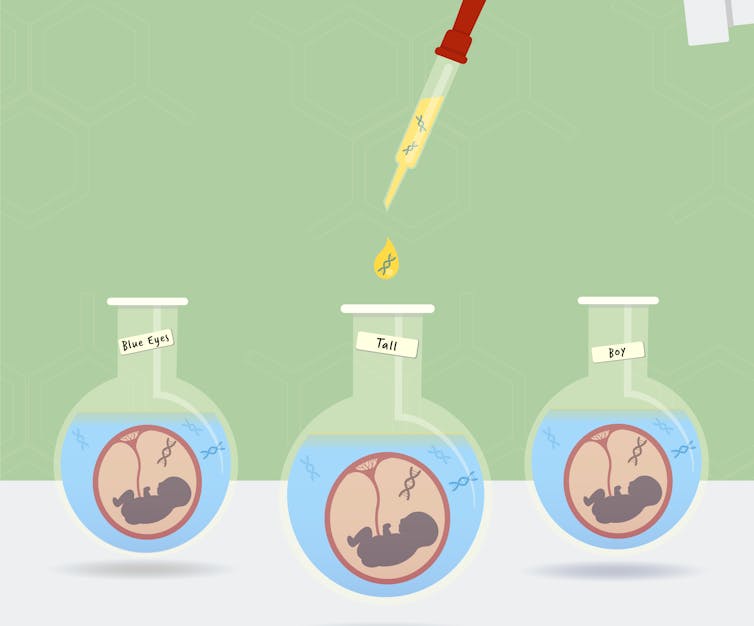
As we know, the power of technology becomes greater and greater everyday. The ability to have access to genetic technology to give parents the option of modifying their unborn child seems unrealistic. Although, many people seem to be involved in “designer babies.” For instance, if a baby has a possible chance of inheriting genetic diseases, now a parent is able to free their offspring of that gene. Britt, author from Live Science, states, “A baby born in England recently was chosen in the embryonic stage to be free of a gene linked with certain types of cancer”(Britt 2009). Therefore, this baby will never develop a genetic form of breast cancer or ovarian cancer in her adult life. Another case like this was done in the United States, with a man who had a 50 percent chance of passing on a gene for deadly colon cancer had embryos screened prior to implanting one in her womb, resulting in a daughter that won't get the disease.
                                      

Up until 2017, it was known that most countries have not yet legislated on genetic modification in human reproduction, but of those that have, all have banned it. Philip Ball, editor of The Guardian, states, "the idea of using Crispr-Cas9 for human reproduction is largely rejected in principle by the medical research community"(Ball 2017). The team of scientist investigating this research is worried that using methods like Crispr-Cas9, could quickly "start us down a path towards non-therapeutic genetic enhancement"(Ball 2017), even if focused initially on improving health. Although, Ronald M. Green, an ethics professor at Dartmouth College has a whole different outlook on this opportunity. Green envisions a "nearly disease-free future in which the information gleaned from reprogenetics allows genes to be tweaked, producing healthier humans without discarding embryos"(Britt 2009). Therefore, there are still many different opinions on whether or not making improvements to the genome would be a good thing or if it would backfire.


Monday, July 22, 2019

Study Debunks 'Depression Genes' Hypotheses

For years, researchers have supposedly found that a certain group of genes play a key role in depression. This has not only lead to a lot of further research, but also given doctors and patients the hope that technology like CRISPR could simply cut these genes out for future offspring. These previous ideas of depression genes come with hypotheses about the future of the disease itself.

Several of the prior studies, at least 10, saw that a certain 18 genes were completely associated with depression. Unfortunately, new testing has proven that of the 18 specific genes that scientists have associated with depression, none of them play any larger role than every other random gene in the body. Though depression is indeed a heritable condition, it “is influenced by many many variants, and individually each of those has a minuscule effect." 

Looking closer at some studies, a particular gene SLC6A4 which directly deals with the transportation of serotonin was previously said to be very important with depression. Specifically, it was believed that a person with a short version of this gene was at a higher risk for developing depression than a person with a “normal” size SLC6A4. This is even more likely if the person was exposed to early life trauma. 

Another study was done with the participation of several DNA/chromosomal data sources such as 23andMe. They used the data from those types of websites in order to determine if any of the so called “associated genes” actually played a role in producing depression when combined with childhood trauma. This is said to be the largest depression study known to man. The researchers were actually surprised to find that those 18 genes are no more related to depression than any other gene. However, it is still believed that as a group, many genes participate in the development of depression. It is important to note that “genes associated with the disease, and what they do, can ultimately come up with more accurate "polygenic scores" to predict risk and still potentially develop drugs designed to counteract that risk.”


I think that this study is really interesting because it involves scientists disproving past hypotheses about this specific disease. More genes must be looked at to determine even the smallest roles in depression, yet I don’t think this disease will ever be completely abolished. Too many genes are involved to pinpoint a certain gene removal or drug that will get rid of all symptoms. This research is a big step in furthering the scientific knowledge of depression 


Thursday, July 4, 2019

Genetic Mutation in “CRISPR” Babies May shorten Lifespan


With new research into the effects of editing the genes of embryos prior to birth using CRISPR, results show this technology may be life threatening. A Chinese scientist used CRISPR to remove the genes that would have given twin girls HIV- their father tested positive- later causing AIDS. This specific gene he chose to edit may decrease the lifespan of these girls by two years. If the mutation causing HIV is passed down by both the mother and the father, then editing the mutation will prevent HIV. However, if the mutation is simply passed down by only one of the parents, then the editing will not allow for the same strength protection. 

Scientists are currently trying to understand why there is less protection with only one mutation. When editing genes, if the patient is an adult the edited genes will not be passed to the child but if CRISPR is used on an embryo, the edits will be passed on. This is due to the fact that an edit on an embryo will change its genetic code in most of its cells. 

Further, the double mutation has been “associated with improvements in mental ability in mice and recovery from stroke in humans.” This has lead researchers to want to understand why this specific gene has such an effect on many diseases.

Most scientists argue their opinions on the use of gene editing with the pros being that they “prevent an otherwise unavoidable disease.” The opposing argument is often that the technology is too premature and not ready for everyday use. 

The Chinese scientists did not properly go about this procedure and therefore, the rest of the science community is extremely against him. He has now been fired yet many other countries are begging to buy his products. 

I think that CRISPR technology is fascinating and needs to be put to use when researchers are better able to understand the impact that gene editing will have. For instance, certain diseases like Cystic Fibrosis are live threatening from the day a child is born and therefore should be able to be fixed. While in this case of HIV mutations, this is not as life threatening as it once was and should not be of the utmost concern.  


Wednesday, May 1, 2019

Gene editing with CRISPR to stop disease before birth


Recently researchers have edited genes with CRISPR technology to prevent lethal lung disease. Scientists are able to do this by inserting CRISPR reagents into the amniotic fluid while the fetus is still developing. The gene editors were introduced four days before mice gave birth and a change in the airway. After doing this there is much to be discovered but they were able to save 22 percent of the animals from this disease. It's proven that there gene editing worked because otherwise the mice would've died within 24 hours.


More research will be done to see how effective the treatment is in the trial phase. However, I can't help but think about how groundbreaking that would be in order to prevent diseases in people before they actually happen. This research isn't the first of it's kind though and actually started with working on liver disease which can also kill in a relatively quick amount of time. I think that also looking into pancreatic cancer or other cancers would also be influential in there research because of the large effect it has on the human population. Maybe someday we'll be able to edit out all of the diseases out of a person's genome using advanced technology like CRISPR.

Friday, April 26, 2019

Allelic Drive

A new CRISPR technology is creating an allelic drive according to Science Daily. It has gRNA which is a guide RNA that locates undesired gene variants that CRISPR can cut and replace with desired version of the gene. This application makes it much easier for scientists to modify populations. The allelic drive allows letter by letter replacement instead of whole sections. It is mostly used in agriculture currently but it will be used on disease carrying insects. Eventually allelic drive will be used to study human disease and hopefully aid in cures of diseases.
I think with rise of outbreaks of human diseases that could be kept down with vaccinations that people choose to deny, it could allow the human population to eliminate diseases without having to use a vaccine. So many people are straying from vaccines which is not helpful for the population.

Friday, April 5, 2019

Gene Edited Lizard


Using CRISPR technology graduate students and faculty members at the University of Georgia were able to create the first gene edited lizard. In the past CRISPR-case9 has been used to sequence and edit the genomes of a various species. However, until now no gene edited lizards have come about. In the picture below the gene edited lizard is the albino lizard on the right.

Researchers found that the key step in editing the genes of the lizard was first understanding the reproduction system and cycle of reptiles. The genes had to be targeted while still being developed inside of the mother. The gene coding for Albinism was chosen because of its obvious phenotype. Out of a batch of 146 gene edited eggs 3 came out Albino. These researchers will continue to look into why this happens. Hopefully, they come up with more substantial results because this could've been a genomic mutation. In the future if they're able to produce a larger number of Albino gene edited lizards or try another gene to edit then the result would be even more creditable I think further testing should happen like researchers already plan to do.

Sunday, March 31, 2019

Cell editors correct genetic errors


In an article published by Science Daily, scientists studying RNA editing have decided to turn to the professionals for help. Editing proteins known as PPR are masters in the art of RNA modification. In plants much of the genetic material contains small errors affecting the DNA in the mitochondria of the cells. But rather than changing the DNA (the actual building blueprints.) these editors act as proofreaders. Going over the RNA and proofreading for any mistakes. Since each editor can usually only recognize one specific error, most plants can have upwards of 500 different proof readers. Researchers curious to see how these whether these editors work alone, or if they need help decided to insert the PPR into E. coli. The assumption of most researchers was that the PPR locate errors and then call upon an RNA correction fluid, an enzyme called cytidine deaminase for help. However, what they discovered was that some PPR proteins have a certain sequence of amino acids at their end which are known to theoretically act as cytidine deaminase. It’s as if they carry their own vial of correction fluid, ready to correct any errors on the spot. 


The question is, why did this develop over the course of evolution. One theory suggests that the RNA editing may allow plants to collect mutations. With so many different combinations of changes that individually could be harmful or even fatal, but together could provide a survival advantage for the plant. Discoveries like these pave the way for amazing possibilities in the now not so distant future. One-day RNA editing will be used to cure diseases that today’s medicine simply cannot cure and treatments cannot help. The future of medical science may very well depend on genetics.


Wednesday, March 27, 2019

Gene therapy for unborn babies

The Guardian posted an article about doctor's using CRISPR to treat a rare brain disorder in unborn babies. The gene therapy they are using could mend the mutations in the womb that causes Angelman Syndrome. The treatment has never been tested before but it would involve the doctor's injecting a virus into the brain that infects the neurons and delivers molecules to correct the genetic faults. The disorder can be detected at 10 weeks and has been tested on a brain cell grown in a dish.  It is suggested that the procedure will be best performed in the second trimester. Normal brain development gene comes from UBE3A where the gene from the mother is "on" and from the father is silenced. During development the gene from the mother is missing or mutated, so the CRISPR technology turns the father's gene "on".
Angelman syndrome affects one in 15,000 births and the children often experience seizures, along with difficulty sleeping and walking. I believe that once this is tested more that it would greatly improve the lives of many children. The testing could be better if doctor's were able to actually use the CRISPR technology on babies in the womb but due to the uncertainty I understand why the testing is only done on mice. Hopefully within the next few years this technology and syndrome can be handled and cured or at least be a treatment for children already suffering from the syndrome. 

Tuesday, March 26, 2019

New DNA Tool

According to Science Daily, a new DNA tool can accurately predict people's height and could potentially assess risk for serious illnesses, such as heart disease and cancer. It first started out with studies being done in Michigan State University, where computers were used to read people's height and bone density. The reading of bone density was not entirely to point, but it showed accurate readings of other things, such as diseases.


The advanced algorithm is able to look at the genetic make up and height of each person. The computer learns from each person and ultimately produces a predictor that can determine how tall they are from their genome alone. The computer system is currently being worked on in order to advance and accurately interpret genetic traits and diseases. 

This new technological advance can help many doctors identify a better way to read and predict illnesses. A genomic test using this algorithm can be as simple as a cheek swab, with efficient cost as low as $50. I believe that this is a better advancement into technology, where doctors are going to have a better hands on exposure to patients health.