Showing posts with label fetus. Show all posts

Tuesday, December 9, 2025

New findings in the development of Childhood Leukemia

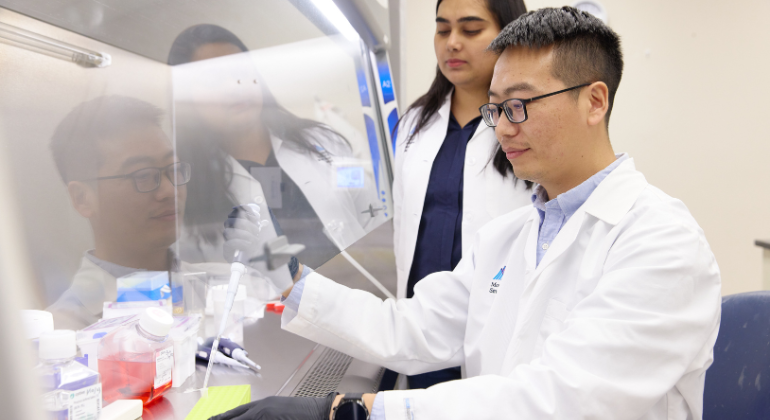
    A recent article by the Mount Sinai Health System shows new promising research regarding childhood leukemia. A research team at theIcahnm School of Medicine used gene editing techniques on human blood cells at different stages of development in a child's life. They introduced a cancer-inducing gene and analyzed the stem cells collected before birth, after birthduringat childhood, and during adulthood. By doing this, the team was able to analyze an identical genetic mutation, but at different developmental stages in humans. Their research found that the time the mutation occurs does affect the aggression and treatment of the cancer that develops. In fetal stem cells, the cells rapidly transformed into leukemia, showing the most aggressive form in the entire study. In human cells that were in adulthood, the cells were less likely to transform into leukemia, making the process much harder. This study makes 2 very important findings for the field of cancer studies and genetics.  Firstly, the time the mutation occurs in development matters greatly for the severity and treatment of the cancer. Secondly, it debunks the idea that the same mutation will create an identical cancer. Another study on childhood leukemia analyzed newborn blood samples between children who later developed leukemia and those who did not. By studying the different methylation patterns, they found that not just the DNA sequence mutations affect children who later develop leukemia. This study supports the idea that some childhood leukemia ensues in the prenatal fetus. 

    
       This research is important to society as leukemia is the most common cancer found in children. The implications of this study must be applied ot the future of cancer studies involving childhood leukemia. This finding challenges previous ideas, as it could have been thought that all identical DNA mutations create the same effect on the large idiucal. With the findings of the Ichan School of Medicine, it is now understood that the developmental stage this mutation occurs is just as important as the mutation itself. 


Wednesday, March 6, 2024

Fetuses make a protein that causes morning sickness in pregnancy

The article from Science News published on January 3rd, 2024, talks about how it was thought to be a surge of hormones made by the fetuses that caused the nausea and vomiting for mothers, otherwise known as morning sickness. 

A new study found that GDF15, a protein connected to stress response, is found in greater amounts in pregnant patients experiencing nausea and vomiting than in non-symptomatic individuals. Despite reduced GDF15 production prior to pregnancy, a genetic variation in GDF15 raises the risk of hyperemesis gravidarums. High levels of GDF15, coming from the placenta and fetus, are found in pregnant individuals having this variation. Those with beta thalassemia, on the other hand, who have elevated GDF15, have fewer symptoms of nausea. Research on mice suggests that decreasing the nausea effects of GDF15 may include previous exposure. Metabolic syndrome could be prevented by increasing GDF15 with metformin. However more research needs to be done on the safety for GDF15-blocking therapies. Treatments for severe nausea and vomiting during pregnancy may benefit from specific medications that target GDF15.

This is important because so many women, about 80 percent of pregnant women, suffer from nausea and vomiting also known as morning sickness and there can be extreme consequences for both the mother and fetus. This can lead to weight loss, dehydration, and even hospitalization and death of the fetus or the mother. If we found a way to cure or prevent morning sickness it would help so many pregnant women. 


https://www.sciencenews.org/article/morning-sickness-pregnancy-nausea-vomiting-fetus-protein

https://www.nhs.uk/pregnancy/related-conditions/complications/severe-vomiting/#:~:text=Around%208%20out%20of%20every,women%20it%20can%20last%20longer.

Friday, November 17, 2023

Is Fetal Macrosomia Hereditary?

     Fetal macrosomia is a fetus larger than 9 to 10 pounds. Findings in a new study suggest that if you or your partner were larger than average babies at birth, you are likely to have a ‘big baby’. Based on the parents that were studied, even if only one parent was a large baby the chances of having a big baby were  more than double if only the father had been born larger than average. In addition, compared to both parents being macrosomia the chances of having a larger baby was more than three times if only the mother had been larger.


    Not only does studies related to this topic help excited partners when planning for their child, but knowing this type of information can serve as a preventative measure.  Sometimes, when babies are born larger than average there can be complications. However, knowing this chance is hereditary in your family can provide prenatal care and interventions to make sure there is a safe pregnancy and successful birth of the newborn.


Wednesday, May 1, 2019

Gene editing with CRISPR to stop disease before birth


Recently researchers have edited genes with CRISPR technology to prevent lethal lung disease. Scientists are able to do this by inserting CRISPR reagents into the amniotic fluid while the fetus is still developing. The gene editors were introduced four days before mice gave birth and a change in the airway. After doing this there is much to be discovered but they were able to save 22 percent of the animals from this disease. It's proven that there gene editing worked because otherwise the mice would've died within 24 hours.


More research will be done to see how effective the treatment is in the trial phase. However, I can't help but think about how groundbreaking that would be in order to prevent diseases in people before they actually happen. This research isn't the first of it's kind though and actually started with working on liver disease which can also kill in a relatively quick amount of time. I think that also looking into pancreatic cancer or other cancers would also be influential in there research because of the large effect it has on the human population. Maybe someday we'll be able to edit out all of the diseases out of a person's genome using advanced technology like CRISPR.

Thursday, November 24, 2016

Non-Invasive Fetal Genetic Test

Researchers at Wayne State University School of Medicine have developed a non-invasive testing method - Trophoblast Retrieval and Isolation (TRIC). This method of genetic disorder testing is as legitimate as more invasive tests like amniocentesis, and can be performed as early as 5 weeks into pregnancy. Knowing that the placenta is derived from the embryo, its DNA is identical to that of the fetus, thus the cells collected by TRIC can be used for prenatal genetic testing. For this research, data was collected from fetuses anywhere between 5-19 weeks of gestation, all of which were proven to be effective test subjects.


This research opportunity first started as a two year long grant given to the researchers in 2012. Shortly after publishing these discoveries earlier this month, a related paper, head researchers D. Randall Armant and Sascha Drewlo released a seperate paper describing a correlation between the presence of specific proteins in the fetus, obtained by TRIC, and pregnancy complications such as an undernourished fetus, and high blood pressure and kidney disorders in the mother.

Overall, this new fetal genetic testing method can prove to be immensely helpful in identifying the sources of pregnancy complications as well as learning how to manage troublesome pregnancies. I believe this is a much needed discovery in the development of the medical sciences, and that there is so much more that can be done with this new finding, in both testing method and complication correlations.

Picture provided by Medical Xpress (http://medicalxpress.com/news/2016-11-reveals-non-invasive-prenatal-genetic-accurate.html).

Non-Invasive Fetal Genetic Test

Researchers at Wayne State University School of Medicine have developed a non-invasive testing method - Trophoblast Retrieval and Isolation (TRIC). This method of genetic disorder testing is as legitimate as more invasive tests like amniocentesis, and can be performed as early as 5 weeks into pregnancy. Knowing that the placenta is derived from the embryo, its DNA is identical to that of the fetus, thus the cells collected by TRIC can be used for prenatal genetic testing. For this research, data was collected from fetuses anywhere between 5-19 weeks of gestation, all of which were proven to be effective test subjects.


This research opportunity first started as a two year long grant given to the researchers in 2012. Shortly after publishing these discoveries earlier this month, a related paper, head researchers D. Randall Armant and Sascha Drewlo released a seperate paper describing a correlation between the presence of specific proteins in the fetus, obtained by TRIC, and pregnancy complications such as an undernourished fetus, and high blood pressure and kidney disorders in the mother.

Overall, this new fetal genetic testing method can prove to be immensely helpful in identifying the sources of pregnancy complications as well as learning how to manage troublesome pregnancies. I believe this is a much needed discovery in the development of the medical sciences, and that there is so much more that can be done with this new finding, in both testing method and complication correlations.

Picture provided by Medical Xpress (http://medicalxpress.com/news/2016-11-reveals-non-invasive-prenatal-genetic-accurate.html).

Friday, April 22, 2016


            When a pregnant women smokes researchers best explain the effects on fetuses to be much like the effects that occur to women or men who smoke.  The same side effects a person experiences when they are smokers can be present to a fetus that is in the womb of a mother who is a smoker. Findings on new development related genes in correlation with pregnant smokers may help many understand about the connection between children health problems and smoking during pregnancy. Researchers have been intrigued with this topic and have began many studies on newborns to identify correlations between smoking while a fetus is still in the womb. Scientists have collected blood samples from umbilical cords of babies whose mothers are smokers and compared them to samples of blood of babies whose mothers are nonsmokers. The results showed that those babies who were born to smokers had 6,000 spots in which their DNA was chemically modified.

            Specific chemicals like carcinogens for example can cause mutations and therefore the increase of birth defects rises incredibly. Nearly half of the locations could be linked to specific genes including those involved in lung and nervous system development according to the article. Researchers also found that even in older children whose mothers had smoked during pregnancies DNA modifications were still found. It is important for women to know that although the fetus is not physically smoking the cigarette it does not mean it will not affect the fetus! Serious health issues and birth defects can be of consequence of this act. Perhaps if one knows they are unable to quit smoking, they should consider not having a baby after all. 

Monday, April 11, 2016

Mom’s Smoking Can Alter Fetus’s DNA


Despite the large amount of research and warnings, studies have shown that 12% of pregnant women in America still smoke. Studies are also showing that smoking during pregnancy can actually alter the DNA of the fetus and lead to birth defects such as low birth weight, asthma, and cleft lips/palates. In order to collect this data, researchers gave questionnaires to 7,000 mothers from around the world where they were asked how often they smoked during their pregnancy. Also, they collected a blood sample from each newborn’s umbilical cords so that they could examine their DNA. The studies showed that DNA does not change the DNA sequence in smoke-affected babies, but affected which genes were turned on or off. For example, “methylation” is when a small molecule is added onto DNA, preventing a certain section from being turned on, which can lead to birth defects. Even though the fetuses aren’t breathing in the smoke, many toxins from cigarettes will pass through the placenta and into the fetus. Researchers believe that methylation plays a large role in the effects on the DNA in the fetus.

It is alarming to me that a percentage of pregnant women in the country still smoke while pregnant. Even though 12% is not that high while looking at the big picture, in reality 1% would still be too high a number. Also, this percentage doesn’t take into account the amount of women who lied and said they did not smoke while pregnant. The effects of smoke on adults is significant and can lead to a number of health complications over time such as various types of cancers and heart disease, so I can only image how many complications these affected fetuses will have growing up. It is also often said that these fetuses are more likely to die from Sudden Infant Death Syndrome and if they do live, they have an increased chance of ADHD. Mothers are supposed to love and care for their children, and smoking while pregnant is selfish because their addiction can lead to lifelong complications or even death for their child.


Thursday, April 7, 2016

Early Fetal Abnormalities May Correct Themselves In Time


         Today in the United States, about every 4 ½ minutes a baby is born with a birth defect. This is affects 1 in every 33 babies born each year. Mothers whom have family history of genetic disorders or who are at risk of such disorders undergo chorionic villus sampling (CVS) which is carried out around 11-14 weeks of pregnancy. CVS removes and analyzes cells from the placenta, around 15-20 weeks amniocentesis can be preformed, this is when a small amount of amniotic fluid is removed and analyzed, this fluid contains cells shed by the fetus. The only downfall to getting this procedure is the 0.6% of miscarrying and once you get the results that indicate a chromosomal condition then the parents must decide whether or not to continue with the pregnancy. 

       Prof. Zernicka-Goetz’s decided to carry out this experiment with her second child at the age of 44. Zernicka-Goetz’s CVS results indicated that up to 25% of the cells in her placenta were abnormal, knowing the risk Zernicka-Goetz proceeding to continue with the pregnancy and her child was born without any disorders. Zernicka-Goetz explains that the embryo has an amazing ability to correct itself, even when half of the early stage cells are abnormal. Further research must be done in order to determine what is the exact proportion of healthy cells are required to achieve the complete repair of an embryo.

       I feel as this discovery is very beneficial to the embryonic development because it allows the opportunity for fetus to self repair itself. With the fetus being capable of fixing the abnormal cells, expecting mothers now, may not have to worry or consider abortion as a solution when there is 25% percent abnormal cells.

Click here for original source: http://www.medicalnewstoday.com/articles/308404.php