Showing posts with label "Development". Show all posts

Tuesday, December 9, 2025

New findings in the development of Childhood Leukemia

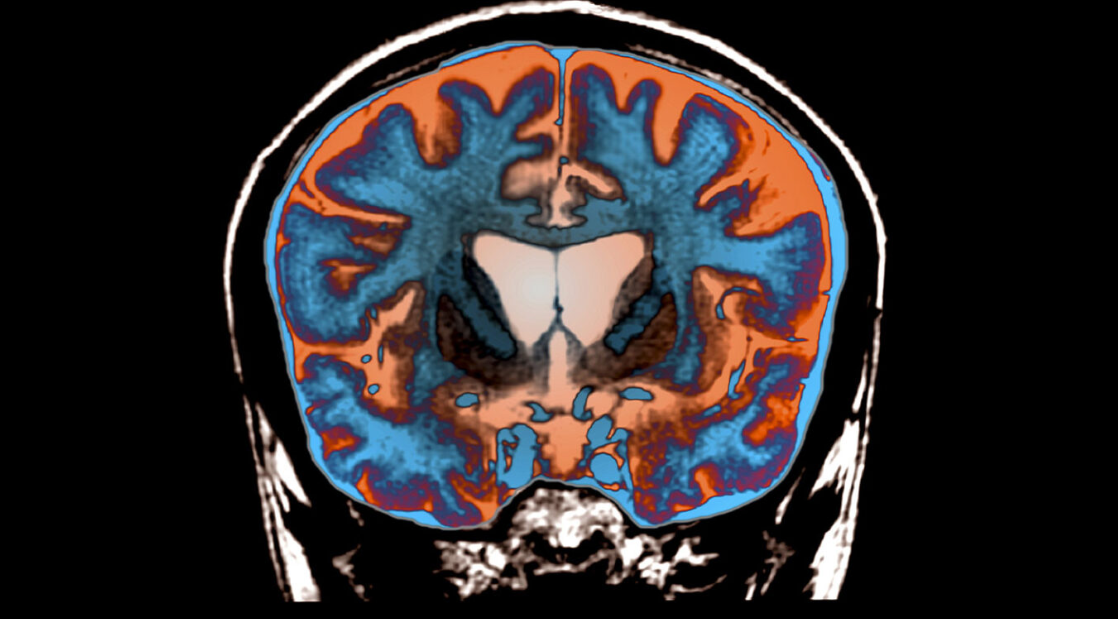
    A recent article by the Mount Sinai Health System shows new promising research regarding childhood leukemia. A research team at theIcahnm School of Medicine used gene editing techniques on human blood cells at different stages of development in a child's life. They introduced a cancer-inducing gene and analyzed the stem cells collected before birth, after birthduringat childhood, and during adulthood. By doing this, the team was able to analyze an identical genetic mutation, but at different developmental stages in humans. Their research found that the time the mutation occurs does affect the aggression and treatment of the cancer that develops. In fetal stem cells, the cells rapidly transformed into leukemia, showing the most aggressive form in the entire study. In human cells that were in adulthood, the cells were less likely to transform into leukemia, making the process much harder. This study makes 2 very important findings for the field of cancer studies and genetics.  Firstly, the time the mutation occurs in development matters greatly for the severity and treatment of the cancer. Secondly, it debunks the idea that the same mutation will create an identical cancer. Another study on childhood leukemia analyzed newborn blood samples between children who later developed leukemia and those who did not. By studying the different methylation patterns, they found that not just the DNA sequence mutations affect children who later develop leukemia. This study supports the idea that some childhood leukemia ensues in the prenatal fetus. 

    
       This research is important to society as leukemia is the most common cancer found in children. The implications of this study must be applied ot the future of cancer studies involving childhood leukemia. This finding challenges previous ideas, as it could have been thought that all identical DNA mutations create the same effect on the large idiucal. With the findings of the Ichan School of Medicine, it is now understood that the developmental stage this mutation occurs is just as important as the mutation itself. 


Friday, November 29, 2024

Unveiling the Ancient Roots of Ape Culture


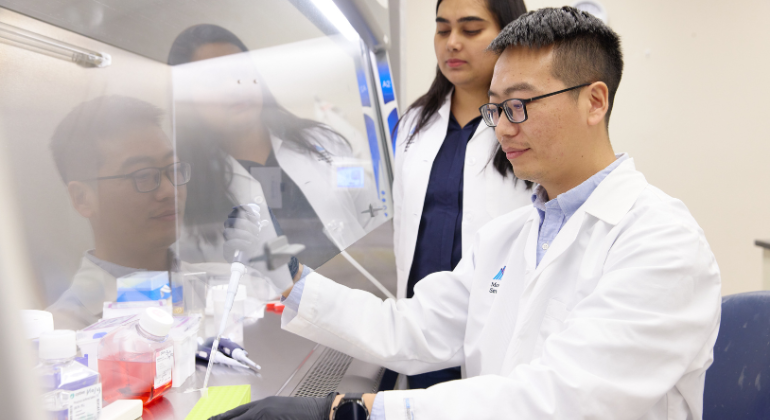
A study by the University of Zurich has discovered new information on the evolution of chimpanzee culture and behavior. The discovery suggests that some advanced behaviors exhibited by chimpanzees may have been passed down throughout different generations. Published in Science, this research took a different approach as it was multidisciplinary, meaning it was conducted by a team of specialists who are masters at specific topics. The study involved primatologists, physicists, and geneticists from various European institutions. The study focused on tracing the genetic links between chimpanzee populations from thousands of years to discover crucial information about chimpanzees' cultural history.

The research team collected information on genetic markers and foraging behaviors from 35 different African study sites. The scientist then categorized the observed behaviors into three categories: those who showed behaviors of no tools while foraging, those who used simple tools during foraging, and the most complex behavior of those using toolsets to assist in foraging. A discovery was made that the most complex chimpanzee technology uses toolsets to help with foraging for food and was linked between separate populations, all being very distant from one another. These findings suggest that populations of chimpanzees barely create this rare technique of using toolsets; this technique would be even less likely for the chimpanzees to reinvent themselves, making these behaviors of using toolsets more likely to be transmitted between different populations of Chimpanzee.

This study provides evidence that chimpanzees were able to quickly grow a culture around them in the early stages of development. The research also reiterates the importance of female migrations to avoid inbreeding. The migrating female chimpanzees spread around this new culture, developing advanced behaviors like using complete toolsets. These findings challenge the already well-known hypothesis that humans can create a more sophisticated culture over generations. More research should be done to observe if other mammal populations have developed more advanced cultures than similar populations.

Links

https://www.sciencedaily.com/releases/2024/11/241127135912.htm

https://www.iflscience.com/groundbreaking-genetic-time-machine-reveals-evidence-of-cumulative-culture-in-chimpanzees-76918

Sunday, November 19, 2023

Why Huntington's Disease May Take So Long To Develop

 Why Huntington's Disease May Take So Long To Develop


Why Huntington’s disease may take so long to develop (sciencenews.org)

Huntington's disease - Symptoms and causes - Mayo Clinic

By: Tina Hesman Saey


    After reading this article discusses how Huntington's disease takes a long time to develop. HTT is the mistakenly repeated gene that brings forth Huntington's disease. According to Mayo Clinic, Huntington's disease is a rare, inherited disease that causes the progressive breakdown of nerve cells in the brain. Huntington's disease causes cognitive, movement, and psychiatric disorders. Preventing the repetition of the HTT gene can stop the disease from growing. 41,000 people in the U.S. have Huntington's disease and 200,000 people are at risk of having that condition. I found this shocking that a large number of Americans suffer from this illness. I learned that people who have more than 40 repeats are at risk of obtaining Huntington's disease rather than a person having 26 or fewer repeats. This disease is very fatal because it can potentially cause paralysis or death due to heart failure. I believe that this article was very educational and increased my knowledge of Huntington's Disease and how it can develop. 


Wednesday, November 30, 2022

Honey Bee Life Spans are 50% Shorter Compared to 50 Years Ago


Entomologists from Maryland have found that bees that are kept in a controlled environment do not live as long as bees in the past. This affects honey production, and lifespan of bee colonies.  For years, beekeepers are losing their colonies much quicker than they have in the past, and entomologists are also seeing this effect in their labs. Experiments were conducted to see if bees were facing environmental stressors, malnutrition, diseases or parasite infections, which are normally reasons that bees have shorter lifespans. 


A Ph.D student from the University of Maryland has observed that bees are isolated from a young age, and just before they reach adulthood, they are taken out of isolation. This means that something is occurring when the bees are young that is causing them to die early. This could be a genetic factor, so scientists are working on separating the bees based on what genes they carry. This is going to involve a lot of genetic sequencing. 


I think the reason that bees that are isolated at a young age are dying faster is because of some developmental factor. If bees are kept in an incubator, then they are not able to interact in an environment that is normal for them. Perhaps the bees in the incubator mated with each other too much, and the generations of bees now have inherited genes that cause defects. If bees were kept in controlled environments for too long, then it is likely that inbreeding occurred. If inbreeding increases homozygosity, then new bees may be homozygous for recessive genes that affect their survival. With less genetic variation, a species will struggle to survive when there are external factors that affect their population. This makes extinction more likely.

Saturday, November 23, 2019

Parents Test Their Children's DNA in China


https://www.technologyreview.com/s/612976/china-parents-genetic-testing-for-kids-talent/
Related article:
https://www.livemint.com/news/world/chinese-parents-test-dna-to-see-if-kids-will-be-smart-11574266331105.html

In China, there are clinics that are opening in cities that claim they can find children’s talents within their DNA. These clinics claim to test traits such as musical, mathematical, and reading abilities, physical talents, introversion, extroversion, and memory. Although there is not much science behind these tests for accuracy, “talent testing” contributes a lot to China’s fast-growing genetics industry. Several clinics claim that they get about 100 to 200 parents testing their children’s DNA each week. Most parents that do the "talent testing" want to know what their children's abilities are so that they could become prodigies in that specific area instead of making their child/children pursue things that they are not necessarily good at.

Image result for genetic testing in china

I'm curious as to what other people think about these parents paying thousands to get their children “talent tested” with almost zero science backing the accuracy of these tests. I appreciate the intentions of these parents, I like how they want their children to succeed in areas they are good at and to pursue their natural-born talents, but I personally do not think it is worth it. I do not think it is worth it because there are still no scientific explanations for the relations between the genome and a lot of traits. I also am not fond of the idea of already knowing what your child is good at through a genetic “talent test”. If I were a parent I would want to learn along with my child through experience what his or her talents are instead of knowing everything right off of the bat. This article also sparked my curiosity about the future, if these tests become global and easily accessible by anyone once there is more scientific explanation for them, how will our society react to them?

Tuesday, April 16, 2019

Jellyfish Development

This article by Okinawa Institute of Science and Technology (OIST) Graduate University explains the Genomic study reveals how jellyfish develop into floating beauties, rather than staying stationary like corals or sea anemones.

Sunday, April 14, 2019

Human Brain Genes Introduced to Macaques


Researches in China believed it would be a good idea to give monkeys human brain genes. Human copies of the MCPH1 gene were introduced into 11 macaque embryos. This gene is known to have an important role in the development of the brain in humans. This gene was introduced to embryos with a virus that carried the gene. Out of the 11 monkeys, only five survived. These five monkeys were tested, including MRI brain scans as well as memory tests. A controlled group was part of the experiment so they could make comparisons. The results showed that the tested macaques did not have bigger brains compared to the control group. One of the differences was that the tested macaques showed better results in short term memory tasks. Also, just like human brains, their brain developed over a long period of time. The main objective of this experiment, according to the researchers was to question the genetic basis of human brain. How the human brain have its own unique intelligence, which other primates do not have. The experiment was extended by using other genes such as SRGAP2C which is related to intelligence and FOXP2 related to speech and language.


This picture released by the Chinese Academy of Sciences Institute of Neuroscience shows five cloned macaques at a research institution in Shanghai. 
This picture shows five cloned macaques 


If the monkeys being experimented end up being more smart like humans, then where are these monkeys going to end up? most likely locked up. The will not have a normal life or might not even like the same things that regular monkeys like including food. Overall, this is probably only causing harm to the macaques. Of course it would be interesting to learn and research on how evolution happened but what is the cost? very unfair to all the innocent animals.

Thursday, March 14, 2019

How the Icefish Got Its Transparent Blood and See-Through Skull

A study from NY times have found that Antarctic blackfin icefish developed to have transparent blood to survive in the freezing water conditions. The Antarctic blackfin icefish, Chaenocephalus aceratus, lacks hemoglobin in their blood and have thin bones which makes the brain visible through its skull. Research have studied the genome of blackfin icefish to compare them to their close relatives and found that their genomic maps changed due to evolutionary time and gave the icefish to have unusual characteristics from their ancestors. The modern icefish no longer makes red blood cells and lacks hemoglobin to carry oxygen. Instead, the icefish is dedicated to make antifreeze for blood and ice-preventing proteins for survival. Since red blood cells become hard to pump and can freeze easily under freezing water, the icefish underwent a strategy for anaemia and developed supersize gills by losing it scales to absorb the abundant oxygen from the freezing water through its skin. Through evolution, the icefish also developed floppy bones that contained less minerals than their ancestors and enabled them to rise up in the water column to eat krill and other aquatic creatures that would not be found in deep sea level.

This is very amusing how the blackfin icefish lost their ancestor's features of having red blood cells and dense bones and developed different physiological features such as transparent blood and sloppy bones for adaptation. It is also very surprising to know that anaemia, a trait that is maladaptive to most vertebrates could be an advantageous trait for a different environment. 


Friday, December 7, 2018

Can Ferrets Provide The Link to Brain Size in Humans?

The research team in this article executed a new and exciting research procedure on ferrets that linked a gene known as ASPM to cortical size development. The ASPM gene is commonly identified in a disorder known as microcephaly, in which patients possessing a nonfunctioning allele for this gene display reduced cortical development. Although mice were also included in this study, the break through came in researcher’s inclusion of ferrets in addition to mice, because ferrets show brain morphology much closer to that of human thus making them excellent model organism for brain related studies. Researchers artificially silenced the ASPM gene in experimental groups of mice and ferrets and studied their rate of cortical development compared to control counterparts.

ASPM was discovered to function very similarly to a magnet. A functioning ASPM gene increases the affinity of early neuron precursors, or radial glial cells, to the ventral zone. In the ventricular zone, these radial glial cells have the ability to continue to continue replicate, which then increases the abundance of cells that become neurons in the long run. Essentially, a lack of a functioning ASPM gene rush out of the ventricular zone and become neurons prematurely which also leads to less neurons in the long run.

While this research study was great for defining the functionality of this gene in development, it is not to be thought of as a link to intelligence. I think by now we all recognize that intelligence and personality for that matter is a direct result of the environment and stimuli we are exposed to. While some genes may ultimately play a role in enhancing intelligence or any other ability, some degree of work and the experiences of the individual come together to form the mind as well.

Tuesday, April 3, 2018

More Air Pollution Equals Shorter telomeres

Image result for telomeres shortening

There has been growing evidence that large exposure time to air pollution can result in developing health problems. Such as cancer, heart diseases, and respiratory illnesses. In a study done by JAMA Pediatrics, they have observed that moms that were exposed to air pollution for a longer period of time during pregnancy resulted in their babies having shorter telomeres. A telomere is a region of repetitive DNA at the end of a chromosome which protects the end of the chromosome from deterioration. This study was conducted on 641 newborns whose mothers were exposed to high levels of air pollution. It was determined that these newborns were born with 8.8% shorter telomeres in their cord blood cells and 13.2% shorter telomeres in their placenta cells than those whose mothers were exposed to less pollution.
Air pollution had the strongest impact on the babies when the mothers were exposed during the second trimester. Surprisingly mothers that were exposed to high levels of air pollution during their third trimester resulted in the babies being born with longer telomeres to those whose mothers were exposed to less air pollution. It is not yet clear how these newborns would have benefitted from air pollution that would increase their telomeres. This study indicated that these newborns would age faster throughout their lifetime because of having shorter telomeres. A couple other factors to keep in mind are that air pollution could have not been the only leading cause of for the shortening of the babies telomeres, events such as stress, smoking, violence can have an impact on the baby's development.

http://time.com/4984038/air-pollution-pregnancy-babies-aging/

https://www.ncbi.nlm.nih.gov/pmc/articles/PMC3370421/