Showing posts with label adaptations. Show all posts

Sunday, October 3, 2021

Cattle Adaptations

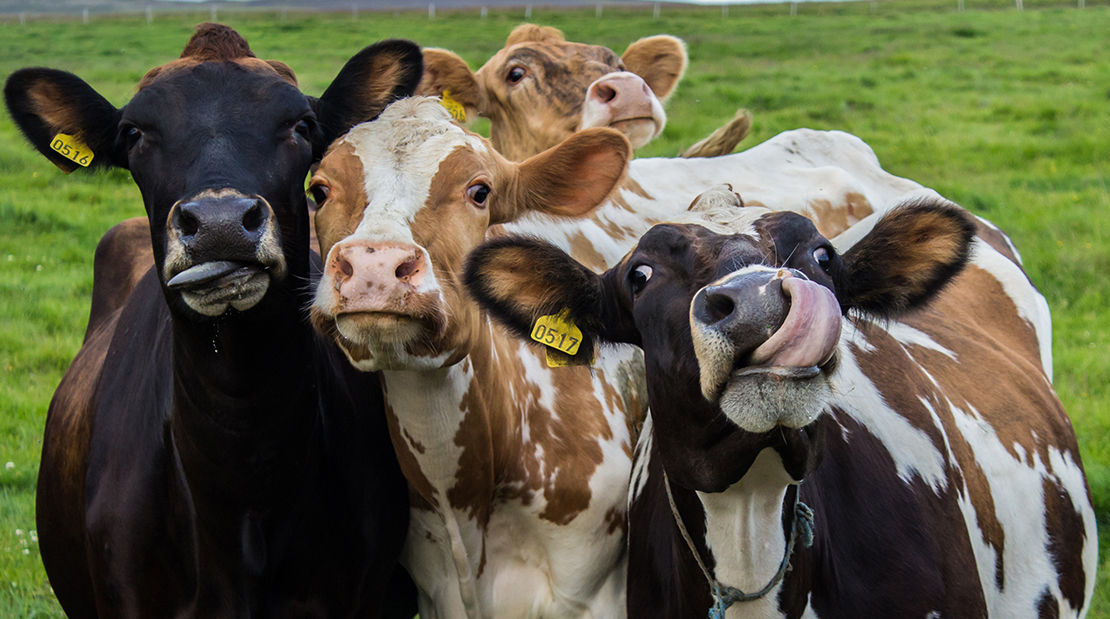
     The University of Missouri released an article on cattle losing adaptations to their environment. Researchers have recently studied cattle DNA, finding genetic variations associated with adaptations. With further research, they believe it may be possible to create tests for farmers that will reveal which climate each cow will do best in. This could be very profitable knowledge to have. If cattle are placed in the environment that will best suit them then they will be happier living with less stress which will make them overall better producers. Fourth-generation cattle farmer and researcher John Decker is working to encode these new revelations. Decker’s goal is to improve the welfare of the cattle as well as solve this mystery in the 50 billion dollar industry. Decker attributes some of these losses in adaptation to breeding. He uses the Colorado cattle as an example. Decker says that by breeding in a stud from a hotter climate the calves are born with fewer adaptations for the Colorado environment causing them to not thrive as well as those by cooler weathered studs. I believe that if researchers can figure out the DNA sequences that code for certain weather adaptations then farmers can buy herds that will thrive in their environments. This will not only help the cattle live better, more comfortable lives but the farmers will get more production from each cow. This could become a mutually beneficial, and extremely profitable finding. 

https://www.sciencedaily.com/releases/2021/07/210722162957.htm


https://extension.psu.edu/heat-detection-and-timing-of-insemination-for-cattle#:~:text=The%20expression%20of%20heat%20is,when%20progesterone%20is%20very%20low.&text=The%20average%20duration%20of%20standing,times%20during%20her%20estrous%20period.

Thursday, March 14, 2019

How the Icefish Got Its Transparent Blood and See-Through Skull

A study from NY times have found that Antarctic blackfin icefish developed to have transparent blood to survive in the freezing water conditions. The Antarctic blackfin icefishChaenocephalus aceratus, lacks hemoglobin in their blood and have thin bones which makes the brain visible through its skull. Research have studied the genome of blackfin icefish to compare them to their close relatives and found that their genomic maps changed due to evolutionary time and gave the icefish to have unusual characteristics from their ancestors. The modern icefish no longer makes red blood cells and lacks hemoglobin to carry oxygen. Instead, the icefish is dedicated to make antifreeze for blood and ice-preventing proteins for survival. Since red blood cells become hard to pump and can freeze easily under freezing water, the icefish underwent a strategy for anaemia and developed supersize gills by losing it scales to absorb the abundant oxygen from the freezing water through its skin. Through evolution, the icefish also developed floppy bones that contained less minerals than their ancestors and enabled them to rise up in the water column to eat krill and other aquatic creatures that would not be found in deep sea level.

This is very amusing how the blackfin icefish lost their ancestor's features of having red blood cells and dense bones and developed different physiological features such as transparent blood and sloppy bones for adaptation. It is also very surprising to know that anaemia, a trait that is maladaptive to most vertebrates could be an advantageous trait for a different environment. 


Tuesday, December 13, 2016

Rapid Evolution Saved This Fish From Pollution


The Atlantic killfish is a very common, minnow-like fish that lives in the rivers that boarder New Jersey and Pennsylvania. The fact that they lived there was very interesting to researchers because these waters are very toxic due to the toxic materials that run into them from surrounding factories. Chemicals like DDT and Agent Orange completely invade these waters, and in large volumes.  They believe that it is an "evolutionary miracle" that they can survive these conditions because most organisms can not. Researchers did studies and found that these fish just have certain genetic adaptations no matter where they live; even if they do live in less polluted waters.


http://www.natureworldnews.com/articles/33874/20161212/killifish-mutant-fish-evolved-survive-toxic-polluted-waters.htm

Monday, December 12, 2016

Talking Monkeys?

For years, researchers and scientists have been curious about primates and their ability to talk. We know that monkeys and chimpanzees are very smart, and have the ability to learn, but why don't they talk like us humans?

It is known that speech is one of the most powerful and a successful adaptation to humans. In order to understand why monkeys do not talk, researchers decided to do some experimenting. The first thing they looked at was the vocal tract of these animals, and realized that they are very similar to humans and have the ability to vocalize. But they believe that the monkey's brains are not wired properly to make speech and words. The adaptation of speech didn't only take place in our vocal tract, but also in our brains. As studies went on, the researchers discovered that monkeys can make a variety of different sounds, but also struggle with sounds, especially vowels.


http://www.sciencemag.org/news/2016/12/why-monkeys-can-t-talk-and-what-they-would-sound-if-they-could

Thursday, May 5, 2016

HMGA2 Gene in Darwin's Finches Discovered

Geospiza fortis

New research shows the discovery of the HMGA2 gene found in Darwin's finches that could possibly help reveal how the finches evolved into 18 different species over the past one to two million years. What lead to the discovery was a drought that had occurred in the Galapagos in 2004 and 2005 that made a competition for food between finches with small-sized beaks and those with large-sized beaks. The finches with big beaks died, but those with small beaks survived by eating small seeds, and by the end of the drought, there were a significantly higher number of finches with small beaks. Researchers found that the HMGA2 gene is responsible for controlling beak size, but they still don't know exactly how it works. This gene is also found in humans, which is responsible for controlling height and face development. It is not common for one specific gene to have such dramatic effects on survival, and the fact that this one particular gene had such a huge impact on adaptation can lead to explanations about speedy evolutionary changes.

I hope that more studies can be done pertaining to this type of research so it can help lead to more answers about the Earth's evolutionary past. Finding the answers or even more clues can help us to make sure our own species doesn't go extinct!

Monday, April 4, 2016

Memory in Plants


In times of stress, plants typically respond to the environment and return to a normal state after the stress has passed. After the stress has passed the plant 'forgets' the previous state. It is thought that stress memories in times without actual stress may devote too much energy to responses, hindering the plants potential development and yield. Currently, research on this forgetting or 'resetting' is focused on changes in RNA metabolism, posttranscriptional gene silencing, and RNA-directed DNA methylation that help the plant in returning to a pre-stress state. Studying how these activities promote resetting could also be the key to how plants experience 'hardening' or 'remember' stressful situations to either react accordingly or ignore non-threatening stress. I was very interested to read about the numerous changes in life processes that plants make in order to adapt to stress and also return to a normal state. As plants, they are typically thought of as simple organisms with only the purpose of photosynthesis and reproduction, however this article opened my eyes to some of the other complex abilities of plants.

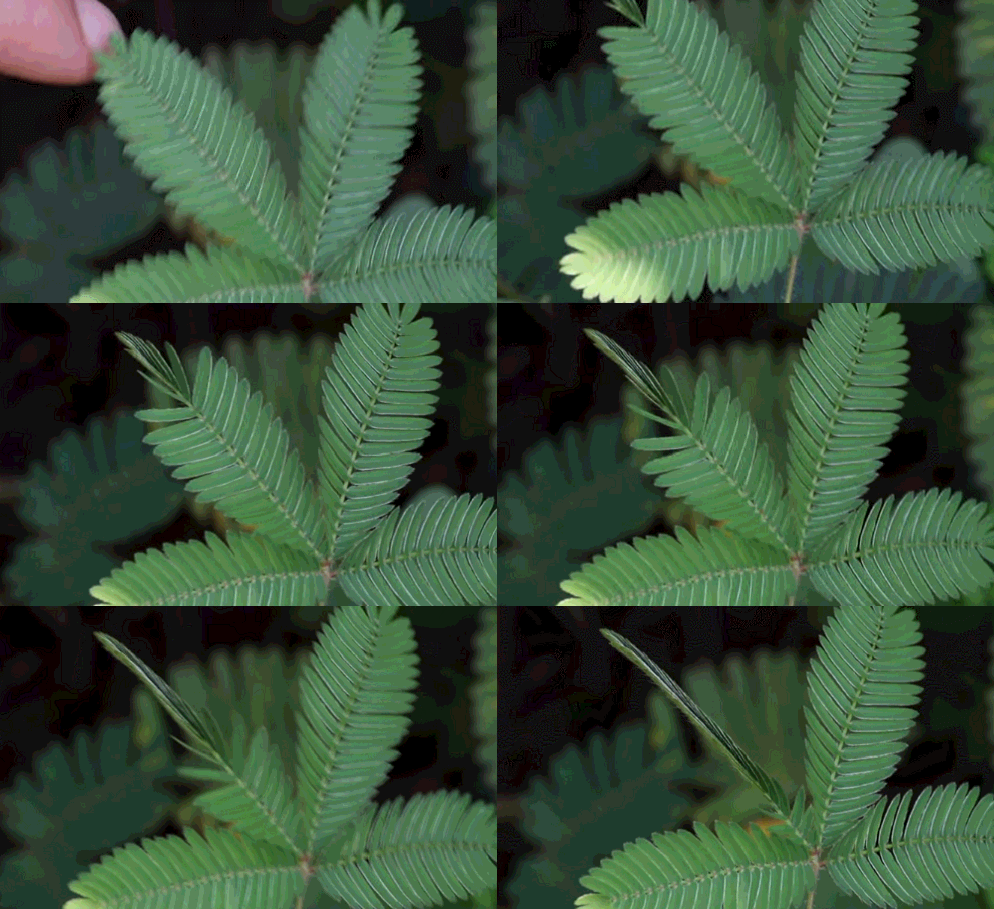
A plant called the Touch-Me-Not curls its leaves when it experiences physical stimulation, as seen in the gif above. Scientists at the University of Western Australia recently explored the ability of the Touch-Me-Not plant to form a memory, in order to prevent the recoiling of being touched. They found that after constant non-damaging exposure to physical stimulation, the Touch-Me-Not plant stopped curling its leaves and 'remembering' that the touch would not hurt it. By remembering not to flinch at touch, the Touch-Me-Not plant is able to conserve energy for other life processes instead of wasting it on curling from a non-threatening touch. This change in behavior and memory to do so raises the question of what changes within the plant allow this activity, opening doors for further research on the topic.