Showing posts with label natural selection. Show all posts

Wednesday, April 29, 2026

Allergies Evolved from a Cleaner Lifestyle


Scientists have hypothesized that modern allergies are the result of a cleaner and simpler way of life.  They believe our immune systems evolved for a dirtier, germ-filled past, and the idea is that in the world’s cleaner environment humans immune systems overreact to simple things, causing allergies.  The research done for this hypothesis included the study of over 15,000 human genomes from 18,000 to 200 years ago.  With the start of farming, research suggests that in the denser societies, natural selection favored genes that fought off bigger issues like influenza and tuberculosis.  These changes caused an increase in autoimmune disease risk, but they also lowered the signals linked to allergic inflammation.  Will Barie, a geneticist, offered the perspective that modern immune systems work on a “patchwork” immune system.  The patchwork system works through different eras.  For instance, the hunter-gatherer phase favored a fast immune system to fight off continual infection.  As well as the agricultural phase, where the immune system operated on a trade-off: tempering harmful inflammation and fighting off new infections.

Picture: https://drathavale.com/nose-sinus/allergy/types-of-allergies/ 

Article: https://www.sciencenews.org/article/ancient-dna-allergies-dirtier-past 

Second Article: https://hms.harvard.edu/news/massive-ancient-dna-study-reveals-natural-selection-has-accelerated-recent-human-evolution 

Friday, May 9, 2025

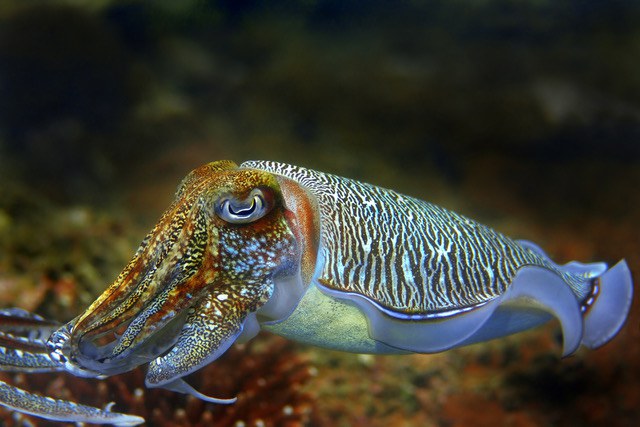
Cuttlefish Ink: The Secret to Outsmarting Sharks

         Cuttlefish have an escape plan when they are approached by predators, they release a cloud of dark ink. While the ink does help hide them, it also has a strong odor that drives sharks away. The chemicals that give blood a strong scent to sharks is weaker than the ink.  One of the main elements that make up the ink is melanin, it sticks really well to the smell receptors in sharks. Researchers looked deeper into the genetics behind how sharks sense of smell works. They gathered genetic data on three shark species - the cloudy catshark, small-spotted catshark, and great white shark, this would model the shapes of 146 different odor receptors. Sharks have 45 smell receptor genes which is not a lot compared to mammals who have somewhere around 850. What that means for the sharks is that they can detect fewer types of odors but are very sensitive to the ones they actually can smell. When scientists modeled how melanin interacts with these smell receptors, they found that it binds really tightly to the receptor. Because sharks are already sensitive to scents the ink is very overwhelming for them driving them away. The melanin's ability to bind so tightly to the receptors is why the sharks react more to the ink than the metallic smell of blood. 


    I think this article is a very interesting example of how evolution can improve the survival skills of animals. Its amazing that a fish that is on the smaller side can get sharks to leave an area because of the ink's odor. I never realized scientist could just make models of smell receptors using the genetic information from different types of sharks to demonstrate how certain component impact the sharks behavior. In this case it was melanin which i also learned gives the black color to the ink. This article kept me very engaged because of the way they connected animal behavior with genetics. It made me realize that something as simple as ink can be a product of natural selection. 

Monday, July 31, 2023

The molecular evolution of genes previously associated with large sizes reveals possible pathways to cetacean gigantism

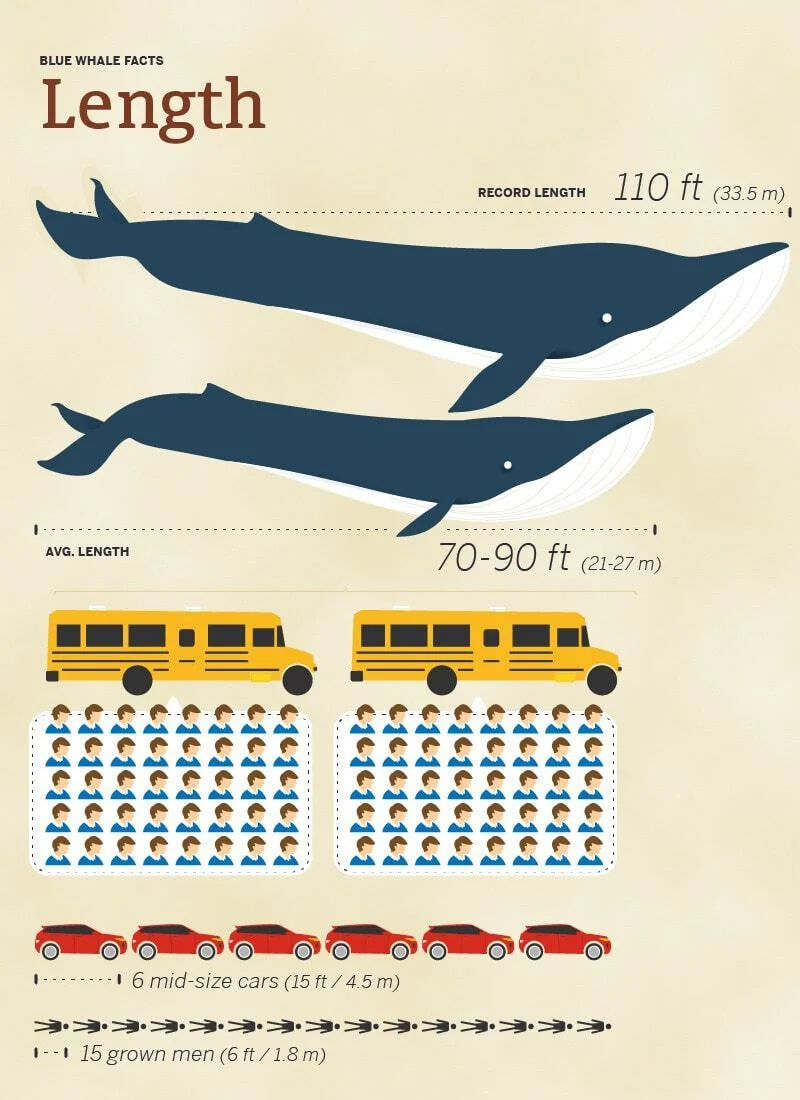
This discussion includes the size of the blue whale and how they came to be the biggest animals on the planet. The blue whale is actually the largest animal to ever exist in terms of both size and weight, as they can grow up to 100 feet long and weigh up to 190 metric tons. This trend only started occurring relatively recently, only starting about five to ten million years ago. A team from the State University of Campinas in Brazil led by biologist Mariana Nery set out to discover the reasons for the massive growth that the blue whale endured. 

To understand the genetic reasons behind the growth, they compared the DNA of nine different genes across 19 species of whales. When studying genes related to body size, they found evidence of positive natural selection in four genes, some of which are associated with growth hormones and insulin pathways. One unexpected result of this study was discovering that the EGF gene, which stands for epidermal growth factor, turned nonfunctional over time. Despite their enormous size, whales do not seem to suffer from the increased cancer risk that usually comes with having more cells. The study suggests that looking into whale genetics might help identify genes that could possibly slow down the spread of cancer in humans as well.


Tuesday, October 12, 2021

Predation due to sexual selection results in modified traits in males.


    An experiment showing the process of natural selection has shown that certain traits will diminish through predation. Broad-horned flour beetles are eaten by Assassin bugs, which target the larger beetles for maximum nutrition. Because of this, scientists found that predation of the beetles resulted in lower fitness for males and much greater fitness and reproductive success for females. Additionally, males that survived would have smaller bodies and mouthparts, resulting in more generations of smaller males. In this way, scientists found that sexual dimorphism diminished in more severe environments, supporting that natural selection directly resulted in the dimorphisms seen in the wild types.

This is less directly genetic, but it is interesting to note how the fitness of the species under certain conditions can influence the genetic variations and phenotypes expressed. This is a study that propels the understanding of natural selection forward (despite this actually being an artificial selection event).

Friday, April 26, 2019

The Bigger the Nostril, the Hotter the Air


It has been found through a study by a team of scientists from Pennsylvania State University that the shape of one’s nostril may share a relationship with the climate of the region that that person’s ancestors descended from. While noses are used for smelling, they are also used to warm and humidify the air that we breathe. It had been found that the more narrow the nostril, the more efficient the nose would be at warming and humidifying the air. Thus, people that descend from colder climates have more narrow nostrils, as they need noses that are more efficient at warming the cold air, and people that descend from warmer climates have wider nostrils, as they do not need noses that are as efficient at warming the already-warm air. It is stated, however, that the climates of past ancestors’ regions are not deciding factors on nose width; other genes may come into play that affect the shape of one’s nose. 
Image result for nostril

I love studies that center around the morphology of humans, so of course I was very interested reading this article. Reading articles that center around humans evolving to have advantageous traits is so interesting to me because I love to think that there are some humans out there that for some reason have higher-functioning noses than I do. It intrigues me that a larger-nostriled friend might have an easier time breathing in the Canadian wilderness than I would, simply because of the morphology of their nose. The study does make sense, anyhow, that humans in colder regions would evolve to breathe easier, and humans in warmer climates would evolve as to not have noses that are too efficient at heating already-warm air. It makes sense that someone like myself, who descends from a tropical country like the Philippines, has such large nostrils. 


Monday, February 11, 2019

Long Lived Lonesome George Clues to Longevity

Charles Darwin developed the idea of natural selection using the tortoises he found on the Galapagos island back in 1835. He preached the idea that these amazing animals adapted there shell to help them survive the lifestyle they endured. In 2012, Lonesome George- the longest living original turtle from the islands- passed away. However he was still giving hints to scientists about longevity and good health. Dr. Aldagisa Caccone,  sequenced the entire genome of Lonesome George and then compared it to other genomes of living animals. She found that there was a gene mutation, IGF1R, that is also found in humans that could be key to longevity in the turtle AND humans.  This gene has one copy in the human genome however the tortoise carried 12. This makes it much more effeceint to carry out these processes to help the turtle live a century.

The amazing part about these tortoises is that they offer so much information to humans. If we can study them more and learn about there genome, we could have solutions to regeneration of body parts. They could survive temperatures that humans could not possible survive. And much like in 1835, were the tortoises were helping the world understand evolution, Lonesome George is once again teaching the world about adaptation and longevity.

Monday, December 3, 2018

Southeast Asia Free Divers Evolved Larger Spleens

     
        The article Free Divers From Southeast Asia Evolved Bigger Spleens is about the Bajau people, also known as sea nomads, that have adapted larger spleens overtime which increases the number of oxygenated red blood cells when diving. The genetic variant increases their endurance when free diving in open ocean. This natural selection in humans is believed to have occurred over hundreds possibly thousands of years. The Bajau people spend the majority of their day in the ocean, diving for fish and shellfish. This has been their method of hunting for over a thousand years now. The body has a number of tricks that allows them to increase their time they can spend under water. One is the increase in red blood cell production which expands lung capacity and more efficiently delivers oxygen to the tissues and organs in the body. The adaptation that is rare and distinct to these groups of people is the increased size of the spleen. The larger spleen stores oxygenated red blood cells and contracts while diving to release the blood cells into the blood circulation throughout the body.
        A graduate student from the University of Copenhagen, Melissa Ilardo, sought out to understand whether the Bajau had their own technique to deal with hypoxia while diving. She used an ultrasound machine to measure the spleen of 43 Bajau and 33 Saluan participants (unrelated to Bajau population). She was interested in spleen size, because she knew the spleen could get quite large in diving marine mammals. Melissa Ilardo also took saliva samples for genomic sequencing. Even while taken into account age, gender, and weight, Melissa Ilardo and her team found that the spleens of the Bajau people were on average 50% larger than the Saluan. The team then compared the genomic sequences of the Bajau and Saluan people to genomic sequences to those of Han Chinese (control - unrelated group). While scanning the variants, they were able to identify 25 polymorphisms unique to the Bajau genomes. This shows the natural selection is definitely at play here. A phylogenetic tree was created which calculated that the Bajau and Saluan people diverged about 15,000 years prior. 
       One of the top variants of interest was one adjacent to the gene for PDE10A which is involved in regulating smooth muscle contraction, including the muscles that surround the spleen.  The teams top hit was a variant adjacent to the gene BDKRB2 which is the only gene that was previously associated with diving response of humans, but not spleen size. They do not yet know how it affects the diving reflux and more studies would need to be done in the future. I found this study and analyses to be extremely interesting. It gives evidence of natural selection among the human species and a timeframe for how long it takes for these adaptions to make way. I am excited to see where they take this study in the future and what more is to come from it. 

Monday, July 30, 2018

Changing the coarse of a leggy lizard

In 2017 an array of hurricanes that hit one after the other hurricane Harvey, then Irma, and Maria, made its impact on not just the weather but also the species that it disrupted. Biologists at Washington university in St. Louis, have released a publication about hurricanes and how it affects lizard population. The biologists had just previously done a survey of the Anolis scriptus (a small bodied common lizard), found in the Turks and Caicos archipelago. When the group came back to Turk and Caicos after the hurricanes that swept through, they discovered their original data (the survey they conducted data) had changed. (1)(2)

When coming back the group of biologists believed that the storm would impact smaller toe sized, smaller body and leg sized lizards, but almost the opposite happened. "The prediction was that if we saw any changes, they would be changes in the features that help lizards hold on -- they would be related to clinging ability... For example, the sticky toe pads on their fingers and toes, maybe they would be larger." said Colin Donihue a postdoctoral fellow at Harvard University. (1)
However, that was not the case when they returned after six weeks. They discovered that Anolis scriptus now had longer fore legs, shorter bones between their hips and knees of their back legs, and had over all smaller bodies. "The observations were statistically significant and consistent at both island sites." (1) This signifying that it is not just a happen stance that this version of the population survived, but that their phenotype was more adaptive to the hurricane.

Johnathan Losos, the William H. Danforth Distinguished Professor at Washington University and professor of biology in Arts and Sciences, said "With regard to evolution, the question is whether hurricanes cause selective mortality: do individuals with certain traits survive better than individuals with different traits? The alternative possibility -- that devastation is so massive that mortality is indiscriminate, not favoring some individuals over others -- is certainly possible." (1)

This is a classic example of how natural disaster occurrences influence certain phenotype's to live on, while others die off. It also shows that during this hurricane and this specific species that this was a natural selection based mortality and not just indiscriminate. Losos Still hypothesizes that even though this is a pretty clear showing on natural selection, there could be other factors involved: "maybe the hurricane blew in lizards with bigger toepads and shorter hindlegs from another island. Or perhaps the act of clinging to the branches in high winds actually caused their forelegs to get longer. We can't rule these possibilities out because this study was the result of serendipity, rather than specifically being designed to test the effect of hurricanes. Still, hurricane-induced natural selection seems like the best explanation for these findings," Losos said. (1)

There was also a pilot study that was conducted that exposed lizards to hurricane-force winds. It was shown through this study that when hurricane- force winds are hurled at a lizard it grasped on to the perch: the ones with longer hindlimbs were more vulnerable to the gusts of wind and pushed off due to their back legs ending up dangling (creating a drag a negative force that was to great to hold on) while the front limbs had to do all the heavy holding. The study showed that to be more hurricane proof for a lizard one needed to have shorter hindlegs and longer forelimbs. This showing more evidence for natural disaster influencing phenotype by natural selection.

Natural disasters are happening more and more frequently due to global warming, and these kinds of research are important for the future and will most likely be an important area of study. 

References:
1- https://www.sciencedaily.com/releases/2018/07/180726090037.htm
2- https://www.nature.com/articles/s41586-018-0352-3

Saturday, July 21, 2018

White Clover Can Be an Annoying Weed. It May Also Hold Secrets to Urban Evolution.


What may seem like an ordinary garden weed is actually one of the most quickly evolving species of flora that will tell scientists a lot about the evolutionary processes in environments that are rapidly changing. In this unplanned experiment that is happening throughout the world, the white clover has learned how to survive in the toughest of climates at a fast rate. Although some may believe these plants to be just a stubborn weed, others see these plants as a refuge for bee recovery as well as Nitrogen nourishment within the soil. In a study under the Global Urban Evolution Project or GLUE, the white clover has been examined in several cities including Ontario, Canada all the way to London. Researcher Marc Johnson believes that cities work great to test cases for evolution. The white clover makes for a good test species because it is seen to flourish in even the toughest of climates such as Norway to southern India.

This study can be very beneficial to examine the correlation between natural selection and how it impacts a species’ evolutionary rate. I find this information could even be used on a smaller scale. As mentioned earlier, the white clover hosts as a refuge for bee recovery. In a climate where pollination rates are low or crops are not thriving, it may be helpful for farmers to plant more of the white clover and put this so-called weed to good use.

Saturday, November 25, 2017

New genetic clues to the extinction of the passenger piegon


We have driven plenty of species to extinction. Much like the passenger pigeons. humans have exterminated passenger pigeons  by ruthless hunting in the late 19th century. Passenger pigeons had been the most abundant bird in North American. A single flock could contain more than a billion birds. Scientist now wonder why some pigeons did not survive in remote areas. A new study has been done on the pigeon’s genome. Published in the Science Journal it is said that the passenger pigeons did not have much of genetic diversity across the its vast population. Scientists looked at the DNA of the passenger pigeon and the study concluded that much of the bird;s genetic code shows signs of strong natural selection. The species was abundant for tens of thousands of years even in the face of major environmental and climate change and despite it all the species was resilient. I found this article to be interesting because I would have not thought that scientists have could find out why the passenger pigeons went extinct through genetic engineering.


Tuesday, April 11, 2017

Ancestral Climates May Have Shaped Your Nose


At Pennsylvania State University, a team of scientists have uncovered more evidence on the relationship between the present nose and the climates of where our ancestors have lived in. An experiment was done my measuring the height, the width, and skin pigmentation of men and women whose ancestors that were born in corresponded regions. The experiment has proven that the width and height of the nostril may vary depending the region one lives in, such as people whose ancestors that lived in warm and humid areas will have a wider noses. However, people whose ancestors that lived in cold and dry regions of the world would have nostrils that are narrowed. In addition, natural selection may act on the shape of the nostril due to the climate of the region favoring the structure of the nose. Other contributors, such as inheritable traits and genetic variation can play a role in demonstrating the shape of the nose.


New York Times Here
WebMD Here

Friday, March 17, 2017

The Climate (and Genetics) Shaped Your Nose!


Noses undoubtedly, and sometimes unfortunately, get passed down from parent to offspring. This article sheds light on research showing how nose shapes are sculpted overtime in response to local conditions of our various ancestors. Although there are a wide variety and diversity of nose shapes, when we take a closer look we can see many similarities that happen to be linked to climate. The research conducted on this topic analyzed the dimensions, angles, and protrusions of 2,637 noses of individuals of four populations: North Europeans, South Asians, East Asians, and West Africans. By comparing this data to local climates and humidity levels of those different populations, researchers were able to define what nose shapes thrived in what areas. It is believed that natural selection called for narrow nostrils in cold/ dry climates because long narrow nostrils better humidify and warm the air in cold and dry areas.


When studying genetics, it is important to consider all external causes for a trait, condition, illness, etc. Our environment plays an important role in who we are and what we look like.


Wednesday, March 8, 2017

Why did Woolly Mammoths Go Extinct?

https://www.nytimes.com/2017/03/02/science/woolly-mammoth-extinct-genetics.html?

Geneticists have recently been able to sequence the genome of ancient woolly mammoths in order to determine the factors that may have led to the species extinction. Previously, the factors of predation or changing climate were able to ruled out, leaving many scientists to speculate about the cause of the their extinction. The genomes of two isolated populations were compared to each other and it was determined that the one population was about 13,000 while the other was only 300. The two genomes different greatly from one another, and it was discovered that the mammoth in the smaller population experienced many genetic mutations that halted the synthesis of proteins, caused them to lose sense of smell, become unable to detect pheromones, and have thin hair that could not protect them from the cold. This was referred to as a "genetic meltdown" and can be attributed to the small population. It is speculated that the small population was due a to lack of water. This evidence supports theories from biologists that small populations lead to a lack of natural selection, so harmful mutations/genes are inherited, leading to the eventual extinction of a species.

Thursday, March 2, 2017

The Woolly Mammoth's Last Stand

https://www.nytimes.com/2017/03/02/science/woolly-mammoth-extinct-genetics.html?rref=collection%2Fsectioncollection%2Fscience&_r=0
http://www.livescience.com/58088-woolly-mammoths-doomed-by-dna-mutations.html

In a remote island off of Siberia, geneticist discovered the tooth of a male woolly mammoth which decodes the probable cause of the population's extinction. This revelation supports the idea that as a population dwindles, natural selection becomes less efficient at deleting bad mutations, and leads to a loss of genes and slowly meltdown the genome. Once numbers fall below a certain level, genetic decline is irreversible and the species will go extinct. The first woolly mammoth's to go extinct were from the mainland due to climate change and hunting, but other populations lived on for thousands of years on remote islands (St. Paul and Wrangel). 
The genomes of the 45,000 year extinct mainland mammoth and the 4,300 extinct Wrangel mammoth were analyzed and geneticist were also able to identify the population size. The population size of the Wrangel was 300 and the mainland had 13000. During the period in between the extinction of both mammoth populations, the species size decreased tremendously and the genetic diversity reduced by 20 percent. This means the lesser fit of the Wrangel mammoths contributed to the extinction.
The Wrangel mammoth's genome detected many deleterious genes and mutations which lead to the population to a genetic meltdown. Many of these genes halted the synthesis of proteins, and damaged olfactory genes as well as receptors which detect pheromones, The two snapshots of the woolly mammoth genome, support the idea that there is genomic meltdown in small populations which contributes to extinction.The discovery that individual genes were deleted in the Wrangel mammoth’s genome is a “very novel result,” and if confirmed, “will have very important implications for conservation biology,” Dr. Dalen said.

I found this article very interesting in many ways. Genetic technologies have become so advanced in analyzing genomes, that the tools can get results from hundreds of thousands of years ago. I also always believed the woolly mammoth's extinction resulted from climate changes, but never thought of mutations being the cause. The mutations found on the genome of the Wrangel mammoth proved to be the final blow to the extinction of the species. The mammoth's were unable to use special senses for survival as well as not being able to socialize with the other sex due to damaged receptors of pheromones. It seems that over time, the mutations weeded out vital genes until there was nothing left to salvage.The mutations were the ultimate destruction of the mammoth species and is important information for conserving endangered species today. 

Monday, February 6, 2017

Springy Tendons!

https://news.brown.edu/articles/2011/11/frogs

http://science.sciencemag.org/content/263/5145/370


The biology behind a frog’s ability to jump comes from their tendons, their muscles work like a spring that stretches as it begins to lurch forward and then recoils itself. Frogs must generate a high level of mechanical power so when they jump, their muscular system is designed to deliver these high powers. Some tendons do much more than just transmit energy, they can also store it. I read an article that compared their tendons to an elastic bands. When you stretch an elastic band the energy is stored in the elastic so when you let go the energy is released  the effect is the band will shoot across the room. 

The frog’s crouched starting position is how they being to build up and store energy. A lot of energy is required to move the legs from this into a straighter position and until the muscle has produced enough energy to move the joints, the power output is stored in the tendon. This trigger is created by the change in posture, from crouched to straight leg. As the tendon gets filled with energy, the muscle continues to slowly contract. This slow, forceful contraction is enough to drag the leg into a less crouched position. The shift in posture encourages the tendon to give up its stored energy. The elastic component, having been stretched by the contracting muscle, suddenly realizing and explosively pulling the back legs into full extension, which catapults the frog’s body upwards and forwards.


I personally think along with jaguars, frogs are incredible creatures. Their morphology is unique because they lack tails as adults and their legs are more suited to jumping than walking. They also are the best jumpers of all the vertebrates, some species can cover over 50times its body length.