Showing posts with label polymorphisms. Show all posts

Tuesday, October 21, 2025

Yeast: Cracking the Code of Genetic Diversity

A recent study done on yeast genomes aimed to better understand how genetic variation contributes to phenotypic diversity by focusing on structural variants and how they are overlooked compared to single nucleotide differences. Some of these variants include insertions, deletions, and rearrangements. Using over 1,000 strains of Saccharomyces cerevisiae (budding yeast), researchers created 1,482 almost complete genomes through long-read sequencing. This allowed them to construct a detailed pangenome containing 8,541 gene families, over 2,000 of which were not present in the standard yeast reference genome. These new discoveries revealed that structural variants play a significant role in genetic diversity, often originating from processes like horizontal gene transfer or rapid evolution.

Through integrating these genomic assemblies with over 8,000 molecular and organismal traits, researchers have discovered that structural variants had a much stronger influence on phenotypic differences than they did on single-nucleotide polymorphisms. They contributed critically to complex traits and were often tied to multiple characteristics at once. Despite the study being limited to yeast and not being able to fully resolve all genetic complexities, it did demonstrate the power of combining complete genome sequencing with large-scale trait data. This approach offers a framework for studying how genetic variation influences diversity in more complex species, including humans.


    This study is fascinating as it pushes beyond the traditional focus on small DNA changes and emphasizes the importance of larger structural variation in shaping biological diversity. It displays how even simple organisms like yeast can assist in answering complex genetic questions that apply to all living things. Research not only enhances our understanding of evolution and trait development but also shows us new possibilities for studying genetic disorders and variation in humans through genome-scale methods.

https://www.sciencedirect.com/topics/neuroscience/saccharomyces-cerevisiae

Monday, March 25, 2024

Are Food Allergies and Genes Related?

Growing up you may have had friends or family suffer from a food allergy, which is an immune system reaction to eating a specific type of food. These reactions can vary in severity from itchiness and swelling, all the way to the air passageway closing and becoming fatal if medical attention is not sought out. As time progresses, food allergies are becoming more and more common across the globe. Though, scientist are still trying to figure out why we have food allergies in the first place. They are lead to believe it has to do with genes and environmental factors. In a recent study it was found that polymorphisms in 9 genes have been associated with food allergies, yet this has not been a proven association. Some similar allergies that are not food related, like asthma and skin rashes have a little more knowledge behind their genetic coding but is still pretty untouched in the research world. 

Food allergies being extremely common across the globe, it is fascinating how little research has been conducted and resulted. I have multiple people in my life with varying food allergies and it is very scary not knowing why they react the way that they do, especially when in many cases one accidental ingestion of a food someone has an allergy to could lead to a serious emergency room trip.  Finding a cure could also revolutionize the stress management of parents who have to slowly introduce their babies to new foods in fear that they might have a severe reaction. Once more research is conducted and investigated I can only hope that will lead to a cure for those suffering with food allergies.


 https://www.ncbi.nlm.nih.gov/pmc/articles/PMC2892276/

https://www.mayoclinic.org/diseases-conditions/food-allergy/symptoms-causes/syc-20355095


Monday, December 3, 2018

Southeast Asia Free Divers Evolved Larger Spleens

     
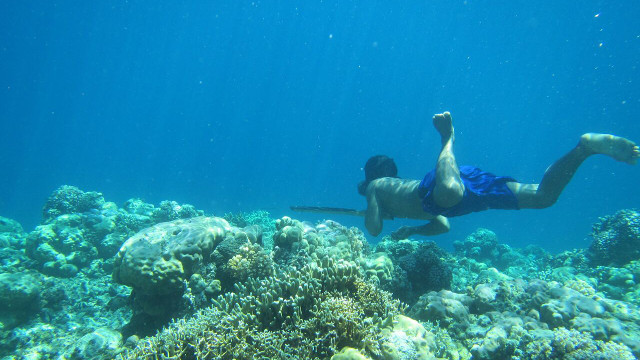
        The article Free Divers From Southeast Asia Evolved Bigger Spleens is about the Bajau people, also known as sea nomads, that have adapted larger spleens overtime which increases the number of oxygenated red blood cells when diving. The genetic variant increases their endurance when free diving in open ocean. This natural selection in humans is believed to have occurred over hundreds possibly thousands of years. The Bajau people spend the majority of their day in the ocean, diving for fish and shellfish. This has been their method of hunting for over a thousand years now. The body has a number of tricks that allows them to increase their time they can spend under water. One is the increase in red blood cell production which expands lung capacity and more efficiently delivers oxygen to the tissues and organs in the body. The adaptation that is rare and distinct to these groups of people is the increased size of the spleen. The larger spleen stores oxygenated red blood cells and contracts while diving to release the blood cells into the blood circulation throughout the body.
        A graduate student from the University of Copenhagen, Melissa Ilardo, sought out to understand whether the Bajau had their own technique to deal with hypoxia while diving. She used an ultrasound machine to measure the spleen of 43 Bajau and 33 Saluan participants (unrelated to Bajau population). She was interested in spleen size, because she knew the spleen could get quite large in diving marine mammals. Melissa Ilardo also took saliva samples for genomic sequencing. Even while taken into account age, gender, and weight, Melissa Ilardo and her team found that the spleens of the Bajau people were on average 50% larger than the Saluan. The team then compared the genomic sequences of the Bajau and Saluan people to genomic sequences to those of Han Chinese (control - unrelated group). While scanning the variants, they were able to identify 25 polymorphisms unique to the Bajau genomes. This shows the natural selection is definitely at play here. A phylogenetic tree was created which calculated that the Bajau and Saluan people diverged about 15,000 years prior. 
       One of the top variants of interest was one adjacent to the gene for PDE10A which is involved in regulating smooth muscle contraction, including the muscles that surround the spleen.  The teams top hit was a variant adjacent to the gene BDKRB2 which is the only gene that was previously associated with diving response of humans, but not spleen size. They do not yet know how it affects the diving reflux and more studies would need to be done in the future. I found this study and analyses to be extremely interesting. It gives evidence of natural selection among the human species and a timeframe for how long it takes for these adaptions to make way. I am excited to see where they take this study in the future and what more is to come from it.