Showing posts with label phenotype. Show all posts

Tuesday, November 21, 2023

Using Artificial Intelligence to Impute Phenotypes on Population Scale Databases


    A report from UCLA details the usage of analyzing large scale databases to impute phenotypes in databases that lack data on phenotypes. Phenotypes in these databases are often missing in many of the individuals in the databases, limiting the utility that these databases have. The group created a new imputation method for phenotypes based off of the UK Biobank dataset. The accuracy of their imputation method, dubbed AutoComplete, outperformed the next best method, called SoftImpute, with the greatest improvements being in the psychiatric and cardiovascular phenotypes. 

    The significance of their imputer is centered around the fact that they take into consideration not only the relationships between phenotypes and the data available, but also the metadata of the database used. They took into account the "patterns of missingness" in the data, which are often structured due to the way that the data is gathered and placed into the databases.

    This report not only exemplifies the importance of having strong computational methods in genetics but also the significance of properly reporting data. Datasets that contain complete information not only make it easier to work with the data, but also provide more accurate results once the data is processed.


The Article

An, U., Pazokitoroudi, A., Alvarez, M. et al. Deep learning-based phenotype imputation on population-scale biobank data increases genetic discoveries. Nat Genet (2023). https://doi.org/10.1038/s41588-023-01558-w

Reference to SoftImpute

Hastie, T., Mazumder, R., Lee, J. D., & Zadeh, R. (2015). Matrix completion and low-rank SVD via fast alternating least squares. The Journal of Machine Learning Research16(1), 3367-3402.

Sunday, August 1, 2021

Genetic Risks of Inbreeding


    In our society today the term "inbreeding" is typically only used when it pertains to animals. For example, a dog having blue eyes is a recessive trait to the dominant brown eyes. The most efficient way to reproduce a generation of dog offspring with blue eyes is breed a male and female dog that carry the blue eyed phenotype, meaning they are homozygous recessive for it. As illustrated in the flow chart, it is possible for an offspring to inherit the homozygous recessive trait from parents who do not physically show it. These are the risks that are posed when inbreeding occurs amongst humans. Hypothetically, imagine the recessive trait in this instance was a chronic auto-immune disease, skeletal abnormality, or chronic genetic disorder. According to a study done in 2011, inbreeding practically doubles a person's susceptibility to inheriting a genetic disorder. If a person were to mate with someone outside of their family gene pool, if they do not carry the recessive trait for the unfavorable disease the offspring can resist being born with that phenotype. 


    There are many undesirable traits that put an offspring at risk when inbreeding. The offspring is susceptible to reduced fertility, birth rate, and immune function. They also have increased risk of cardiovascular disease, facial asymmetry, and risk of genetic disorders. The rates of child mortality is higher, and the growth of the human body as an adult is smaller. The most common genetic disorders that inbreed offspring face are schizophrenia, limb malformation, blindness, congenital heart disease, and neonatal diabetes. 


Link: https://www.thoughtco.com/inbreeding-definition-effects-4171861

Link: https://www.bbcearth.com/news/what-are-the-effects-of-inbreeding

Tuesday, March 30, 2021

Spicy New Hybrids


    One of the most popular spices known to man is the chili pepper. It is used as a spice to add heat and flavor to many culinary dishes, and comes from the fruit of plants from the genus Capsicum, members of the nightshade family-- Solanaceae. There are currently 35 different species of peppers in the Capsicum family, which leads to constant changes in their genetic relatedness; and scientists recently discovered an entirely new host of chili hybrids that, "could be grown by crossing domesticated peppers with their wild cousins."

As scientists continued to improve their understanding of the relationship between Capsicum species and hybrids, they also stumbled upon a misidentification of several species that were wrongly characterized. The study published in the journal, PLOS ONE, explains, "Based on a phylogeny constructed by genotyping using single sequence repeat (SSR) markers and with a portion of the waxy locus, and through principal component analysis (PCA) of phenotypic data, we clarify the relationships among wild and domesticated Capsicum species." Yet, even then, the full phylogeny of Capsicum is still unresolved.

An upside to these newfound hybrids is that chilies tend to be rather difficult to cultivate and maintain. These hybrids will allow breeders to create chilies that are both, disease resistant and increase productivity. "Many of the many wild species have better disease resistance and so our findings could be valuable for identifying candidates for future breeding programs, potentially increasing productivity for food producers, and maybe even creating some new flavors to explore too!" lead author of the study, Catherine Parry explains. 

Finding new species and hybrids of food and spices can lead to great improvements and advances in both the world and our diets. I think it's great that we are constantly learning and adapting to these newfound scientific discoveries. Plus, who doesn't like a little "kick" in their food!


Links:

https://phys.org/news/2021-03-chilli-genetics-greater-variety-plates.html

https://www.biorxiv.org/content/10.1101/2020.11.30.403691v1

Tuesday, November 20, 2018

Genetic Evidence Reveals Salmon are Shrinking!

      Salmon are an important species in the food chain and many species around the world rely on this fish as a part of their regular diet. There are a total of eight species of Salmon around the world, seven which are native to the Pacific Ocean and one which is located in the Atlantic Ocean. Each species plays a crucial role in maintaining a proper balance in the world's ecosystem, however, that role is being threatened by the fact that Salmon appear to be shrinking! Apparently researchers have been aware of this epidemic for some time now but what they didn't know was what was causing salmon to shrink. In order to find out why salmon are shrinking a study was conducted by the University of Helsinki and the Institute of Finland on a salmon population over the course of 36 years. A quote from a professor at Helsinki was posted by ScienceDaily stating that "we knew from our earlier research that the age at maturity had been decreasing over this period. Now we wanted to see if there were signs of this also at the genetic level" (Craig, 2018). This fortuitous observation provided scientists with a great opportunity to study a trait for adaptive evolution in vertebrates and apply what they learn to other species. The study was conducted by analyzing scales collected from salmon populations in the Treno River in Northern Finland. Upon analyzing the scales researchers found an allele located on a gene that influences maturity in salmon. The single locus responsible for late maturity in salmon was found in the Vgll3 region of the gene. According to the scientific journal posted in Nature, Ecology and Evolution researchers have calculated an 18% decrease in the vgll3 allele associated with late maturity in the salmon population. The gene which is passed on in sex specific selection is responsible for perpetuating this long observed trend in salmon during migration. Scientists are still exploring what evolutionary purpose this allele serves but what they do now know is it plays an incredible role in the trend of salmon populations around the world. By further studying the allelic effects of this gene, scientists may be able to glean more information about the fitness trait of evolution and get a better understanding of the phenotypic diversity of the salmon population as a whole.

Monday, July 30, 2018

Changing the coarse of a leggy lizard

In 2017 an array of hurricanes that hit one after the other hurricane Harvey, then Irma, and Maria, made its impact on not just the weather but also the species that it disrupted. Biologists at Washington university in St. Louis, have released a publication about hurricanes and how it affects lizard population. The biologists had just previously done a survey of the Anolis scriptus (a small bodied common lizard), found in the Turks and Caicos archipelago. When the group came back to Turk and Caicos after the hurricanes that swept through, they discovered their original data (the survey they conducted data) had changed. (1)(2)

When coming back the group of biologists believed that the storm would impact smaller toe sized, smaller body and leg sized lizards, but almost the opposite happened. "The prediction was that if we saw any changes, they would be changes in the features that help lizards hold on -- they would be related to clinging ability... For example, the sticky toe pads on their fingers and toes, maybe they would be larger." said Colin Donihue a postdoctoral fellow at Harvard University. (1)
However, that was not the case when they returned after six weeks. They discovered that Anolis scriptus now had longer fore legs, shorter bones between their hips and knees of their back legs, and had over all smaller bodies. "The observations were statistically significant and consistent at both island sites." (1) This signifying that it is not just a happen stance that this version of the population survived, but that their phenotype was more adaptive to the hurricane.

Johnathan Losos, the William H. Danforth Distinguished Professor at Washington University and professor of biology in Arts and Sciences, said "With regard to evolution, the question is whether hurricanes cause selective mortality: do individuals with certain traits survive better than individuals with different traits? The alternative possibility -- that devastation is so massive that mortality is indiscriminate, not favoring some individuals over others -- is certainly possible." (1)

This is a classic example of how natural disaster occurrences influence certain phenotype's to live on, while others die off. It also shows that during this hurricane and this specific species that this was a natural selection based mortality and not just indiscriminate. Losos Still hypothesizes that even though this is a pretty clear showing on natural selection, there could be other factors involved: "maybe the hurricane blew in lizards with bigger toepads and shorter hindlegs from another island. Or perhaps the act of clinging to the branches in high winds actually caused their forelegs to get longer. We can't rule these possibilities out because this study was the result of serendipity, rather than specifically being designed to test the effect of hurricanes. Still, hurricane-induced natural selection seems like the best explanation for these findings," Losos said. (1)

There was also a pilot study that was conducted that exposed lizards to hurricane-force winds. It was shown through this study that when hurricane- force winds are hurled at a lizard it grasped on to the perch: the ones with longer hindlimbs were more vulnerable to the gusts of wind and pushed off due to their back legs ending up dangling (creating a drag a negative force that was to great to hold on) while the front limbs had to do all the heavy holding. The study showed that to be more hurricane proof for a lizard one needed to have shorter hindlegs and longer forelimbs. This showing more evidence for natural disaster influencing phenotype by natural selection.

Natural disasters are happening more and more frequently due to global warming, and these kinds of research are important for the future and will most likely be an important area of study. 

References:
1- https://www.sciencedaily.com/releases/2018/07/180726090037.htm
2- https://www.nature.com/articles/s41586-018-0352-3

Sunday, November 26, 2017

Being in space alters gene expression

Mark and Scott Kelly are Identical twins but they have one huge difference, one spent an entire year in space. early test results show that there is increased methylation in several genes this means that they are "turning off" and these affects are persisting for a short time while he gets reaclimated to being on earth. NASA scientists refer to leaving earths surface is akin to fireworks inside your body as you slip the surly bonds of earth. Many of Scott's genes activated and others turned off and we can see this by looking at the activation of his brother mark's genes while he remained on earth for the year. Also NASA is reporting that Scott's Telomeres grew while in space, could a gravity free environment influence telomerease in somatic cells? NASA is collecting this data to study the effects of a mars expedition and the affect prolonged space travel would have on humans.

the data collected from Scott's year in space could be pivotal to prolonged space travel for years to come and will help humans be successful in our endeavors into space. Its quite interesting that entering space the body starts to methylize certain genes, and activate others. Perhaps the most intriguing piece of evidence is the purported lengthening of Scott's telomeres, will this affect Scott's aging process? will he age slower than his brother? only time will tell.
link 1

Friday, January 27, 2017

Bad News, Bulldogs


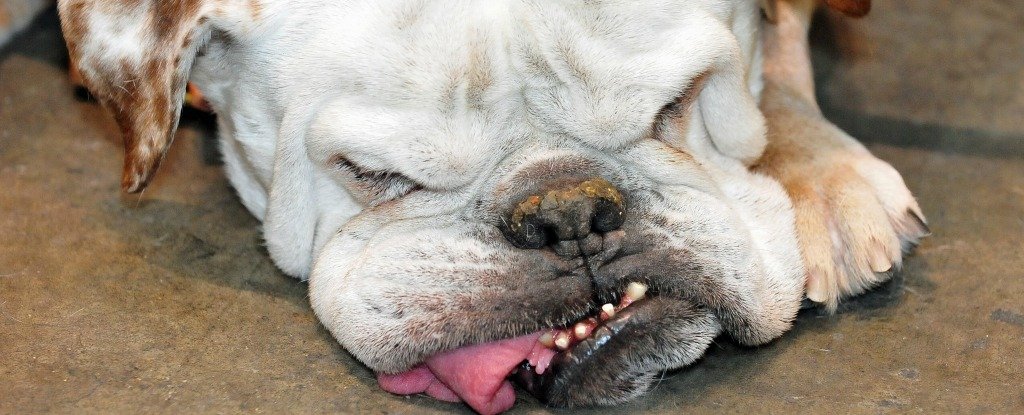
According to this article on Science Alert, the increasingly popular English bulldog is approaching a crucial tipping point due to their genetic similarity. In a study of 102 bulldogs, a group of researchers from the University of California, Davis School of Veterinary Medicine found that the genetic diversity of these bulldogs was so low that breeders are likely incapable of selectively breeding them with healthier phenotypes. Crossbreeding is the most viable option for selecting healthy phenotypes without risking the animals' health, however this may result in a breed that will not fit the English bulldog specifications. This means that the English bulldog as we know it will likely not be around for long since they will express traits of the breed of dog they would be crossed with.
As an aspiring veterinarian and all-around animal enthusiast, this is a topic that I have a considerable amount of experience with, namely family and friends who either own or have owned purebred English bulldogs. I also owned a bulldog mix, of which he had noticeably less medical issues due to his breed than the purebred individuals. It is well known that purebred breeds have significantly more medical issues than mixed breeds and the English bulldog is infamous for having an extensive list of such issues. I strongly believe that English bulldogs should be crossbred with a different breed in order to increase their genetic variability and significantly reduce the number of unhealthy, purebred individuals by educating the public on the suffering that purebred English bulldogs endure simply by existing.

Monday, October 26, 2015

What Extroverts and Introverts Can Learn from Snails


Researchers at the Lund University in Sweden are taking a closer look into the personalities of snails.  In most species, it can be seen that some individuals act more bold and aggressive, while others seem to be more shy, and this is no different in snails.  To test the snails’ personalities, lead researcher Johan Ahlgren would tap the snails’ shells until they hid inside.  Those snails who would reemerge in ten seconds and under were classified as bold while those who took over fifteen seconds to reemerged were classified as shy.  

The interesting part of this study looks into shell thickness.  The bold snails always had thicker shells than the shy snails.  The thick-shelled snails, can be more behavior this way because of the extra protection their shells offer them.  Meanwhile, the thin-shelled snails have to be more cautious of predators, and other dangerous situations, because they are less protected.

This is where genetics plays a huge role.  The thickness of a snail’s shell is an observable characteristic, a phenotype, which means it has corresponding genes that code for it.  These snails inherited their shell thickness genes from their parents, which produced the phenotype of either thick or thin shells.  The most amazing part of this is that these genes affected the snails personalities and level of cautiousness.  

I find this to be extremely interesting because this gives insight into the age old question of nature versus nurture.  This is a debate of whether genes or environment make a person who they are, and it has been debated for hundreds of years.  This experiment definitely does not end the debate, but it shows a great case for the nature side.  These snails were all taken from the same pond, and were fed the same diet, which according to the nurture theory would make them all equal, but this clearly was not the case.  The genes these snails had for shell thickness affected their personalities, showing genetics goes deeper than just physical traits.

For more information on the genetics of introverts and extroverts click here.