Showing posts with label Space. Show all posts

Tuesday, March 18, 2025

How Astronauts' DNA Adaptations in Space Could Revolutionize Earth's Medical Treatments

     A study found significant genetic changes in astronauts due to prolonged exposure to microgravity. These changes include the dysregulation of 11 genes related to immune function, DNA repair, and cancer progression. This is a result of the unique environmental stressors of space, such as increased radiation and altered gravitational forces, which affect cellular and molecular structures. Understanding these genetic shifts is crucial for developing countermeasures to protect astronauts and could also offer insights into medical treatments for related conditions on Earth. Researchers can discover how specific genes are influenced under extreme conditions. This knowledge can be used to repurpose existing drugs or develop new treatments that target similar genetic pathways in diseases on Earth, such as immune disorders, neurodegenerative conditions, and cancer, potentially enhancing their effectiveness or reducing side effects.

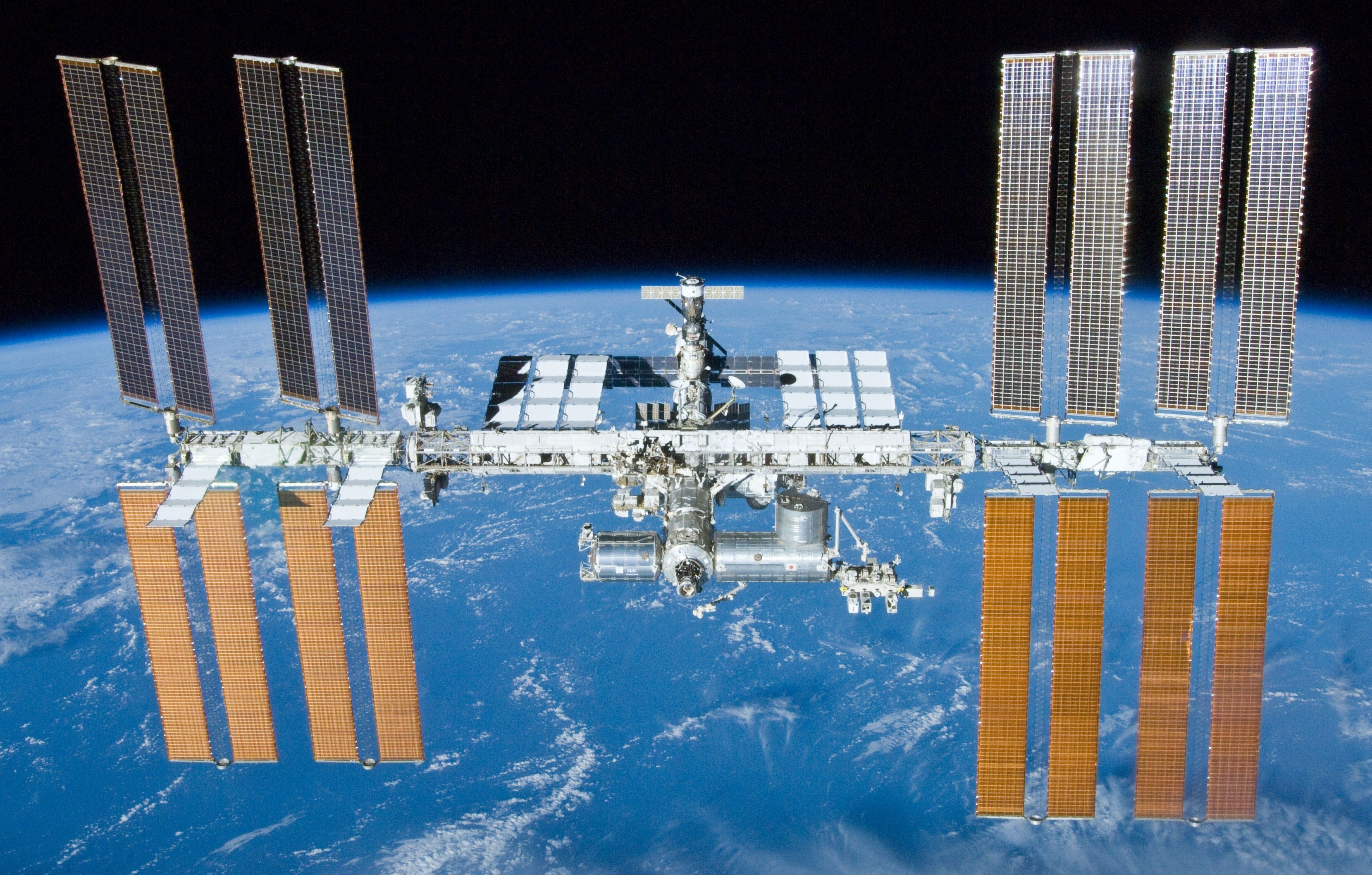
Butch Wilmore and Suni Williams floating in the ISS
    I think studying the genetic changes in astronauts due to microgravity is interesting because it opens up the potential for groundbreaking medical advances on Earth. By understanding how genes adapt in extreme environments, scientists can identify new targets for drug development or repurpose existing medications to better treat diseases that involve similar genetic pathways. This research not only benefits astronaut health but could also lead to innovative treatments for serious conditions, enhancing healthcare outcomes across the globe.

Links:

https://www.thetimes.com/uk/science/article/genetic-changes-in-astronauts-could-help-treat-disease-on-earth-nh836nt3f#:~:text=By%20identifying%20common%20genes%20whose,disorders%2C%20neurodegenerative%20conditions%2C%20cardiovascular%20issues

https://www.nasa.gov/hrp/hazards/#:~:text=These%20include%20space%20radiation%2C%20isolation,and%20closed%20or%20hostile%20environments.

Thursday, October 14, 2021

Mice in space don't have kids: Ionizing Radiation alters the reproductive health and clock genes of mice.


    The circadian rhythm and clock genes of mice have been found to be negatively affected by ionizing radiation in a recent study. More particularly, the effect of this radiation lowers the motility of sperm in male mice, reducing their ability to reproduce. The clock genes are harmed by reducing the expression of mRNA, causing the metabolism and sleep cycle of the mice to fail, reducing energy and causing lethargy. This circadian rhythm failure will lead to further reproductive harm. These effects can become exacerbated over long periods, and may eventually result in sterility. The harm that is caused by IR puts strain on the concept of long term interplanetary or intergalactic travel, as the ability to produce the next generation of astronauts while in space may come with several issues.

I personally believe that not enough is known about what genes are harmed while traveling in space, and that more conditions and diseases will come from a mixture of low gravity, high radiation, and eventually shallow gene pools aboard interplanetary vessels. In this way (and many others), I think that space travel should continue as a concept for the foreseeable future, as these issues cannot even be solved in our current setting on earth. Adding more variables will only cause more confusion.

Thursday, July 8, 2021

Crazy Cosmic Chromosome Correcting

 As much as scientists try their best to do their amazing work and innovate from every corner of their fields and every corner of the globe, there's only so much that they can do while they're living on the ground. That's why scientists stationed up on the International Space Station tried their hands at performing gene editing while in space, and recently they were successful in performing a CRISPR-Cas9 procedure within the limitations of their zero-gravity residence. This can lead to several breakthroughs, as oftentimes space can be home to DNA-damaging radiation, and the ability to change or repair said DNA while in space would be critical if humanity ever decides to live away from Earth long-term. 

 CRISPR: three new developments in the world of gene editing

Link to article: https://www.labroots.com/trending/space/20784/astronauts-perform-crispr-gene-editing-space


Link to article explaining: https://www.britannica.com/science/homologous-recombination


Sunday, November 22, 2020

Swole Mice in Space?!


Scientists may have found a better solution than exercise to fend off muscle atrophy in space. A new medicine may keep astronauts from suffering from muscle loss according to Molecular Medicine Keeps Mice Mighty in Microgravity, by Amber Dance. By eliminating myostatin, a protein that normally blocks muscle growth, from 40 mice and then sending them to space, geneticist Se-Jin Lee tested how the newly muscular mice reacted to 33 days up in microgravity. Lee observed that while normal mice lost muscle mass, the muscular mice, stayed buff. This not only bodes well for astronauts with dreams of Mars, but for normal people who suffer from muscle loss, like the elderly, people with diseases like cancer or chronic obstructive pulmonary disease, or people with injuries that caused them to lose muscle mass.

 While removing myostatin from people’s genes would be impractical and expensive, that’s not the only solution Lee and his team have in mind. In normal bodies, myostatin shuts off muscle growth by attaching to a receptor on the surface of muscle cells. Lee set up a decoy of this receptor and had the astronauts inject it into the mice’s bloodstream. The decoy receptor caught the myostatin molecules and allowed the mice to get bulky. The decoy also captures another protein, called activin A, which also prevents muscle growth, as well as preventing the growth of bone. The results are extremely optimistic, suggesting that a drug to protect from muscle and bone loss, both for astronauts and your average civilian, may be possible in the near future. It will be interesting to see how well this will translate over to humans and if it really will be beneficial.


Other lInks


Sunday, July 26, 2020

Germs From Space May Hinder Human Immune Systems


Are human immune systems able to fight germs from space? Universities of Aberdeen and Exter researchers looked into the immune responses of mammalian cells to various amino acid combinations, so as to mimic what could be encountered in space. These amino acid combinations included ones that are rare on Earth, isovaline and ?-aminoisobutyric acid, though they have been known to exist on meteors and potentially elsewhere in space. Scientists wanted to test whether immune response to germs from other planets or the moon would be less or the same as it is for those already known on Earth.


Researchers used mice to test T-cell responses to these various amino acid combinations. They found that they had a significantly lower immune response to this than they would to germs more common on Earth. Thus, it can be said that humans and other mammals may have difficulty fighting germs either in space or brought to Earth from space.


After the coronavirus pandemic, scientists realized just how susceptible humans are to becoming severely ill from new pathogens, as our immune systems are not able to fight them as effectively as they are with common ones. It may not pose an issue now, but as space travel increases, the introduction of unfamiliar pathogens to humans may increase. Therefore, this study will hopefully help scientists take proper precautions prior to space excursions so as to protect not only the space travelers, but the rest of Earth’s population.


Article: https://www.sciencedaily.com/releases/2020/07/200723092638.htm

Related Article: https://www.independent.co.uk/life-style/gadgets-and-tech/news/alien-germs-human-cells-immune-system-science-a9633811.html


Thursday, November 28, 2019

Space-breeding Research Center


China wanted to increase the yield and quality of crops. So, the Chinese government researchers launched 8 recoverable satellites and 5 high-altitude balloons, that exposed seeds of vegetables and flowers to cosmic radiation and triggered mutations, in the space. Those seeds were then brought back on earth to be sown. These satellites also contained bacteria to see how high-energy radiation affected them. With hundreds of space-breeding experiments being done, many seeds were successfully selected because they were more resistant to drought and main diseases.

Even after exposure to a high dosage of radiation, it was concluded that the seeds contained no trace of any radioactive substance after extensive testing. Researchers are also combining biological techniques such as genetic sequencing, molecular labeling and gene editing to help improve the efficiency of new crop species.


“The question is, should we stick entirely to the pace of nature, or give it a little boost?” Dr. Li Jingzhao, a scientist involved in the program, asked.


I think this program is an important one because it improves the economy, scientific research, and biodiversity. We are exposed to radiation every day, with human activities, we are exposed to radiation even at more (and there are consequences) but as long as my food is safe, I say you scientists go for the ride! 


Article publication: South China Morning Post on November 7, 2019.
Article URL: https://www.abacusnews.com/culture/china-wants-produce-mutant-crops-space/article/3036708
Related article: http://www.spacedaily.com/news/china-00zb.html

Sunday, November 26, 2017

Being in space alters gene expression

Mark and Scott Kelly are Identical twins but they have one huge difference, one spent an entire year in space. early test results show that there is increased methylation in several genes this means that they are "turning off" and these affects are persisting for a short time while he gets reaclimated to being on earth. NASA scientists refer to leaving earths surface is akin to fireworks inside your body as you slip the surly bonds of earth. Many of Scott's genes activated and others turned off and we can see this by looking at the activation of his brother mark's genes while he remained on earth for the year. Also NASA is reporting that Scott's Telomeres grew while in space, could a gravity free environment influence telomerease in somatic cells? NASA is collecting this data to study the effects of a mars expedition and the affect prolonged space travel would have on humans.

the data collected from Scott's year in space could be pivotal to prolonged space travel for years to come and will help humans be successful in our endeavors into space. Its quite interesting that entering space the body starts to methylize certain genes, and activate others. Perhaps the most intriguing piece of evidence is the purported lengthening of Scott's telomeres, will this affect Scott's aging process? will he age slower than his brother? only time will tell.
link 1

Monday, November 23, 2015

Water Bears' Weird DNA Allows Them To Survive In Space


   Water bears are tiny little micro-animals that are also the only species known to survive in space. Recent studies state that water bears also possess the highest amount of foreign DNA than any other species. About one-sixth of the water bear's genome comes from other animals. This is due to horizontal gene transfer occurring when the water bears are placed under conditions of extreme stress. Researchers believe that under extreme stress, their DNA breaks into small pieces and when the cells rehydrate, they become momentarily permeable which allows other DNA and large molecules to enter. Water bears have the ability to repair their own DNA as well as the ability to patch in foreign DNA while their cell membranes are still "leaky." Like water bears, the human genome also contains foreign though, obviously, not nearly as much.
   This mix of different DNA may be the reason why water bears are able to survive in the extreme conditions that are impossible for other species to survive. The addition of bacterial DNA within the water bear's genome may be the reason why this animal has the ability to survive in space .In 2007, a colony of water bears were shot into space and when they returned, not only were many of them still alive, but some had laid eggs while in space and the offspring were healthily hatched. Water bears can also be placed in a freezer for a year, then taken out and thawed. After 20 minutes, they unfreeze and carry on as nothing happened.
   I have learned briefly about water bears in the past, but this article goes more in depth about the interesting genome of the tiny animals. I did not know that water bears were the only animals able to survive in space and it was also interesting to know of the possible reason why. Further research can lead 


Tuesday, April 28, 2015

How Space Effects the Body

NASA twin astronauts Scott and Mark Kelly are participating in a genetic study that will take place while one on Earth and the other is in space. The purpose is to study the effects of spaceflight using their identical twin genetic makeup. NASA's Human Research Program and Bio-medical Research Institute have taken up this unique research and have ask potential researcher to design an observational comparison between the two astronauts. John Charles the chief of HRP's international science office says that the genetic revolution has reached the space age. He stated that this research was an opportunity to explore.

Data for this research will be collect during Scott Kelly's yearlong space flight. Scott is aboard the International Space Station, his year long journey started last month in March. Mark will be the researcher controlled subject. While Scott is spending a year in space his identical twin Mark will be living out his normal life down on Earth.

In order to collect the data the twins will take blood samples at regular intervals. They will also be providing saliva, psychological, and physical tests. the researchers will be focusing on how effect the space environment on human DNA. They will be looking for any changes in small molecules that are effected by dieting, stress, and zero gravity.

There are no defined outcomes of this research yet because it is first of its kind. NASA will use the data to show the effect space has on the human body. The data collected from this research may be able to aid in future human health studies and will add to the current knowledge of genetics. The information collected from this experiment may shed light on the way people think about the
genetic processes.  This new opportunity to compare the effects of spaceflight and observe the changes in the genetic makeup between twin brothers is extremely revolutionary. I cannot wait to see the result that are produced from this amazing experiment.

Monday, February 16, 2015

Ice or Aliens?

Scientists have recently recreated interstellar ice, found to constitute most of the matter comprising the dense molecular clouds that lead to planetary and star formation. Within the ice, many simple sugars are formed with some help from ultraviolet radiation and cosmic rays, glycolaldehyde and glyceraldehyde being the two most important. What is their significance? These simple sugars are the backbone in the formation of nucleotides. As we now know, nucleotides serve as building blocks in the creation of DNA and RNA.
According to the LiveScience.com article, this explains that a comet colliding with early Earth and leaving these sugars behind, could have lead to the formation of complex life and eventually humans. Shifting now, from what we already know to speculation of the unknown, what could this mean? These new discoveries could mean that another life form exists somewhere in the universe. After all, if a comet carrying simple sugars suspended in ice is the source of our existence, what's to say this same mechanism hasn't created other societies of complex life?

Thursday, December 4, 2014

DNA From Outer Space


     Sitting with a few beers at a campfire on a warm summer night, i can only imagine that many people ponder how life came to this planet.  What else would there be to talk about? Well a team of Swiss and German scientists have completed studies that produce clues that it could have been possible for the first DNA to come from outer space.  Early in the Earth's history, meteorites and asteroids hit the planet.  The popular thought until now was that anything that entered our atmosphere reached extreme temperatures and could not survive. 

The scientists dotted a rocket with DNA fragments inside the exterior grooves.  Once the flight of the rocket was concluded, they tested the stability of the genetic material.  The flight consisted of a 13 minute round trip with exit and reentry into the atmosphere.  They found that the DNA that could create life survived the trip intact. The scientists did note that the experiment could not fully replicate the speed and temperature of a meteorite colliding with earth.  It does prove that a civilization could be contaminated with DNA on the outside of a spaceship.  Bacteria was already known to survive certain similar conditions.This of course does not prove or disprove any evidence of how life was started on earth or anywhere else if there is life on other planets.


http://www.scientificamerican.com/article/dna-can-survive-reentry-from-space/
http://www.ibtimes.com/nasa-dna-found-meteorites-indicates-life-may-have-originated-space-828233

Wednesday, December 3, 2014

DNA Shown To Withstand Even The Most Extreme Conditions

The wonders and capabilities of DNA continue to broaden its horizons as more and more researchers study this molecule of life. DNA, being the genetic information command molecule from generation to generation, and cell to cell, is an astounding subject of many recent studies and there are still many mysteries about its capabilities. Recently, scientists with the University of Zurich sent DNA into space and were astonished with what they had found.

Led by Professor Oliver Ullrich, a team of scientists at UZH sent DNA into space by putting samples on the outter shell of the payload section of a rocket used in the TEXUS-49 mission. The rocket was launched into space and reentered Earth's atmosphere.What these scientists found was astonishing. Much of the DNA sent on the outer shell of the ship survived both the launch and reentry mostly intact. Even more interestingly, these DNA fragments were still capable of passing on genetic information as shown through the use of bacterial and connective tissue cells. This carries profound ideas especially with concerns of extraterrestrial life. The study shows that DNA can be put through the extreme conditions of the vacuum of space and reentry into an atmosphere, so contaminant DNA of extraterrestrial life or the spread of terrestrial DNA to other planets.

Article Link: http://www.sciencedaily.com/releases/2014/11/141126144150.htm
Supporting Link: http://www.kurzweilai.net/dna-survives-rocket-return-from-space

Saturday, November 29, 2014


DNA survives critical entry into Earth's atmosphere

          A team of scientists from UZH discovered that DNA can survive a flight through space and re-enter Earth's atmosphere during an experiment on the TEXUS-49 research rocket mission. The DNA was applied to the outer shell of the payload section of a rocket using pipettes and flew into space from Earth and back again. After the mission, the DNA was still found on the application points of the rocket and was still able to transfer genetic information to cells, proving DNA is able to survive in extreme conditions. 

        
        The scientists got the idea to put DNA on the rocket from studying the role of gravity in the regulation of gene expression in human cells using remote-controlled hardware inside the rocket's payload. During preparations for this experiment, researchers began to wonder if the outer structure of the rocket might be suitable for stability tests on biosignatures

       Quickly improvised, the experiment was supposed to merely be a pretest to check the stability of biomarkers during space flight and re-entry into Earth's atmosphere. Scientists were surprised to find the DNA completely intact and functioning, proving DNA can survive in very harsh conditions. 

      This experiment is interesting not only because of its spontaneity, but because of the results produced. The fact that DNA can survive in space proves the greatness of the molecule and opens the door to possible life on other planets.

Article

Sunday, November 23, 2014

Plants Return to Earth after Growing in Space

     More than one thousand plants were put into deep freeze and sent to the International Space Station in order to determine the effect of microgravity on plant growth. As the plants are thawed, their RNA will be sampled using an instrument that will determine the activity of their approximately 30,000 genes. Gravity itself is a force that strongly affects biology, as humans who spend a prolonged period of time in space show decreased bone mass as it is not required to support weight. Similarly, plants that are grown in low-gravity environments grow taller and thinner, and tend to have less structural support.


     Genes produce RNA which then code for separate proteins in the genetic process called transcription. By observing the genetic expression of plants grown in microgravity versus an identical group grown on Earth, the influence of microgravity on plant genes can be determined. It has been shown that plants grown with a lack of physical adversity, such as rain or wind, tend to be less strong and are more susceptible to diseases and pests. Plants grown in space tend to be more vulnerable to diseases due to the same mechanism. Therefore, by determining how to grow plants in space that are resistant to disease, it will be easier to provide food and oxygen for astronauts in the near future.


     I find this article interesting because it directly relates genetic expression to physical adversity. As scientists are able to determine how to grow plants that are less susceptible to disease, it will become more efficient to send astronauts to the International Space Station. In addition, astronauts will be able to go on longer trips if they can produce their own food without worry, meaning that humans will be able to explore more of space after this experiment is completed.