Sunday, October 19, 2025
Genes and Mental Illnesses: Is There a Connection?
Friday, December 9, 2022
Yaks That Adapt to Low Oxygen Environments
There has been recent insight into adaptations, genetically and cellularly, that allow yaks to survive in high altitude environments. It has been determined that this ability to live in these kinds of environments could be a result of endothelial lung cells specific to yaks. The endothelial lung cells are a single layer lined with blood vessels that regulates the exchanges between the bloodstream and surrounding tissues. High altitude regions in the Tibetan Plateau are inhabited by both domestic and wild yaks. They experience low oxygen concentrations. Humans and other non-native mammals would experience extreme heart and lung issues if exposed to such low oxygen conditions. This is not the case for the yaks who have adapted to these conditions over millions of years.
A group of scientists explored just how yaks are adapted to these kinds of environments by combining transcriptomic and genomic data to present an exclusive genome assembly for both domestic and wild yaks. Transcriptomic data involves characterizing all transcription activity (both coding and non-coding) or a select subset of RNA transcripts within the sample. This analysis allows for the identification of candidate genes and expressed markers of traits of interest associated. This also included a map of the different lung cell types present. 127 genes were identified to be expressed differently in yaks compared to European cattle and identified a subtype of endothelial cells only found in the lung tissue of yaks. This specific cell type was shown to express genes involved in high altitude adaptation. These findings on genetic adaptations of yaks and high-altitude environments can be useful for future studies on how other mammals respond to low oxygen environments.
Tuesday, July 30, 2019
Autism Largely Caused by Genetics, Not Environment: Study
Thursday, March 30, 2017
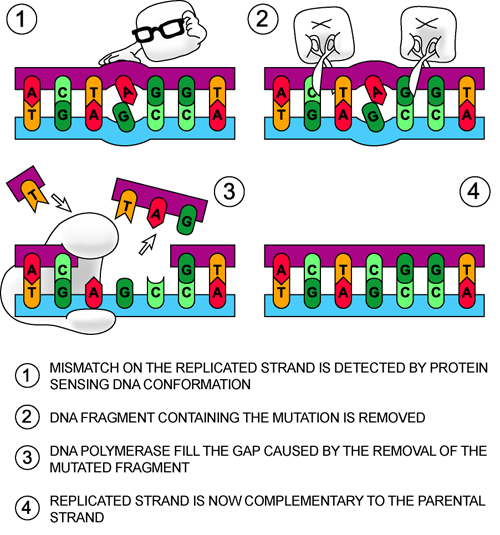
Is DNA making more mistakes then you think?
Monday, February 16, 2015
Ice or Aliens?
According to the LiveScience.com article, this explains that a comet colliding with early Earth and leaving these sugars behind, could have lead to the formation of complex life and eventually humans. Shifting now, from what we already know to speculation of the unknown, what could this mean? These new discoveries could mean that another life form exists somewhere in the universe. After all, if a comet carrying simple sugars suspended in ice is the source of our existence, what's to say this same mechanism hasn't created other societies of complex life?
Sunday, December 7, 2014
Centipedes and Evolution
One author of this study, Ariel Chipman, the genetic sequencing of these arthropods shows how they've changed over time. It helps demonstrate the changes from living in water to living on land. For example, Chipman was able to conclude that myriapods and insects changed their preferred environment differently from one another. One example of this is the fact that centipedes don't have the olfactory genes insects have. Instead, centipedes have enhanced another aspect of their genome, which is not present in insects. One species of centipedes have no eyes and live underground, and this demonstrates how the environment influences evolution. Therefore, their other senses are enhanced.
Research on genomes was fixated on humans, but now there is enough knowledge that scientists are able to research animals. Knowing the genomes of more simple organisms will enable scientists to learn more about human genetics. In the future, this will serve several purposes.
Article: http://www.sciencedaily.com/releases/2014/11/141125140807.htm
Supporting Article: http://www.plosbiology.org/article/info%3Adoi%2F10.1371%2Fjournal.pbio.1002005
Friday, December 5, 2014
People Conceived During Dutch Famine have Altered DNA
Tuesday, December 3, 2013
Autism Risks are increased by Air Pollution
Studies show that genetics isn't the only factor that effects a persons chance of having autism. Researchers say the enviornment also has an important impact on the risks. The gene MET is associated with autism and predicts altered brain structure and function . It controls the MET protein in the brain and the immune system. In the experiment 408 kids between the ages of 2 and 5 were examined. The kids were from the Childhood Autism Risks for Genetics and the Environmental study. Out of those 408 kids, 252 had the standards to have autism spectrum disorder. Many of those children lived in unfavorable conditions that researchers say may have increased the risk of these children to have autism. Researchers found that the air pollution exposure, traffic- related sources and air quality measures could have in fact increased the risk of the disease. The case is still under further study.http://www.scienceworldreport.com/articles/11304/20131202/air-pollution-genetics-increase-autism-risk.htm
Tuesday, October 29, 2013
Left Handedness is not " in the genes"
Wednesday, October 16, 2013
Genetically modified corn is actually better for the environment and harvesters
I find this concept extremely important. While the corn might not be grown entirely naturally, the amount of money being paid to spray the corn with insecticide would decrease exponentially, causing the farmers to save money and make more profit. Also, if there is no harm in eating this genetically modified corn, then it is a win-win situation for all. Humans are also not ingesting any harmful insecticide. I feel that we are headed to this type of crop growing revelation in the future.
Wednesday, April 3, 2013
The Link Between Natural Selection and Inflammatory Disease
It has been demonstrated that some of the genetic variants that make a person more susceptible to inflammatory diseases such as multiple sclerosis, Chrohn's Disease, and rheumatoid arthritis may in fact have been beneficial to our ancestors.
During the time period when bacterial and viral pathogens claimed many lives, the inflammatory response was utilized and developed as a mechanism of self defense. Now that our society has access to antibiotics and cleaning products that kill potentially pathogenic invaders, the inflammatory response that kept people alive in the past is now no longer needed as much and is beginning to become more of a problem by causing autoimmune disorders.
So far, it has been discovered that there are 21 places on the human genome that bear a "signature" for both natural selection and susceptibility to inflammatory disease.
Friday, April 13, 2012
Effects of Environmental Toxicants Reach Down Through Generations
This study was carried out to study pollutants that U.S. troops may be surrounded by. Scientists exposed pregnant female rats to relatively high, but non-fatal, amounts of the toxins. They then tracked any changes in the three generations of offspring. The results showed that "females reached puberty earlier, increased rates in he decay and death of sperm cells, and lower numbers of ovarian follicles that later become eggs." Its interesting to see how these pollutants have such an effect on animals such as rats. These toxicants are obviously not good for humans to be around as well, but I wonder if they could have similar effects in humans like they do in rats.
Saturday, December 3, 2011
Environment and diet can leave "marks" on your heart for life
Sunday, November 27, 2011
Human Leukocyte Antigen Locus: Parkinson's Disease
The research team studied 2,000 Parkinson's patients and 2,000 clinical control volunteers, some for over two decades, in order to hone in on the most important data. Over that time, they were assessing the clinical, environmental and genetic factors that might contribute to the development of Parkinson's disease. The study was centralized on the HLA locus, which contributes to the majority of immune functions and responses in humans. Continuous study at this locus can help to reach conclusions on how infection, inflammation and autoimmunity may contribute to the onset of Parkinson's disease.
Although many important conclusions were made from this study, much more work in required to fully understand the correlation between the HLA locus and Parkinson's disease. The Consortium's next step is to look more into gene-environment links in order to personalize therapeutics for any specific individual.