Sunday, October 19, 2025
Genes and Mental Illnesses: Is There a Connection?
Sunday, February 18, 2024
Bipolar Disorder Linked to Genetics?
In the article written by the National Institute of Mental Health, researchers have identified genetic locations related to bipolar disorder and tell us the possible biological cause for the disorder. The study also compared the overlap between bipolar I disorder (manic and sometimes depressive episodes) and bipolar II disorder (depressive and hypomanic episodes). Bipolar I disorder shows a stronger genetic correlation with schizophrenia, while bipolar II disorder correlates with major depression. Now it is also noted that traits such as excessive alcohol consumption, smoking, and sleeping issues can also affect bipolar disorder. To test the genome and understand differences researchers sampled 57 groups across Europe, North America, and Australia. This includes about 41K people with bipolar disorder, and 371K without. 64 genomic locations were noted as risk loci pertaining to this issue, which means this study identified 33 more than previously identified in previous studies. Those 64 genomes include 161 individual genes where some involve how brain neurons signal each other. This allows targets for biological treatments with specific medication to help treat bipolar disorder.
Bipolar disorder is a mental illness known for its highs and lows. I truly believe that more research into not just environmental causes but also genetic risks could make someone more susceptible to exhibiting symptoms of this illness. It is interesting to see how they can identify differences in loci that can cause the neurons to not signal properly, but also affect how the medication given to treat it affects our brain. If research can understand biologically how bipolar disorder affects people's brains, we can create more personalized treatments for those who have this disorder.
Sources:
Genomic Data From More Than 41,000 People Shed New Light on Bipolar Disorder. 2021 Sep 29. National Institute of Mental Health (NIMH). https://www.nimh.nih.gov/news/science-news/2021/genomic-data-from-more-than-41000-people-shed-new-light-on-bipolar-disorder.
Bipolar disorder - Symptoms and causes - Mayo Clinic. 2022 Dec 13. Mayo Clinic. https://www.mayoclinic.org/diseases-conditions/bipolar-disorder/symptoms-causes/syc-20355955.
Tuesday, November 21, 2023
Genetic Testing Could Greatly Benefit Patients With Depression, Save Health System Millions
https://www.medscape.com/viewarticle/998508#:~:text=The%20model%20predicted%20that%20testing,million%20CAD%20over%2020%20years
Thursday, September 21, 2023
Mental Disorders and Their Heritability
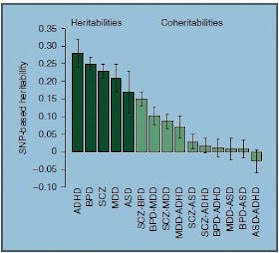
Mental disorders, such as ADHD, BPD, SCZ, MDD, and ASD, are traceable to the same genetic variations. People who have any of these mental disorders are more likely to have variations at the same four chromosomal sites. Since the extent of this overlap still remained unclear, researchers looked into this by looking for any comparisons and similarities in the genetic variations among a population of those who have those mental disorders. The population of those with the mental disorder was compared to a control group (those who have not been diagnosed with a mental disorder), to be able to calculate the extent of any overlaps between genetic variants and these mental disorders. Bipolar disease and depression had a 10% heritability and common genetic variation overlap, schizophrenia, and depression had a 9% overlap, schizophrenia and autism had a 3% overlap, and schizophrenia and bipolar disorder had a 10% overlap. Although some of these overlaps may seem minor or insignificant, it is a good starting place to continue research and learn more about the genetic inheritance of these mental disorders.
Mental disorders are greatly affecting our population, so it is crucial to look into the origin of these disorders. If researchers are able to find a greater overlap in the connection between these disorders and heritability, then maybe we can learn more about mental disorders and how to better treat and manage them. I would be curious to know if any other mental disorders have significant overlaps between heritability and genetic variation.
https://www.healthline.com/health/are-mental-illness-genetic
Friday, August 4, 2023
Genetic Factor Found In 5 Mental Disorders
A study suggests that major mental disorders like autism, ADHD, bipolar disorder, major depression, and schizophrenia, which were thought to be distinct, share certain genetic variations. This indicates potential genetic connections among these disorders. The study used data from genome-wide association studies to analyze over 33,000 patients with these disorders and found significant genetic variations associated with all five conditions. Specific genes related to calcium regulation in neurons, particularly CACNA1C and CACNB2, were linked to these disorders. Additionally, certain regions of chromosomes 3 and 10 were found to have illness-linked variations. While these genetic associations alone can't predict or diagnose these conditions, they could contribute to better diagnoses and a deeper understanding of the disorders' causes.
Friday, December 10, 2021
Genetic similarities between PTSD and other mental health disorders
https://news.yale.edu/2021/01/28/genetic-analysis-yields-new-insights-ptsd
https://www.nimh.nih.gov/health/topics/post-traumatic-stress-disorder-ptsd
Monday, November 22, 2021
The Brain Cell Receptor that is Linked to Depression and Anxiety
This structure appears on brain cells and can either be genetically inherited or can develop over time due to stress or trauma.
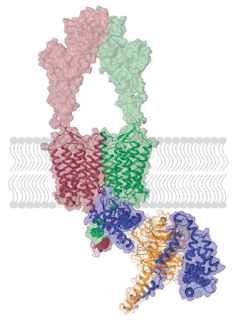
GPR158 is an orphan G-protein-coupled receptor, shown in the green and red colours of the rendering. RGS7, shown in blue, is the signaling complex. Gβ5 is shown in yellow and is paired together with RGS7 as part of the signaling complex. The lipid bilayer is shown in grey.
Now, with the structural information confirmed, drugs can be developed to disrupt the function of this receptor in a way that reduces the level of anxiety and depression in an affected person. More research for specific drug administration is needed, but having the structure of the receptor is a vast leap towards developing new medications to help with anxiety and depression.
Tuesday, April 27, 2021
Causes of Bipolar Disorder
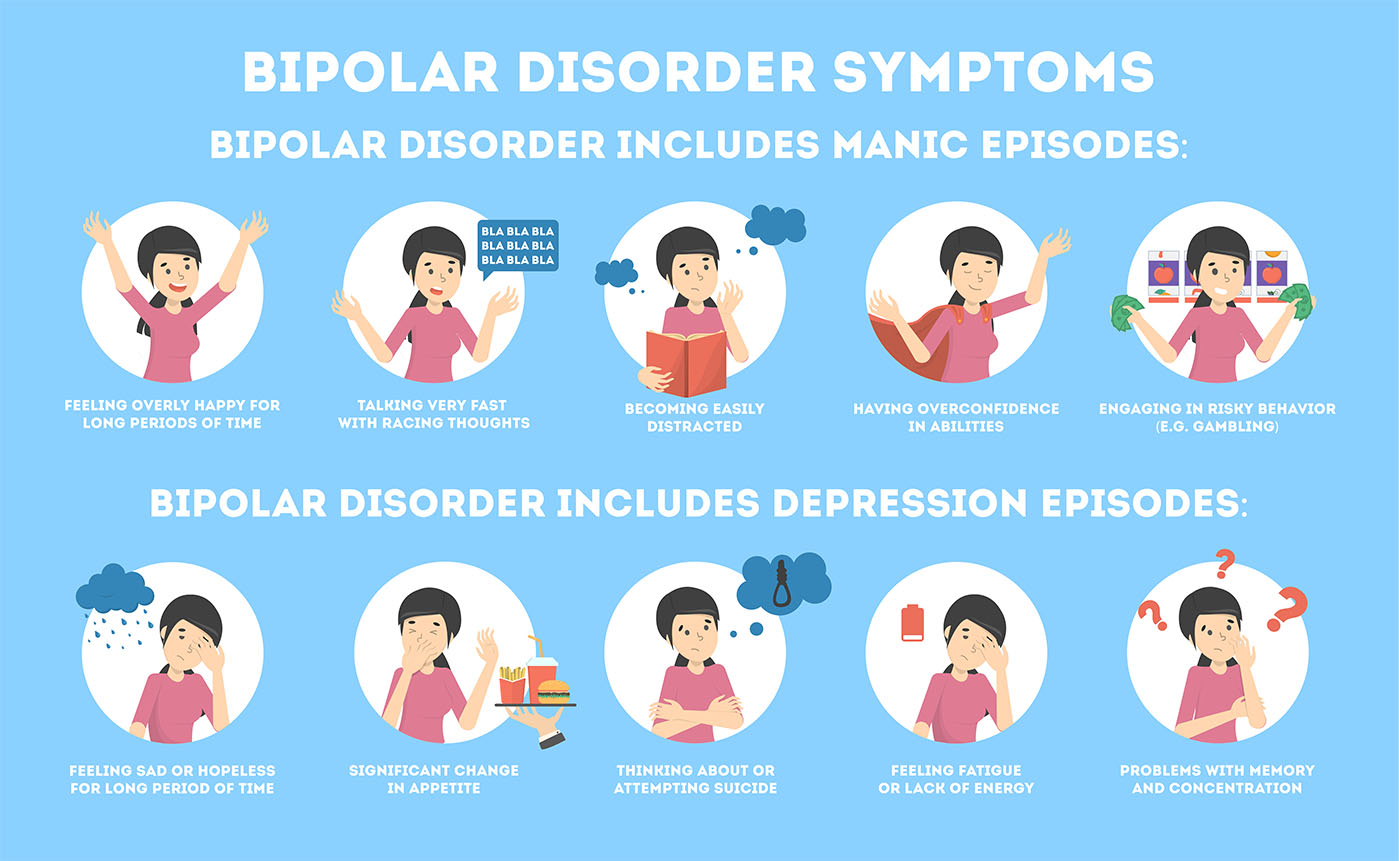
Bipolar disorder, also known as manic-depressive disorder or manic depression, is an episodic mental disorder that causes unusually extreme fluctuations in mood, energy, activity, and focus. In the manic episodes, the person feels very happy and increases in activity and motivation. In the depressive episodes, the person feels hopeless, sad, etc. and decreases in activity and motivation.
According to the National Institute of Mental Health, bipolar disorder develops or starts during late adolescence or early adulthood. There are two main causes to this disorder: genes and brain structure/function.
The chance of a person having manic depression given that one of their family member has it is 4 to 6 times higher than someone who doesn't have a family member with it. In identical twins, if one has it, there is a 70% chance that the other will have it.
A faulty brain circuitry may also cause this disorder. Neurotransmitters, like noradrenaline and serotonin are associated with mood disorders. In a normal person, these chemicals are balanced in the system -- not too high nor too low. Extraneous factors may shift these chemicals off balance and cause the disorder. For example, mania episodes are associated with high noradrenaline levels and depressive episodes are associated with low levels.
https://www.nimh.nih.gov/health/publications/bipolar-disorder/index.shtml
https://greatist.com/health/what-causes-bipolar-disorder
Friday, April 16, 2021
Genetic Link between Anxiety and Depression found
Mental illness like all other diseases, is contributed to by genetic factors. Whether they encode for having the mental illness, by constructing an abnormal brain chemistry, or make one more susceptible to having a mental illness. note: Mental illness is also very much contributed to by environmental factors. Because there is a genetic link to mental illness, the specific genes that contribute to mental illness can be found.
Researchers from QIRM Berghofer have mapped out the genes that contribute to depression and anxiety, using genetic data from over 400 thousand individuals. 674 genes were identified and 509 of those genes were relevant in both illnesses (roughly 75%). The researchers also discovered when analyzing the genes only linked to anxiety, there was a strong overlap with genes linked to hypertension. Genes only linked to depression had a strong overlap with genes linked to hypertriglyceridemia, which suggests depression may also have metabolic components. I think the more we learn about the genetic linkages to mental illness the easier it will be to treat and or medicate for individuals. I think pretty soon, when someone has depression or anxiety we can analyze their genome find the exact receptor problem their genes have coded and create a individual specific inhibitor (or reuptake inhibitor) to treat them.
Links:
https://www.nature.com/articles/s41562-021-01094-9
https://www.cell.com/trends/genetics/fulltext/S0168-9525(99)01721-7
Thursday, April 15, 2021
Seasons Have an Effect on Your Mood
Lihua Sun, a student from China who moved to Finland for graduate studies, noticed a trend in Finland. He began to see that at different points of time, people became moody. His hypothesis was that it had to do with the change of seasons. For his graduate studies in Finland, Sun noticed a change in his moods after his 14 years living there. His study was to take brain scans of mu-opioid of healthy volunteers to see how much of the chemical was visible in the scan. He noticed that the mu-opioid was more visible during the hours of sunlight. In contrast, the mu-opioid was least abundant during hours of no sunlight.
What you can conclude from this is that the spikes in mu-opioid cause changes in mood. Sun noted that studies have shown that suicides have peaked during hours of long sunlight and long darkness. This shows that mu-opioid needs to be exposed to humans in moderation. The paradigm of prolonged darkness causes depression can now be stated as false, since depression can be noticed from prolonged sunlight as well. We must be careful about our moods during the Summer and winter, due to the long lasting sun and moon.
A Key Brain Chemical Fluctuates With The Seasons, New Study Finds (forbes.com)
Seasonal affective disorder (SAD) - Symptoms and causes - Mayo Clinic
Wednesday, December 9, 2020
Is Anxiety and Depression genetic?
Anxiety, depression, and other mental disorders are becoming more and more present in the public consciousness, many people suffer from them. While these disorders may have many situational or environmental causes, but with so many people battling these mental disorders, could it be genetic? Major depressive disorder (MDD) and neuroticism traits have some genetic susceptibilities. Studies have shown some correlation between polymorphism in the serotonin transporting region (5HTTLPR) and bipolar disorder, suicidal behaviors, and depression-related traits, but nothing yet to show it is responsible for MDD.
Mental disorders are incredibly complex and multifaceted, so there is no exact answer to whether these disorders are inherited. However, studies show that there could possibly be genetic factors involved. Seratonin transmitter mutations have been linked to Bipolar and other similar disorders. There is still a lot of research that needs to be conducted to determine the exact gene sequences or mutations responsible.
Links:
https://www.sciencedirect.com/science/article/pii/S0006322305010139?casa_token=d7j9zXyl1acAAAAA:Z2MhTYwifuZmhDP-OKs7HPvQGu-XmAUng7keAZL41r7h0hHe41RK5vZ1u-voVP6v_FIEY-QJ2Kk
https://www.healthline.com/health/depression/genetic
Friday, December 4, 2020
Is Anxiety Caused by Genetics?
Anxiety is one thing that many, many humans have dealt, or will have to deal with sometime in their life time. In simple terms, it can be defined as one who has an intense fear about every little thing going on around them, causing many symptoms such as fatigue, elevated blood pressure, stress, sweats, and many more. Many things can cause this such as family stress, school, work, relationship issues, personal issues, etc. But, why does this happen more often in some families, and not others at times? Anxiety very may well be passed down from generation to generation. One study showed that the gene, RBFOX1, raises the chances for one to acquire anxiety feelings. Of course, we know that an external factor could very well cause it, such as a sudden death of a loved one. That would obviously cause one to feel anxiety and depression, whether the gene is in their DNA or not. For people who suffer from anxiety, they may seek care such as therapy to relieve the episodes. Even though one may naturally have anxiety, at least there can be some sorts of treatment/management to heal the person.
https://www.healthline.com/health/mental-health/is-anxiety-genetic#symptoms
https://www.nature.com/articles/s41380-019-0559-1
Friday, November 27, 2020
The Epigenetics of Addiction and Depression
Dopamine controlling genes may be a root cause of addiction to drugs like alcohol and cocaine, as well as an answer to why drugs for depression need to be taken for weeks before they have an effect, according to the article The Epigenetic Secrets Behind Dopamine, Drug Addiction and Depression, by R. Douglas Fields.
Neurotransmitters may have more to do with this process than we realized. Neurotransmitters transmit signals between neurons, which allows us to think, learn, and feel. When neurotransmitter signals misfire, we suffer problems with thinking, making decisions, or mood disorders, like depression or bipolar disorder. Serotonin, a kind of neurotransmitter known as a monoamine, helps to regulate moods and to treat depression, drugs that increase the level of serotonin in the brain are usually prescribed. According to research led by Ian Maze done last year, serotonin has another function: it can be used as one of the special markers of DNA. Specifically, serotonin bonds to a histone, the protein used as a spool, known as H3. H3 controls the genes that turn human stem cells into serotonin neurons. Maze’s team figured that if serotonin had this function, there was a chance that dopamine could also do the same thing, with the genes that control drug addiction. After all, the same enzyme that bonds serotonin to H3 also allows dopamine to be attached to H3, in a process called dopaminylation. This discovery may be essential for future research into addiction, or even broader, other kinds of mental illness, and how to treat these disorders. I already knew that genetics affected disorders and diseases like these, but it is also very interesting to look at how epigenetics plays a role.
Additional LinksThursday, November 26, 2020
The Cross Link Between Genetics and Suicide
Suicide has been a rising cause of death in America. One reason many people feel suicidal is because of their family history with mental health. Not only has family history contributed to suicidal tendencies, it also can cause depression, bipolar disorder, anxiety, schizophrenia, and more mental health issues. Genome wide association study (GWAS) was used to study different families to cross check their genomes. Approximately 22 genes were discovered that indicated elevated risk of suicide death. Although family history is just one factor of the many environmental factors such as childhood, trauma, and poverty; it still increases a person's likelihood. With that being said I believe more people and families should seek therapy. Suicidal thoughts will never truly go away, you learn to live with it and become the bigger person. However not many people can afford therapy which is why better FREE counseling services should be provided at schools and colleges as well as better education to children and adults about suicide and how to prevent it.
https://medicalxpress.com/news/2020-11-genetic-discovery-suicide-families.html
https://ajp.psychiatryonline.org/doi/10.1176/appi.ajp.2020.19101025
Tuesday, November 24, 2020
Opioids Prescriptions Link to Major Depression
https://jamanetwork-com.ezproxy.stockton.edu/journals/jamapsychiatry/fullarticle/2772881?resultClick=1
https://www.drugabuse.gov/publications/drugfacts/prescription-opioids
Sunday, November 15, 2020
Happiness Can Be Inherited

Thursday, December 12, 2019
New targeted therapy for anxiety and depression
The above graphic was pulled from the second article, The CRF system, stress, depression and anxiety—insights from human genetic studies. The graphic outlines one of the most significant pathways that are affected in people with anxiety, depression, and various other mental illnesses. The main focus of this pathway is the corticotropin releasing factor (CRF), which regulates the hypothalamic-pituitary-adrenal axis (HPA axis). The adrenal glands in the body control stress response, most commonly the fight or flight response. Since CRF plays such a key role in the activation or inhibition of the HPA axis, researchers are beginning to look into targeted therapy that can regulate CRF. If CRF is regulated, the HPA axis would be regulated - meaning anxiety and depression responses would be able to be controlled and mitigated.
Since genetics predisposes people to anxiety and depression, and social interactions can shape or alter the DNA, some people may have an enhanced risk of developing these illnesses. For example, someone who has been traumatized by sexual assault and who is genetically predisposed to depression and anxiety will be extremely likely to develop and experience depression and anxiety. On the contrary, someone who is not genetically predisposed but was not lovingly nurtured by their parent growing up still may be likely to develop and experience anxiety and depression because their experience may alter their DNA and how it is expressed which may affect neural links in the brain.
I think the possibility of targeted drug therapies for depression and anxiety are something of the near future. If the HPA axis is the main player in many of the mental illnesses, it may be possible to stop the onset of symptoms in at-risk patients before they even begin, allowing people to live a normal life. If the HPA axis and CRF is a big factor in other mental illnesses like schizophrenia, a drug that targets CRF may be the key to finding a cure for these ailments and since it would be targeted therapy, there is the possibility of little to no side effects. I definitely think this topic deserves more research since there is the possibility of giving patients a whole new life, no matter what their age, so they can have an overall better quality of life.
Article links:
The New Genetics of Mental Illness:
https://www.jstor.org/stable/pdf/24939890.pdf?refreqid=excelsior%3Ad7cc5f97bcf0a23f85a7a8d216164514
The CRF system, stress, depression and anxiety - insights from human genetic studies:
http://web.a.ebscohost.com.ezproxy.stockton.edu/ehost/pdfviewer/pdfviewer?vid=1&sid=41351801-df51-406c-b812-7b8b58e6b823%40sessionmgr4006
Friday, November 29, 2019
Brain Tissue Reveals Sex-specific Gene Changes in Depression

https://www.medicalnewstoday.com/articles/321245.php#1
Related Article:
https://www.sciencedaily.com/releases/2018/03/180313130643.htm
Major depression is a mental health disorder where depressive symptoms continue for at least 2 weeks. A study was done in which researchers analyzed brain tissue of 26 deceased adult men and 24 adult women who had major depression. They specifically searched for genetic alterations across the dorsolateral prefrontal cortex, subgenual anterior cingulate cortex, and basolateral amygdala, all of which are implicated in depression. The study reported 706 genes expressed differently in men with severe depression and 882 genes expressed differently in women with the disorder. The researchers also note that the different brain regions are unique to the opposing changes in gene expression.
I thought that this article was cool because special medications could be created specifically for each sex for the most effective results. Sometimes antidepressants are not effective for certain people so I hope that this study will become useful for them.