Showing posts with label Genetic Variation. Show all posts

Friday, December 5, 2025

Fingerprinting the Fastest-Changing Regions of the Human Genome

    Scientists recently used DNA sequencing across a four-generation family to investigate how our genome changes over time. Their findings showed that certain regions of our DNA mutate much faster than previously believed (University of Utah Healthcare). This challenges the traditional view that mutation rates are relatively uniform across the genome and opens up new questions about why some areas are more prone to change. Understanding these fast-evolving regions is crucial because it may shed light on both human evolution and the mechanisms underlying inherited diseases. For more background on how mutation rates vary across the human genome, see this review article Variation in the Mutation Rate Across Mammalian Genomes


    From a genetics education perspective, this research is particularly intriguing. In most classes, mutation rates are discussed mainly in the context of population genetics or disease-causing mutations. However, the discovery of genomic hotspots (areas that accumulate mutations at a higher rate than average) suggests that some regions of our DNA are naturally more dynamic. This has far-reaching implications: not only could it influence how we interpret genetic variation, but it also changes how we think about genome stability and the processes that drive evolution at the molecular level.

    Several key questions emerge from this study. Why do these regions evolve faster than others? Are they structurally different in a way that makes them more vulnerable to damage, or are they less constrained by natural selection? Could they be exposed to more errors during DNA replication or less effective repair mechanisms? Exploring these possibilities could help scientists pinpoint the factors that drive rapid genomic change and better understand the balance between genome flexibility and stability.

    This research also has potential applications in health and genetic counseling. If certain regions are mutation hotspots, individuals with variations in these areas might face different risks for inherited conditions. Identifying these hotspots could improve predictions about disease inheritance and guide approaches to monitoring and prevention. 

    T bottom line is that our genome is not static, but rather a constantly evolving landscape. Unlike many studies that focus on therapies or specific diseases, this research provides insight into the basic mechanisms of change within our DNA. 

                                                                            Resources

University of Utah Health. “Parts of Our DNA May Evolve Much Faster than Previously Thought.”University of Utah Health, 2025, https://healthcare.utah.edu/newsroom/news/2025/04/parts-of-our-dna-may-evolve-much-faster-previously-thought 

Hodgkinson, Adam, and Alison Eyre-Walker. “Variation in the Mutation Rate Across the Mammalian Genome.” Nature Reviews Genetics, vol. 12, no. 11, 2011, pp. 756–766, https://www.nature.com/articles/nrg3098

Sunday, October 29, 2023

Genomic Effects of Inbreeding on Scandinavian Wolves


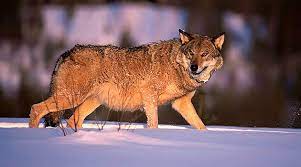
Researchers at Uppsala University studied the genetic origins of the Scandinavian grey wolf population, which began with only three wolves from Finland in the 1980s. After five generations of inbreeding, between 10 and 25% of the original genetic variation was lost, amounting to 160,000 genetic variants. The founding wolves weren't entirely unrelated, contributing to a reduction in initial genetic diversity. Professor Hans Ellegren highlighted the need for inbred populations to receive new genetic material from diverse sources. Despite recent genetic contributions from immigrating wolves, the high level of inbreeding threatens the retention of these new variants.

The Uppsala University study on Scandinavian grey wolves vividly highlights the perils of inbreeding. With just five generations resulting in a loss of up to 25% of original genetic variation, the fragility of such limited gene pools becomes starkly evident. This research is a potent reminder of the need for diversity to ensure the long-term health and survival of species. The second article, which is focused on human inbreeding shows that inbreeding between closely related individuals can result in significant health risks for offspring, including the increased likelihood of inheriting rare genetic diseases. Research shows that inbred children exhibited decreased cognitive abilities, reduced height, and lung function, and were more susceptible to diseases in general. 

Thursday, September 21, 2023

Mental Disorders and Their Heritability

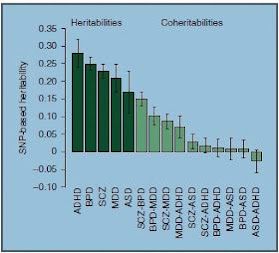
Chart showing genetic overlap of mental disorders


Mental disorders, such as ADHD, BPD, SCZ, MDD, and ASD, are traceable to the same genetic variations. People who have any of these mental disorders are more likely to have variations at the same four chromosomal sites. Since the extent of this overlap still remained unclear, researchers looked into this by looking for any comparisons and similarities in the genetic variations among a population of those who have those mental disorders. The population of those with the mental disorder was compared to a control group (those who have not been diagnosed with a mental disorder), to be able to calculate the extent of any overlaps between genetic variants and these mental disorders. Bipolar disease and depression had a 10% heritability and common genetic variation overlap, schizophrenia, and depression had a 9% overlap, schizophrenia and autism had a 3% overlap, and schizophrenia and bipolar disorder had a 10% overlap. Although some of these overlaps may seem minor or insignificant, it is a good starting place to continue research and learn more about the genetic inheritance of these mental disorders.


Mental disorders are greatly affecting our population, so it is crucial to look into the origin of these disorders. If researchers are able to find a greater overlap in the connection between these disorders and heritability, then maybe we can learn more about mental disorders and how to better treat and manage them. I would be curious to know if any other mental disorders have significant overlaps between heritability and genetic variation.


https://www.nih.gov/news-events/news-releases/new-data-reveal-extent-genetic-overlap-between-major-mental-disorders 


https://www.healthline.com/health/are-mental-illness-genetic 


Thursday, December 1, 2022

Founder Event Affects Genetic Variability In Ashkenazi Jewish Populations


Excavation of an old storehouse in efforts to build access ramps led to unearthing a medieval Jewish gravesite in Erfurt, Germany. From there, archaeologists were able to collect bags full of molars, bicuspids, and incisors from the bones of the dead buried there. Geneticists extracted DNA samples from 33 teeth. Studies of their DNA reveal how, despite being genetically related to the medieval Ashkenazi individuals of the Erfurt community, modern day Ashkenazim, even if they live worlds apart, have less genetic variation. From this study, scientists, geneticists, and researchers discovered the high level of homozygosity among modern Ashkenazi Jews around the world. The evidence suggests this was due to a bottleneck (founder) event where the original community experienced a reduction in population size and repopulated from the few that were left among them. 


It's inspiring to hear how DNA, whether it comes from a living person, or centuries old individual long buried, has a story, a history to share. The computational geneticist from Columbia University, Itsik Pe'er said it best, "Ancient DNA sequencing is a cheat-code that can take you to places where you don't have information today." 

Friday, April 15, 2022

New Study Identifies 120 Genes Linked to Schizophrenia


    An article by Robert Preidt for U.S. News unveils a study that identified 120 genes linked to schizophrenia. This is currently the largest genetic study done on schizophrenia and includes 45 countries. Researchers analyzed DNA from roughly 77,000 people who suffer from schizophrenia and 244,000 without the disease. The study has identified specific genes that are linked with the disease, which could lead to new and more effective treatments, as many people with schizophrenia do not respond well to current treatments. 

    The inheritance pattern of schizophrenia is usually unknown. The probability of developing schizophrenia is higher for family members of affected individuals. Genetic variation is the most likely cause of the disease, and usually it is a combination of multiple genetic changes. There are also environmental factors associated with schizophrenia, such as exposure to infections before birth and extremely high stress during childhood.


Thursday, April 14, 2022

New Genetic Clues Could be Key to Saving Sea Turtles from Mysterious Disease


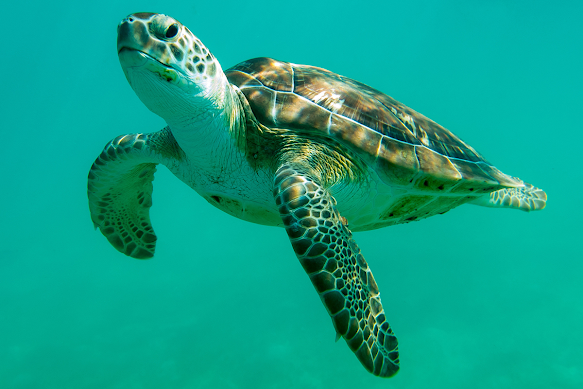
According to an article published in University of Central Florida Today, a group of UCF researchers discovered new gene variants in the immune systems of sea turtles, which could be the key to saving this species from another major disease: fibropapillomatosis (FP). This study was published in the journal Royal Society Open Science and sheds a light on the role of gene variants (MHC class I alleles) in protecting sea turtles from this disease.


This is the first time researchers have studied variation in MHC genes in green sea turtles. MHC proteins help recognize pathogenic threats and then key the immune system to respond to them. FP causes sea turtles to develop tumors on their bodies, which inhibits their mobility and ability to catch prey.


About half of the green sea turtles observed in the Indian River Lagoon have FP. Central Florida’s Atlantic coastline hosts about one-third of all green sea turtle nests in the state. Green sea turtles are important because they contribute to healthy oceans by grazing and maintaining seagrass beds. All turtles are considered threatened or endangered due to threats from pollution, coastal development, and fishing, in addition to infectious diseases.


A better understanding of the role genes play in protecting sea turtles can help inform management strategies, such as captive breeding using turtles who are genetically resistant to FP, as stated by UCF Associate Professor of Biology Anna Savage. Simply knowing a baseline of how much variation is out there can help give researchers a better idea of what sea turtle populations will look like in the future. Knowing the relationships between genetic variants and disease susceptibility can be used as a tool if one knows which of the MHC alleles is really important for surviving disease threats.


The lead author of the study, Katherine Martin, helped sequence MHC class I genes from 268 green sea turtles and 88 loggerhead sea turtles. The researchers found 116 newly-discovered alleles, some of which were linked to the development of FP but also potentially the regression of tumors. Even with all of these alleles discovered, however, there needs to be more sampling to get a better picture of what MHC alleles do to protect sea turtles. The next step of the experiment is to expand the sampling of green sea turtles and loggerheads as well as examine genetic information from other turtle species.


Related article: https://pubmed.ncbi.nlm.nih.gov/16181327/

Tuesday, February 8, 2022

Assessment of Genetic Variation and Species Distribution Modeling Used to Formulate a Conservation Plan for the Keystone Species Astacus astacus


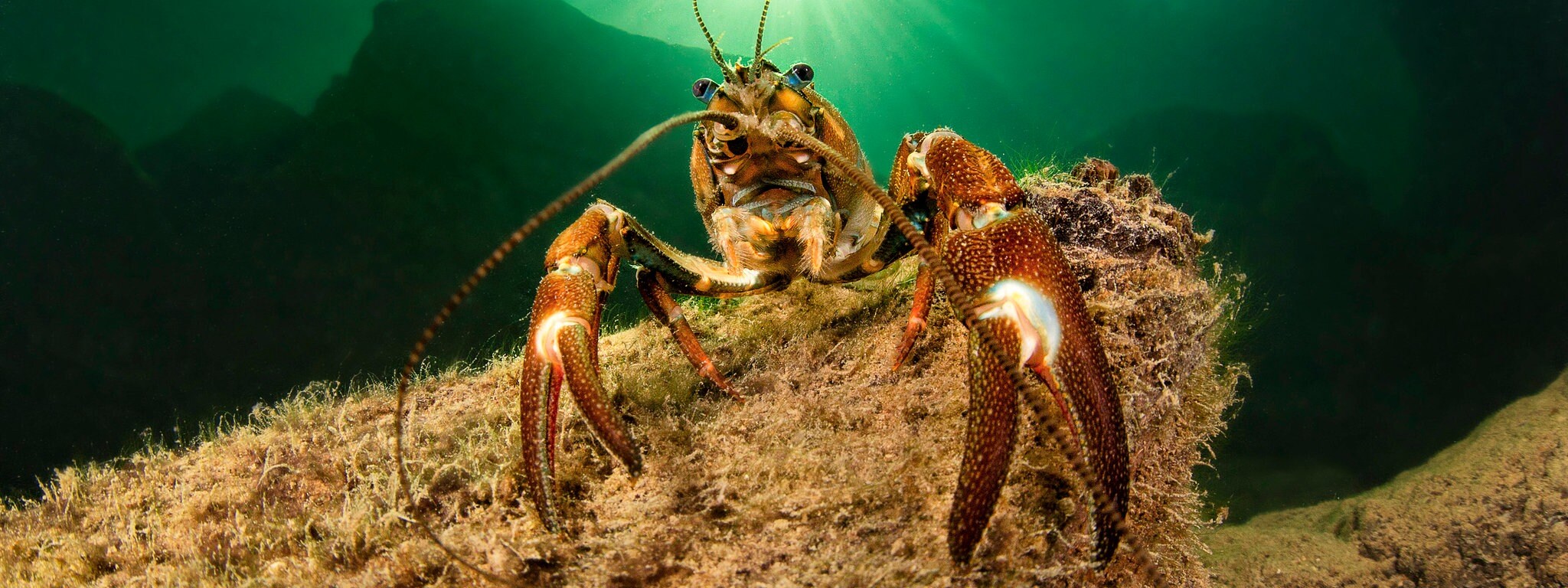
    Anthropogenic impacts have decreased the genetic diversity of Astacus astacus, the noble crayfish. It is expected that only 13 percent of the crayfish will survive, excluding the most genetically diverse populations. 
    Mitochondrial and nuclear DNA variations among crayfish were assessed to determine genetic diversity across multiple populations. The mitochondrial DNA revealed that six genetic lineages exist. Using the nuclear DNA, 175 alleles were observed across the 15 microsatellite loci, with an average of 12 alleles per locus. 
    Species distribution modeling showed the current and future susceptibility of habitats to climate change. The information collected was then used to predict invasive species that cause disease in the indigenous populations' future migration patterns. The results also showed that many crayfish populations were isolated from gene flow.
     The conservation plan recommended assisted migration and repopulation to protect this keystone species. By creating a population with multiple genetic lineages and ensuring that the new locations are less susceptible to invasive species, assisted migration and repopulation have a higher chance of success.
    Genetic diversity is essential for increasing the adaptive capability of a population. A disease that affects one individual is likely to have the same effect on individuals that share similar genetic information. As such, crayfish should be prioritized for protection since the indigenous crayfish population is especially vulnerable due to its lack of genetic diversity. 
    There is still diversity across the different populations which allows for recovery; however, introducing species from one population to another should be done with caution. Previous studies have shown that genetic erosion can occur when introducing domesticated organisms to wild populations. Although, in this case, it would be the introduction of one wild population to another, the same principle still applies since genetic variation exists. It is vital to consider every outcome and test potential impacts before implementing conservation efforts since it is harder to reverse actions than to take them in the first place.

Friday, July 30, 2021

Penicillin Allergies May be Linked to One Immune System Gene


    Penicillin is one of the most popular antibiotics but it is also one of the most common drug allergy causes. The effects of this Penicillin allergy include wheezing, hives, and more. Scientists have linked this Penicillin allergy with a genetic variation on the immune system gene HLA. Genetic variations within this gene were also linked with adverse reactions to HIV/AIDS medicine. To find this correlation between the variation in the HLA gene and allergy to Penicillin researchers looked through genetic records of people who reported that they shared this allergy. The researchers combed through the DNA of these people and found one thing in common among all of them, a variation on the same spot of chromosome 6. This variant was named HLA-B*55:01. These findings were then confirmed when researchers cross referenced their findings with genetic data from "23 and Me" that further confirmed the genetic variation in the HLA gene. Scientists are optimistic about these findings because they can use them to help people overcome their allergies to Penicillin and other antibiotics. Scientists now need to come up with a way to override the variation on the HLA gene in chromosome 6 to prevent this resistance from occurring.

Article Link: https://www.sciencenews.org/article/penicillin-allergies-immune-system-genetics

Related Link: https://www.sciencedirect.com/topics/medicine-and-dentistry/penicillin-resistance

Thursday, April 15, 2021

Identical twins without identical DNA


It was once widely accepted that identical (monozygotic) twins shared the same DNA. If identical twins were to have health differences, it was always explained by environmental factors. However, it was recently determined that identical twins will have 5.2 genetic differences on average. In Iceland, researchers examined the genomes of 381 identical twin pairs. Of the 381 pairs of twins, only 38 were exact genetic copies. Shockingly, 39 pairs of twins from the study had more than 100 genetic differences. The majority of identical twins had several genetic differences. These genetic differences are hypothesized to be from early in development. These differences may have occurred right before the egg split into two, or shortly after. Another explanation for why twins may have so many genetic differences could be determined by how many cells from the original embryo separate to form the second offspring. The less cells it takes to form a separate offspring, the more genetic variation may arise between the twins. This is shocking to most, since identical twins normally look like carbon copies. However, many of the identical twins we know may not be 100% genetically identical afterall.

References 

H. Jonsson et alDifferences between germline genomes of monozygotic twinsNature Genetics. Published online January 7, 2021. doi: 10.1038/s41588-020-00755-1.


Saey, T. H. (2021, January 07). Some identical twins don't have identical DNA. Retrieved from https://www.sciencenews.org/article/some-identical-twins-dont-have-identical-dna-genetics

Thursday, February 11, 2021

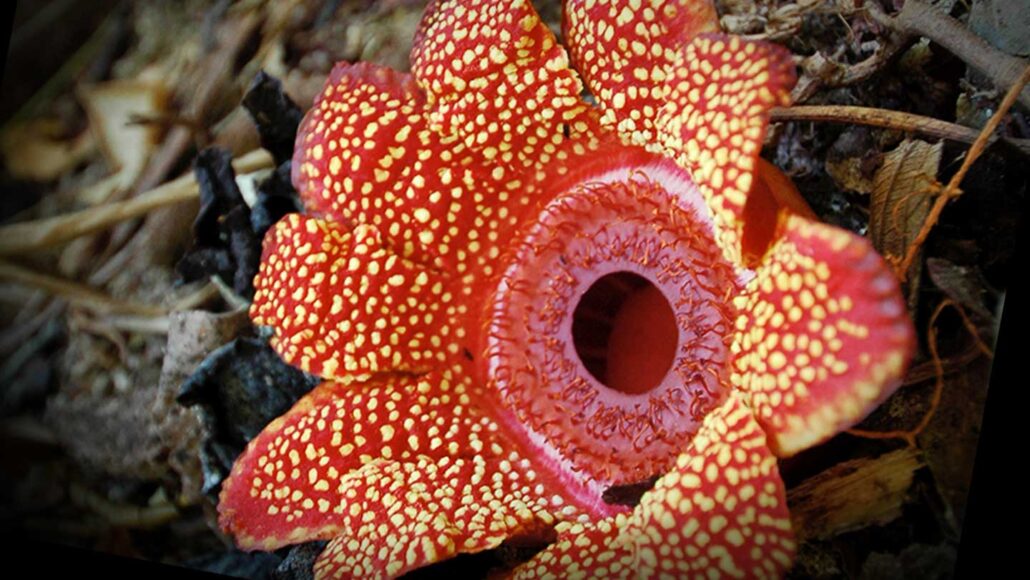
New Genetic Blueprint Found in Parasitic Plants


Newfound research on the genetic instruction book of the Sapria genus reveals the lengths to which it has gone to become a specialized parasite. The new discovery illustrates the level of commitment S. Himalayana and its relatives have given to evolving a parasitic lifestyle and provides a comparison to other extreme plant parasites. 

Based on the findings published by Current Biology, most of the Sapria genus have lost half more than half of their genetic material. Not only that but plants like the Sapria Himalayana and their genomes were used for research. Findings showed they had completely removed the need for stems, roots, and even any photosynthetic tissue—and based on further research, even chloroplast genome have vanished

Charles Davis, an evolutionary biologist at Harvard University states that these genetic variations from such parasitic plants have left biologists confused by the sudden change. Such obvious plants recognize by their “rotting flesh” smell, are no longer producing flowers. He notes, “these plants have lost half of their genes, yet they still survive.” 

However, further investigation into this interesting genetic modification will allow researchers to determine some of biology’s limits, which I think will benefit us greatly. 

Links:


Sunday, November 3, 2019

Are humans changing diversity worldwide?


It is no secret that the human population has impacted the environment and the various species on earth.  Researchers at McGill University states that animal diversity is changing due to loss of their environment and the increase of the human population. The biologists of McGill University pulled information from the largest genetic data repositories available and from the results came to a conclusion that while the human do impact the genetic diversity in animals, the results are not all negative. Data trends shows human influences increase the genetic diversity in certain species while decreases the diversity in other species.


Related image


Personally, I believe the genetic diversity in species are decreasing at a faster rate then it is increasing. I think a large percentage of the increase in genetic diversity is due to human interference, an example being breeding new corn strands. The genetic diversity increase are happening naturally but rather scientifically induced. All in all I believe the human population has a rather negative effect on genetic diversity.


Links:
https://www.sciencedaily.com/releases/2019/10/191022112156.htm
https://onlinelibrary.wiley.com/doi/abs/10.1111/ele.13394

Thursday, May 2, 2019

Narwhals aren't genetically diverse

Narwhal populations are increasing but the genetic diversity of these animals haven't increased over the years. Scientists thought that there wasn't much genetic variation due to inbreeding. However, after doing studies this wasn't found to be the case. After genomes were sequenced they were found to have similar DNA to beluga whales, polar bears and walruses. The narwhal population has grown despite this low genetic diversity. What has scientists surprised is the fact that the narwhal population has thrived even though in most animals and plants that have little genetic variation they aren't able to adapt to climate change.

I think that this is really strange because previous research would suggest that narwhal populations would go down due to them not being genetically diverse. This makes me wonder if other animal species have low genetic diversity and are still able to do well in the wild. The research done here will be influential in population genetics and animal populations that have been affected by climate change as well.

Wednesday, January 30, 2019

Genetic Codes of Morning People and Night Owls


This article from The New York Times discusses a new study that was published in Nature Communications, in which scientists tried to find genetic correlations between people who exhibited traits associated with being either a night owl or a morning person. Around 700,000 individuals had their genomes were analyzed. 351 different variations were then identified as being linked to the time in which someone prefers to go to sleep.It should be noted that there was no difference in the amount of time spent sleeping per night, but merely that "morning people" went to bed at an earlier time and "night owls" went to bed at a later time.

As a self proclaimed "night owl", I think this study was really cool. I've always been interested in how much of our genetic makeup is responsible for the type of person that we are. It brings back in to light the old "Nature vs Nurture" debate, in which we are constantly questioning whether people are who they are by influence of genes (nature) or how they were raised (nurture). I've always believed it was an equal mixture between the two, but as I get older the more I start to feel that nature is a larger contributor than nurture is in terms of personality development. Articles such as this, that show that even a preference for sleep time can be linked to genetic variations just helps support my argument that much more.

-Erica Midili

Saturday, January 26, 2019

Vitamin E May Cause Cancer In Some People

A study done by researchers at Brigham and Women's Hospital have made a peculiar revelation on the effects of vitamin E. Depending on an individual's COMT gene, vitamin E can increase or decrease chances of getting cancer. Kathryn Hall, PhD, MPH, from the division of Preventive Medicine at Brigham and her colleagues inspected cancer rates of women during a 10 year trial and continued another 10 years after. Those women with the met-met COMT variant who had taken vitamin E had a 14% lower rate of cancer. On the other hand, the val-val variant had a 15% higher rate of cancer.

I am truly stunned at how a vitamin, which is essential to the body, may play a factor in cancer. I learned vitamin E had many benefits such as anti-inflammatory, improves immune system, and prevents heart disease. This prompts the question, do other vitamins or nutrients that are so-called beneficial have the potential to influence cancer and/or other diseases? Further studies should definitely make it clearer as to how to approach this issue.   


Sunday, November 18, 2018

Finding the Optimal Genetic Distance


Baker’s Yeast (Saccharomyces cerevisiae)

When in search for the optimal genetic distance scientists surprisingly find the answer in the classic fable Goldilocks and the Three Bears. According to Jianzhi Zhang, a professor in the Department of Ecology and Evolutionary Biology at the University of Michigan, and his doctoral student Xinzhu Wei, have proposed that the optimal mating distance (OMD) for a species is the average genetic difference between two individuals in that selected species. Goldilocks definitely had a point in finding the answer that was not too small or too large, but just right. Thus, scientists have now determined the optimal mating distance of three model organisms to support this claim. By finding the OMD in baker's yeast, the plant Arabidopsis and mice, this research shows its applicability in the three major lineages of eukaryotes.
     Optimal mating distance is the measured genetic difference between an individual’s parents. For decades, it has been in the science field's best interest to find a way to determine this value for each species. According to evolutionary theory, one can predict that finding the optimal mating distance of a species would, in turn, maximize the fitness of an individual. This prediction is supported by the idea that a healthy balance between heterozygosity and common genetic material produces the fittest offspring.
     Heterozygosity allows for genetic variation and can lead to the production of hybrid offspring if two distinct parent lines are crossed. However, if the genetic distance is too large, genetic incompatibility can become harmful to the individual. On the contrary, an extreme of too little or no genetic variation is also dangerous for it increases chances of extinction and inhibits a population's ability to evolve to its changing environment. This being said, it is essential to find the sweet spot between the two extremes.
     I feel that this work is important for it can be used to improve multiple areas within the science fields. This knowledge can be applied agriculturally to increase yield and work towards alleviating food insecurity or could be used in the conservation efforts of endangered species.

Resources:


Sunday, September 9, 2018

Advancement of Precision Medicine Through the Study of SNPs

Researchers from the National Institute of Environmental Health Sciences (NIEHS) led by Shephard Schulman, M.D., and Stravros Garantziotis, M.D., conducted a study that examined genetic variation in the asthmatic population, and how these variations effect each individual's response to the environment, specifically, air pollution. For their study, Schulman and Stravros were able to gather 2,704 volunteers, who had varying degrees of asthma, through a DNA bank. Schulman explained that these degrees exist, because of a specific type of genetic variation termed single nucleotide polymorphism or SNP, which he states, "can alter the way proteins are made and make individuals more or less prone to illness" (1).  

The two lead researchers isolated four SNPs of interest, and set their study by dividing the participants into three groups according to the SNP data: those who were highly sensitive to air pollution, those who were insensitive, and those in between. With the subcategories of genetic variation in place, the research team used participants' addresses and their distance from a major highway to determine air pollution effect, since air pollution is generally higher in places located near these highways. 

As a result of the study, the researchers found that those who had the SNP that dictated hyper-sensivity and lived near a major highway had severe symptoms related to asthma, while those who were insensitive and did not live near a major highway showed less severe symptoms. With the conclusion of this study, the researchers hope to advance the field of precision medicine. Precision medicine focuses on preventative treatment specific to an individual. 

For me, this study sheds light on how vital genetics can be on disease prevention. If an individual is known to have a genetic variation that leaves them prone to certain illnesses aggravated by the environment, a systematic approach can be taken in finding a specific treatment to aid the individual. Instead of spending money on costly prescriptions, a better approach may be to tailor/adjust that person's lifestyle to the environment they live in. In the case of those who are hyper sensitive and live near major highways, installing an air filter may be the first step in the right direction.  

Resource
https://www.sciencedaily.com/releases/2018/08/180831130117.htm

Additional Resources
https://www.sciencedaily.com/releases/2016/09/160904181251.htm
https://www.ncbi.nlm.nih.gov/pmc/articles/PMC3984232/

Wednesday, April 4, 2018

Chinook Salmon: A Decline in Genetic Diversity

Over the past years, the genetic modification of salmon for commercial use has been steadily decreasing as less salmon is being caught along the Pacific Northwest. Apart from their general population decline, the past 7000 years has shown a 2/3 decrease in genetic diversity, compared to bones of the same Salmon found in Native American archaeological sites. Such a loss in diversity is detrimental to such a valuable and rich food source. Genetic diversity allows for the different characteristics in the salmon we eat, and helps to control GMO salmon from the natural Chinook Salmon. A possible cause for such a low diversity comes from the numerous man made structures that hinder the natural process for many Chinook Salmon. Dams cover off many potential spawning habitats from ocean Chinook Salmon, thus creating some inbreeding for the fish already located in the rivers and oceans.

Genetic Diversity helps to create more variations in offspring and allows for natural adaptations to occur. Without a growing population the Salmon can be susceptible to a loss in genetic diversity and thus a loss in adaptation and variation. Conservations have been made restore the flow of diversity back into the Salmon, but the damage may be far from repairable.


Link to Pacific Northwest Salmon
Pacific Northwest Salmon (Chinook Salmon)

Link to other Pacific Northwest Salmon
Chinook Salmon Populations

Thursday, November 30, 2017

New genetic variations linked to educational attainment: Genetic overlap between cognitive ability and longevity

Researchers from the Feinstein Institute for Medical Research have recently discovered a link between genetic variations and a person's cognitive ability. An international team of 65 scientists led by Dr. Lencz led the largest peer-reviewed study of its kind and analyzed the genomes of over 400,000 individuals. These individuals took neuropsychological tests to measure their brain function and cognitive ability. By profiling the ability of these individuals, the researchers discovered a genetic predisposition in certain individuals towards higher cognitive ability and longer lifespan. Dr. Lencz explained that this genetic information has the potential to be used to develop targeted treatments for cognitive and memory disorders. 
These findings were released two days ago and it is amazing that these researchers performed such a widespread study on the genomes of a large population. This genetic information is beneficial in the development in the treatment for cognitive and memory disorders. It can be used to produce and manufacture new drugs such as Alzheimer's disease, schizophrenia, and attention deficit hyperactivity disorder. While there are many drugs currently available to treat these disorders, novel treatments can be introduced that are more effective. 

Tuesday, April 18, 2017

Promiscuity and Decline of Evolution

“Survival of the fittest” and Darwin’s theory of evolution suggests that new species evolve when favored characteristics are bred and passed on more successfully than non-favored genes. Mating is thought to be through sexual selection. This is when one sex chooses to mate with the opposite sex because of very specific characteristics that will eventually form a new species. New research now suggests something other than the theory of evolution is driving mating and slowing down species evolution. Polygamous birds, ones that mate with several partners during a season, are less diverse genetically when compared to monogamous species. Rapid diversification does not equal higher genetic differences in population. As first scientists thought that polygamous birds choose their mates randomly but it seems they have a “type”. Humans prefer blonde or dark hair partners and the same rings true for birds. I find it interesting how other animals besides humans look for traits in mates that don't necessarily mean anything for survival. 

Tuesday, February 28, 2017

Has Evolution Increased Autism Spectrum Disorder Risk?


Image: Shuttershock

A study conducted by the Psychiatric Genomics Consortium found that genetic variants linked to Autism Spectrum Disorders could be caused by evolution favoring traits for enhanced cognitive capabilities. Their research showed that variants linked to ASD seemed to have been positively selected rather than negatively selected as previously believed (meaning more traits for ASD were retained in populations). Scientists believe that the selected cognitive enhancement trait is beneficial, it has also come with the cost of increased risk of falling on the Spectrum. 
Hopefully scientists will be able to identify which genes are affected by this selected variant and can utilize it to find the cause of Autism disorders. As someone with a brother who is cognitively impaired, it would be interesting to see this come to life.