Showing posts with label alleles. Show all posts

Saturday, November 25, 2023

The Role of Genetics in Shaping Your Exercise Journey

           Exercise doesn't carry a tag stating “one size fits all.” A variety of new exercises are flooding health news articles to promote the best way to get in shape. Contrary to these articles, it's crucial to highlight the overlooked benefit of gene testing. Gene testing empowers individuals to tailor their exercise journey, leading to impactful and long-lasting results. Learning how to work alongside and understand our genes, can help to utilize the genes that influence the outcomes of different kinds of physical activity one can endure. A study led by experts from the Cambridge Centre for Sport & Exercise Sciences at Anglia Ruskin University (ARU) in England examined 72% of the difference between people in performance outcome following a specific exercise can be due to genetic differences. The components are measured on three types of physical exercise: muscle strength, cardiovascular fitness, and anaerobic power. The study discovered 13 genes and associated alleles that are responsible for how an individual can undergo each of the three types of physical exercise. 

By prompting genetic testing, individuals can find the solution to what works for their genes. Beneficiaries are individuals ranging from patients in hospitals to olympic athletes. Individuals carry different genetic makeup, so no exercise regime can work for an entire population. Therefore, genetic testing can allow individuals to understand how to work alongside their genes, not against.


Links:

https://www.sciencedaily.com/releases/2021/10/211014142032.htm

https://www.ideafit.com/personal-training/genes-and-exercise-how-much-does-it-matter/


Thursday, April 14, 2022

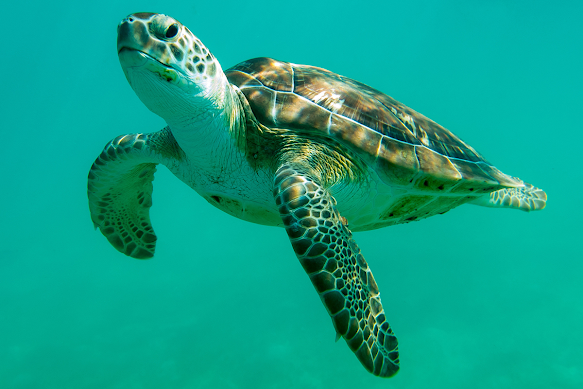
New Genetic Clues Could be Key to Saving Sea Turtles from Mysterious Disease


According to an article published in University of Central Florida Today, a group of UCF researchers discovered new gene variants in the immune systems of sea turtles, which could be the key to saving this species from another major disease: fibropapillomatosis (FP). This study was published in the journal Royal Society Open Science and sheds a light on the role of gene variants (MHC class I alleles) in protecting sea turtles from this disease.


This is the first time researchers have studied variation in MHC genes in green sea turtles. MHC proteins help recognize pathogenic threats and then key the immune system to respond to them. FP causes sea turtles to develop tumors on their bodies, which inhibits their mobility and ability to catch prey.


About half of the green sea turtles observed in the Indian River Lagoon have FP. Central Florida’s Atlantic coastline hosts about one-third of all green sea turtle nests in the state. Green sea turtles are important because they contribute to healthy oceans by grazing and maintaining seagrass beds. All turtles are considered threatened or endangered due to threats from pollution, coastal development, and fishing, in addition to infectious diseases.


A better understanding of the role genes play in protecting sea turtles can help inform management strategies, such as captive breeding using turtles who are genetically resistant to FP, as stated by UCF Associate Professor of Biology Anna Savage. Simply knowing a baseline of how much variation is out there can help give researchers a better idea of what sea turtle populations will look like in the future. Knowing the relationships between genetic variants and disease susceptibility can be used as a tool if one knows which of the MHC alleles is really important for surviving disease threats.


The lead author of the study, Katherine Martin, helped sequence MHC class I genes from 268 green sea turtles and 88 loggerhead sea turtles. The researchers found 116 newly-discovered alleles, some of which were linked to the development of FP but also potentially the regression of tumors. Even with all of these alleles discovered, however, there needs to be more sampling to get a better picture of what MHC alleles do to protect sea turtles. The next step of the experiment is to expand the sampling of green sea turtles and loggerheads as well as examine genetic information from other turtle species.


Related article: https://pubmed.ncbi.nlm.nih.gov/16181327/

Wednesday, December 8, 2021

Scientists find 13 candidate genes associated with fitness outcomes

Physical exercise is necessary for optimal health, the prevention of chronic diseases, and the avoidance of premature mortality. According to the 2018 physical activity guidelines for Americans, a balance of moderate and rigorous intensity physical activity, as well as muscle-strengthening activities involving the major muscle groups, is recommended. A meta-analysis published in PLOS ONE by Cambridge University researchers identified 13 potential genes linked to fitness results in previously untrained adults. Genetic factors were responsible for 72 percent of the variation in the strength training group's results. In the aerobic (44 percent) and anaerobic power groups, genetic variables had a smaller impact on the outcomes (10 percent). More research is needed to establish the precise roles of fitness genes and how to effectively tailor exercise instruction to individual genetic profiles. Cardiovascular fitness, muscle strength, and anaerobic power are the three components needed to evaluate health-related fitness. Cardiovascular fitness, also known as cardiorespiratory fitness, refers to how well the respiratory and circulatory systems provide oxygen to the skeletal muscle during physical activity. The maximum oxygen uptake (VO2) test determines the maximum oxygen consumption capacity of the body throughout a high-intensity activity, such as treadmill exercise. "Environment is a major factor for trainability," Dr. Bernd Wolfarth, professor in the Department of Sports Medicine at Humboldt University, Berlin, says in a session at the 22nd Annual Congress of the European College of Sports Science. "We know that about 25–40 percent of the variability of phenotype comes from genes, and the other 60–75 percent comes from environmental effects." Candidate genes may be able to predict successful responses to specific types of exercise training. These genes may have an impact on the body's energy processes, metabolism, storage, and cell proliferation. Following these findings, researchers from Anglia Ruskin University's Cambridge Centre for Sport and Exercise Sciences conducted a meta-analysis to discover the exact versions, or alleles, of candidate genes linked to the exercise response in untrained people. Strength, anaerobic power, and cardiovascular fitness were all measured by the team. From each parent, an individual inherits one allele of each gene. If both alleles are the same, the individual is homozygous for the gene; if the two alleles are different, the individual is heterozygous for the gene.

Tuesday, November 16, 2021

Scientists Find 13 Candidate Genes Associated with Fitness Outcomes

Working out: Time to get in shape! Here are six easy workout routines and  exercises that you can follow while in quarantine - The Economic Times

In this article researchers found that there is a specific type of gene called candidate gene may be able to predict successful responses from targeted types of workouts within peoples training as well as influence energy pathways. metabolism, storage and cell growth in the body. A meta-analysis was conducted to find specific versions or alleles of the candidate genes in relation to untrained participants response to exercise and analyzed strength, anaerobic power, as well as cardiopulmonary fitness. The study was also able to tell wether it was identified genes or alleles which was the contributor to differences within exercise training responses within the participants of the study. Researchers had been able to identify 13 candidate genes and alleles from which there were nine, six, and four that were correlated with cardiorespiratory fitness, muscular strength, as well as anaerobic power. When breaking down these three categories, it was interpreted that 44% of the difference in aerobic training responses were due to genetic influences. Within the power group genes had less influence with only having 10% of the variability in response to being due to genetics. As researchers learn more about phenotypic expressions of the various haplotypes within genes there will eventually be a spectrum to help interpret them moving froward. The meta- analysis was able to classify the study groups, however further studies will have to find out the exact role of the genes influencing cardiopulmonary fitness, strength and anaerobic power. The benefit of finding the exact role will help to better support the optimization and individualization for exercise programs based on the genetic makeup of a person.