Showing posts with label "Healthcare Applications". Show all posts

Sunday, October 29, 2023

Genomic Effects of Inbreeding on Scandinavian Wolves


Researchers at Uppsala University studied the genetic origins of the Scandinavian grey wolf population, which began with only three wolves from Finland in the 1980s. After five generations of inbreeding, between 10 and 25% of the original genetic variation was lost, amounting to 160,000 genetic variants. The founding wolves weren't entirely unrelated, contributing to a reduction in initial genetic diversity. Professor Hans Ellegren highlighted the need for inbred populations to receive new genetic material from diverse sources. Despite recent genetic contributions from immigrating wolves, the high level of inbreeding threatens the retention of these new variants.

The Uppsala University study on Scandinavian grey wolves vividly highlights the perils of inbreeding. With just five generations resulting in a loss of up to 25% of original genetic variation, the fragility of such limited gene pools becomes starkly evident. This research is a potent reminder of the need for diversity to ensure the long-term health and survival of species. The second article, which is focused on human inbreeding shows that inbreeding between closely related individuals can result in significant health risks for offspring, including the increased likelihood of inheriting rare genetic diseases. Research shows that inbred children exhibited decreased cognitive abilities, reduced height, and lung function, and were more susceptible to diseases in general. 

Tuesday, October 17, 2023

Fecal Microbe transplants: B. vulgatus Genes that Correlate with Early Colonization


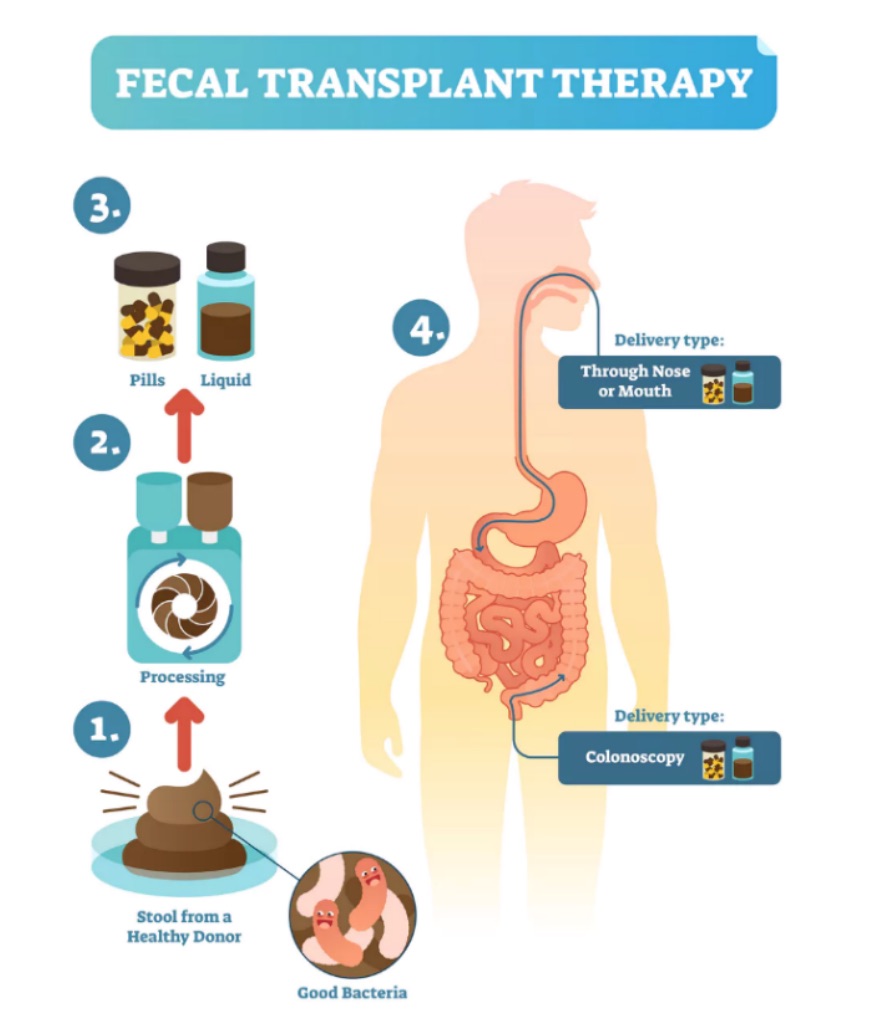
    Researchers at the Icahn School of Medicine identified 150 bacterial strains that frequently engraft after fecal microbial transplants to treat recurrent Clostridium difficile infections. In a follow-up, UAB researchers Hyunmin Koo and Casey D. Morrow focused on the microbe Bacteroides vulgatus, prevalent in healthy guts. They analyzed its genes to determine which were unique to early-colonizing strains. Only 19 common genes were identified out of 4,911, with two genes – a putative chitobiase and a unique fimbrillin family protein – being highlighted. These genes could help enhance colonization after a fecal microbe transplant. The UAB study suggests further application in restoring gut flora after treatments like chemotherapy.

    This article highlights important progress in understanding and fighting against recurrent Clostridium difficile infections. The researchers spent so much time figuring out how fecal microbial transplants work at the gene level. Using both computer data and actual patient samples makes the study even stronger, and provides hope to hundreds and thousands of patients suffering since there is so little known about which donor strains provide long-term engraftment, and which engraft early after the transplant. The second article also shows how there's uncertainty about which donor strains ensure successful long-term outcomes. The article also states that most failures of fecal microbe transplantation occur in the first four weeks. This is deeply saddening and the only way that healthcare professionals can provide better treatment is through advancements in genetics. 


Links: 


https://www.uab.edu/news/research/item/13807-fecal-microbe-transplants-b-vulgatus-genes-that-correlate-with-early-colonization#:~:text=Researchers%20found%2019%20Bacteroides%20vulgatus,in%20the%20first%20four%20weeks.

https://www.sciencedaily.com/releases/2023/10/231013123116.htm


Thursday, March 21, 2019

Routine Genetic Testing

The Guardian recently published an article which discusses the incorporation of genetic testing to detect diseases into routine health care. Matt Hancock, the health secretary of the NHS, is calling for genetic tests for common cancers and heart disease to begin immediately. (NHS, which stands for National Health System, is the state-funded care system which guarantees all British citizens care.) Hancock developed this opinion after learning from a commercial genetic test that he is at a higher risk of developing prostate cancer. He views the testing as a “game-changer for cancer screenings”. The idea of routine genetic screening is not without criticism. Some worry that because genetic tests have been largely developed using genetic data from whites with European ancestry individuals of other ethnic backgrounds will receive inaccurate results. Some professionals also argue that genetic testing creates unnecessary stress and confusion. While genetic testing can be helpful, experts are not recommending it for every individual at this time as the accuracy is unknown. 

Integrating genetic testing into routine care is not an idea I am particularly fond of. I do agree that unnecessary testing can lead to confusion and stress. The average individual does not completely understand their results, and this can cause them to believe things that may not be true. An elevated risk for cancer or heart disease does not translate into a cancer diagnosis or a heart attack. I also see a large cost associated with testing all individuals. In countries with government funded health care the cost is probably not a big deal, but in countries like the U.S. where health insurance varies from person to person it is. A genetic test, that might not be necessary, could cost individuals hundreds of dollars. This is not practical. As a future healthcare provider, I will advocate for further genetic testing if there is a family history and I will remain opposed to routine genetic testing.