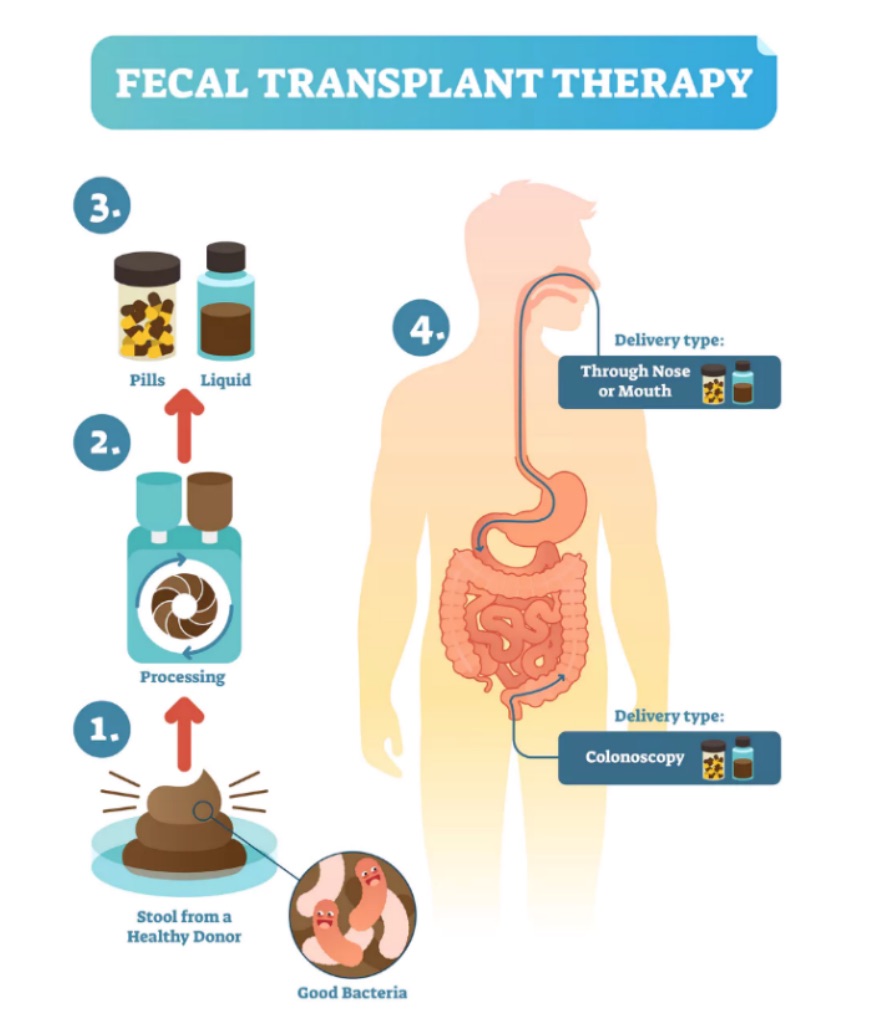
Researchers at the Icahn School of Medicine identified 150 bacterial strains that frequently engraft after fecal microbial transplants to treat recurrent Clostridium difficile infections. In a follow-up, UAB researchers Hyunmin Koo and Casey D. Morrow focused on the microbe Bacteroides vulgatus, prevalent in healthy guts. They analyzed its genes to determine which were unique to early-colonizing strains. Only 19 common genes were identified out of 4,911, with two genes – a putative chitobiase and a unique fimbrillin family protein – being highlighted. These genes could help enhance colonization after a fecal microbe transplant. The UAB study suggests further application in restoring gut flora after treatments like chemotherapy.
This article highlights important progress in understanding and fighting against recurrent Clostridium difficile infections. The researchers spent so much time figuring out how fecal microbial transplants work at the gene level. Using both computer data and actual patient samples makes the study even stronger, and provides hope to hundreds and thousands of patients suffering since there is so little known about which donor strains provide long-term engraftment, and which engraft early after the transplant. The second article also shows how there's uncertainty about which donor strains ensure successful long-term outcomes. The article also states that most failures of fecal microbe transplantation occur in the first four weeks. This is deeply saddening and the only way that healthcare professionals can provide better treatment is through advancements in genetics.
Links:
https://www.uab.edu/news/research/item/13807-fecal-microbe-transplants-b-vulgatus-genes-that-correlate-with-early-colonization#:~:text=Researchers%20found%2019%20Bacteroides%20vulgatus,in%20the%20first%20four%20weeks.
https://www.sciencedaily.com/releases/2023/10/231013123116.htm

