Showing posts with label "chemotherapy". Show all posts

Tuesday, November 18, 2025

Defeating Resistant Lung Cancer Using CRISPR

    New groundbreaking research from ChristianaCare's Gene Editing Institute has revealed that CRISPR gene editing can disable the NRF2 gene in lung cancer cells (a key culprit in chemotherapy resistance. When NRF2 is overactive, tumors become a lot more resilient to standard drugs, but by knocking it out using CRISPR/Cas9, researchers were able to restore the cancer cells' sensitivity to chemotherapy and slow tumor growth.

    One of the most promising areas of this work is how precisely the team targeted the resistance mechanism. They were able to lock in on a tumor-specific mutation called R34G and NRF2 while using lipid-nanoparticles (LNPs) to deliver CRISPR safely into tumors in animal models. Amazingly, editing only 20% to 40% of the tumor cells was enough to boost the effectiveness of chemotherapy, a promising insight given that editing each individual cancer cell is not realistic in real-world treatment.


    Thus research could alter the way individuals think about cancer treatment, Rather than creating entirely new therapies, scientists are using gene editing to make existing chemotherapy more effective. Because NRF2 is implicated in resistance across a variety of solid tumors (not only lung cancer), this approach has the potential to benefit several patients. It is still early, but the precision, the targeted delivery, and the dramatic resensitization of tumors all look toward a powerful new weapon in the fight against drug-resistant cancer.

Sunday, April 20, 2025

The Next Step in Cancer Treatment

 Chemotherapy is a common course of treatment for people diagnosed with cancer, and it is known to have intense side effects. Chemotoxicity occurs when DNA changes, or genetic factors react with the medications within treatment, and cause life threatening issues like gastrointestinal toxicity, and hand-foot syndrome. Roughly 3% of people who use fluorouracil in their treatments, experience chemotoxicity and 1,300 people annually have fatal reactions to it. So what can we do to prevent this?


Drug-Gene Testing is the answer. Multi-gene testing can analyze the reactions a person may have to chemotherapy based on their genetics. DPYD variants can be a lead cause to chemotoxicity, as it's enzyme, DPD is responsible for metabolizing chemotherapy medications. A deficiency in DPD can be fatal for patients, roughly 39-61% of people experiencing toxicity are deficient. 3-8% of the general population has a DPYD variant causing DPD deficiency. Drug-gene testing can detect these genetic variations and other medical interactions which can save the lives of people who are already fighting to survive. It is important to advocate for more of these tests to be done before treatment. 

Article

More on Chemotoxicity

Tuesday, October 17, 2023

Fecal Microbe transplants: B. vulgatus Genes that Correlate with Early Colonization


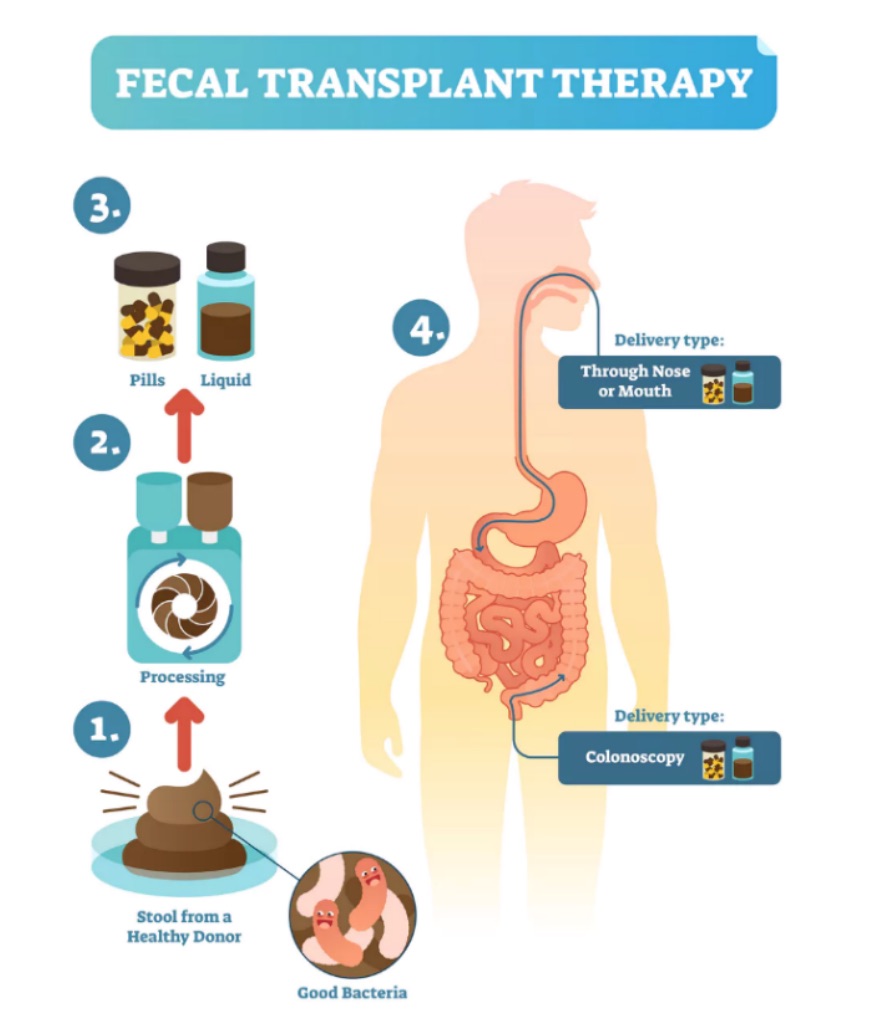
    Researchers at the Icahn School of Medicine identified 150 bacterial strains that frequently engraft after fecal microbial transplants to treat recurrent Clostridium difficile infections. In a follow-up, UAB researchers Hyunmin Koo and Casey D. Morrow focused on the microbe Bacteroides vulgatus, prevalent in healthy guts. They analyzed its genes to determine which were unique to early-colonizing strains. Only 19 common genes were identified out of 4,911, with two genes – a putative chitobiase and a unique fimbrillin family protein – being highlighted. These genes could help enhance colonization after a fecal microbe transplant. The UAB study suggests further application in restoring gut flora after treatments like chemotherapy.

    This article highlights important progress in understanding and fighting against recurrent Clostridium difficile infections. The researchers spent so much time figuring out how fecal microbial transplants work at the gene level. Using both computer data and actual patient samples makes the study even stronger, and provides hope to hundreds and thousands of patients suffering since there is so little known about which donor strains provide long-term engraftment, and which engraft early after the transplant. The second article also shows how there's uncertainty about which donor strains ensure successful long-term outcomes. The article also states that most failures of fecal microbe transplantation occur in the first four weeks. This is deeply saddening and the only way that healthcare professionals can provide better treatment is through advancements in genetics. 


Links: 


https://www.uab.edu/news/research/item/13807-fecal-microbe-transplants-b-vulgatus-genes-that-correlate-with-early-colonization#:~:text=Researchers%20found%2019%20Bacteroides%20vulgatus,in%20the%20first%20four%20weeks.

https://www.sciencedaily.com/releases/2023/10/231013123116.htm


Wednesday, April 13, 2022

Epigenetic treatments: New allies for chemotherapies?


The epigenetic changes acquired by tumor cells during chemotherapy treatment were examined cell by cell by a research team directed by Celine Vallot, CNRS Research Director in the Laboratoire Dynamique de l'information Génétique: Bases Fondamentales et Cancer (CNRS/Institut Curie/Sorbonne Université). The scientists found the genes whose expression allowed cells to endure treatment, as well as the epigenomic alterations that govern them, in collaboration with Léila Périé's team at the Physico-chimie Curie (CNRS/Institut Curie/Sorbonne Université). Scientists discovered that in the absence of treatment, epigenomic markers lock the expression of certain genes, and that this lock is broken by chemotherapy in rare cells. All cancer cells remain responsive to treatment if this lock is kept from jumping. Scientists demonstrated this by employing epi-drugs, which are pharmacological substances that prevent epigenetic marks from being removed, on animal models of breast cancer. These compounds must yet be modified for human usage.

These findings show that the epigenome has a role in cancer treatment resistance. Scientists are currently working hard to figure out how to apply this principle to humans in a therapeutic way. Scientists believe that if future clinical trials are successful, these epi-treatments could be used in concert with chemotherapies to extend their effectiveness in patients.

Personally, if this treatment does become successful, this would open up of a lot opportunities, as well as give hope to a lot patients that are going through chemotherapy, or any other cancer treatment. This study will also help better understand cancer cells, and also might lead to a step forward into finding a cure to cancer in a foreseeable future.

Links to articles:


Monday, April 9, 2018

How lung cancer cells disguise themselves to evade chemo

How lung cancer cells disguise themselves to evade chemo

        Lung cancer has one of the lowest survival rates and throughout the world and the United states lung cancer takes the most lives compared to other cancer related deaths. These statistics are mainly due to the fact that lung cancer cells are able to develop resistance to chemotherapy treatment. New research proves that lung cancer cells are able to resist the treatment. The lung cancer cells are able to adopt characteristics of cells from neighboring organs. 
         At Duke University school of medicine, an assistant professor Purushothama Rao Tata, found in a new study that a genetic mutation and mechanism drives that shape shifting process allowing lung cancer cells to shift into having characteristics from other organs in order to resist affects from chemotherapy treatment. 
        In professor Tata's study they analyzed the genomes of lung cancer tumors, when studying them the team found that many tumors lacked a gene, NKX2-1, that initiated cells to develop into a lung cancer cell. The scientists hypothesized that knocking out the NKX2-1 gene would make lung cancer cells lose their identity and adopt that of neighboring organs.


         The results were that when depleting the lung tissue of the NKX2-1 gene it made the tissue change appearance and its behavior. The lung tissue began to resemble gastric tissue and even began to produce digestive enzymes Doing so made the lung tissue change its appearance and, surprisingly, its behavior.
         In my opinion I believe that this is a monumental finding. This discovery can now lead to scientists and researchers planning ahead of steps they can take in order to study the paths that the cells take and design therapies to block them. Cancer, especially lung has effected many people, everyone has been affected in some way whether it be close or a friend of a friend. Any development in the discovery of fighting cancer is a victory. 

Link to original article:
Link to another site: