Showing posts with label "Genetic Testing". Show all posts

Tuesday, November 25, 2025

Why Brittle Bones Aren’t Just a Woman’s Problem


        Osteoporosis is a progressive condition that is influenced both by environmental factors and by being genetically predisposed to it. This article mentions that men are often overlooked in being screened for the disease, despite the fact that they have similar risks to women. 


        A key genetic component of Osteoporosis is bone mineral density. Bone mineral density is highly heritable, about 60-80%. Specifically, individuals with a history of osteoporosis inherit variants of genes that can reduce gene formation, weaken collagen structure, or change calcium/vitamin D metabolism. These variants are COL1A1, LRP5, and ESR1. The rate of osteoporosis in men has likely increased due to inherited susceptibility and environmental factors. The article also mentions that sex-linked genetic pathways, such as estrogen and testosterone, can influence when the disease appears in men versus women. 


        This article exposes a big health issue that is very overlooked in men. Overall, this article is trying to call out that men should be getting screened more for osteoporosis, and it is not just a "women's disease". Especially since it has a large genetic component. Also, since men often have worse fracture recovery as compared to women, they should definitely get screened for osteoporosis after that. 

References 
Mayo Clinic Staff. (2025, September 20). Osteoporosis — Symptoms and causes. Mayo Clinic. https://www.mayoclinic.org/diseases-conditions/osteoporosis/symptoms-causes/syc-20351968
Span, P. (2025, October 4). Why brittle bones aren’t just a woman’s problem. The New York Times. https://www.nytimes.com/2025/10/04/health/osteoporosis-men.html

Monday, October 13, 2025

Obesity Prediction Could Be Guided by Genetic Risk Scores

 In an article written by the NY Times, there was a study conducted to see if there was a correlation between obesity and one’s genetic makeup. Many believe that your genetic component is stronger than your environment. Dr. Hiroschorn, an author for Nature Medicine states that genetics offers indications of who is and isn’t at risk of being obese. “Finding a genetic footprint for obesity has proved challenging. With rare exceptions, there’s not one gene or even a few that are the culprits. Instead, obesity is spurred by thousands of gene variants acting in concert. Each variant exerts a tiny effect”.

With the data given from these genetic variants, it could help the providers give the patients the proper guidance and support to live a healthier lifestyle in anticipation of weight-related health dangers. The scores given can give us an idea of when young children could get obesity as adults. This would provide a lot of help for the future generations of kids and prevent issues such as heart disease (elevated cholesterol and blood pressure). Aside from genetic factors, there are also environmental factors that greatly affect the individual but genetic composition is definitely important.


https://www.nytimes.com/2025/07/21/health/obesity-genetic-risk-score.html?searchResultPosition=2 

https://obesitymedicine.org/blog/obesity-and-genetics/ 


Sunday, April 20, 2025

The Next Step in Cancer Treatment

 Chemotherapy is a common course of treatment for people diagnosed with cancer, and it is known to have intense side effects. Chemotoxicity occurs when DNA changes, or genetic factors react with the medications within treatment, and cause life threatening issues like gastrointestinal toxicity, and hand-foot syndrome. Roughly 3% of people who use fluorouracil in their treatments, experience chemotoxicity and 1,300 people annually have fatal reactions to it. So what can we do to prevent this?


Drug-Gene Testing is the answer. Multi-gene testing can analyze the reactions a person may have to chemotherapy based on their genetics. DPYD variants can be a lead cause to chemotoxicity, as it's enzyme, DPD is responsible for metabolizing chemotherapy medications. A deficiency in DPD can be fatal for patients, roughly 39-61% of people experiencing toxicity are deficient. 3-8% of the general population has a DPYD variant causing DPD deficiency. Drug-gene testing can detect these genetic variations and other medical interactions which can save the lives of people who are already fighting to survive. It is important to advocate for more of these tests to be done before treatment. 

Article

More on Chemotoxicity

Friday, December 8, 2023

DNA from Beethoven's Hair Hints at what Killed the Composer

 DNA from Beethoven's Hair Hints at what Killed the Composer


    DNA from Beethoven's hair has been tested and they are helping to uncover his exact cause of death. Beethoven had health issues most of his life. He died on March 28, 1827, and historians suspect it was because of liver failure. The analysis of his hair has shown that he carried several genetic risk factors for liver disease. Since he had this elevated risk, paired with his bad habit of drinking and potential liver infection, he brought about his own premature death. His skin apparently turned yellow in the summer of 1821 and it's thought to be that his faulty liver is the reason why. 
    This article caught my eye because I knew Beethoven lived so long ago so I was wondering why there was an article on this now. It is fascinating to see that even 2 centuries later technology can be used to identify some hair off of such an important person. I was wondering how this worked but in the article, it said they used hairs that were preserved very well and still intact. They also said from the strands they were given they separated some as they did not belong to Beethoven. This is so interesting because it has been saved and passed along all this time and way for it to not even belong to Beethoven. It is truly impressive what today's technology can accomplish. 

LINKS: 

Monday, November 20, 2023

Decoding the RNA Sequence of Extinct Animals


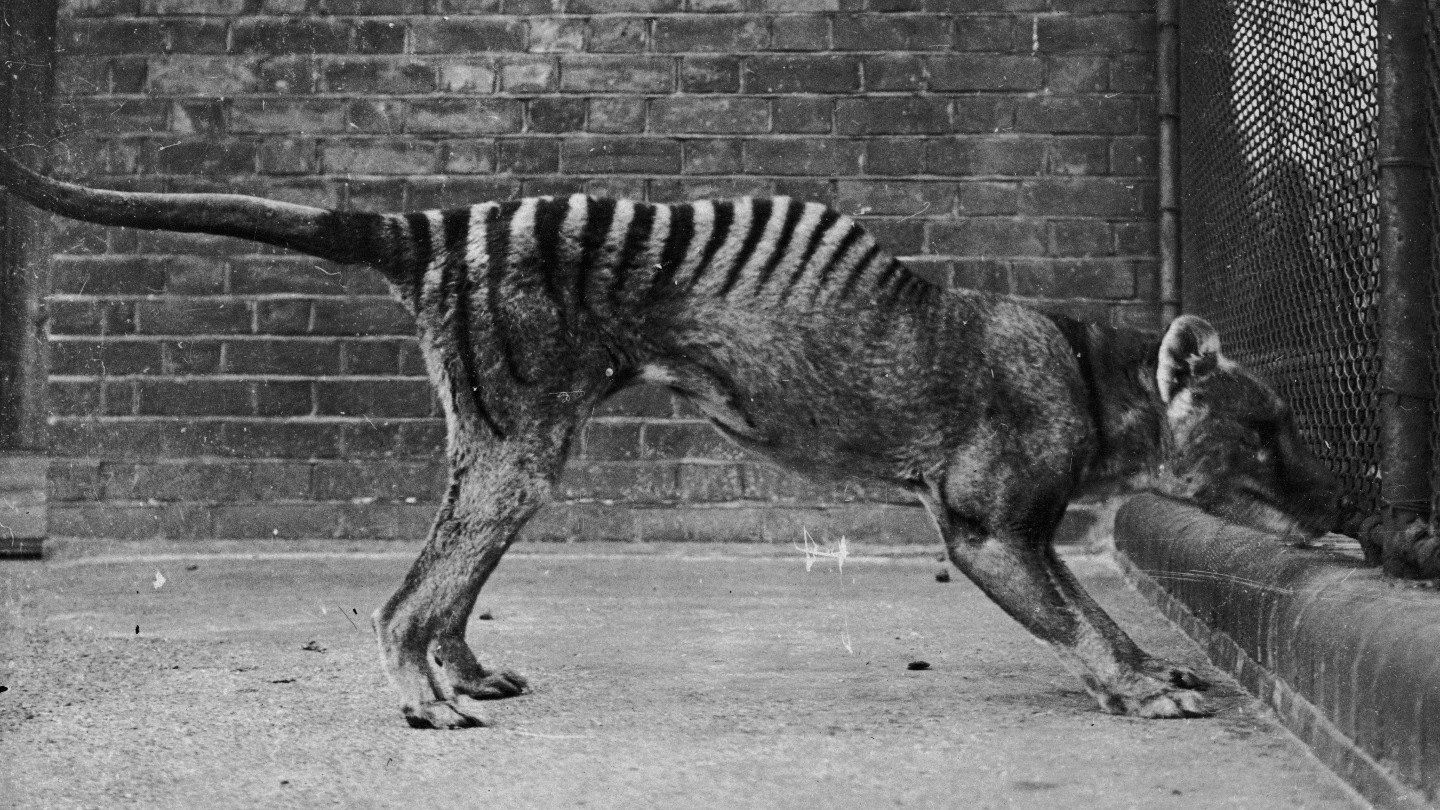
The Tasmanian tiger species was hunted to endangerment after being labeled as a pest. In 1936 the species was declared extinct as the las Tasmanian tiger had died. In 2020, Mármol-Sánchez and colleagues saw the 130 year old desiccated Tasmanian tiger and used it to obtain skin and muscle samples. For the first time, an RNA sequence has been extracted from the cells of an extinct species. This was done by grinding up the samples and adding chemicals that isolate nucleotides. Then the nucleotides were processed by a computer algorithm and compared to the sequences of thousands of different species. Although there was some contamination from humans, around 70% of the RNA is suspected to be from the Tasmanian tiger. The scientists were then able to observe how the RNA sample had different protein-coding nucleotides from the skin and muscle sample. Researchers are hoping to bring the Tasmanian tiger out of extinction by modifying the genes of a closely related species. Researches are beginning to study the RNA of other extinct animals to hopefully find out where RNA viruses originate from.

I am very amazed that the RNA of an animal was able to remain intact for around 130 years without being frozen or preserved. RNA is more fragile compared to DNA, but this case hopefully implies that an RNA sample of other extinct species can be tested. Using the RNA to find the causes of viruses could be extremely helpful, as using the sequences could help humans make better medications against the viruses and possibly prevent it from spreading. I personally am unsure how reviving an extinct species would turn out. Everything is evolving and different from the nineteenth century, so it is not known if the Tasmanian tigers could live in the wild or if they would thrive. 

Sites:

Wednesday, November 27, 2019

Reprogrammed Ants

Florida carpenter ants have specialized jobs where they either "major" which are soldier or "minor" which forage for food. Shelby Berger injected the "major" ants with trichostatin A from 0,5, or 10 days after adulthood. This was injected in the brain and caused numerous of their genes to be expressed differently. Some had changes in behavior, but the ants that were injected at 10 days did not; suggesting that behavior flexibility has a very short time frame. This can cause soldier ants to behave as the foragers.

I think this is a very interesting study. I wonder if this can be done with ants, what other species this can affect as well. The test seemed to mainly turn the soldier ants into foragers, but I wonder if it could work the other way as well. I believe it would because it seems to alter their genetics, so it should be the same.

Image of the Day: Reprogrammed Ants

https://www.the-scientist.com/image-of-the-day/image-of-the-day--reprogrammed-ants-66709

Related Article:
https://penntoday.upenn.edu/news/reprogramming-carpenter-ants-epigenetics

Friday, November 8, 2019

Consumer Genetic Testing Kits Offer False Reassurance

Genetic tests that are created for consumers may be offering false reassurance to those at risk for cancer. This idea was proposed by a study conducted by a clinical genetic testing company by the name of Invitae. The study showed that consumer DNA kits often give negative results for many DNA mutations that may cause cancer. Some people are at higher risk than others, for example, those of asian and african-american backgrounds had a higher likelihood to carry mutations that could not be detected by the consumer kits.  Image result for genetic testing kits
The FDA has approved the tests run by the consumer kits, however, customers still run the chance of receiving a false negative. This is due to the fact that the FDA only approves for testing of specific mutations. In the study, out of 270,806 patients clinically testing positive for the MUTYH gene the majority of their mutation would not be found by a consumer kit. In response to this study the company 23andMe made the statement that its test “is not a diagnostic test”. They also ensure that they make it clear to customers that they do not test for a large variety of mutations.
Personally I think that these kits should be used more as a “fun” way to discover things about your DNA rather than a way to diagnose disease. Those with a family history of cancer should not depend on consumer kits to confirm or deny mutations in their DNA. This could lead to false reassurance which could have negative repercussions later in life.


Tuesday, April 9, 2019

Sharing Your Genetic Test Results Can Help In Autism Development

Sharing your genetic test results showed that it could help in the advancement in autism research like stated in Spectrum News. These results raised the percentage of genetic explanation, from 3 percent to 25 percent, of cases of autism in the past five years. With these test and results, it helped families receive clarification of their children's diagnosis and showed them what to expect with their children's condition based off of another test with similar diagnoses.

Sharing results helped to further autism research and allowed more research on the effects of different genetic variants involved with autism. There were times that genetic variants were clear and showed other underlying conditions associated with that variation of autism. One case showed a form of juvenile diabetes that was caused due to the deletion of part of a chromosome that also caused this person's autism.

Although these tests can reveal these different variants to autism, sometimes it does not, but their test is still important in the main goal of finding the function of certain genes and results of variants. The inconclusive test could open doors for more research. In these cases, these tests are taken and placed into a database, like ClinVar, where it notifies you when new information about your variant is made known.

Overall, if waiting for ClinVar or given resources for your variant, I think sharing your genetic test results could help in the advancement of autism; whether it is directly to your cases or autism as a whole. Any information about autism could help in its research even if its new to the researchers.


Thursday, April 4, 2019

Consanguinity Genetics


Nowadays many people see consanguineous (blood-related) couples as a taboo. It is illegal in many countries to marry close relatives or first degree family members, but marriage within cousins, second cousins, extended family etc, are common in many cultures. The most argued reason why consanguineous marriage should not be allowed has being the clinical consequences to the offspring. People relate this type of unions to disease and malformations, but they are misinformed about the topic.

Queen Victoria and Prince Albert (cousins) and 5 of their 9 children. 

Articles on human genetics note that people from a recent common ancestor have the same genetic pool, meaning that they might posses more equal genes or share genetic information. Disease, morbidity, and mortality usually come from recessive genes. With consanguineous couples there is more chances of their children being homozygous on recessive genes, or the probability of  occurrence of certain genotypes is increased. Genetic counseling is very helpful to evaluate and understand the risks of medical conditions that might be caused in a blood-related union.
We all carry recessive genes and are all at risk of having children with certain diseases. Ultimately what matters the most is the well being of your offspring; if there isn't any risk, then nothing should stop you from marrying your cousin.

  ,

Sunday, March 31, 2019


How important is your DNA to you?
As many of us have heard, there are companies out there that claim to give you results based on your DNA. Before sending your DNA kit, there are some facts that you should keep in mind. First of all, the results obtained are NOT a diagnosis. These are chances of risks for certain/diseases or disorders. Second, tests might not be accurate even though they claim they are. Third, the tests results sent back home to the consumers have a high chance for false positives which means diagnosing a person with something they might not even have. Also, this might happen all the way around, with a false negative, telling a person they do not have a disease that they actually do have. Fourth, diseases with neurological conditions cannot be tested such as dementia. These are some of the reasons why these companies should not be trusted 100%. 
Personally, I have never sent any genetic information to any of these companies but I have heard of many people that have done it. This does not necessarily mean that the information given from these websites are false, but it is a warning so we do not believe in every advertisement we see/read. Out of curiosity, many people send their genetic DNA to find out different things like their ancestry, for example. Others, offer to let you if you suffer from any diseases or based on the DNA they will tell you how to better your diet. The same companies offer diet plans. “Discover DNA insights that will keep you on track all year long”, phrases like this one are being used to catch the attention of individuals.


uncaptioned image
Do not let a random individual have access to your DNA without doing research first.

Thursday, March 21, 2019

Routine Genetic Testing

The Guardian recently published an article which discusses the incorporation of genetic testing to detect diseases into routine health care. Matt Hancock, the health secretary of the NHS, is calling for genetic tests for common cancers and heart disease to begin immediately. (NHS, which stands for National Health System, is the state-funded care system which guarantees all British citizens care.) Hancock developed this opinion after learning from a commercial genetic test that he is at a higher risk of developing prostate cancer. He views the testing as a “game-changer for cancer screenings”. The idea of routine genetic screening is not without criticism. Some worry that because genetic tests have been largely developed using genetic data from whites with European ancestry individuals of other ethnic backgrounds will receive inaccurate results. Some professionals also argue that genetic testing creates unnecessary stress and confusion. While genetic testing can be helpful, experts are not recommending it for every individual at this time as the accuracy is unknown. 

Integrating genetic testing into routine care is not an idea I am particularly fond of. I do agree that unnecessary testing can lead to confusion and stress. The average individual does not completely understand their results, and this can cause them to believe things that may not be true. An elevated risk for cancer or heart disease does not translate into a cancer diagnosis or a heart attack. I also see a large cost associated with testing all individuals. In countries with government funded health care the cost is probably not a big deal, but in countries like the U.S. where health insurance varies from person to person it is. A genetic test, that might not be necessary, could cost individuals hundreds of dollars. This is not practical. As a future healthcare provider, I will advocate for further genetic testing if there is a family history and I will remain opposed to routine genetic testing. 

Sunday, March 17, 2019

Horseshoe crabs are really relatives of spiders, scorpions


In an article from Science Daily, scientists used genetic data analysis and concluded that horseshoe crabs belong to the arachnid family tree. Arthropods are considered to be the most successful animals on the planet and the group include insects, crustaceans, and arachnids. Although horseshoe crabs are marine animals and known to be in the arthropod family, their genomic data have repeatedly shown their relationship with arachnids like spiders, scorpions, ticks, and mites. Horseshoe crabs are the only marine animals to breathe with book gills which is similar to the book lungs spiders and scorpions in land use to survive. There are only 4 species of horseshoe crabs that are alive today. According to the fossil record, the first group appeared 450 million years ago with extinct lineages like scorpions. In order to test the complex relationship among horseshoe crab with other species, scientists from University of Wisconsin-Madison compared the genomic sequence of the three out of four of the alive horseshoe crab against the genome sequence of 50 other arthropod species. As a result of the analysis, the research revealed that horseshoe crabs nested in the arachnid family.

Some scientist might not agree with the findings of this study because of the difference in colonization of the two species of animal. Horseshoe crabs are water dwellers while the arachnids colonized land. These animals belong to a group called Chelicerata and possibly have a common ancestor. I do think that more research with major characteristics of the two species needs to be done with major in order to support the data of this study.

Monday, December 3, 2018

Rapid DNA Analysis Steps In to Identify Remains of Wildfire Victims

The savage out of control fire that tore through in excess of 240 square miles of northern California this month and obliterated the town of Paradise medium-term has decreased, yet the solemn procedure of distinguishing the individuals who died is as yet progressing.

Image result for california wildfireFor as long as three weeks, around 10,000 people have been engaged with the look for human stays in the several sections of land of pulverization—among them firefighters, dead body pooches, inquiry and save groups, and anthropologists from adjacent colleges, as per Megan McMann, people group relations facilitator at the Butte County Sheriff's Office. Up until this point, the loss of life remains at 88, however almost 200 individuals stay absent starting yesterday (November 28) and hunt teams are never again effectively searching for stays, as per USA Today.

The undertaking currently tumbles to distinguishing the remaining parts that have been gathered. Fingerprinting is generally the main alternative, by which recognizable pieces of proof can be made effortlessly through existing databases, for example, the FBI's unique mark database. Something else, specialists can make X-beams from teeth and recognize people by contrasting these and dental specialists' records. In any case, following those records down can be testing, and some have raised the worry that the records of Paradise occupants were devastated in the fire.

Image result for fingerprint dnaOn the off chance that fingerprints and dental records come up short or if the remaining parts are excessively harmed, DNA testing is the subsequent stage. Normally, it would take a long time to send tests to a lab and lead the investigation, however a Colorado-based organization called ANDE has ventured in to help with the exertion in California. The organization, which normally works with the US military and the FBI, spends significant time in quick DNA examination. Since November 12, a group of 20 workers has set up camp at the coroner's office in Sacramento to run DNA tests on tests rapidly spreading fire specialists acquire. It takes under two hours to get a read out.


Read the complete article by clicking on the links below:
Link One
Link Two


Tuesday, November 20, 2018

DNA Testing Reveals true Identity of Kidnapped Child


This Article was about using Genetic makeup to help identify a Woman that had no idea who she really was. Lisa Jensen was a woman who was kidnapped at 2 then later abandoned by her supposed father at 5, she had no knowledge of her past or identity. Using 23andme, ancestry.com, FamilyTreeDNA, and GED match, her and a team of investigators were able to identify distant relatives that matched her genetic makeup. From tracking down and interviewing these relatives, she was able to slowly build a family tree that linked those distant relatives closer and closer to herself. During the research however she discovered her birth mother had passed away long before the search began but from this information Lisa was able to identify her birth name: Dawn. Because of these databases and the process of linking people from their genetic makeup, Lisa was able to meet her blood relatives and find more about her true self that couldn't be identified without DNA.

From discussing the true process of Gene sequencing done by these companies however the databases that they keep are extensive and do prove their worth in this case. IN the article it states that she would have no clue what her past was if not for the help of these databases. Because of this this I believe that the so called “mail order genetic sequencing” companies do have some importance to mapping lineages based off DNA. Although they aren’t extremely accurate to tell you health risks or potential concerns based upon your genes, they can tell you who you are related and not related to. Because of this property, these companies are a good thing to have due to their enormous databases of DNA and lineages of people.

References
Corum, J., & Murphy, H. (2018, October 15). How Genetic Sleuthing Helped a Kidnapped Girl Recover Her Identity. Retrieved from https://www.nytimes.com/interactive/2018/10/15/science/gedmatch-genetic-sleuthing.htm

Wednesday, July 25, 2018

Pet DNA testing looks a little hairy

Pet DNA testing has recently experienced a boom. The general public have jumped at the opportunity to have their dogs and cats DNA tested, and nearly 20 companies are glad to do it. While this new technology has been used to give "individualized healthcare" to pets there is one big problem, no regulation.

While many pet owners are simply interested in the entertainment value of knowing what breed their pet is, many people are making medical decisions based on test results. In humans, the mutations associated with disease are ceaselessly analyzed from multiple individuals, to determine the actual likelihood of disease. This has yet to happen with dogs. Most companies only compare the DNA to one individual's genome. Many pet owners are insisting on executing treatments, surgeries, and even euthanasia based on tests with very low accuracy.

This may sound troubling, but Veterinarians understand there is much work to be done. The International Veterinarian community must demand regulation on pet DNA testing businesses so that its potential may be unleashed. By researching more about canines' genome and its relationship to pathology we may better understand cancer and diabetes in humans.

Article
Related Article

Monday, July 23, 2018

Choosing surgery in response to genetic testing


 While many people consider genetic testing to be a novel tool that should be taken with a grain of salt, some folks are making big life decisions in response to test results. 3 sisters from Berkeley Heights, NJ tested positive for a mutation on the BRCA1 gene in 2012. By 2013 all three women had each successfully undergone a double mastectomy (removal of both breasts) and oophorectomy (removal of ovary).

This was not an easy decision for the women to make, however the choice to undergo surgery became more clear when reviewing the probabilities of developing cancers. All three were determined to be at a 60% lifetime risk of developing breast cancer and a 40% chance of developing ovarian cancer. Their pedigree also showed their brother's offspring to have a 50% chance of carrying the mutation.

After surgery one of the sisters, Patti, had reason to be proud of her decision. After her mastectomy, the tissue was found to be cancerous. She told the Star Ledger, "Our decision isn't right for everyone, but there are many options in between and, at the very least, genetic testing gives people the option to be closely monitored so that changes can be identified and addressed early."

I tend to agree with Patti. While not everyone should immediately jump to surgery following a genetic test, we should make use of this tool to identify and monitor mutations. Granted the individual wants to know their risk factors. 

Article
Related Article

Monday, July 2, 2018


The Truth on Online Gene Testing.


A 29-year-old radiology resident at Baylor University Medical Center, Dr. Joshua Clayton sent in a sample of his saliva to 23andMe in hopes of learning more about his ancestry. 23andMe is one genetics testing company out of many where people can send in DNA samples and get quick results for a decent price. However, many physicians are arguing that is may be doing more harm than good. After Dr. Clayton’s results came back ordinary, he sent the same sample of DNA to a separate genetics testing company called Promethease which advertises to do a more in-depth analysis. The results of the analysis came back positive for Lynch syndrome, a genetic disorder that can lead to deadly cancers at an early age. Frightened by this, Dr. Clayton reached out to a company with expertise in medical diagnostics and found that the  results from Promethease were actually a false positive. Although he knew false positives were common in these genetic testings, many consumers do not understand how debatable their results may be. In a small study performed by Ambry Genetics, it was found that 40% of the results from these companies were erroneous. These testing companies do state that their results are not intended for medical purposes yet this can be very confusing when the consumer is expecting to have accurate results.


Personally, I do not see the harm in participating in these genetic testing activities, however, one should never rely solely on the validity of the results. If there is a chance a mutation is hereditary than one should be examined by a certified clinical laboratory. Possibly having a genetic disorder is worrisome enough so why take the chance of being misdiagnosed.

Related article

Thursday, May 3, 2018

Genetics Testing in the Work Place


As our medical screening abilities become more comprehensive so too, it would seem, does our potential health care benefits. According to the New York Times article Employees Jump at Genetic Testing. Is That a Good Thing? By Natacha Singer, companies all across nation, like Visa, General Electric, Levi’s, and many more, have started including genetic screening as part of their company health care programs. Ideally this is to make it possible for employees to see if they have any genetic/heritable predisposition to a disease so that they may be able to take preventable measures/medical counseling earlier before they are affected, when costs of dealing with ailments are cheaper. And yes, these screening are both novel and optional.


Yet while in theory this addition to company health benefits would improve costs and employee health there are many other concerns around its application in the work place. The main concern being that participants might take the results of these genetic tests, which are by no means 100% accurate, too literally and look at them as a diagnosis, not realizing that they just show potential increased or decreased probability. This intern could cause participants to take drastic or unnecessary health precautions and/or procedures that end up doing patients more physical and financial harm than good, and vice versa the genetic results could give patients a false sense of security if they come up negative, resulting in them not taking the standard recommended medical screenings. Yet, as this new benefit enters the work place we will begin to see if it does more harm than good, as it is way to early to tell, but if in know people then I think this will probably end in an influx of unnecessary procedures and panic, as most people are not that educated on this subject. 

For more on genetic screening/testing check this link out https://ghr.nlm.nih.gov/primer/testing/genetictesting


Sunday, April 22, 2018

Is Parkinson's disease passed on through genetics?


     Parkinson's disease is a condition that affects the brain, specifically the areas that contribute to controlling movement and balance. It involves tremors and muscle rigidity when worsening neurological changes. It can even increase depression and dementia. While the exact cause of the disease is unknown, it is known that genetics affects the development of the disease. They also have discovered how mutations in some genes can be passed down through generations and may lead to an increased risk of Parkinson's disease.
      Some genes appear to influence the ability of the brain to break down proteins that are present in neurons where dopamine is produced, and Parkinson's disease causes a decrease of dopamine in the brain. According to the National Human Genome Research Institute, genes that are associated with Parkinson's disease include: SNCA (PARK1), UCHL1 (PARK5), LRRK2 (PARK8), and PARK3. There are also recessive genes that cause an increased risk of Parkinson's disease. There genes include: PARK2 (PARK2), PARK7 (PARK7), PINK1 (PARK6), DJ-1, and Parkin. If someone wishes they can talk to a doctor or genetic counselor about genetic testing and if it is a good choice for them is the disease runs in the family. Genetic testing exists for the PINK1, PARK7, SNCA, and LRRK genes, which may influence Parkinson's disease. 
     Some common risk factors of Parkinson's Disease are age, usually occurs in people 50 or older, being male, family history, if it runs in the family or they have the gene, history of exposure to toxins, and history of head trauma. Some early signs of the disease are as follows: problems with balance, lack of arm swing when walking, problems creating facial expressions, speech problems such as slurring words, and unexplained muscle stiffness.
      As of now doctors have no prevention for Parkinson's disease. However some studies have shown that exercise can reduce the affects of it. As for the outlook of the disease, one study showed that the presence of one of the six known gene mutations is detected in only 3 to 5 percent of people who develop Parkinson's disease without a family history. Therefore there are many other factors that may contribute to its development. 
     In my opinion, having the resources to even contribute to genetic testing makes researchers a step closer to hopefully finding a prevention for the disease. Since they know what the risk factors are, early symptoms, and the dominant and recessive genes associated with the disease they can now work on fixing the mutations in the genes that cause Parkinson's. Many people suffer from it and it is hard watching someone and for the person themselves to lose control over their own body. It is also painful for them. Hopefully these discoveries can bring science a step closer to finding out more about curing the disease and or stopping the development. 

Link to Article: 

https://www.medicalnewstoday.com/articles/320560.php
Link to more information: 
https://www.genome.gov/10001217/learning-about-parkinsons-disease/

Wednesday, March 28, 2018

5 Things to Know Before Purchasing a DNA Testing Kit

DNA testing kits are becoming more affordable and cheaper than they ever were before. Many popular brands like 23andMe and ancestory.com are selling these kits and all it takes is a sample of your spit and you are given information about your DNA. Alicia Park from TIME Magazine thinks there are five important things everyone should know before purchasing these kits. These five things are; you won't find out everything about your genes, don't expect to learn if you will get cancer, you'll learn more about where you came from, your DNA might not be as private as you think, and your DNA isn't your destiny. Many people will think that if there results show they have a specific "cancer causing" gene they will one day get cancer no matter what. Unfortunately, this person might be right, but just because they have the gene does not mean they will get cancer. It only means that their chances of getting cancer might be higher than someone else without that gene. DNA testing kits can be very interesting and fun if the buyer has an understanding of what their results show.


Article URL: http://time.com/5063464/23andme-dna-ancestry-test/
Additional Information: https://www.23andme.com/