Showing posts with label "Mutations". Show all posts

Tuesday, April 23, 2024

Peculiar Genes: Myostatin Deficiency

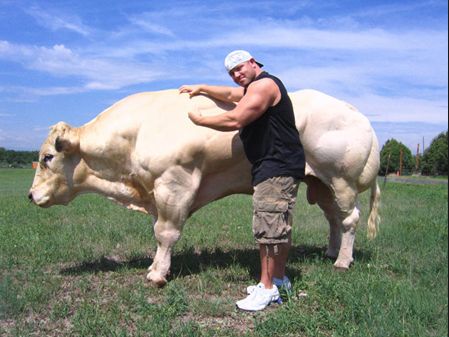
Most of us have seen those pictures of extremely muscular cows. While this may appear to be the result of something in the body working too well, its actually the opposite. In their bodies, and in ours, myostatin is a protein that limits the amount of muscle the body can hold on its frame. Seeing potential clinical applications, scientists investigated the effects this may potentially have on individuals with muscle wasting diseases by causing the genes responsible for the proper production of myostatin to mutate in mice. After these mutated mice developed they investigated the potential effects of their excessive musculature on their ability to put it to use. Unfortunately, while the mice did have more muscle mass, this came at the cost of impaired force generation, and in fact the myostatin mutant mice were actually weaker than their wild-type counterparts. 
In the realm of social media, there has been talk on the effects a myostatin deficiency may have on human performance, such as in anaerobic sporting events (sprinting, lifting weights, anything short term), and bodybuilding. Geneticists in Lithuania investigated this relationship by looking at a variation in the MSTN gene in athletes and non athletes, where they really only found that one allele for this gene that caused the deletion of myostatin may be correlated with better performance in endurance oriented activities. In my opinion, a complete surprise, but nonetheless very interesting. The idea of there being a gene that makes someone predisposed to putting on more muscle (which, with the amount of genetic variation in the world it's out there) sounds almost like science fiction, but with how our scientific knowledge is developing, I wouldn’t be surprised if one day we had the ability to use genetic engineering in the same way we use performance enhancing drugs. Each of the studies referenced has additional, very interesting information you should check out, such as how they would potentially treat muscle wasting conditions as well as additional information on the human genetics involved in myostatin deficiencies.

Studies on Mice

Human Studies


Friday, December 8, 2023

The Effects of Smoking in the Molecular Level

A study done at the Ontario Institute for Cancer Research results in seeing that smoking appears to prevent formation of proteins that help prevent tumors to occur in the body. When smoking, mutations known as "stop-gain" mutations in the DNA increase and these mutation prevent the body from making these protective proteins. This is because the DNA gets altered and the formation of tumor suppressors is halted. This is why people who smoke are more vulnerable to cancer due to the stop-gain mutations that some acquire. The study also noted that the longer and the more frequent a person had smoked, the increase in stop-gain mutations were found in their tumors. The study focused on tobacco and what it does to the body. Researchers found that smoking tobacco damages our DNA and deactivates critical proteins that are needed for cell function. Other bad habits that people do are drinking alcohol and having an unhealthy diet. These things are not yet confirmed to also boost stop-gain mutations, but they are being studied because of its high possibility. 

I've always known and people have always told me that smoking is bad for you health, and I've also heard how smoking can lead to cancer. Many people have heard this, and it's true. But I never knew the health problems you get are due to mutations. It is very captivating how smoking can do these things down to the molecular level. The level of explanation given in this article is very good, and many people, smokers and non-smokers, should be aware of the causes of smoking. And just how these things may happen to smokers, second-hand smoking is just as damaging due to the concentration levels of carcinogens that people might inhale from smokers. 

Sources:

https://www.usnews.com/news/health-news/articles/2023-11-08/smoking-undermines-human-dna-that-would-normally-prevent-cancer

https://cancer.ca/en/cancer-information/reduce-your-risk/live-smoke-free


Monday, November 25, 2019

Without Alzheimer’s Dementia

For decades Alzheimer’s Disease has been a horrifyingly sad disease, that until recently, could not be prevented. The discomfort a diagnosis of this disease presents in the loss of memory an individual suffers, when once they were so vibrant. It’s always been true that with age memory recall becomes more difficult, but the addition of the amyloid-beta deposits create a lonely and ignorant individual that cannot even remember the love of their life. The deposits are overproduced because of a specific mutation known as E280A for early-onset patients. One lucky individual however, has a second mutation, that saved her from having dementia at the early age. The odd thing is, her brain still showed signs of being affected by Alzheimer’s. The mutation is known as the Christchurch mutation. This mutation is found in other early-onset patients, but none of them had two copies of the mutation. It seems with recent discovery a double copy of the Christchurch mutation can inhibit the dementia effects of Alzheimer’s leaving a patient with full cognitive memory for an extended period of time. There is only one case, but one instance is enough to fund research into discovering the physiological effects of  this mutation and if it can be replicated in a new treatment to save the memory of these patients. I found this information relieving because one day I could find myself caring for someone with the disease, and if a treatment is made, I know it will have many positive effects in the advancement of medicine. I truly hope there is a link with the double mutation and this one patient is not simply lucky.


Original Link: https://www.usnews.com/news/health-news/articles/2019-11-04/a-gene-kept-one-woman-from-developing-alzheimers-could-it-help-others
Related Link: https://www.alzforum.org/news/research-news/can-apoe-mutation-halt-alzheimers-disease


Sunday, October 20, 2019

A Newly Discovered Genetic Mutation That Makes Woman Feel No Pain


Imagine living a life where you never really experience physical pain, stress, or anxiety. A 71-year-old woman by the name of Jo Cameron is a very rare case of a genetic mutation that makes her feel no pain. Cameron lived through her childhood breaking her arm and not noticing it until her bone was oddly resetting, eating spicy peppers with ease, and ironing herself with the smell of her own burning skin as the only indication that she was burning. Throughout her life, Cameron never thought anything was different about her. Until she underwent a hand surgery that was supposed to be an excruciating procedure. After this procedure, a consultant, Srivastava, sent her to see pain specialists in London. This research team in London found that there were two mutations that allowed Cameron to experience little to no pain and allowed for a boost in happiness, forgetfulness, and wound healing.
Jo Cameron
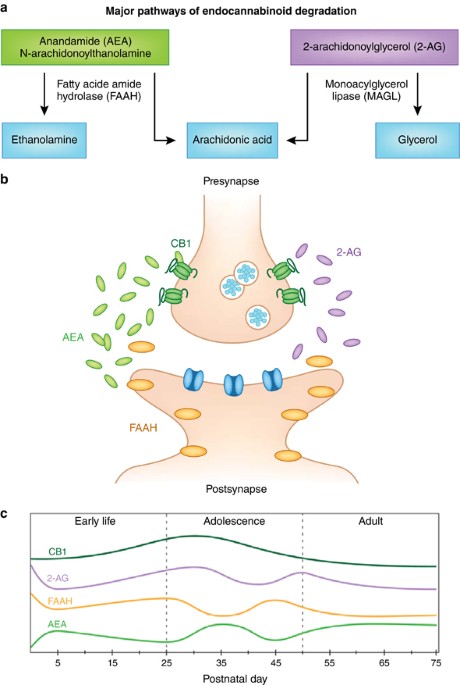
 The first was a more common mutation. It was the mutation of the FAAH gene that causes a partial loss in its function to make an enzyme that breaks down anandamide (a chemical known to reduce pain and elevate mood). The second mutation is more on the rare side. This mutation was a deletion in the FAAH-OUT gene that was unknown prior to this case. This gene acts as “volume control” and since Cameron’s FAAH-OUT gene had a deletion, it had a complete loss in its function. Thus, Cameron had an excess of anandamide in her body, in fact, she had twice the amount compared to those in the general population, causing her to feel less pain and generally feel happier. The effects of FAAH and anandamide in the endocannabinoid system, which deals with memory formation, explains Cameron’s forgetfulness and memory loss.

This article caught my eye because upon reading the title, I thought that this woman basically had superpowers; superpowers that allowed for her to not feel any physical pain or anxiety. I cannot wait to see more articles and studies done in relation to this because I would like to see how it changes modern analgesics that are given out to patients and I would like to see how this study is clinically applied to situations in terms of patients with chronic pain, anxiety, and depression.

https://www.theguardian.com/science/2019/mar/28/scientists-find-genetic-mutation-that-makes-woman-feel-no-pain

https://www.painresearchforum.org/news/118611-wow-that’s-faah-out-newly-discovered-genetic-mutations-woman-who-feels-no-pain

Thursday, April 11, 2019

Genetic Testing Can Guide Cancer Treatment

After decades of research scientists believe they have found a better way to help treat cancer.  The typical cancer treatment includes a type of surgery, chemotherapy and radiation.  With the new knowledge oncologists can now start to offer treatments based on the specific genetics of the patients cancer.  Since the treatments (drugs and therapies) would be specific to their cancer it would be more effective and have fewer side effects.  Oncologists would take a sample of the tumor and then pathology would run a genetic test on the specific cancer.  Once they find the mutation for the cancer they use drugs related to that mutation and this is known as targeted therapy.  There is also immunotherapies that do not target the cancer mutation but try to put the immune system into overdrive so that it recognizes the cancer and tries to fight it.  Immunotherapy works with cancers with multiple mutations and helps to treat many different kinds of cancer.  Testing is still occurring with this genetic testing, upcoming testing is with cancer patients that are at Stage 4 and they will be testing their tumor specimens for 100 different targets to try and find a therapy to help their individual cancer.  Searching for so many at the same time could provide a better chance at finding the right one for the patient.
Image result for cancer cells

Tuesday, April 9, 2019

Heat Stunts Growth in Plants

According to the Nara Institute of Science and Technology, researchers have found that when plants experience stress, there is a pause during the cell cycle. The pause in cell division occurs in both plant and animals cells-mostly to repair DNA. Scientists disrupted the DNA in Arabidopsis cells by infecting the cells with bleomycin. (Bleomycin is a compound used to halt the growth of human cancer cells). It was discovered that Arabidopsis had mutations in their ANAC044 and ANAC085 cells, which acted like bleomycin was never introduced to the cell.

Arabidopsis from eLife

The researcher, Professor Masaaki Umeda stated that he wanted to see how ANAC044 and ANAC085 acted in response to other external stresses. While observing plants under high temperatures, researchers found that there was only a pause in the cell cycle. This means that plants have developed a system for when a plant is under stress, such as experiencing high temperatures; the plant directs its energy to survive, rather than grow. Professor Umeda stated that this research illuminates a new mechanism to optimize organ growth under stressful conditions. While I think that would be an amazing application of these findings, increasing plant longevity and plant productivity are also important.

Sunday, March 31, 2019

Genetics behind defects of Canine Enamel

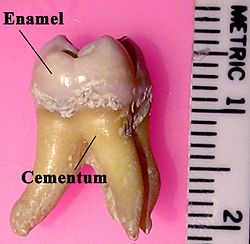
A study from the University of Helinski determined that humans and dogs share the same two genes that may be the cause of their enamel issues. Two genes, ENAM and ACP4, were previously linked in humans for their cause in enamel disorders were also found in multiple types of dogs. The disorder, Amelogenisis imperfect (AI), is what is known in humans to cause the hereditary disorders of the enamel. This disorder is linked with 10 genes including ACP4 and ENAM. The disorder can cause physical and dental harm to both dogs and humans. Mutations or defects in these two genes can cause  developmental issues in the thickness of the enamel, quality or even absence of it entirely. The ENAM mutation controls the protein, Enamelin, which controls whether the teeth receive the correct amount of thickness of enamel. The ACP4 mutation is controlled by the phosphatase enzyme which we think controls cellular differentiation and mineralisation however this data is not fully clear yet.
Dogs with the ACP4 mutation did show thin enamel and a slight mineralisation disorder. 

Due to dogs having the same primary and permanent types of teeth and similar numbers of teeth I think this is a very useful study to conduct. Previously, most of these cases remained undiagnosed but now we have a chance to learn more about the causes of these mutations and exactly what they control. This is both great for the human as well as there best friend, the dog for there overall health.


Thursday, March 21, 2019

Guided by CRISPR, prenatal gene editing shows proof-of-concept in treating disease before birth


In an article from Science Daily, scientists conducted gene editing to prevent a lethal liver disease in laboratory animals and offers to treat human congenital disease before birth. Researchers from Children's Hospital of Philadelphia used low-toxic DNA base editing tools to turn off the effects of a disease causing genetic mutation. In this study, scientists performed prenatal gene editing to improve liver function and to prevent neonatal death in a group of mice that had been engineered with a mutation causing the lethal disease called hereditary tyrosinemia type 1 (HT1). In humans, HT1 usually occurs during infancy and treated with a medicine called nitisinone and strict diet. But, when the treatment fails the patients are in severe risk of liver failure or cancer. Scientists suggested that prenatal gene editing can be used to prevent disease like HT1 and many other congenital diseases. The research used base editor 3 (BE3) and a modified CRISPR associated with protein 9 (CRISPR-Cas 9) tool to carry an enzyme to a particular genetic location in the liver cells of the fetal mice. The enzyme modified the targeted genetic sequence of liver cells chemically by changing the type of DNA bases into another. As a result, the mice showed reduced level of cholesterol and had improved liver function.

A future application for DNA base editing could be correcting disease-causing mutations and to improve functions of organs beyond liver. I think this technique would be very useful for doctors to treat diseases during early pregnancy to ensure the health of the fetus.

Friday, February 22, 2019

Longevity Clues Tucked in Great White Shark Genome

In a recent article on "TheScientist," the great white shark is discussed, as new discoveries have suggested its DNA being linked to wound healing, cancer protection, and a long life. The great white shark has almost double the amount of chromosome pairs as humans do with a total of 41 pairs. A research team analyzed and sequenced the entire genome and came across very interesting results. They found specific genetic changes/adaptations that have contributed to the species' success on Earth for such a long time. These genetic changes include DNA repair, damage response and tolerance, and wound healing including, blood clotting agents and proteins to produce new flesh. Due to sharks being so large in size and having a long lifespan, they should theoretically, have more time and cells for oncogenic mutations to develop. With this new data, researchers were able to conclude that the organim's genetic adaptations have helped put them at a lower rate of developing cancer. The researchers hope that fully understanding these genes that protect the sharks from cancer, could be used to benefit humans. 
Image result for great white shark 


I found this article to be extremely interesting as it discusses that more research could lead to human benefits. If the great white shark's DNA can be used to cure cancer or prevent it in humans, that would be a major breakthrough discovery that would really change the world. 

Wednesday, February 6, 2019

How do genetic differences affect the risks of Bipolar Disorder

A recent study conducted by the Picower Institute of Learning and Memory at MIT could possibly help improve diagnosis and future treatment of Bipolar Disorder for many people. In the article posted by Medical News, Today explains how the study identified and observed genetic differences in a gene called CPG2 which can be tied to an increased risk of developing Bipolar Disorder. The study in no way says that this mutation is the direct cause of Bipolar Disorder but, they found that lower levels of CPG2 were found in patients with this mental disorder. 
I found this article really interesting to read because there is a common misconception/stigma that surrounds mental illness. A lot of people tend to believe that mental illness does not really exist and that it really is just in peoples heads. Especially when it comes to specific disorders such as Bipolar disorder, where it's thought to be mood swings you can't control. However, this finding could help educate people so they can see that it, in fact, has to do with specific genes in your body.

Monday, February 4, 2019

Genetic Mutations In Our Bodies Might Be Less Random Than We Thought, Scientists Say

In a recent article on Discover Magazine, the topic of human evolution was discussed. A new technology of a map of the human genome is currently showing scientists a detailed look of how genes recombine from parent chromosomes and the random mutations that sometimes result. Data from the high-resolution map has actually shown mutations to be more likely in certain areas of some people. These findings have shown scientists that mutations are not so random as they have believed. Researchers studied whole-genome sequencing data and also the genetic variations in 150,000 people from Iceland. Results showed over 4.5 million recombinations and 200,000 mutations. This study allowed the researchers to update the human genome map with a resolution of four times better than it previously was. The analysis also revealed that the most chromosome rearrangements occur at genetic hotspots, which are areas that mutations are linked to. Another interesting discovery was that women add more to recombination and men add more to random mutations. With all the data, the researchers were able to find 35 areas in the human genome that affect recombination, such as the rate or location. This information has allowed researchers to conclude that humans have evolved to control the kind of mutations that occur in our bodies.
These Are The Most Common Types of Mutations
After reading this article, I am very surprised with learning that mutations are not so random. I have always learned that mutations are rare and have slim chances of occurring. This article has proved that to be wrong, showing that humans have actually evolved to control all the mutations that occur.

Thursday, October 18, 2018

Researchers Explore a Cancer Paradox


Cancer is known to be a disease cause by mutations of healthy cells, and scientists have discovered that it takes about 5 to 10 different mutations to turn healthy cells into cancer cells. Shockingly, this article discusses how a number of healthy cells actually turn out to be carriers for "primary drivers" of cancers. Scientists didn't know that so many mutations could be carried and not expressed, so this discovery has made a giant step in cancer research. They did a study on skin cells to try to find cancer-causing mutations in patients without cancer, and found 74 genes that are known to play a role in cancer. It was concluded that about one in four skin cells carries a mutation on a cancer linked gene, which is a crazy high number. Scientists thought that maybe this number was so high because they were testing skin cells, which are exposed to UV rays for long periods of time, so they looked at cells inside the body, as well. They found that there weren't as many cancer causing mutations in the esophagus as in the skin, but that there were still some. After multiple studies, they concluded that many of these mutations arose because of natural mutations, not smoking or any other outside force. While those are also helpful in aiding cancer cells' growth, they are not the only factors. The end of this article claimed that even a super healthy person has a pretty good chance of getting cancer, because genetic mutations are much more common than originally thought. Scientists hypothesized that cancer might not be as common as these studies would make one expect because as the cancer cells are growing, so are cloned cells that help fight the cancer cells. 
This article was super interesting to me because I always wondered how people get cancer, and what actually causes it. I have heard that almost everything can cause cancer, like sunblock or too much deodorant, and was never sure what was true and what wasn't. Most of those claims may have been hoaxes because cancer can arise from mutations within our own bodies, and people probably didn't realize that, or didn't want to believe it. It is so much easier for us to blame some other outside force rather than accept the fact that sometimes it just happens. Hopefully now that scientists understand the mutations that occur and cause cancer, they will be able to create genes to kill these cells or get rid of them in some way. 

https://www.nytimes.com/2018/10/18/science/cancer-genetic-mutations.html?rref=collection%2Fsectioncollection%2Fscience

https://www.cancer.net/navigating-cancer-care/cancer-basics/genetics/genetics-cancer

https://www.cancer.gov/about-cancer/understanding/what-is-cancer

Monday, October 8, 2018

Could we use gene mutations to treat diabetes and heart disease?


A recent study has brought to light a link between mutations of three genes that control cholesterol and can possibly lower the risk of cardiovascular problems and type 2 diabetes. This study, conducted  at the Stanford University School of Medicine and Veteran Affairs Palo Alto Health Care System, linked this genetic information on about 300,000 veterans. The study focused on how the three gene variants/ mutations were linked to positive effects rather than how they damaged the body. If the veterans carried the following genes: ANGPTL4 for type 2 diabetes, PDE3B for coronary heart disease, and PCSK9 for abdominal aortic aneurism then they on average had better levels of blood cholesterol. Also depending on the gene in which they carry they had less of a risk of developing the disease correlated with that gene. With this information they hope for the creation of drugs that will mimic the effects of these gene variants.

The mutation that Stanford is most closely looking at is PDE3B, because a drug is circling the market already called Cilostazol. They hope that this drug can be a strong contender to treat heart disease. Researchers pooled 297,626 veterans and collected their cholesterol to look for the variant that played a role. The study told of 188 previously known genetic markers and 118 new ones. PDE3B was found in the study to lower triglycerides, raise HDLs and lower heart disease by 20%. Cilostazol is thought to have the same effect, but it has not been proven. I think that once a large trial has been conducted with this drug or another one that has the same genetic makeup it should be on the market. Being able to lower bad cholesterol, diabetes and heart disease (the number one killer in America) would be a huge breakthrough in medicine.

Monday, July 2, 2018


The Truth on Online Gene Testing.


A 29-year-old radiology resident at Baylor University Medical Center, Dr. Joshua Clayton sent in a sample of his saliva to 23andMe in hopes of learning more about his ancestry. 23andMe is one genetics testing company out of many where people can send in DNA samples and get quick results for a decent price. However, many physicians are arguing that is may be doing more harm than good. After Dr. Clayton’s results came back ordinary, he sent the same sample of DNA to a separate genetics testing company called Promethease which advertises to do a more in-depth analysis. The results of the analysis came back positive for Lynch syndrome, a genetic disorder that can lead to deadly cancers at an early age. Frightened by this, Dr. Clayton reached out to a company with expertise in medical diagnostics and found that the  results from Promethease were actually a false positive. Although he knew false positives were common in these genetic testings, many consumers do not understand how debatable their results may be. In a small study performed by Ambry Genetics, it was found that 40% of the results from these companies were erroneous. These testing companies do state that their results are not intended for medical purposes yet this can be very confusing when the consumer is expecting to have accurate results.


Personally, I do not see the harm in participating in these genetic testing activities, however, one should never rely solely on the validity of the results. If there is a chance a mutation is hereditary than one should be examined by a certified clinical laboratory. Possibly having a genetic disorder is worrisome enough so why take the chance of being misdiagnosed.

Related article

Tuesday, May 1, 2018

De Novo Mutation Gene linked to Poor Motor Skills in Autism


There are two types of genetic factors that can contribute to Autism Spectrum Disorder (ASD). They are inherited mutations and de novo mutations. De novo mutations do not appear in either parents` genetic makeup but are present in the child. Past research indicated that the presence of damaging de novo mutations correlated with lower non-verbal IQ. This new study found that reduced motor skills also correlates with de novo mutations in ASD. The motor skill correlation is a stronger indicator of the severity of the damage of the de novo gene than IQ. Impaired social skills and communication are hallmark traits of ASD, these traits are not linked to the presence or absence of de novo mutations. Research speculate that children who have ASD as a consequence of inherited factors have less general cognitive damage than those with de novo mutations. A possible explanation for this is that individuals with cognitive disabilities are less likely to have children, passing down their genetics. The results from this study can be a facet of clinical evaluation of patients. The near universality of poor motor skills in ASD children is an indicator that the factors that cause the core behavioral defects also cause general cognitive dysfunction. I thought this article was interesting because the general population is told that genetics are a component in ASD in the context that if ASD is in the family the child can have ASD. This study indicates that the genetic component of ASD is a result of mutations so there is less certainty to rule out the possibility of having a child with ASD. With the discovery of these de novo mutations can lead to more intense research on ASD causing genes. Topics that could be explored with this new information are which individuals are more susceptible to this mutation, what do this mutations code from, and how this mutation is caused could. Also the mechanism of the develop of ASD could be studied with a more complete understanding of the genetic component of ASD.

Friday, November 10, 2017

How a 'flipped' gene helped butterflies evolve mimicry


In a study published on Nature Communications, scientist from the University of Chicago analyzed different species of swallowtail butterflies from different geographic locations. They analyzed the butterflies and found that butterflies from different regions had different mimicking patterns. The scientists believed that the mimicry occurred about two million years ago when a double sex gene flipped at some point. They saw variation in butterflies and believe some of the original undisguised forms of butterflies might have been lost by prey because of their inability to flip the gene like the other butterflies. They also saw that some butterfly populations have maintained multiple female forms for millions of years, while other butterflies without the mimic patterns diminished.

I found this article interesting because this study explored on how and when the swallowtail butterfly developed mimic patterns. This is a interesting discovery because scientists previously believed that the butterfly mimic was controlled by "supergenes", which were groups of several tightly linked genes that were always inherited as groups, which is not the case. This could help us understand how the flipping of  a double sex gene works and the advantages and disadvantages of it.


https://www.sciencedaily.com/releases/2017/11/171107113214.htm

https://sciencelife.uchospitals.edu/2017/11/07/how-a-flipped-gene-helped-butterflies-evolve-mimicry/

Saturday, November 4, 2017

‘Chemical surgery' can correct genetic mutations behind many diseases


     The breakthrough of DNA base editing brings hope of potential treatment for lot of diseases that arise as the result of a single genetic ‘misspelling’. Researcher discovered a method/process that can correct a type of genetic mutation behind some diseases. There are plethora of human genetic variations associated with disease, while many diseases involve several variations, a huge amount including sickle cell anemia; that results in genetic misspelling, known as a “point mutation.” There is an error in one of the stages of the DNA double helix structure that are made of bases, Adenine, Thymine, Cytosine, and Guanine A-T, G-C. Around 20,000 known point mutations that are linked to diseases are down to bases that must be G instead of being A, and their corresponding pair being a T instead of C. Well, scientists say that they can fix these errors in a process called base editing, turning A base back to G and T base back to C using a modified version of the gene editing tool CRIPR-Cas9. CRISPR allows scientists to precisely target and edit pieces of the genome, it is a molecule made of RNA, that allows a specific site of interest on the target, DNA double helix. The RNA molecule is attached to a bacterial enzyme that unwinds the DNA and works as a pair of molecular scissors to cut it at the exact point required. This allows scientists to cut, paste and delete single letters of genetic code.     

     David Liu, the co-author from the Broad Institute of MIT and Harvard and some other researchers, were using base editing to try to study or authenticate potential future therapeutic treatments for blood diseases, genetic deafness, genetic blindness and some neurological disorders. Within the new machinery, a section of single-stranded genetic material known as RNA directs the tool to the faulty section of DNA, which the Cas9 protein then unwinds. Certain developed enzyme within the tool then chemically alters the A base, turning it into a molecule known as inosine, which is read as G by the machine. Significantly, the Cas9 protein used in the tool has been shuffled so that it cannot split the two strands of DNA, as is typical with gene-editing techniques. Rather, the editing tool only makes a mark in the opposite strand of DNA near the error base, deceiving the cell into replacing the DNA strand around the site. That mark helped the cell to replace the T with a C, because the base opposite the T has been converted to inosine, which pairs with C, adding the mark had showed approach to work in both the cells of bacteria and of humans.


      This technique has some advantages over traditional Crispr-Cas9 techniques for switching base pairs, not least that it is less prone to problems of random insertions or deletions, was not found to cause unwanted changes to the base pairs, and works well in adult cells. However, Dr. Liu noted that base-editing cannot be used to insert or delete stretches of DNA. Dr. Liu cautions, that more work will be needed to cure diseases, there are many additional steps beyond simply making the mutation that may be needed to treat [a] disease. Well, many genetic diseases are due to mutations where a single base pair has been substituted for another, this makes these new base editing methods of great value in both basic research to make disease models and, in theory to correct genetic disease; making either non-hereditable or hereditable alterations. Since the changes formed using the tool do not occur in the DNA, they only temporarily alter the proteins generated – a development that could not only avoid some of the ethical dilemmas around gene editing, but also offer ways to tackle diseases caused by temporary changes within a cell, such as inflammation. 
     Dr. Lieu said “I am hopeful that as complementary approaches, DNA base editing and RNA base editing will together enable an especially broad set of potential research and therapeutic applications” (Davis). 

Reference:

Davis, N. (2017, November 1). 'Chemical surgery' could treat diseases by fixing genetic mutations. Retrieved November 3, 2017, from https://geneticliteracyproject.org/2017/11/01/chemical-surgery-treat-diseases-fixing-genetic-mutations/

Davis, N. (2017, October 25). 'Chemical surgery' can correct genetic mutations behind many diseases – study. Retrieved November 03, 2017, from https://www.theguardian.com/science/2017/oct/25/chemical-surgery-can-correct-genetic-mutations-behind-many-diseases-study