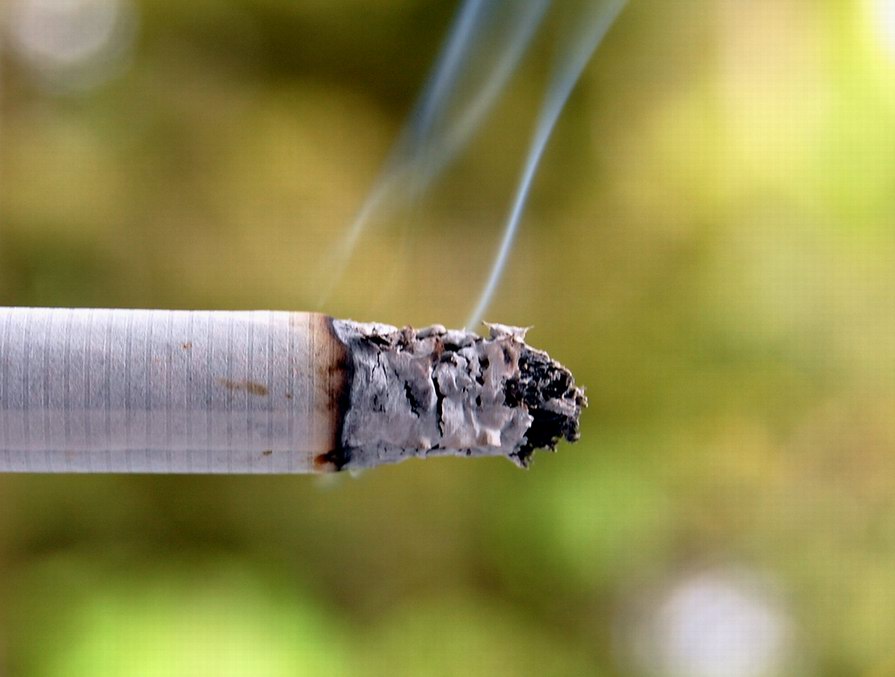
Showing posts with label Smokers. Show all posts

Friday, December 8, 2023

The Effects of Smoking in the Molecular Level

A study done at the Ontario Institute for Cancer Research results in seeing that smoking appears to prevent formation of proteins that help prevent tumors to occur in the body. When smoking, mutations known as "stop-gain" mutations in the DNA increase and these mutation prevent the body from making these protective proteins. This is because the DNA gets altered and the formation of tumor suppressors is halted. This is why people who smoke are more vulnerable to cancer due to the stop-gain mutations that some acquire. The study also noted that the longer and the more frequent a person had smoked, the increase in stop-gain mutations were found in their tumors. The study focused on tobacco and what it does to the body. Researchers found that smoking tobacco damages our DNA and deactivates critical proteins that are needed for cell function. Other bad habits that people do are drinking alcohol and having an unhealthy diet. These things are not yet confirmed to also boost stop-gain mutations, but they are being studied because of its high possibility. 

I've always known and people have always told me that smoking is bad for you health, and I've also heard how smoking can lead to cancer. Many people have heard this, and it's true. But I never knew the health problems you get are due to mutations. It is very captivating how smoking can do these things down to the molecular level. The level of explanation given in this article is very good, and many people, smokers and non-smokers, should be aware of the causes of smoking. And just how these things may happen to smokers, second-hand smoking is just as damaging due to the concentration levels of carcinogens that people might inhale from smokers. 

Sources:

https://www.usnews.com/news/health-news/articles/2023-11-08/smoking-undermines-human-dna-that-would-normally-prevent-cancer

https://cancer.ca/en/cancer-information/reduce-your-risk/live-smoke-free


Wednesday, April 13, 2022

Some Smokers Develop Genetic Defenses Against Lung Cancer, Study Finds


A new study published by Nature Genetics found that some cigarette smokers may have genes that protect them from the genetic mutations that cause lung cancer. Through analysis of the cells lining the lungs of both smokers and non-smokers, both with and without lung cancer, researchers found that smokers had more of the genetic mutations that cause lung cancer even if they do not develop the disease. “However, while the number of genetic mutations detected in lung cells increased in parallel with the amount and length of time people smoked, this increase stopped at a certain point -- 23 "pack-years," which equates to smoking one pack per day of cigarettes for 23 years, the researchers said. This suggests that some long-time, heavy smokers are able to "suppress further mutation accumulation" because they have "proficient systems for repairing DNA damage or detoxifying cigarette smoke…” (Dunlevy, 2022). For this study, researchers used a technology called single-cell multiple displacement amplification that allows for genetic analysis of individual cells.

This is only a preliminary finding and many more larger studies need to be conducted in order to arrive at a solid conclusion. For this study, scientists say this mutation may be due to a change in ones own genetic makeup or something that becomes inherited. Scientists also warn that their findings do not give the green light on smoking and still stress that risks for developing cancers and other health complications are still possible. Nearly 240,000 people in the United States will be diagnosed with lung cancer this year, about 80% of them smokers, 13% are considered to be active smokers, the American Cancer Society estimates.

This type of study may help healthcare professionals and scientists treat and improve future diagnoses of lung cancers, but it is still too early to determine if it can work out.

An article from Science Daily goes into further detail on this topic.


Thursday, November 24, 2016

Smokers & Non-Smokers Show Different Cancer Mutation Patterns

A study explains that DNA damages offer hints to help find malignancies in different types of tissues. DNA in malignant tissues of smokers shows a mutation pattern that is significantly different from those in the malignant tissues of those that are nonsmokers. This new study explains how smoking has a correlation with various types of cancer which enhances several types of DNA damage. A mutation in our DNA can arise more naturally in someone's lifetime, but some genetic changes --such as those caused by smoking -- significantly increase the risk of certain cancers. Fortunately, scientists have recognized many patterns of DNA mutations that routinely show up the tissues of certain cancers. The identified patterns that appear over and over again in a tumor DNA, can behave as a signature of the underlying mechanism that caused the mutation, which will offer clues to how different cancers can attack.lady smoking

Ludmil Alexandrov, a cancer geneticist said that although smoking's link to cancer has been known for many years, it was a mystery to him as to why smoking will increase risks of cancer like the bladder or kidney, tissues that were not exposed to smoke. Alexandrov and his team of researchers found many differences in the number of manipulated DNA signatures in the malignancies of smokers compared to those that had the same type of cancer but did not smoke. Smoking can leave permanent mutations, it destroys the genetic material in many cells in the body. Alexandrov collected DNA from more than 5000 people which represented 17 cancer for which smoking was a known risk factor. Almost half of the samples were from smokers. Signature 4 was mostly found in the people who smoked but occurred far less in nonsmokers. Signature 4 showed up in cancers of the oral cavity, but researchers were not sure why these tissue's which are directly exposed to smoke didn't have a heavy mutational load. DNA damage in smokers differed from those that didn't smoke in an another suite of mutation known as signature 5. The cause of signature 5 is still unknown, but researchers did determine that the amount of signature 5 mutations is like a clock, it increases with age. Researchers also took into account the amount of tobacco smoked, they discovered that the number of mutations in some diseases was linked to smoking a pack a day for one year. A pack a day for one year leads to 150 mutations in a lung cell, 97 in a larynx cell, 39 in the pharynx, 23 in the oral cavity, 18 in the bladder and 6 in a liver cell. 

"When someone has cancer, we can only see what is happening right now, we do not know what happened 20 years ago when that cancer was just one cell," says cancer biologist GerdPfeiffer. I completely agree with Pfeiffer on that because these signatures can give us a clear idea of what might have happened years ago.

Smoking is actually giving one benefit, and that is to figure out why it increases the risks of cancer. With this idea, we can make more experiments on how it can decreases the risks too.

Sunday, November 20, 2016

Cancer mutation patters differ in smokers/non-smokers

An international team of researchers found several differences in the amount of altered DNA signatures in the tumors of smokers compared with those from non-smokers with the same type of cancer.

"Tobacco smoking leaves permanent mutations - it erodes the genetic material of most cells in your body", says Ludmil Alexandrov of Los Alamos National Laboratory in New Mexico, who led the analysis. "Even if you are just a social smoker who occasionally has one or two or five cigarettes, there is a cumulative effect."

The team compiled data on over 5000 human samples of 17 different cancers. The DNA was then searched for patterns of damage, known as "mutation signatures". One type of mutation, called "Signature 4", which indicates damage to Guanine, showed a far greater presence in tissues exposed to tobacco smoke. Signature 4 also strongly correlated with lung squamous cancer, lung adenocarcinoma and larynx cancers.


Strangely, signature 4 showed a significantly lesser correlation with oral, pharynx, and esophagus cancer, despite being just as exposed to tobacco smoke as the lungs and larynx. Researchers also were able to graph the relationship between quantity smoked and number of mutations. For instance, a pack a day for one year leads to 150 mutations in a lung cell, 97 in a larynx cell, 39 in the pharynx, 23 in the oral cavity, 18 in the bladder and 6 in the liver cell.

I take interest in the genetic or hereditary aspects of tobacco resistance. I have known individuals who have smoked a pack or so a day for numerous decades and never got lung cancer, and others who have smoked far less over a shorter period of time, yet fell ill with some respiratory related cancer.

Friday, November 11, 2016

The Difference Between Cancer Mutation Patterns in Smokers and in Non-Smokers


     Gene mutations in any organism can have several causes. Smoking, however, has been known to increase the risk of around 17 cancers, including lung cancer, bladder cancer, kidney cancer, and many more. Tobacco smoke is a complex mixture of chemicals, at least 60 of which are carcinogens. A new analysis shows that DNA in cancerous tissues of smokers are different from those in cancerous tissues of non-smokers. Cancer geneticist Ludmil Alexandrov and his international research team conducted an experiment in which they analyzed and examined mutational signatures and DNA methylation in DNA extracted from 5000 genome sequences, half of which were from smokers. What showed the increase in cancer risks in smokers were the mutational signatures 2,4,5,13, and 16. 


 lady smoking   

  
     Signature 4 mutation signals damage to guanine and it appears in DNA of cells which were exposed to chemicals from burnt products, such as tar in cigarette smoke. This signature was found in non-smokers' tumors, but less often. Smokers with lung squamous cancer, lung adenocarcinoma and larynx cancers had high numbers of signature 4 mutations, while cancers of oral cavity, pharynx, and esophagus had much less signature 4 mutations. Even though the reason why these tissues didn't have as much signature 4 mutations, despite being the most directly exposed to smoke, is unclear, the team speculates that these tissues might metabolize smoke differently.

     Another difference observed between the smoker's damaged DNA and that of non-smokers was the presence of signature 5 mutations. This signature normally shows up in all cancer types but its cause is still unknown. However, it is known that it increases with age and the analysis revealed that the more a person smoked, the more signature 5 mutations were present. Smokers with lung adenocarcinoma also appeared to have more signature 2 and 13 than non-smokers with the same disease. These could have resulted from overactive DNA editing machinery. However they are found in many types cancer and it's still unclear how smoking influenced the increase in these signatures. Signature 16 has only been found in liver cancer tumors, but it was in a higher number in smokers' damaged DNA than in those of non-smokers. It's correlation to smoking is also unknown.


     The researchers took into account the pack years smoked (1 pack year = one pack of cigarettes per day per year) and found a positive correlation between pack years and the number of mutational signatures. This information helped them calculate the mutations caused by smoking for each cancer type in the tumors they researched. The results were that one pack year leads to 150 mutations in a lung cell, 97 in a larynx cell, 39 in the pharynx cell, 23 in the oral cavity cell, 18 in the bladder cell, and 6 in a liver cell.


     I think that this information is very important for the public, so that it can bring better awareness to how harmful smoking is and how important it is to help treat people with smoking addictions. I hope that more answers can be found about how the signatures mentioned in the previous paragraph cause cancer and what the correlation between these mutations and smoking is, because this information can also help identifying the causes of other cancers due to these mutations.


Links:


Sunday, April 10, 2016

Mother's Smoking Can Alter Fetus's DNA

A new study indicates that smoking while pregnant changes the fetus's DNA with many other complications for the unborn child. These complications include, low birth weight, risks of asthma, and cleft lips or palates. Despite of health precautions, in the United States, about 12 percent of pregnant women smoke while they are pregnant. The American Journal of Human Genetics examine the effects on fetal's DNA and looked at 7,000 newborns and their mothers around the globe. The researchers collected blood sample from the newborn and gathered information about the mother's smoking habits. Researchers observed epigenetic changes, which alters the DNA sequence by either switching "on or "off" in a specifc gene. One specific gene they examine was methylation, it is a small molecule part of the DNA that prevents a specific DNA sequence from turning on. Researchers discovered, newborn DNA was different from the DNA of newborns who were born to non-smokers. Dr. Stephanie London, an epidemiologist states that even if the fetus is developing, many of the chemicals while smoking can pass through the placenta. However, some health complications remains unclear for maternal smoking and further studies are needed to be confirmed.


I personally think this research is not a surprise for me because smoking or consuming any sort of drug will have health complications to the developing child. It is essential for individuals to take precautions of their habits during pregnancy. Prenatal smoking is a major issue that should be taken seriously and help those women who are suffering from it. This research ensures that substance use or smoking can be life-threatening to the fetus. 

Wednesday, April 15, 2015

Cigarette Smoke makes Superbug Invincible?


It was already known that Cigarettes are bad for you, but people really don't care so they never listen. Little did they know that it coats superbugs in particular MRSA. Crotty Alexander and her team tested out whether or not cigarette smoke causes MRSA to become more resistant. They found out that the smoke does make MRSA harder to kill and the more smoke it was exposed to the harder it got to kill it.
 
The team also discovered that smoke-exposed MRSA were more resistant to killing by antimicrobial peptides, small protein pieces the immune system uses to poke holes in bacterial cells and trigger inflammation. The smoke also made MRSA better at sticking to and invading human cells.
 
This is a very serious issue and people that smoke need to be aware of this. Because what's going to stop the superbug from spreading to others. And medicine won't work because it repels almost everything.
 
Source:

Friday, December 5, 2014

Gene Linked to Heavy Smokers


Smokers, especially heavy smokers, have shown to have a genetic variant that is associate with increased body mass (BMI). The gene variant CHRNA5-A3-B4 is associated with smokers who have a low BMI, but the BMI in non smokers that have this gene to be higher. This gene that is linked to those who have never smoked is still not understood. There are assumptions that this gene variant reacting to nicotinic acetylcholine could be the reason for the low BMI.


 http://abcnews.go.com/blogs/headlines/2013/09/florida-county-bans-smokers-from-new-jobs/http://www.sciencedaily.com/releases/2014/12/141204143124.htm