Showing posts with label "RNA". Show all posts

Saturday, November 22, 2025

How RNA Can Shape Gene Expression Across Generations

 A new study from the University of Maryland in C. elegans (roundworms) reveals that double-stranded RNA (dsRNA) can travel between cells and even influence gene expression for over 100 generations. scientists found that a protein called SID-1 acts as a “gatekeeper,” controlling the entry of dsRNA into cells. Interestingly, when SID-1 was removed, the worms became better at passing on gene expression changes, and these changes persisted for more than 100 generations. This discovery has big implications for RNA-based therapeutics. It suggests that not only do RNA therapies need to reach individual cells, but our cells may already have natural pathways for importing regulatory RNA, and these pathways could be harnessed or modulated to make treatments more effective.


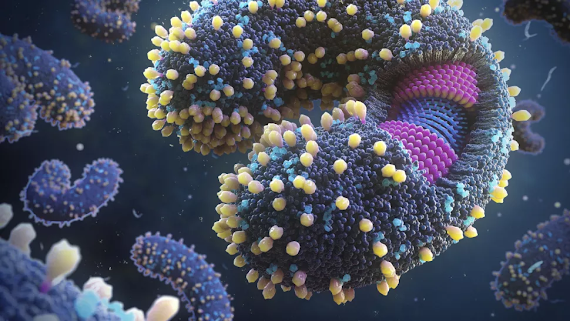
Picture of RNA (source)

A related epigenetics study from the Salk Institute found that genetic sequences themselves help guide where DNA methylation is added in the genome. Previously, scientists mostly thought methylation patterns were governed by other epigenetic marks; this discovery shows that the underlying DNA sequence also plays a directing role. Together, these findings highlight how genetic sequence, RNA movement, and epigenetic markers work as an integrated system. They also point to new possibilities for therapies that aim to influence gene expression in a long-lasting, precise way.

1st article: https://www.sciencedaily.com/releases/2025/02/250205131827.htm

2nd article: https://www.eurekalert.org/news-releases/1107133

Tuesday, November 18, 2025

Personalized Gene Editing for All Angelina Tadros

 Angelina Tadros

November 18, 2025

Genetics

Dr. Barbato


Personalized Gene Editing for All

 A recent study discusses how the field of genetic medicine is going through major change, from a one size fits all medication style to more personal and uniquely fixed treatments that can correct someone's specific genetic mutation. The article explains how scientists and the FDA are working together to make personalized gene-editing treatments available to more patients. An important example is an infant named KJ, who was given a custom CRISPR treatment for a severe genetic disorder. Ultimately, his case proved that personalized editing is possible, but it also showed that the traditional drug-approval system is too slow and expensive to support one patient at a time therapies. This caused the FDA to explore new approval pathways that focus on approving entire platforms instead of individual custom drugs.

These platforms depend on the programmable nature of CRISPR technology, scientists can use the same basic treatment while switching out a small part of the RNA to target different mutations. The researchers described platforms for phenylketonuria (PKU) and for seven types of urea-cycle disorders (UCDs-which is what KJ had). After back and forth with the FDA, they found support for a streamlined process where only minimal new testing is required for each new mutation added to a platform. This means many patients with different genetic variants could be treated under one large general clinical trial.

Overall, the article highlights a major shift in genetic medicine and an interesting twist on medicine for once believed untreatable rare diseases. Instead of developing a new therapy from scratch for each patient, platform based editing could make customized treatments faster, safer, and more widely available. With continued support from the FDA and research agencies, personalized gene editing could move from experimental trials like KJ’s to a normal option for patients with rare genetic diseases. This discovery can be life changing for many.

Figure 1


Figure 1 demonstrates how all of the different variants are included efficiently in one trial, by each new IND mostly just reusing the original one and needing only small lab tests for each new variant.


Sources 

Article + Picture link: https://www.cell.com/ajhg/fulltext/S0002-9297(25)00397-0

Extra source: https://www.sciencedirect.com/science/article/pii/S1465324925007492

Wednesday, March 12, 2025

Unlocking Ancient RNA Systems for Advanced Gene Editing

    A recent discovery by MIT researchers has unveiled an ancient RNA-guided system that could revolutionize gene-editing therapy. This system, believed to predate CRISPR, simplifies the delivery of gene-editing tools by utilizing a compact enzyme called Fanzor, which is guided by RNA to make precise genetic modifications. Unlike CRISPR-Cas systems, which rely on large and complex protein structures, Fanzor offers a more efficient and adaptable alternative for therapeutic applications. This could make gene-editing treatments more accessible by improving their delivery into human cells, addressing challenges related to size limitations and immune responses associated with traditional CRISPR-based methods.


    By understanding the natural origins of these systems, scientists can engineer more effective gene-editing technologies that could be used to treat genetic disorders, develop new medical therapies, and advance synthetic biology. This discovery reinforces the idea that molecular biology is constantly evolving, offering new insights into how life manipulates genetic material for survival—insights we can now harness for cutting-edge biotechnology.

Thursday, November 23, 2023

For The First Time, Researchers Decoded the RNA Of an Extinct Animal

 For The First Time, Researchers Decoded the RNA Of an Extinct Animal


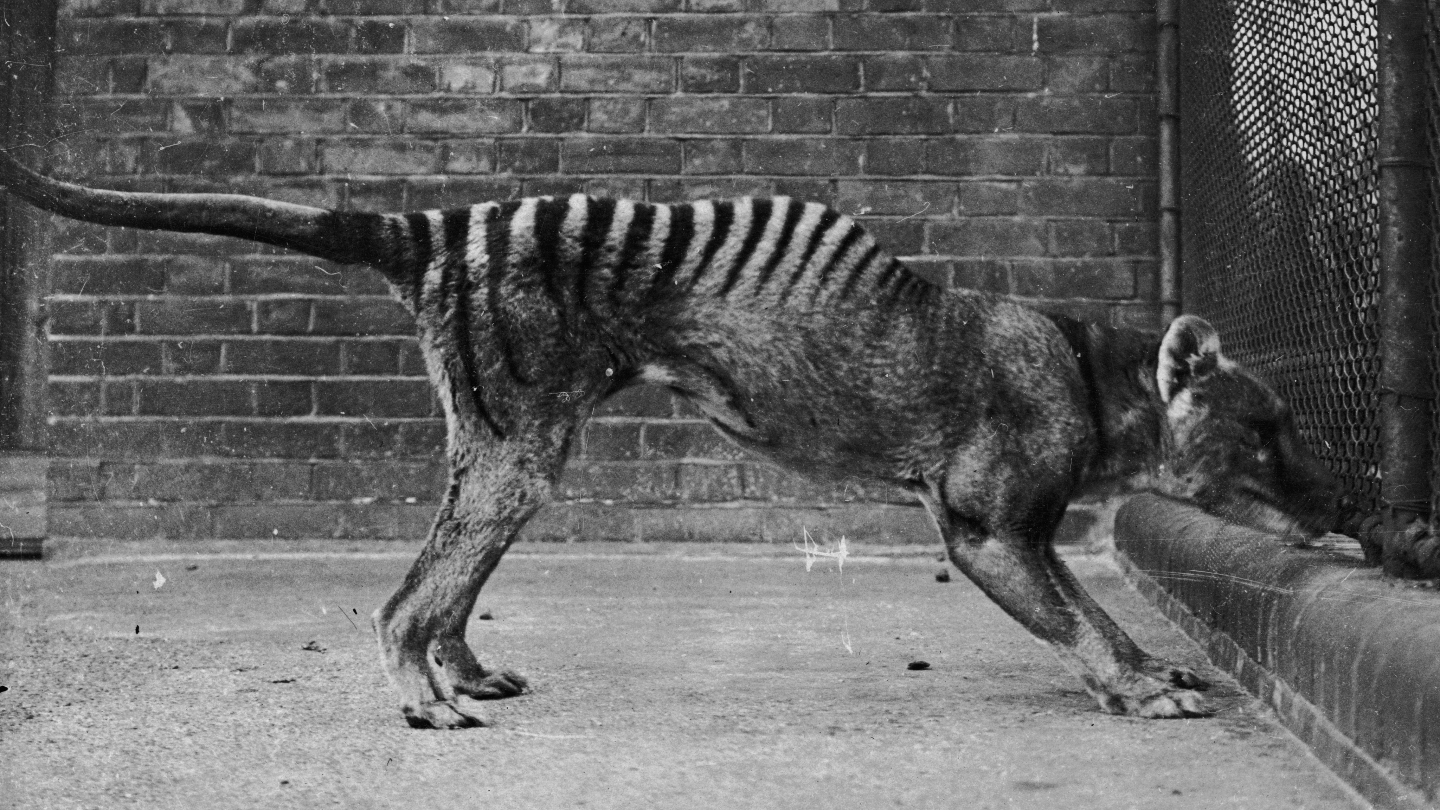
The article discusses an animal known Tasman tiger that became extinct in 1936. The last Tasman tiger died in a zoo in Hobart, Tasmania. This extinct animal had stripes like a tiger from its shoulder to its tail with the facial structure of a wolf. A bounty was put in place to hunt these animals to extinction in the 19th century. The importance of decoding the RNA was to uncover how the tiger's cells functioned which was said by Emilio Marmol-Sanchez. Six small samples of the muscle and skin were collected from the tiger where each sample was made/ into powder and researchers added chemicals to be able to separate the nucleotides. Researchers gathered different protein-coding RNA molecules in the skin and muscles of the tiger. 250 thylacine micro RNAs were found that controlled how the cells moved. I found this article interesting because this was my first time hearing of a Tasman tiger. The scientists even tried to modify the genes of the fat-tailed dunnart to try to attempt de-extinct the organism using the Tasmans closest relative..


Monday, November 20, 2023

Decoding the RNA Sequence of Extinct Animals


The Tasmanian tiger species was hunted to endangerment after being labeled as a pest. In 1936 the species was declared extinct as the las Tasmanian tiger had died. In 2020, Mármol-Sánchez and colleagues saw the 130 year old desiccated Tasmanian tiger and used it to obtain skin and muscle samples. For the first time, an RNA sequence has been extracted from the cells of an extinct species. This was done by grinding up the samples and adding chemicals that isolate nucleotides. Then the nucleotides were processed by a computer algorithm and compared to the sequences of thousands of different species. Although there was some contamination from humans, around 70% of the RNA is suspected to be from the Tasmanian tiger. The scientists were then able to observe how the RNA sample had different protein-coding nucleotides from the skin and muscle sample. Researchers are hoping to bring the Tasmanian tiger out of extinction by modifying the genes of a closely related species. Researches are beginning to study the RNA of other extinct animals to hopefully find out where RNA viruses originate from.

I am very amazed that the RNA of an animal was able to remain intact for around 130 years without being frozen or preserved. RNA is more fragile compared to DNA, but this case hopefully implies that an RNA sample of other extinct species can be tested. Using the RNA to find the causes of viruses could be extremely helpful, as using the sequences could help humans make better medications against the viruses and possibly prevent it from spreading. I personally am unsure how reviving an extinct species would turn out. Everything is evolving and different from the nineteenth century, so it is not known if the Tasmanian tigers could live in the wild or if they would thrive. 

Sites:

Wednesday, November 8, 2023

Thousands of DNA- Cutting Enzymes Found in Eukaryotes


Many eukaryotic organisms contain DNA cutting enzymes called Fanzors and scientists at MIT’s McGovern Institute for Brain Research have identified that there are thousands of them.  Fanzors are RNA- guided enzymes that can be programmed to cut DNA at specific sites and its diversity gives scientists a large set of programmable enzymes that could be adapted into new tools for research or medicine. These enzymes are much like bacterial enzymes known as CRISPR, bacterial enzymes that power the widely used gene editing system. CRISPRS have made clear how useful RNA guided enzymes can be when used in the lab. The CRISPR-based genome editing tools were developed by MIT professors and McGovern investigators. These editing tools have changed the way scientists modify DNA, accelerating research and enabling the development of a lot of different types of gene therapies. Fanzor enzymes can be programmed to cut specific DNA sequences and it has been discovered that Fanzors can target DNA sequences in humans without optimization. Fanzors likely evolved from the RNA-guided DNA-cutting bacterial enzymes called TnpBs. The traced evolutionary connections suggest that the TnpBs probably entered the eukaryotic cells, some had likely been transmitted by viruses and some were likely introduced by symbiotic bacteria. A feature that they had developed through evolution was having a signal that allows them to enter a nucleus of a cell, where they would have access to DNA. The research team determined that Fanzors evolved a DNA-cutting active site that is distinct from their predecessors. The active site seems to allow the enzyme to cut its target sequence more precisely than the ancestors of TnpB. When the other enzymes are targeted to a DNA sequence in a test tube, they become activated and cut other sequences in the tube, which is something that the Fanzors do not do. When the researchers used an RNA guide to direct the enzymes to cut specific sites in the DNA of human cells, it was found that certain Fanzors were able to cut the target sequences with about 10% to 20% efficiency. 

These new findings are very important as they could help with discovering different, sophisticated genome editing techniques. Hopefully, with the discovery of the diversity of Fanzors, enzymes naturally evolved in eukaryotes could be better suited to function safely and efficiently in other eukaryotes, including humans. This article was exciting to read because it indicates the promises of further discoveries of different editing techniques for DNA.


Sources:

https://news.mit.edu/2023/thousands-programmable-dna-cutters-found-algae-snails-other-organisms-1013 

https://news.mit.edu/2023/fanzor-system-in-animals-can-edit-human-genome-0628 

Saturday, November 26, 2022

Interfering RNA to Reduce Lipoprotein(a) in Cardiovascular Disease


Cardiovascular disease is the leading cause of death and disability worldwide. Lipoprotein(a) is a low-density lipoprotein variant containing a protein called apolipoprotein(a). High levels of lipoprotein(a) are a causal risk factor for atherosclerotic cardiovascular disease. It also influences inflammatory processes as well as the function of leukocytes, and vascular and cardiac cells, thereby impacting vessels and the heart. Statins form the select therapy with the aim to block cholesterol synthesis, although additional lipid-lowering drugs are required to achieve low-density lipoprotein cholesterol target values. 

A recent study has discovered that olpasiran therapy significantly reduces lipoprotein(a) concentrations in patients with atherosclerotic cardiovascular disease. Olpasiran is a small interfering RNA that reduces lipoprotein synthesis in the liver. The study conducted a randomized, double-blind, placebo-controlled, dose-finding trial in which patients with atherosclerotic cardiovascular disease and lipoprotein(a) concentration of more than 150 nmol per liter were involved. Patients were randomly assigned to receive one of four doses of olpasiran or a matching placebo. After nine months, the lipoprotein concentration had increased by a mean of 3.6% in the placebo group while olpasiran therapy had substantially and significantly reduced the lipoprotein(a) concentration in a dose-dependent manner. 

With cardiovascular disease being the leading cause of mortality and morbidity worldwide, effective and worthwhile therapies to reduce cardiovascular risk are highly needed. In so, I believe that further trials are required to determine olpasiran therapy's effect on cardiovascular disease, not just atherosclerotic cardiovascular disease.  Although from the previous trial on atherosclerotic cardiovascular disease, olpasiran therapy seems to be a promising therapy for individuals with high lipoprotein(a) levels who currently don't have any effective therapies to lower their concentration. 


Sunday, November 6, 2022

Foe Turned Friend: How DNA from Ancient Viruses Protects Humans Today

 A new study was published detailing research on fragments of aniceint viral DNA that over generations has become incorporated into the human genome. Such strands of DNA are called endogenous retroviruses, and the new research explores there role protecting cells from modern viruses. The study was titled "Evolution and Antiviral Activity of a Human Protein of Retroviral Origin", and was recently published in Science. In the study the researched used 'computational genomics' techniques to scan the entire human genome looking for segments that showed a sequence indicative of a endogenous retroviruse. In total, approximately eight percent of the human genome consists of these endogenous retroviruses. This is an amazing number considering it is four times the amount DNA for genes that make proteins. 

Once a retrovirus finds a cell it uses a envelope protein to bind to a receptor point on the cell's surface to enter the inside of the cell. Once inside the cell the virus can inject its own RNA which is converted to DNA and then incorporated into the cells genome. The study found one thing very important about the retroviruses inside of cells: the envelope proteins they code for are still expressed and will bind to the cell's receptors, blocking other viruses from entering the cell and thereby protecting it from infection. The main retrovirus observed in the study was Suppressyn. Placental-like cells (which are prone to infection) both with and without Suppressyn, were exposed to a virus, but only the ones without Suppressyn became infected. The presence of Suppressyn proved to be enough to block the viruses entry into the cells. 

I thought that this was very significant study with many implications. I had previously never known about endogenous retroviruses but was amazed to learn how prevalent they are in the human genome, and even more so the importance they have developed. I find it pretty interesting that an ancient virus would be the thing to protect us from modern ones. With more study I wonder where this knowledge can go, and if with the right development we can find endogenous retroviruses to block out viruses that are of issue to us in the present. COVID has shown without doubt that there is a need for protection against viruses, and the applications of this study in that field can be very significant.  

Friday, April 15, 2022

Thousands of new Viruses Discovered in the Ocean


In an article published by Live Science, a new study identified more than 5,000 new virus species in the world’s oceans. The researchers in this study analyzed tens of thousands of water samples from around the globe, hunting for RNA viruses. These viruses are understudied compared with DNA viruses, which use DNA as their genetic material, according to the authors.


The diversity of the newly-discovered viruses was so great that reachers proposed doubling the number of taxonomic groups needed to classify these viruses from the existing five phyla to 10 phyla. As stated by Matthew Sullivan, a professor of microbiology at The Ohio State University, the discovery of an entirely new phylum, Taraviricota, in nearly all of the world’s oceans suggests that they’re ecologically important.


Studies of RNA viruses usually just focused on those that cause diseases, according to Sullivan, however, these make up a very small percentage of all RNA viruses on Earth. For the study, the researchers analyzed 35,000 water samples taken from 121 locations in all five of the world’s oceans. The examined genetic sequences were extracted from plankton, which are common hosts for RNA viruses. They homed in on sequences belonging to RNA viruses by looking for an ancient gene called RdRp, which is found in all RNA viruses but is absent from other viruses and cells. Over 44,000 sequences were identified with this gene.


The RdRp gene is billions of years old and has thus evolved many times. Because the gene’s evolution goes so far back, it was difficult for researchers to determine the evolutionary relationship between the sequences. So the researchers used machine learning to help organize them.


Overall, 5,500 new RNA virus species were identified that fell into the five existing phyla as well as the five newly proposed phyla, which were named Taraviricota, Pomiviricota, Paraxenovirivota, Wamoviricota, and Arctiviricota. Virus species in the Taraviricota phylum appeared to be absent from temperate and tropical waters while viruses in the Arctiviricota phylum are abundant in the Arctic Ocean, according to the researchers.


Understanding how the RdRp gene diverged over time could lead to a better understanding of how early life evolved on Earth.


Related article: https://www.nature.com/articles/sdata201817

Sunday, June 30, 2019

Genes Could Record Forensic Clues to Time of Death

Characterizing DNA for criminal investigation "is an extension from the typing of the proteins that are coded for by DNA to the typing of DNA itself". Genetic variations of the proteins include blood, tissue, and serum types, and because of the great development in molecular genetics, it is possible to study the differences of DNA in different people.

More recently, scientists have examined RNA instead of DNA and found that RNA is more stable than previously thought. Even after death, some genes can continue to transcribe into RNA. Typically body temperature and physical signs are used to determine the time of death, but medical examiners are beginning to use "changes in the microbial community during decomposition".


Above is a graph that shows different tissue genes with detectable changes after death. The brain displays zero change while other tissue types display various levels of change. This is evidence that the brain is not needed for gene expression and that molecular processes can continue until the needed enzymes are depleted.

This article sparked my interest because it shows how complex DNA is. As I read the article, it first reminded me of cockroaches and how they can live up to a week without their head. Genes may not last a week after death, but certain genes can continue transcribing after death. It also interested me because knowing the time of death is important for identifying the cause of death as well as confirming or disproving a crime. By examining the DNA forensic investigators can determine a more accurate time of death rather than an estimate.


Sunday, March 31, 2019

Cell editors correct genetic errors


In an article published by Science Daily, scientists studying RNA editing have decided to turn to the professionals for help. Editing proteins known as PPR are masters in the art of RNA modification. In plants much of the genetic material contains small errors affecting the DNA in the mitochondria of the cells. But rather than changing the DNA (the actual building blueprints.) these editors act as proofreaders. Going over the RNA and proofreading for any mistakes. Since each editor can usually only recognize one specific error, most plants can have upwards of 500 different proof readers. Researchers curious to see how these whether these editors work alone, or if they need help decided to insert the PPR into E. coli. The assumption of most researchers was that the PPR locate errors and then call upon an RNA correction fluid, an enzyme called cytidine deaminase for help. However, what they discovered was that some PPR proteins have a certain sequence of amino acids at their end which are known to theoretically act as cytidine deaminase. It’s as if they carry their own vial of correction fluid, ready to correct any errors on the spot. 


The question is, why did this develop over the course of evolution. One theory suggests that the RNA editing may allow plants to collect mutations. With so many different combinations of changes that individually could be harmful or even fatal, but together could provide a survival advantage for the plant. Discoveries like these pave the way for amazing possibilities in the now not so distant future. One-day RNA editing will be used to cure diseases that today’s medicine simply cannot cure and treatments cannot help. The future of medical science may very well depend on genetics.


Thursday, February 28, 2019

DNA: New and Bigger

Natural DNA is expressed by four different letters, referred to as bases – A, C, G, and T; where C and only bonds to G and A only bonds to T. These bases form bonds with their hydrogen atoms. The four natural bases of DNA are all anchored to molecular backbones. A pair of backbones can join into a double helix because their bases are attracted to each other. However, now DNA is new and bigger. 


Steven A. Benner, a chemist and now distinguished fellow at the Foundation for Applied Molecular Evolution in Florida, and some of his colleagues reported that they have doubled the genetic alphabet. Dr. Benner and his colleagues have built DNA with eight bases – four natural, and four unnatural. They named their new system Hachioji DNA; hachi is Japanese for eight and moji is for letter. 

At first, they only created one new pair of bases. The six-base DNA became the basis of a new, sensitive test for viruses in blood samples. Although, they then moved forward and created another pair of bases. From there, with the eight bases, the researchers started building DNA molecules with a variety of different sequences. The researchers found that no matter which sequence they created, the molecules still formed the standard double helix. Additionally, Dr. Floyd E. Romesberg, of the Scripps Research Institute in San Diego, attempted to create his own bases. He chose to established a pair of oily compounds that repelled water. This brought the unnatural pair of bases together because “oil doesn’t like to mix with water, but it does like to mix with oil”. Dr. Romesberg and his colleagues also established enzymes that could copy DNA made from both the natural bases and unnatural, oily ones. The scientists continued by engineering bacteria that could make new copies of these hybrid genes. Dr. Romesberg’s team also began making unnatural proteins from these unnatural genes. Andrew Ellington, an evolutionary engineer at the University of Texas, led the effort to find an enzyme that could read Hachimoji DNA. He and his colleagues found one made by a virus, and they manipulated to easily read the eight bases.  

In the future, Hachimoji DNA may store information of a different types. This could mean expanding the capacity to store digital dat (encoding a movie or a spreadsheet). Since DNA has the capability to remain intact for centuries, researchers at Microsoft and the University of Washington managed to encode 35 songs, videos, documents, and other files, totaling 200 megabytes, in a batch of DNA molecules. 

The fact that there have been bases added to the known four DNA bases is remarkable. This could be an indicator that there is possibility of life outside what we know now. It just goes to show that even something we think to be factual, known, and proven can be altered. It presents change as inevitable. 

Tuesday, December 4, 2018

Inosine could be a potential route to the first RNA and the origin of life on Earth

Image result for earth picsIt's alluring to pursue our inception story. However, this interest can bring something other than excite. Learning of how Earth assembled its first cells could illuminate our look for extraterrestrial life. In the event that we distinguish the fixings and condition required to start unconstrained life, we could look for comparable conditions on planets over our universe.

Today, a great part of the cause of-life explore centers around one explicit building square: RNA. While a few researchers trust that life framed from more straightforward particles and just later developed RNA, others search for proof to demonstrate (or discredit) that RNA shaped first. A complex yet flexible particle, RNA stores and transmits hereditary data and incorporates proteins, making it a competent possibility for the foundation of the principal cells.

Image result for RNATo check this "RNA World Hypothesis," specialists confront two difficulties. In the first place, they have to distinguish which fixings responded to make RNA's four nucleotides - adenine, guanine, cytosine, and uracil (A, G, C, and U). What's more, second, they have to decide how RNA put away and duplicated hereditary data with the end goal to repeat itself.

Up until this point, researchers have gained critical ground discovering antecedents to C and U. However, An and G stay slippery. Presently, in a paper distributed in PNAS, Jack W. Szostak, Professor of Chemistry and Chemical Biology at Harvard University, alongside first-creator and graduate understudy Seohyun (Chris) Kim propose that RNA could have begun with an alternate arrangement of nucleotide bases. Instead of guanine, RNA could have depended on a surrogate - inosine.


Link 1
Link 2

Thursday, April 12, 2018

How molecules in cells 'find' one another and organize into structures


For the first time, a team of researchers shows that RNA molecules can recognize one another to form into the same droplet. This is due to specific 3D shapes that the molecules assume. They worked with fungus cells and colleagues, which showed the RNA molecules ended up in the same droplets, if these 3D structures allow them to bind to one another through base pairing.  They then found out that RNA molecules will end up in different droplets in their secondary 3D structure is shielding any complementarity.  This finding is important because it reveals a selective mechanism for forming these RNA protein condensates.
They still need more evidence; with using fungus researchers believed there should be a liquid-to-liquid phase separation in order for the two different biological processes to occur. But they need more evidence that matters for the cell function. There has also been indication that with these liquid condensates that it should condense to more of a solid state may be a factor in disease such as Parkinson, Huntington’s, and Alzheimer’s.


Sunday, December 3, 2017

How bearded dragons switch their sex

Australian bearded dragons

Bearded dragons are known for being able to change their sex in increasing heat and researchers haven't known why until now. Bearded dragons are the weirdest of the reptile family, having two sex chromosomes and a temperature override that determine sex. An experiment done in Australia showed that when the lizards eggs are incubated below 32 degrees Celsius, dragons with two Z chromosomes develop as male while dragons with one Z and one W develop as female. However, when the temperature increases above 32 degrees Celsius, the male ZZ dragons will develop as female. The researchers found that the sex-reversed female dragons increase the activity of two of their genes. These two genes have been linked to sex differentiation in many other animals. Changes in the dragons RNA were also found. Certain sections of RNA that would normally be removed remained. These sections contained stop codons which prematurely ended the RNA sequence, thus allowing the sex change. 

https://www.sciencenews.org/article/how-bearded-dragons-switch-their-sex?mode=topic&context=87
https://voices.nationalgeographic.org/2013/09/22/7-gender-bending-animals/

Saturday, November 4, 2017

‘Chemical surgery' can correct genetic mutations behind many diseases


     The breakthrough of DNA base editing brings hope of potential treatment for lot of diseases that arise as the result of a single genetic ‘misspelling’. Researcher discovered a method/process that can correct a type of genetic mutation behind some diseases. There are plethora of human genetic variations associated with disease, while many diseases involve several variations, a huge amount including sickle cell anemia; that results in genetic misspelling, known as a “point mutation.” There is an error in one of the stages of the DNA double helix structure that are made of bases, Adenine, Thymine, Cytosine, and Guanine A-T, G-C. Around 20,000 known point mutations that are linked to diseases are down to bases that must be G instead of being A, and their corresponding pair being a T instead of C. Well, scientists say that they can fix these errors in a process called base editing, turning A base back to G and T base back to C using a modified version of the gene editing tool CRIPR-Cas9. CRISPR allows scientists to precisely target and edit pieces of the genome, it is a molecule made of RNA, that allows a specific site of interest on the target, DNA double helix. The RNA molecule is attached to a bacterial enzyme that unwinds the DNA and works as a pair of molecular scissors to cut it at the exact point required. This allows scientists to cut, paste and delete single letters of genetic code.     

     David Liu, the co-author from the Broad Institute of MIT and Harvard and some other researchers, were using base editing to try to study or authenticate potential future therapeutic treatments for blood diseases, genetic deafness, genetic blindness and some neurological disorders. Within the new machinery, a section of single-stranded genetic material known as RNA directs the tool to the faulty section of DNA, which the Cas9 protein then unwinds. Certain developed enzyme within the tool then chemically alters the A base, turning it into a molecule known as inosine, which is read as G by the machine. Significantly, the Cas9 protein used in the tool has been shuffled so that it cannot split the two strands of DNA, as is typical with gene-editing techniques. Rather, the editing tool only makes a mark in the opposite strand of DNA near the error base, deceiving the cell into replacing the DNA strand around the site. That mark helped the cell to replace the T with a C, because the base opposite the T has been converted to inosine, which pairs with C, adding the mark had showed approach to work in both the cells of bacteria and of humans.


      This technique has some advantages over traditional Crispr-Cas9 techniques for switching base pairs, not least that it is less prone to problems of random insertions or deletions, was not found to cause unwanted changes to the base pairs, and works well in adult cells. However, Dr. Liu noted that base-editing cannot be used to insert or delete stretches of DNA. Dr. Liu cautions, that more work will be needed to cure diseases, there are many additional steps beyond simply making the mutation that may be needed to treat [a] disease. Well, many genetic diseases are due to mutations where a single base pair has been substituted for another, this makes these new base editing methods of great value in both basic research to make disease models and, in theory to correct genetic disease; making either non-hereditable or hereditable alterations. Since the changes formed using the tool do not occur in the DNA, they only temporarily alter the proteins generated – a development that could not only avoid some of the ethical dilemmas around gene editing, but also offer ways to tackle diseases caused by temporary changes within a cell, such as inflammation. 
     Dr. Lieu said “I am hopeful that as complementary approaches, DNA base editing and RNA base editing will together enable an especially broad set of potential research and therapeutic applications” (Davis). 

Reference:

Davis, N. (2017, November 1). 'Chemical surgery' could treat diseases by fixing genetic mutations. Retrieved November 3, 2017, from https://geneticliteracyproject.org/2017/11/01/chemical-surgery-treat-diseases-fixing-genetic-mutations/

Davis, N. (2017, October 25). 'Chemical surgery' can correct genetic mutations behind many diseases – study. Retrieved November 03, 2017, from https://www.theguardian.com/science/2017/oct/25/chemical-surgery-can-correct-genetic-mutations-behind-many-diseases-study