Showing posts with label #extinction. Show all posts

Wednesday, December 10, 2025

Bringing the Dire Wolf to Modern Times

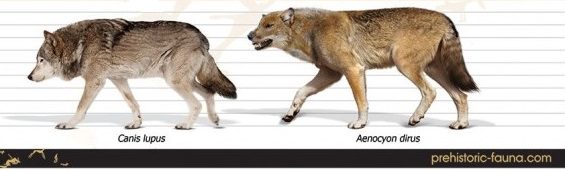
 An article from 9 months ago from the New York Times highlights the process of de-extinction, and the efforts of a team of scientists to attempt to bring back the dire wolf species. Basically, DNA was extracted from the fossils of dire wolves, which was then studied. The scientists were able to edit 20 genes of gray wolves to have the distinct features that they discovered in the dire wolves. Embryos were then created of these new wolves and implanted in a surrogate mother, who then gave birth to three healthy wolves. These wolves are bigger than the average gray wolf and have a dense fur coat, both traits that belonged to dire wolves. The experiment is considered a success, and while these particular wolves remain in captivity, these scientists believe that the technology that was used and developed in this experiment could be used to help preserve endangered species today. They believe that they can make copies of endangered species and release them to the wild to help improve genetic diversity and help increase the species's numbers.


Did We Really “De-extinct” the Dire Wolf? - Ohio History Connection 

 Of course, these animals aren't going to ever actually be dire wolves, just animals that are coded to look like them. Bringing back an animal from extinction is an impossible task, however the animals that can be de-extinct can offer a unique perspective into what life looked like on this planet thousands of years ago. Also, if this technology can actually be used to help save animals from extinction and this is just the start, then there seems to be a bright future ahead of this planet's biodiversity.


Thursday, April 24, 2025

Humans Neared Extinction, and What Did It Cost?

 Roughly 900,000 years ago, the human population dropped to 1,200 people, and remained this small for about 100,00 years. Climate pressures dropped the population, and decreased genetic variation by 66%. 


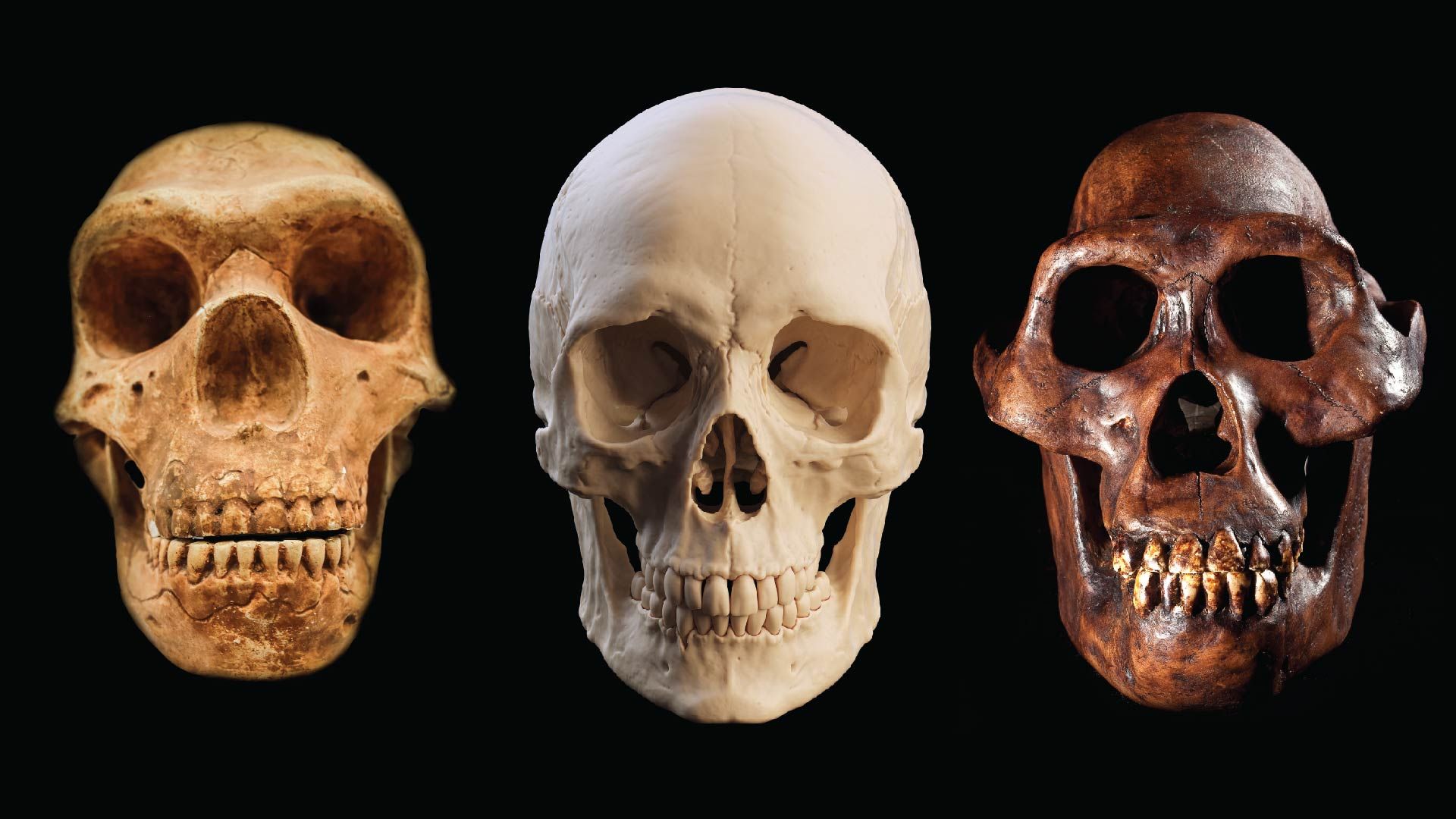
Scientists were able to use modern human DNA, rather then attempt recovering DNA from such ancient fossils, to determine the changes that occured due to this intense genetic bottleneck. This decrease in population, and then recovery leading to the growth of human populations, is what may be credited with the separation of modern humans from neanderthals. Two ancestral chromosomes merged to form what is now chromosome 2. This would be where human defining traits would evolve, like complex social behaviors, and increased cognitive development. 

This near extinction is what can explain the large gap in fossilized Homo sapiens from the time period.

Article

Research

Wednesday, November 20, 2024

How did the Wrangel Island Mammoths become extinct?

A recent study published in Cell Press challenges the central hypothesis of what caused the woolly mammoth extinction on Wrangel Island around 4,000 years ago. The research team, led by evolutionary geneticist  Love DalĂ©n, studied 21 wooly mammoth genomes that spanned throughout the 50,000 years of their existence, including when they resided on Wrangel Island. These mammoth genomes were collected from mammoth bone fragments, tusks, and teeth found in Siberia and Wrangel Island to extract the DNA for their analysis. The findings showed that despite being a small population of at most eight mammoths, the population still grew to about 200-300 individuals and remained stable until their extinction. The population would then continue to live for thousands of more years, which contradicts the idea that the population of the mammoths on Wrangel Island was always on a decline.
Contrary to the earlier hypothesis, which suggested that inbreeding and genetic mutations caused the mammoth's extinction, the analysis presented that the most harmful genetic mutations in the mammoth population became less frequent over time, most likely due to natural selection wiping out the carries of the harmful genetic mutations. This indicates that the Wrangel Island mammoths were not genetically doomed from the start but were wiped out by a significant event like a disease outbreak or a sudden environmental change that led to the mammoth's extinction. Using computer modeling, the research team compared the genomes of the found woolly mammoths to the genomes of modern elephants and humans to determine the impact of genetic mutations over time. The research team concluded that while some detrimental mutations did appear, the overall genetic health of the population remained stable. This discovery challenges the original hypothesis of "mutational meltdown" for the extinction of wooly mammoths on Wrangel Island. This hypothesis believed that the small isolated population of wooly mammoths had gone extinct due to an accumulation of harmful mutations during inbreeding, leading to the extinction of the woolly mammoths on the island. This study now proposes that the Wrangel Island mammoths were genetically equipped to survive for much longer if external factors had not intervened, leading to the extinction of the population.
I believe it was an excellent original hypothesis about the extinction of the Wrangel Island mammoths, as it makes sense that too many gene mutations occurred during inbreeding. However, with this new evidence proving the original hypothesis wrong, how many other hypotheses about how certain species went extinct are accurate? Understanding these reasons for extinction allows us to understand past ecosystems that used to exist and how they worked; it also allows us to plan accordingly as a species to ensure we are wiped out the same way as other species. So, as we further our research into the extinct species, we should consider multiple factors for the reason for extinction rather than assuming only one genetic factor.
https://www.sciencenews.org/article/last-woolly-mammoths-species-extinct
https://www.snexplores.org/article/why-woolly-mammoths-died-out
Monday, November 18, 2024

Resurection of the Mammoths

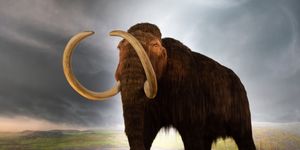
woolly mammoth from royal victoria museum, victoria, british columbia, canada, 2018 


    The potential of using genetics to splice together the genome sequence of extinct has long been questioned by those of science and science fiction. Colossal ,a biotech company, has made it their life's work to bring back the long extinct woolly mammoth. They believe that with the help of closely related ancestors like the Asian elephant which shares 99.1 match with the mammoth. They are working to splice the DNA's together in an almost Jurassic Park esque. They then will create a viable embryo of a woolly mammoth to then implant into an Asian elephant which hopefully will successfully carry the first woolly mammoth back into the world. 

    If brought back they plan reintroduce the woolly mammoth into Siberia which closely represents their original habitats 4,000 years ago. They had once walked Siberian lands in a way that broke up the soil to allow for local fauna to emerge and thrive in the frigid climates. This is a somewhat strange but effective solution that may potentially give some relief to the ever growing climate change issue increasingly growing all over the world. If completely successful we may see the revival of both an extinct species and our climate. It also may pose new research towards the revival of other extinct species.


Sources:

https://www.msn.com/en-us/news/technology/extinct-for-over-4000-years-scientists-are-inching-closer-to-bringing-back-the-woolly-mammoth/ar-AA1ukMnA

https://www.popularmechanics.com/science/animals/a42708517/scientists-reincarnating-woolly-mammoth/ 

Thursday, November 23, 2023

For The First Time, Researchers Decoded the RNA Of an Extinct Animal

 For The First Time, Researchers Decoded the RNA Of an Extinct Animal


The article discusses an animal known Tasman tiger that became extinct in 1936. The last Tasman tiger died in a zoo in Hobart, Tasmania. This extinct animal had stripes like a tiger from its shoulder to its tail with the facial structure of a wolf. A bounty was put in place to hunt these animals to extinction in the 19th century. The importance of decoding the RNA was to uncover how the tiger's cells functioned which was said by Emilio Marmol-Sanchez. Six small samples of the muscle and skin were collected from the tiger where each sample was made/ into powder and researchers added chemicals to be able to separate the nucleotides. Researchers gathered different protein-coding RNA molecules in the skin and muscles of the tiger. 250 thylacine micro RNAs were found that controlled how the cells moved. I found this article interesting because this was my first time hearing of a Tasman tiger. The scientists even tried to modify the genes of the fat-tailed dunnart to try to attempt de-extinct the organism using the Tasmans closest relative..


Sunday, April 7, 2019

Killer Whale Genetics Raise Inbreeding Questions

The NOAA Fisheries Northwest Fisheries Science Center have discovered that only about 26-76 whales in the Southern Resident population are breeding. Scientists are concerned since this endangered species is compromising their survival rate with inbreeding. Inbreeding will cause this species to be less resistant to change and will eventually cause their numbers to decrease even more. This study has also found that their inbreeding could explain why many Southern Resident calves die at birth. Usually different species of whales maintain their diversity when they join other family groups. However, the Southern Resident population does not follow this pattern. When whales of this species are born, they stay with their mothers and families for the rest of their lives. After analysis, scientists have found that two males have fathered over half of their population since 1990. Scientists are still trying to figure out why this species has a higher rate of inbreeding so that they can try to start to expose the whales to new mates.
It is extremely disappointing to see a species compromise their own survival rate and possibly increase their chances of extinction. Whales are not very easy to manipulate and the ocean is not the easiest place to work with. Most biology students understand the severe consequences of inbreeding and this species is already experiencing some of them. Some scientists believe that if they are able to increase the salmon population, the whales will feel more comfortable to leave their original family groups and mate with other whales. I understand how this strategy may work, but I personally believe that we cannot change this species's natural tendency to stay with their own family groups. I do not think that we will be able to change their environment so much that we would be able to change their natural behavior.


Wednesday, November 21, 2018

Saving Every Type of Tiger Left Through Genetics

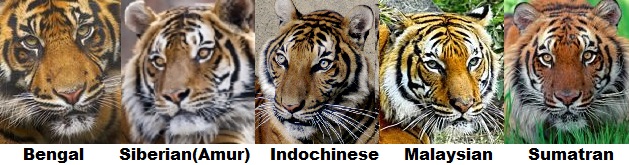
Tigers around the world have been going instinct and are now endangered. Less than 4,000 tigers remain in the wild. A century ago, about 100,000 tigers roamed Asia's forests. But now most tigers survive in captivity than in the wild due to habitat destruction, poaching, and more. Molecular geneticist, Dr. Shu-Jin Luo from the Peking University, conducted a study in order to account all types of tiger subspecies that are left to properly save them. Latest analyses confirmed nine total subspecies with six of them still living: Bengel, Amur, South China, Sumatran, Indochinese, and Malayan. The Caspian, Javan, and Bali tigers already have been lost to extinction.


Compared to Dr. Lou's and her colleagues' past findings of just one tiger genome sequenced, now they had whole-genome sequence analyses of 32 preserved wild tiger specimens from around the world. Six distinct subspecies of tigers were broken down from the statistical analysis of 1.8 million DNA variants across the tigers' genomes. This information also opens new doors into the evolutionary history of tigers. For example, they found genes associated with smaller body sizes  in Sumatran tigers of Indonesia relative to most mainland tigers due to the small prey (deer and wild boar) they hunt for. This information agrees with Dr.Luo's morphological observations and ecological expectations. Dr. Luo concludes, "To preserve such genomic signatures is to preserve evolutionary uniqueness that tigers have accumulated over thousands of years. We need to respect this uniqueness by maximizing our efforts for all tiger subspecies."

The Asia director of science for the Wildlife Conservation Society, Dr. Ullas Koranth, praising Dr.Lou's research but believes in prioritizing more in the  maintaining and recovering of tigers instead. In my opinion, I agree with Dr. Karanth. Although I also believe that collecting genetic information for the uniqueness of their genome is of high importance, the conservation and rebuilding of the tiger population is crucial and should be done initially. We should save them first and then document them. Tigers are imperative as they act as keystone species for most ecosystems, which is why we should be more aware of their endangered population.

Resources:
https://search.proquest.com/nytimes/docview/2125563003/fulltext

Saturday, November 25, 2017

New genetic clues to the extinction of the passenger piegon


We have driven plenty of species to extinction. Much like the passenger pigeons. humans have exterminated passenger pigeons  by ruthless hunting in the late 19th century. Passenger pigeons had been the most abundant bird in North American. A single flock could contain more than a billion birds. Scientist now wonder why some pigeons did not survive in remote areas. A new study has been done on the pigeon’s genome. Published in the Science Journal it is said that the passenger pigeons did not have much of genetic diversity across the its vast population. Scientists looked at the DNA of the passenger pigeon and the study concluded that much of the bird;s genetic code shows signs of strong natural selection. The species was abundant for tens of thousands of years even in the face of major environmental and climate change and despite it all the species was resilient. I found this article to be interesting because I would have not thought that scientists have could find out why the passenger pigeons went extinct through genetic engineering.


Wednesday, April 5, 2017

Genetic History of European Beaver

http://uploads.neatorama.com/wp-content/uploads/2009/06/beaver_pho34.jpg


The family Castordae has only two living species left, Castor canadensis, the North American beaver, and Castor fiber, the European beaver. This was not always the case for the Castordae family, but over time only two species survived, and it was a struggle to make it to today. Castor fiber, the European beaver, has recently the topic of research at the University of York, UK and the University of Potsdam, Germany. They wanted to compare and contrast the DNA genomes of the modern day European beaver to it's relatives that have went extinct as far back at 10,000 years. Through the study they looked at 48 DNA samples of extinct beavers ranging rom a few hundred years old to 11,000 years old, and 152 modern day sequences. Their findings show that the beavers can be divided into three groups, the tow main were found in western and eastern Europe, and the third was found in the Danube basin, but went extinct 6,000 years ago. The findings show that the most genetic diversity was in the past when most of the species coexisted, but know the genetic variation is relatively low.

Only the Castor fiber survives, and can be found throughout Europe and into Northern Asia. It is a shame that the genetic diversity was lost along with so many species. In fact the modern European was almost hunted to extinction in the 19th century, with only 1200 left at the lowest population point. The lack of species and interbreeding or the bottleneck of the modern species may have been the culprit to the low genetic variation.  

Thursday, March 16, 2017

Cheetahs are in Danger of Extinction

      Even though cheetahs are fast they cannot outrun their chance of extinction. Sadly, there are only about 7,000 cheetahs left worldwide according to the article Cheetahs in Danger of Extinction, Researchers Say. The main problem for this animal is that the cats they prey on live in an area in Africa and Asia where they are unprotected. People collect these cats to sell and make money from them. Also, cheetahs are losing their habitats. This is a huge problem because not having a habitat means small chance of survival. In the article, it stated, “The economic benefits or ecotourism and direct rewards for reducing poaching could be possible incentives.” So, there might be some ways to save cheetahs and help them. They might not be doomed yet. Personally, I believe this should not be taken lightly. If cheetahs become extinct this will create all sorts of problems in the food chain. Lions will be effected by this greatly as well because lion prey on cheetah. So, now lions will have less food which will create a situation that is hard for them to survive. This pattern will just go on and on effecting other animals. I think researches must get this point across that it is important for humans to try and do everything in our power to increase their population size as well as get them out of the danger zone of extinction. 


Wednesday, March 8, 2017

Why did Woolly Mammoths Go Extinct?

https://www.nytimes.com/2017/03/02/science/woolly-mammoth-extinct-genetics.html?

Geneticists have recently been able to sequence the genome of ancient woolly mammoths in order to determine the factors that may have led to the species extinction. Previously, the factors of predation or changing climate were able to ruled out, leaving many scientists to speculate about the cause of the their extinction. The genomes of two isolated populations were compared to each other and it was determined that the one population was about 13,000 while the other was only 300. The two genomes different greatly from one another, and it was discovered that the mammoth in the smaller population experienced many genetic mutations that halted the synthesis of proteins, caused them to lose sense of smell, become unable to detect pheromones, and have thin hair that could not protect them from the cold. This was referred to as a "genetic meltdown" and can be attributed to the small population. It is speculated that the small population was due a to lack of water. This evidence supports theories from biologists that small populations lead to a lack of natural selection, so harmful mutations/genes are inherited, leading to the eventual extinction of a species.

Thursday, May 5, 2016

Save The Northern White Rhino!

 
 In 2015 a group of scientists convened to discuss the imminent extinction of the northern white rhinoceros and the possibility of bringing the species back from the verge of extinction. A publication of this meeting is designed as part of the ongoing effort to raise awareness for the extinction crisis facing rhinos and many other species. Above, the northern white rhino is seen squaring up for a fight in Kenya. The northern white rhino is very uncommon, with only three living individuals left on this planet and could be considered doomed for extinction. But now researchers have proposed a road map for preserving such endangered species through techniques that use stem cells and assisted reproduction technology.

With the new methods proposed in this article, we could eliminate the chance of species extinction if the proper cell extraction techniques take place. If enough cells are found of already extinct species, possible re-population could even happen! Imagine the possibilities of cellular recovery if this method deems possible. This technique would open the door for so many branches of science and could lead to even more groundbreaking discoveries.