Showing posts with label conservation biology. Show all posts

Saturday, September 23, 2023

Genetic Drift in San Francisco Garter Snakes


        San Francisco garter snakes are found along California's southern coast and live in aquatic and upland environments. The population has recently experienced significant habitat loss due to urban development and groups within the population have become isolated from one another. The isolated populations have generated cause for concern among conservationists due to the possibility of genetic drift. Genetic drift is the loss or disappearance of genes within a population, reducing genetic diversity overall. To determine if genetic drift is occurring in San Francisco garter snake populations researchers obtained small tissue samples from individuals in geographically isolated populations for genetic analysis. 

        Researchers used the tissue samples to quantify the DNA and establish the number of genes, compared loci, and determine the sex of the individuals. The DNA was then compared with individuals from other geographic sites. Researchers determined that the populations were experiencing significant genetic erosion due to their isolation. This genetic drift is crucial for conservationists moving forward since the species is currently endangered. The study published in 2020 determined that the populations were experiencing genetic drift, it would certainly be interesting to redo this study to determine if the genetic drift is increasing and what conservation efforts would be most beneficial. 

Friday, November 19, 2021

As New Zealand’s Endangered Kākāpō Rebounds, Researchers Measure Genomic Signs of Inbreeding

The Creature Feature: 10 Fun Facts About the Kakapo | WIRED

The Kākāpō bird which used to flourish in New Zealand is now endangered due to mammalian predators. The population has now dwindled down to 201 birds which are on a predator free island and studied by conservationists and geneticists. Currently, due to the genetic bottleneck this bird faces, geneticists are studying the health impacts of inbreeding within this small population. The results from a study they conducted show that inbreeding isn't reducing their survival chances and that introducing genetic variety does not always produce the intended expectations. Since creating complex multigenerational pedigrees would not be possible for the founding population of this species, researchers began to use DNA sequencing and genome-wide mapping of single nucleotide polymorphisms for analysis. After studying this, they realized that the one male from the New Zealand mainland population as well as the birds found in the Stewart Island population were both inbred. This study led to an interesting concept of how combining two inbred populations in an attempt to diversify can actually tend to increase deleterious alleles. In conclusion, by using different methods to compare levels of inbreeding with survival in the Kākāpō bird suggested that decreased inbreeding did not relate to improved survival chances. This study has helped conservationists and researchers learn more about the species and how they can expand their efforts for the future. 

Thursday, April 11, 2019

CSI Meets Conservation Biology

According to a Science Daily article  Stanford University has found a way to protect endangered species by studying their DNA. Protecting endangered species has many challenges and can cost a fortune for conservation scientist and researchers. By being able to study a species DNA, scientist can gather valuable information such as inbreeding, population history, natural selection and evolution. However, the current approach requires large amounts of DNA which can be very difficult to obtain when dealing with endangered species. Standford's Program for Conservation Genomic and India's National Center for Biological Sciences decided to collaborate and create a new sequencing method that amplified the small bits of DNA that were obtained using different samples.

Endangered Species

The researchers found DNA in the endangered animal feces, shed hair, saliva found on killed prey and simultaneously tested them in the same test tubes. This method and technology proved to be highly effective at comparing the genetic characteristics of the DNA. The researchers stated this was an easy lab technique to implement, and can be done relatively cheap because it did not need extensive lab equipment. The data generated could be shared easily across other labs. The technique details, material and methods can be found, here. The current methods to gathering information take a long time, and when it comes to endangered animals, time is something that they don't have. The researchers at Standford have made their methods freely available to everyone-which I think is great because it makes it easier to share data across borders.

Thursday, January 24, 2019

Guarumo Trees and Three-toed Sloth Survival

In an article entitled Where Sloths Find These Branches, Their Family Trees Expand, written by Veronique Greenwood for The New York Times,it talks about a recent study reporting how sloths are more likely to survive with more guarumo trees in their cocoa plantation.   This is especially important because the findings show how a vulnerable species is still capable to adapt and find their ecological niche even when the habitat is disturbed by human activity.


A current PhD student, Mr. Garces-Restrepo, used a map of trees in sloths favored territories to find a connection between density of a specific tree species and the offspring number/survival rate.
This study was done by not only using radio collars that tracked location but also taking DNA samples in order to tell who is producing the most offspring. Throughout this study, 5 adults who died had lower numbers of guarumo tree in the area than those who survived. More so, from using these DNA samples they were able to see what areas the sloths are coming from which leads back to the idea that adults who had more guarumo around them produced more offspring.

Wednesday, November 21, 2018

Saving Every Type of Tiger Left Through Genetics

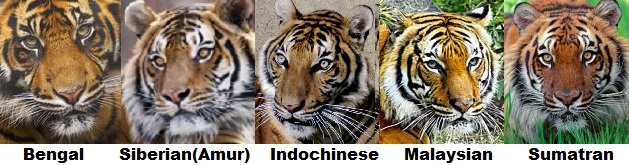
Tigers around the world have been going instinct and are now endangered. Less than 4,000 tigers remain in the wild. A century ago, about 100,000 tigers roamed Asia's forests. But now most tigers survive in captivity than in the wild due to habitat destruction, poaching, and more. Molecular geneticist, Dr. Shu-Jin Luo from the Peking University, conducted a study in order to account all types of tiger subspecies that are left to properly save them. Latest analyses confirmed nine total subspecies with six of them still living: Bengel, Amur, South China, Sumatran, Indochinese, and Malayan. The Caspian, Javan, and Bali tigers already have been lost to extinction.


Compared to Dr. Lou's and her colleagues' past findings of just one tiger genome sequenced, now they had whole-genome sequence analyses of 32 preserved wild tiger specimens from around the world. Six distinct subspecies of tigers were broken down from the statistical analysis of 1.8 million DNA variants across the tigers' genomes. This information also opens new doors into the evolutionary history of tigers. For example, they found genes associated with smaller body sizes  in Sumatran tigers of Indonesia relative to most mainland tigers due to the small prey (deer and wild boar) they hunt for. This information agrees with Dr.Luo's morphological observations and ecological expectations. Dr. Luo concludes, "To preserve such genomic signatures is to preserve evolutionary uniqueness that tigers have accumulated over thousands of years. We need to respect this uniqueness by maximizing our efforts for all tiger subspecies."

The Asia director of science for the Wildlife Conservation Society, Dr. Ullas Koranth, praising Dr.Lou's research but believes in prioritizing more in the  maintaining and recovering of tigers instead. In my opinion, I agree with Dr. Karanth. Although I also believe that collecting genetic information for the uniqueness of their genome is of high importance, the conservation and rebuilding of the tiger population is crucial and should be done initially. We should save them first and then document them. Tigers are imperative as they act as keystone species for most ecosystems, which is why we should be more aware of their endangered population.

Resources:
https://search.proquest.com/nytimes/docview/2125563003/fulltext

Sunday, July 8, 2018

Rhino Embryos Made in Lab to Save Nearly Extinct Subspecies


The number of northern white rhinoceros have dropped substantially to the single digits over the past decade. The few that remain all have severe reproductive issues. Hopes of regenerating the subspecies only became worse when Sudan, the last male northern white rhino, died in captivity last spring. “We thought, ‘The story’s over’,” stated Dr. Thomas Hildebrandt. However, it soon became far from over as Dr. Hildebrandt and his colleagues created hybrid embryos that can possibly be implanted into female surrogate southern white rhinos. The expectation is to see the first purebred northern white rhinos through this method in the next three years or so. However, a major downside is the likelihood of severe inbreeding in order to produce purebreds. This could cause reproductive issues for the hybrid subspecies and lead right back to square one.


Although I applaud the technical sophistication and advantages that have been made throughout this study, it is also concerning that too much technology might do more harm than good. Nonetheless, if this experiment proves to be a success, it could lead to the survival of other extinct subspecies.
Related article

Tuesday, May 3, 2016

Tweaking Genes to Save Species

There was an article published earlier this month in The New York Times entitled Tweaking Genes to Save Species. This article explains how bio-technologists have engineered mosquitoes with a lethal gene in order to be released in areas where mosquitoes carrying the Zika virus are prevalent.  Another group has discovered a way to engineer mosquitoes that spread sterility in the mosquito population;
this technique is called gene drive.  If regulators approve these techniques it may serve other purposes besides being used as weapon against the spread of mosquito-carrying illnesses.

These remarkable techniques could be used to protect the earth's biodiversity. This type of meddling makes many conservation biologists nervous because of the risk and unpredictability. However, we may have to accept the risks associated with artificial manipulation of a natural population to save species in a world where species are going extinct daily.  An example of how this technique can help preserve biodiversity is by protecting at-risk species. For example white-nose syndrome, a fungal disease, is destroying bat colonies throughout North America.  Through gene-editing technology a less lethal form of the fungus administered to the bats at risk which may enable them to develop a resistance.

These advanced genomic techniques have the potential to restore lost genetic diversity.  Ryan Phelan, an executive director of Revive and Restore says,"We're in a unique period where we've got the technology potentially in place to start changing the course for a lot of these species before they go extinct." However appealing these techniques may seem I think we should exercise extreme caution because it is arrogant of us to think we can  plan what will happen. There have been many cases
 how human environmental meddling has had devastating consequences.  A famous example of this is how Australians brought back poisonous cane toads from South America in order to control the
 grey-backed cane beetle.  These toads have been extremely destructive ever since.  Ecosystems are highly complex and I think it is impossible to predict how genetically engineering nature will unfold.

Monday, May 2, 2016

Using Bats to Test A New Approach to the Fight Against Fungus

Fungal species have amounted to disastrous events for a diverse range of species throughout time. Hundreds of animal and plant species alike have went extinct due to strains of these silent killers. A focus recently has been the devastating effect that Pseudogymnoascus destructans have on bats. This fungal variety in particular infects bats during hibernation and leads to the lethal white-nose syndrome, causing a 90% population decrease in multiple bat species throughout the last decade.


Alike many fungal diseases affecting species worldwide, there is no known solution for most of these diseases. Since wiping out a fungal species could create more problems for the surrounding ecosystem, geneticists plan to genetically weaken the fungus to allow the species to eventually build an immunity to it. The easily sequenced and easy to grow Pseudogymnoascus destructans makes it a great model for this worldwide epidemic. 

Less virulent strains of the fungus can be genetically modified using RNAi or CRISPR. Another strategy is going to be creating a virus to infect the fungus, called a mycovirus, and in turn reduce its fitness. Experiments are currently underway by the scientists over at Revive & Restore to choose the most successful strain of the fungus to then be deployed at hibernation sites. The severity of the white-nose syndrome will then be monitored over time to see the conclusive effects of this strategy. 

Read the whole article here! 

This research caught my eye because not only do I really enjoy acts towards the conservation of living organisms, but for it to be done genetically in a way that conserves the organisms on both ends of this fight to create a peaceful solution is really awesome to me. The evolution of genomics is increasing at such a great slope and I'm excited to see where it will take us in the field of health and wellness for all living organisms. I also am really looking forward to hearing about what comes of the current research presented in this article.

Sunday, April 3, 2016

DNA of the Web


30% of people in the US are afraid of spiders while others are the ones to kill or capture them. Charles Xu of the University of Notre Dame along with his team were the ones to create a way to study spiders without even having to interact with one. With the use of black widow spiders and their prey, the house cricket they found a way to non invasively extract, amplify and sequence MitochondrialDNA that was left on the web. A spider's web can hold the DNA of itself and its prey for up to 88 days. Their lab study is the first to have a source of noninvasive genetic material and could help many different field scientists in the future.

Some of the people that could find use in this new technique are conservation researchers, pest management, and biodiversity surveyors, among others.Conservation can benefit from this by taking a web in a particular area of study and find out what species had been in the web. With this information they could possible help that particular endangered spider or insect by conserving that area. Pest management could use the technique to find what spider species are hiding in crates being imported from one place to another. They could also find what species are invading households in an area. Though much more testing is needed, especially out in field, there is a good outlook for these types of scientists.


This was interesting to find due to the fact that it is a noninvasive technique. Which seems unrealistic because of how small the species are. I am not a huge spider fan or insect fan, but I can see how this is important to these types of science. I wonder if they can figure out how to perfect this technique if they could use it for other areas in science.

Monday, March 21, 2016

Genetic Rescue Needed to Save Island Foxes


The island fox is one of the fastest mammals to recover their populations after being placed under the endangered species act in 2004. Three out of six populations have successfully been rehabilitated, however, one population may need some assistance. An associate professor at the College of Natural Sciences, Department of Biology led a team of researchers in preforming the most in depth genetic study of island foxes in California, his name is Chris Funk. 

The results of the foxes genetic studies concluded that all six island fox populations permitted a designation of six subspecies. However, it also proved that one individual population on the San Nicolas Island may require some genetic assistance to prevent the population from extinction. To reduce this populations risk of extinction a process called genetic rescue may be necessary. 

The genomic study showed the San Nicolas population of foxes had a dangerously low amount of genetic variation. A low amount of genetic diversity can prove to be harmful to any species. This can lead to low survival rate or low reproductive success,or it can reduce the populations ability to resist disease outbreak and adapt to varying environmental changes. If all individuals of the population have identical genes there is no “survival of the fittest”, a simple disease may wipe out the entire population.

To avoid extinction, scientists are contemplating using genetic rescue. This means island foxes from other populations will be brought into this at risk population, and this will increase the gene pool of the population. The foxes chosen to increase the gene pool of the vulnerable population will be chosen using the collected genetic information of each population. The foxes with the most desirable traits for the San Nicolas foxes environment will most likely be selected for introduction. 


Genetic diversity is an important aspect of a healthy thriving population. It allows a population to have an overall chance of survival during an outbreak of disease, or serious environmental change, like climate change. The individuals with desirable traits to combat these issues will survive, those with non desirable traits will not survive. With a lack of genetic diversity it is likely all individuals in the population possess the undesirable trait, so to me this idea of genetic rescue can have serious benefits for this population. It has said to be successful in other populations, so I am curious to see if it is successful in this population of island foxes. 

Thursday, September 3, 2015

Using Genetic Diversity to Find Potentially Endangered Species

Statistics may help in identifying species that will soon become endangered, allowing conservation groups to intervene before it is too late.

Cheetahs are poster children for low genetic diversity,
as they can barely breed to due to how inbred the population is.
Photograph credit: Diana Robinson on flikr
A Purdue University study led by Janna Willoughby estimates likelihood of extinction of a species by by seeing how genetically diverse a species is. Genetic diversity is the frequency of different alleles in a population. The more diverse a population is, the more likely it is to contain individuals who can adapt and survive changes in environment.

Previously, endangered species were identified by number of mature adults, range size, and any evidence of population decline. The study has found that species listed as threatened show decreased genetic diversity. As it stands now, genetic diversity does not factor into a species being labeled as threatened. If a species is numerous in population but has low genetic diversity, it wouldn't be put on the list of threatened species until the population falls below a threshold. And smaller populations encourage inbreeding and suffer from loss of diversity, which can start a vicious cycle that could catapult the species into more danger.

Hopefully, once the team's methods are perfected, they may end up helping conserve species that we previously didn't think needed such help.

You can read the full news article here
To see Willoughby's early paper, click here or wait for the November issue of Biological Conservation

Sunday, March 8, 2015

Hybridization of American Black Ducks and Mallards

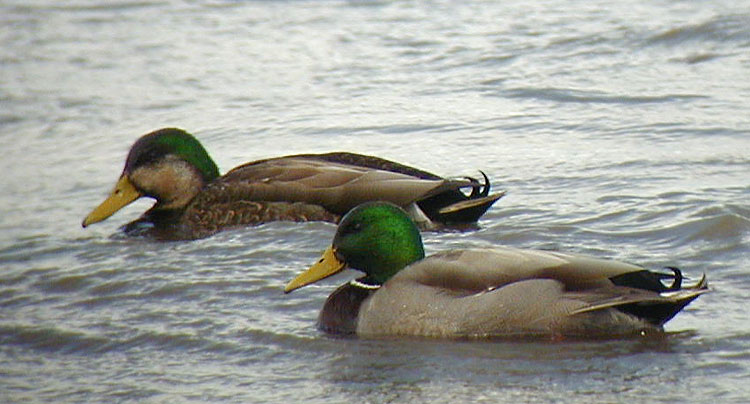
Anas platyrhynchos, also known as the Mallard, is a species of duck that is known to hybridize with many other duck species such as the Northern Pintail, Anas acuta, the American Black Duck, Anas rubripes, and many others. The American Black Duck has been suffering population declines for decades now due to over-hunting and habbitat loss. While they are still one of the most abundant species on the marsh, researcher has been done to determine the purity of the bloodlines. Currently at the Edwin B. Forsythe National Wildlife Refuge in Galloway, New Jersey research is being complied to shed light on this subject. Black Ducks are trapped and blood samples are taken to be analyzed. Some speculate that the Black Duck population, while visually appearing "fine', may be in serious trouble due to the inbreeding. More research needs to be done into the extent of the hybridiztion problems that the Mallards are causing, but the general population can contribute if they so choose. Mallards were originally kept as game birds and "pets" so if hunters were to focus more on these birds than other native birds, populations of natural species would be likely to increase overt time. This link gives many of the species that Anas platyrhynchos has hybridized with for reference.

Thursday, February 13, 2014

Marius the Giraffe: The Debate Between Geneticists and Animal Rights Activists


   This is Marius. He lived in a zoo in Copenhagen, Denmark. He spent most of his days walking around his enclosure, grazing on acacia leaves and interacting with his fellow giraffes. This past Sunday, Marius was lured out of his enclosure with a piece of bread and shot in the head with a bolt gun. The zoo's reasoning of why they did this and then dissected his body in front of visitors and fed him to the lions? His genetics. Apparently, the genes that Marius had were over-represented among giraffes in captivity, and therefore, he needed to be put down. Needless to say, this has outraged much of the public and animal rights activists, but many geneticists are supporting this decision. Their argument is that when animals in captivity are not properly monitored, inbreeding occurs, and can hurt conservation efforts. 
   While I agree that conservation is very important when it comes to threatened and endangered species, I simply cannot agree with euthanasia when it comes to a healthy animal. Do I believe that he should have become a sire to all of the other female giraffes? Well no, of course not. But there were other options that the zoo had that did not involve a bolt gun. Marius could have been relocated to somewhere else that would take care of him, or he simply could have been sterilized so that he was unable to reproduce. The Copenhagen Zoo did not even stop to think and consider either of those options, even after mass petitioning from the public and an offer from Yorkshire Wildlife Park to take him. That is the part that I believe is completely wrong and inhumane. Marius was only 18 months old, still just a baby in giraffe terms, since males are not sexually mature until 4 or 5 years old. There is not even a remotely acceptable reason as to why he needed to be killed. Hopefully this unfortunate event can act as an impetus to stop zoos from killing animals unnecessarily in the future.       

Article Link: http://www.independent.co.uk/news/world/europe/the-killing-of-marius-the-giraffe-opens-an-important-debate-about-genetics-animal-rights-and-zoo-inbreeding-9120219.html

Related Link: http://www.giraffeconservation.org/

Tuesday, April 5, 2011

Save the Animals; DNA Fingerprinting of Endangered Species.


Till now there has been no reliable methods for counting the number of endangered species in a given area. Setting up camp and spying to catch a glimpse of a passing species has been the best known method to site the number animals in a given area. Conservationists don’t have to sit watch anymore due to a new genetic method to getting significant and accurate totals of not only the animals on site but also the ones that are “just visiting”.

Andrew DeWoody, a professor of genetics at Purdue University; Jamie Ivy, population manager at the San Diego Zoo; and Todd Katzner, a research assistant professor at the University of West Virginia, according to an article in The Hindu: India’s National Newspaper found that visual counts of imperial and white-tailed sea eagles in the Narzum National Nature Reserve of Kazakhstan were underestimated. By using DNA from eagle feathers gathered in the area the researchers were able to get DNA fingerprints for each bird. 414 birds were identified from this DNA evidence, that is three times as many birds as they had originally estimated through observation, and two and a half times more then was estimated through modeling.

The flaw in the original methods of observing was that the birds are difficult to capture, mark, and recite, this makes it hard to differentiate between the birds. Keeping track of the birds that are coming and going also causes discrepancy in their numbers. From extracting the DNA of feathers found around hundreds of roosting sites they were able to determine that hundreds of eagles had recently visited the site.

Knowing that the DNA of animals can help save endangered species is reassuring to the conservation biology field. By taking the DNA fingerprints of other endangered species this could help show just how small a species has become, this knowledge may bring to light how urgent the call is to save different species. I hope more Wild Life Reserves use this method to save the animals.