Showing posts with label biodiversity. Show all posts

Wednesday, November 19, 2025

Extinction Solution for Thousands of Species Thanks to Gene Editing


       Ethical genome engineering has been making exceptional progress in the stride to rehabilitate endangered species and their compromised ecosystems.  Professor Cock Van Oosterhout and Dr. Stephen Turner's team of geneticists and bio-technologists claim recovery of lost genetic diversity in endangered species can be restored with the help of historic DNA samples. Van Oosterhout states "Gene engineering provides a way to restore that variation, whether it's reintroducing DNA variation that has been lost from immune-system genes that we can retrieve from museum specimens or borrowing climate-tolerance genes from closely related species". This statement suggests that by figuring out what gene is compromising a species, such as lack of climate change tolerance, scientists can extract a wanted gene from a relative species and introduce this to the compromised species. 
    One example of this successful application is the restoration of the once critically endangered pink pigeon (pictured below). This species was down to 10 known birds and brought back up to over 600, thanks to three key methods: restoration of variation that was once lost, facilitating adaptation, and reducing the passing of harmful mutations to following generations. 
    

Figure 1: newborn genetically altered pink pigeon 

    Some risks factors of this method include unintentional genetic modifications and reductions, therefore until percent error is mitigated, this approach remains experimental. 
    This method of attempting to help endangered species seems simple, yet practical. By introducing new technologies with what scientists already know about the species and their ancestors,  solutions can be suggested and practical applications can be made. Although gene alteration is not a replacement to species protection,  this is a hopeful positive step in the rehabilitation of many organisms, and perhaps one day the term "extinction" will be endangered. 


Sources

https://phys.org/news/2025-07-gene-solution-endangered-species.html
https://www.sciencedaily.com/releases/2025/07/250720034017.htm 

Wednesday, November 20, 2024

2 Million-Year-Old DNA Reveals Secrets of an Ancient Arctic Ecosystem

Scientists have made an incredible discovery: the oldest DNA ever found, dating back more than 2 million years, has been unearthed in Greenland. This ancient DNA, preserved in sediment from the Kap København Formation, offers a fascinating glimpse into an Arctic ecosystem that once included reindeer, hares, mastodons, and plants like birch and poplar trees. This finding provides a unique snapshot of how life thrived in the challenging environments of the Pleistocene epoch.

To piece together this ancient world, researchers used advanced techniques to extract and study environmental DNA (eDNA) from soil samples. Instead of identifying individual species, they reconstructed entire ecosystems, showing how plants and animals coexisted. This research not only helps us understand the distant past but also provides insights into how life adapts to major climate changes, a topic that feels more important than ever.

A related study in Nature shows the broader potential of eDNA, showing how it can unlock secrets from Earth’s ancient history and even predict future biodiversity patterns. Scientists are now exploring other locations, like polar ice cores and deep-sea sediments, to uncover more hidden stories about the planet’s past.

I think this discovery is a game changer for understanding our planet’s history. It’s mind blowing that scientists can reconstruct ecosystems from millions of years ago using tiny fragments of DNA. What really stands out to me is how this research connects the past to the future. By learning how ancient life adapted to extreme climate shifts, we can gain insights into how today’s ecosystems might respond to climate change. This isn’t just about studying history, it’s about using those lessons to protect our future.

SITES USED

https://www.the-scientist.com/scientists-unearth-the-oldest-dna-ever-found-70820

https://www.nature.com/articles/d41586-022-04376-y?utm_

DNA & RNA Purification

Tuesday, April 9, 2024

4000 Year old teeth provides evidence to support the "disappearing microbiome" hypothesis

 Two teeth, from the same man, were excavated from Killuragh Cave, County Limerick and studied by archaeologists from the Atlantic Technological University and University of Edinburgh. The teeth showed advanced dental decay and had a high amount of Streptococcus mutans DNA, a strain of bacteria that is linked to gum disease tooth decay. Though S. mutans is common in modern mouths, it is very rare for the strain to be seen in ancient teeth, which makes this finding in these teeth vital for creating a truer version of the lineage of mouth bacterias. More and more dental cavities have become common due to sugary foods being introduced in masses, which may explain why the presence of S. mutans is so rare in ancient teeth. Scientists also found that other streptococcal strains were missing from the teeth while other divergent bacterias common in gum disease, like Tannerella forsythia, was found.  Dr. Cassidy, an author of the study, explains, "a single lineage of T. forsythia has become dominant worldwide. this is the tell-tale sign of natural selection..." (ScienceDaily). T. forsythia being present added evidence of natural selection for this strain and answered other questions about gum disease bacteria's history. 

I think analyzing fossils, and finding answers from something thousands of years old is always worth reading about. The thought of the evolution of the microbiome of the mouth is not something usually thought about but, these findings are vital for gum disease history and human mouth health. Learning more about what sweets can do to human teeth and how tooth decay affected people from up to 4000 years ago was very interesting and thought provoking, considering the age of these teeth. It's also interesting to see how the microbiome has changed, how some strains are missing while others are that are present now, are missing then. I also thought it was important to mention how these findings were considered to support "loss in biodiversity" which supports the "disappearing microbiome hypothesis". This hypothesis proposes that "modern microbiomes are less diverse that those of our ancestors" (ScienceDaily). Overall, I thought it was an interesting read and sparked a hope that more research about the history of tooth decay and gum disease is done. 

https://www.sciencedaily.com/releases/2024/03/240327124735.htm#  
https://academic.oup.com/mbe/article/41/3/msae017/7617356 

Wednesday, November 22, 2023

Identifying Species through Swabbing eDNA


A study was done by swabbing two dozen leaves in a tropical forest in Uganda, and it turned out to result in identifying 52 animals in that area. The swab picked up DNA from the environment shed from 52 animals. DNA is not just found inside a cell, it is found all over. So by analyzing environmental DNA, or eDNA, the species can be revealed. Another study was done at the University of Greifswald in Germany with flies. The eDNA is picked up from flies that contains DNA from dead animals and feces. This study was done with another biologist who collected eDNA from the air. Both of the results were compared. The eDNA resulted in many birds and mammals that were known to live in the park. Another researcher has been working on the same type of study and mentioned that he had bird species found in the eDNA that he hadn’t seen before. Sampling eDNA is crucial especially with biodiversity declining and seeing many more species becoming extinct. 

These studies are the answer to a new way to monitor biodiversity in any ecosystem. More than 99% of all species that have lived on Earth have gone extinct. The number of species will degrade as time goes on due to the human population. If scientists can use this information and use this type of study on a larger scale, there can be new results and findings on any species in any area. And with these results, scientists and researchers can find a way to act accordingly and help species and the ecosystem as a whole. The tools required for this study are definitely more convenient since they are only swabs compared to other devices which is another good reason why this is a more approachable technique.


Sources:

https://www.worldwildlife.org/magazine/issues/summer-2022/articles/how-scientists-use-edna-to-monitor-biodiversity#:~:text=Water—like%20soil%2C%20air%2C,an%20ecosystem%20and%20its%20species.


https://www.sciencenews.org/article/environmental-dna-leaf-swab-technique-biodiversity

Tuesday, November 14, 2023

DNA testing on Leaves to Determine Biodiversity

Monitoring the biodiversity of different environments have been fundamental in protecting the habitats. For aquatic species, water samples have been collected to study the DNA. Aquatic life sheds its DNA, making it easy to collect from the water. Scientists could only observe the biodiversity by setting up cameras for terrestrial species. The cameras were very inaccurate as some species would avoid them, or the cameras could not be set up in an area that was harder to reach. Scientists have started to collect eDNA (environmental DNA) from the air, but that was time consuming as it takes hours. There have been small 

Recently scientists have begun to collect DNA samples from random leaves by using swabs. The swabs could be used to determine the biodiversity in the habitat. Before this, the swabs had been only used to find the for one specific species DNA on plants. The DNA collected from the swabs were then processed by Lynggard Gogarten. The sequences were then compared to the eDNA data available. The team had found DNA sequences from 50 species in only 72 minutes of swabbing the leaves, with each swab collecting on average DNA from 8 different species. Lynggard is looking to research how long the eDNA stays on the leaves and if the climate and weather affect how well the DNA sticks onto the leaves. 

If the swab method shows that it is reliable, then it will most likely be very useful in collecting data on biodiversity. I believe that this method will prove to be useful because scientists can just find DNA samples on leaves instead of trying to find the animals. This method could also potentially become more widespread due to only needing a swab and a procedure to compare genetic sequences. The current method requires scientists to go into the habitats and set up multiple cameras and hoping to see an animal or spending hours collected airborne eDNA. Although the procedure is very new, there is no downside to being able to determine the biodiversity in an area without harming the environment. 


Sources:


Tuesday, November 23, 2021

Live long and prosper: Study examines genetic gems in Galápagos giant tortoise genomes

Galapagos giant tortoises make a comeback, thanks to innovative  conservation strategies

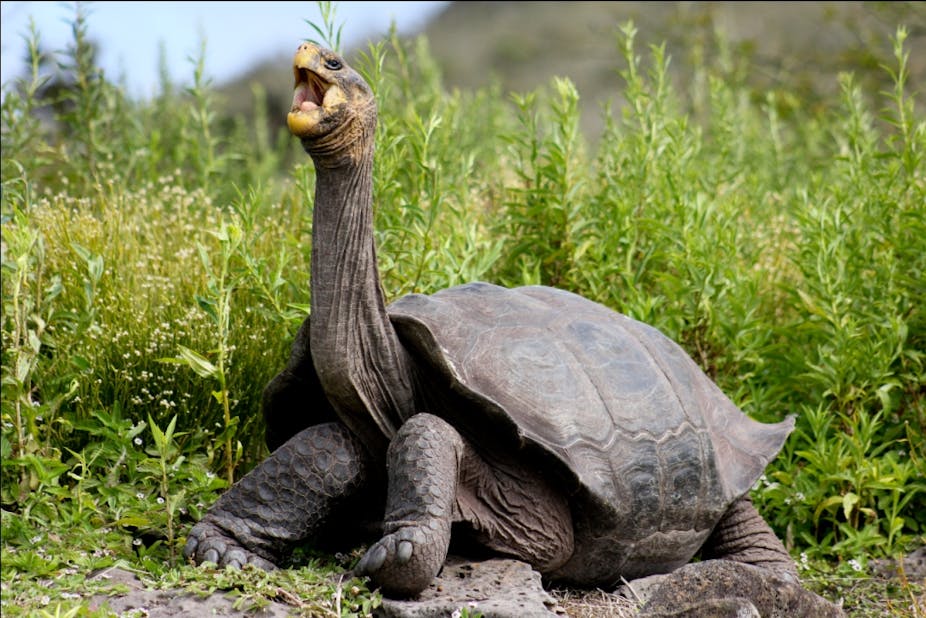
Giant tortoises found in the Galápagos have been often known to live over a 100 years. These particular tortoise have evolved to now have extra copies of the genes that fight against the issues associated with aging like cancer. A series of experiments determined that these turtles have cells which are overly sensitive and are able to go through apoptosis (self-destruct) as soon as they are exposed to stresses related to damaged protein. This mechanism allows for destruction of glitchy cells before they turn into tumors which is a way these animals avoid cancer. 

These results were very interesting as it would be expected that animals that are bigger and tend to live longer would have higher cancer rates. Some scientists believe that studying the way some species have evolved to gain traits like this, can be translated to help in human health and disease. This also shows the importance of conserving biodiversity to study species like these turtles to learn how their special mechanisms can help us deal with our health challenges. 

Using Environmental DNA Sequencing to Study Aquatic Biodiversity in the Amazon


An article from phys.org shows how an expedition at the Javari River Basin have used environmental DNA (eDNA) sequencing to investigate fish diversity in the Amazon. The expedition team was looking to see if it was feasible to study diversity using this method instead of using traditional methods that rely on nets and other fishing gear which can negatively impact the environment. Using eDNA would help reduce environmental impact and to find all the fish species living their without catching and killing them.

This method involves extracting molecules of DNA that is present in water samples and identifying the species to which the DNA belongs to by using genetic markers. The marker most often used is the 12S mitochondrialRNA gene. To find the small molecules, such as excrement and animal parts, in the water samples, the researchers used DNA extraction kits designed to analyze blood and tissue. The team spent 18 days on the Javari River and collected water samples at three of 46 locations where they collected fish using traditional methods as reference to see if the eDNA testing was accurate. They were able to collect a total of 443 species including 60 that were undiscovered using eDNA. Using traditional methods at these three sites resulted in only 201 species collected.

The article does state the limitations of eDNA. For instance, only 58 out of the 201 species caught were identified with precision at the species levels when using eDNA analysis. This is because 12S is a slowly evolving piece of genetic code and is not sufficient enough to identify specimens at the species level because many of the species in the Amazon diverged quite recently in evolutionary terms. For example, two eels that diverged recently, Electrophorus viltai and E.electricus, would be difficult to identify with just the 12S marker. Perhaps more than one marker is going to have to be used to identify specimens up to the species level. The researcher do expect for the technique to improve over the years so that DNA sampling can be used to identify species accurately without the use of traditional methods.

Sunday, August 8, 2021

DNA pulled from thin air identifies nearby animals

Researchers can now collect and sequence DNA from the air | Live Science 

 Tracking animal DNA is something that has been done on land and in the water but researchers have recently been able to do it in air. British and Danish researchers have found a way to identify DNA in the atmosphere released from wildlife. Teams set up vacuum pumps throughout the Hamerton Zoo Park in Cambridge and Copenhagen Zoo and were able to find DNA from the animals there in the filters. One of the most impressive parts was that not only did they get DNA from the animals currently at the zoo, they were also able to pick up on genetic material from the animals used as food for the others. This technique can be incredibly beneficial in the future as ways to study and detect rare species or those who are harder to find, e.g. those that live in caves, burrows, etc. The one downside to this technique that while they can detect that an animal was present, there is no way as of yet to figure out when it was there. There is also no way of knowing how long DNA lasts in air so this technique will have to be worked on more before being used.

 https://www.sciencemag.org/news/2021/07/dna-pulled-thin-air-identifies-nearby-animals

 https://www.theguardian.com/science/2021/aug/08/dna-from-thin-air-a-new-way-to-detect-rare-wildlife-in-hostile-environments


Saturday, November 21, 2020

A Sole-Surviving Ancient Reptile: The Tuatara


In this ScienceNews article written by Jake Buehler, we learn about a very fascinating organism. The tuatara is a lizard-like species that is native to New Zealand, and the last of a mighty order of reptiles that flourished back when dinosaurs walked the earth. They have many abilities that have fascinated scientists for decades, including a long lifespan, imperviousness to many kinds of infections, and most surprisingly for a reptile, thriving in cooler weather. Now, with a vulnerable status on the IUCN red list and its sacred status to the Indigenous Maori people, scientists prioritize the compiling of the tuatara’s genome.

The researchers found that the tuatara’s genome is 5 gigabases which is two-thirds larger than a human’s and unusually large for a reptile. What I find the most interesting is that the tuatara split off from their reptilian relatives about 250 million years ago, so they really have a unique place when being compared to other reptiles today. The team also found that tuatara has more genes that produce selenoproteins than humans do, and an unusually high number of TRP genes which may explain the tuatara’s long lifespan and tolerance for the cold. This new knowledge excites both human biologists, who can use knowledge of the selenoproteins, and reptile biologists alike, but with such a large genome there is much to learn to truly unravel the mystery of the tuatara.


Other Links


Wednesday, April 11, 2018

Leeches: Unexpected Helper to Studying Biodiversity

Leeches. The gross, worm-like vampires of the natural world that can swell to 10x their body size have recently been found to be of some great value. Dr. Michael Tessler, currently conducting post-doctoral research at the American Museum of Natural History’s Sackler Institute of Comparative Genomics, has been collecting leeches in China, Bangladesh, and Cambodia to analyze the blood DNA in their digestive system. The interest in analyzing DNA from the digestive system of leeches stems from a criminal case from 2009
Leeches in the lab. Photo Credit: University of Copenhagen

In 2001 in Tasmania, Australia, Peter Alec Cannon and an accomplice broke into a home, tied up and assaulted a 71 year-old woman, and robbed her. There was little evidence at the scene, except for a large, recently fed leech on the floor of the home. Officers an the victim all lacked evidence of leech bites, so the officers collected the leech as evidence to connect to the assailant. DNA was extracted from the leech and entered into a database, where it sat unidentified until Cannon was arrested for a drug charge in 2008. Following the drug charge, Cannon's DNA was cross checked in the database, and finally connected to the DNA from the belly of a leech from 2001. This case was the first in both Australia and world-wide to identify a criminal suspect using DNA collected from a leech. Following this breakthrough case, the first field study to analyze mammal biodiversity using leeches was conducted in 2012. But there was one flaw with this study: only 25 leeches were caught and analyzed in Vietnam. In comes Dr. Tessler.


The ultimate goal is to see if the leech blood analysis is a viable option for large scale biodiversity observations. Current standards for biodiversity analysis are camera traps, fecal and hair collection, and live capture. Live capture ultimately puts stress on the animals, while fecal and hair collection can often be a difficult task. Camera traps are the present gold standard, but are extremely expensive(about $25,000 as reported in the New York Times article) and require long periods of time for collection. If leeches result in a viable method for analyzing biodiversity on a large scale, the cost would be dropped dramatically (costing about $4,000) and bring this method up to the same gold standard as camera trapping by using the DNA to identify individual species. Only time will truly be able to tell is the collected data from leeches in these broad scale forests, compared with camera trap data, lead to further advancements in the study of biodiversity. 


As a future ecologist, any new techniques in observing biodiversity is extremely interesting to me. And the use of organisms such as leeches to identify species in a large area using the blood ingested by the leech is extremely fascinating. However, this does beg the questions of how how the DNA in blood may degrade the longer it is in the leech after ingestion, and further how reliable this method of collection could be in the longterm? I definitely look forward to the results from Dr. Tessler's research and the future of this method.

Wednesday, April 5, 2017

Mutant lifestyles: Researchers uncover a potent genetic element in Earth's smallest life forms


Researchers have discovered unidentified organisms capable of self-mutation thus expanding the diversity of the tree of life. These new microorganisms are 500 times smaller than bacteria, scientists found these organisms in the groundwater samples from a Colorado aquifer. After analyzing numerous genomes from the sample they detected a unusual genetic element DGR or diversity-generating retroelements. A professor in UCSB's Department of Earth Sciences along with postdoctoral scholar Blair Paul found that these DGRs discovered in bacteria are enabling them to target their own genes to accelerate mutation. While still is unknown about DGRs scientist now are able to see the pattern of mutation in DNA . The big question now is whether these mutations can alter the proteins the genes code for or is the whole sequence being deleted. I found this article interesting as it shows how diverse the microbial world is and how there is still much to learn. 


https://www.nsf.gov/news/news_summ.jsp?cntn_id=191443&org=NSF&from=news

https://www.sciencedaily.com/releases/2017/04/170403135510.htm 

Friday, October 21, 2016

Global Genetic Diversity Map


    Throughout history, maps have been used to represent many aspects of the animal kingdom, such as the range, regional mix, and species at risk. Now however, there is a new set of maps designed to show the distribution of genetic diversity around the world. These maps can help track loss of biodiversity and its cause in a certain region. As population geneticist Andreia Miraldo says, "Without genetic diversity, species can't evolve into new species," and "It also plays a fundamental role in allowing species populations to adapt to changes in their environment."


    Miraldo and her research team conducted an experiment in which they gathered geographical coordinates for over 92,000 records of mitochondrial DNA from 4,675 species of land mammals and amphibians. They compared the changes in cytochrome b, a gene used to measure genetic diversity within a species, and mapped the average genetic diversity for all species within areas of about 150,000 square kilometers.
   
    On the map above, the results show that the tropical Andes and the Amazon have high genetic diversity for both mammals and amphibians, which are shown in dark blue. The South African subtropical regions has high genetic diversity in mammals, while eastern North America has high genetic diversity for amphibians. Results also determined that genetic diversity is 27% higher in the tropics than in non-tropic regions. In conclusion, Industrialized cities and rural areas that are occupied by humans are shown to have very low genetic diversity than wild habitats, as shown in green and yellow. This implies that a lot of human activity could have a large impact on genetic diversity for other species. However, more research has to be done in this area in order to confirm these results and Miraldo hopes to learn more about how human activity and climate change affect global genetic diversity.

  I found this research topic very interesting because it can help us learn more about endangered species and how to save them from extinction. I also think that it can help us as humans to learn the harm and impact our actions have on other living organisms sharing our planet. I believe that it can perhaps prove that climate change is indeed happening and that it's negatively affecting genetic diversity around the world. And maybe when we accept this reality, we can start reducing pollution, deforestation, and over-hunting.

Links:

Tuesday, May 3, 2016

Tweaking Genes to Save Species

There was an article published earlier this month in The New York Times entitled Tweaking Genes to Save Species. This article explains how bio-technologists have engineered mosquitoes with a lethal gene in order to be released in areas where mosquitoes carrying the Zika virus are prevalent.  Another group has discovered a way to engineer mosquitoes that spread sterility in the mosquito population;
this technique is called gene drive.  If regulators approve these techniques it may serve other purposes besides being used as weapon against the spread of mosquito-carrying illnesses.

These remarkable techniques could be used to protect the earth's biodiversity. This type of meddling makes many conservation biologists nervous because of the risk and unpredictability. However, we may have to accept the risks associated with artificial manipulation of a natural population to save species in a world where species are going extinct daily.  An example of how this technique can help preserve biodiversity is by protecting at-risk species. For example white-nose syndrome, a fungal disease, is destroying bat colonies throughout North America.  Through gene-editing technology a less lethal form of the fungus administered to the bats at risk which may enable them to develop a resistance.

These advanced genomic techniques have the potential to restore lost genetic diversity.  Ryan Phelan, an executive director of Revive and Restore says,"We're in a unique period where we've got the technology potentially in place to start changing the course for a lot of these species before they go extinct." However appealing these techniques may seem I think we should exercise extreme caution because it is arrogant of us to think we can  plan what will happen. There have been many cases
 how human environmental meddling has had devastating consequences.  A famous example of this is how Australians brought back poisonous cane toads from South America in order to control the
 grey-backed cane beetle.  These toads have been extremely destructive ever since.  Ecosystems are highly complex and I think it is impossible to predict how genetically engineering nature will unfold.

Wednesday, April 27, 2016

Deadly virus meets deadly gene

Biotenchnologists are trying to find a way to infect the mosquito that spreads the Zika virus to pass a lethal gene to its offspring, or to spread sterility throughout the mosquito population. This technique is called gene drive. This would help both humans, and Earth's overall Biodiversity. Yet, there are some that is worried about this process because it is meddling in 'natures dna'. An example of deadly mosquito is in Hawaii where avian malaria is killing off native birds via mosquito. If a species dies off, it can cause a collapse of the local food chain in that area disrupting the ecosystem. Imagine if scientist can destroy sterile all mosquitos by a single gene transfer. The same can go with other animals instead of the mosquito. There are many more animals out there that are passing deadly diseases that are killing off entire animal populations. Not only this could be to stop diseases, but better modify animals that are shrinking in population due to the lack of genetic diversity. With these new techniques and advances in science, we can save multiple populations. Yet, sadly not every animal can be saved, but the perservation of the Earth's Biodiversity that is dwindling can be saved.
http://www.nytimes.com/2016/04/17/opinion/sunday/tweaking-genes-to-save-species.html?_r=0

Saturday, April 2, 2016

Tomato genetics study sheds light on plant evolution

Scientists have created a study in which tomatoes are genetically modified. This study so far has help shed light on plant evolution as a whole.
"The vast biodiversity we observed in tomato species was not the result of simply one evolutionary or environmental factor. It is the result of a complex set of genetic resources that we can distinguish with large-scale genomic data," said Pease, who joined the U-M Department of Ecology and Evolutionary Biology.
The research that was done may contribute to future studies and efforts to create better crops. These better crops could be more bug resistant and even more cold or hot resistant depending on the weather. These would be made by crossbreeding and not be genetically modifying them.

The tomato can adapt rapidly to ecological change, in which the scientists have found three major genetic strategies that support how it can adapt so quickly. These genetic strategies are: the recruitment of genes from a common ancestral pool, the trading of genes between species through a form of natural crossbreeding called intogression, and the rapid accumulation of new genetic mutations. Or, in other words, diversity from their ancestors, trading genes between species, and new evolutionary changes.