Showing posts with label #bacteria. Show all posts

Sunday, November 23, 2025

Reducing Redundancy of Genetic Code

 A recent genetic discovery made by scientists in Cambridge could allow scientists to significantly cut down the amount of unneeded and repeating code that we often see in a gene. The study focuses in on one of the most studied bacteria in history, E. Coli. and its genetic code. Redundancy in a gene refers to different codons that all code for the same amino acid. For example, there are six different codons that all code for the amino acid Leucine. Because of this, we see hundreds of different combinations in each protein in different parts of the code that all code for the same amino acid. Scientists have begun to investigate this bloat, and are actively looking for ways to reduce it. In E. Coli, they started off by reducing the number of Serine codons from 6 to just 2 without it harming the bacteria. After the success of this experiment, they went even further, attempting to further build upon that reduction. However, doing this would mean they would have to remove or alter over 5 times more codons than what they removed in the original reduction. After a long period of trial and error, in which some changes destroyed the entire bacteria, scientists realized their dream, and Syn57, although extremely weak, was created.

The main benefits highlighted in the article are that Syn57 could potentially help create new drugs, useful molecules, or even combat against genetically engineered microbes released in the environment. The reason Syn57 could be useful in the fight against engineered microbes is due to the unnatural code being unreadable to the microbes, rendering their effects useless. If true, Syn57 can potentially open the door for other treatments of the same kind, thus being able to render any dangerous viruses or microbes ineffective. While still very early in this field, and any kind of real medical impact won't be anytime soon, the potential something like that holds is immeasurable and worth keeping tabs on. If we can find a way to make a gene or bacteria impossible for a foreign danger to read, there could be major positive impacts on our health as a society.

Syn57 represents a new chapter in the genetic code of life - MRC Laboratory  of Molecular Biology 

Sunday, November 16, 2025

Precision Plasmids: Rewriting the Fight Against Resistance

Antibiotic-resistant bacteria are becoming harder to treat, but scientists are developing a precise genetic tool to target them: engineered plasmids that act like "sniper DNA." These customized plasmids can enter resistant bacteria, cut out the genes responsible for resistance, and kill only the harmful cells while protecting beneficial microbes. A recent report from the American Society for Microbiology shows how CRISPR-based plasmids can eliminate resistance genes in bacteria such as Enterococcus faecalis. This approach could reshape how we fight infections by shifting from broad antibiotics to targeted genetics tools. 

A review from the Journal of Nanobiotechnology explains how engineered CRISPR systems could be tailored to detect and neutralize resistant microbes on a larger scale. If refined these precision tools may help us stay ahead of rapidly evolving bacterial resistance


Friday, May 9, 2025

Scientists Discover Organism That Act Like Living Electrical Wires

Scientists have discovered a new species of electricity-conducting bacteria, Candidatus Electrothrix yaqonensis, in mudflats along Oregon’s Yaquina Bay. This finding has significant implications for environmental cleanup and the development of bioelectronic technologies. The bacterium is part of the cable bacteria group, which form long, filamentous chains capable of conducting electricity through their shared outer membrane.

What makes the new bacteria especially noteworthy is its hybrid genetic makeup. It appears to bridge the gap between two known cable bacteria genera, Ca. Electrothrix and Ca. Electronema, offering potential insights into bacterial evolution. Structurally, it stands out for its pronounced surface ridges and unique nickel-based conductive fibers, which let it transport electrons over long distances. This ability allows the bacterium to participate in redox reactions that are critical for nutrient cycling and pollution breakdown.

Because these bacteria can thrive in diverse environments and conduct electricity without the need for external power, they hold promise for cleaning up contaminated sediments and inspiring new types of bioelectronic devices. The bacterium’s name honors the Indigenous Yaqona people, representing a collaboration between scientists and the Confederated Tribes of Siletz Indians.

Thursday, April 24, 2025

Strange Bacteria That Can't Live Alone Hint at Early Steps to Complex Life

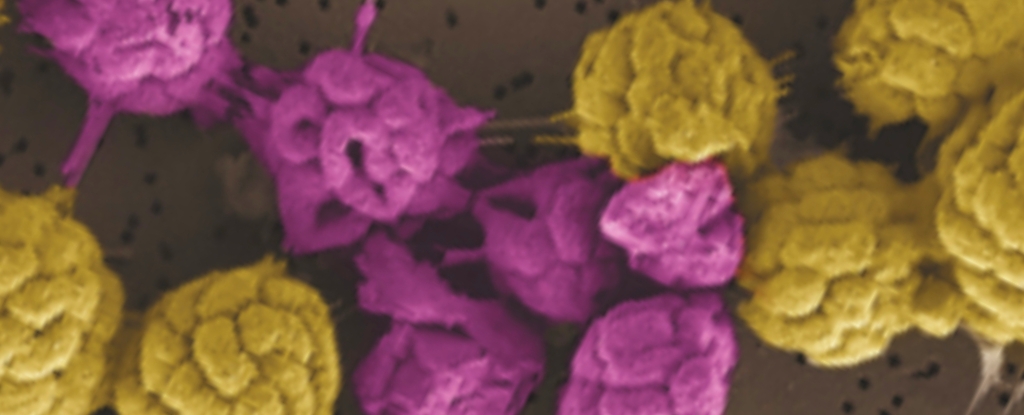
 A new study shows that s unique group of bacteria known as multicellular magnetotactic bacteria (MMB) may offer insight into the early evolution of complex life. Unlike other bacteria, MMBs are never found living as individual cells—they exist exclusively in tightly bound groups called consortia, where separation leads to cell death. Discovered in a Massachusetts salt marsh, these spherical consortia resemble blastocysts, an early stage in animal embryonic development, hinting at possible evolutionary parallels.

The study led by George Schaible at Montana State University analyzed the metagenomes of 22 MMB consortia and discovered that the cells within are not clones. Instead, they have diverse genetic makeups, allowing for metabolic specialization. Some cells process certain nutrients while others handle different tasks, mirroring a division of labor similar to human societies or body organs. This internal diversity likely helps MMBs adapt to the ever-changing conditions of tidal environments.

The bacteria also use various carbon and energy sources, including reducing sulfate to hydrogen sulfide, a process enhanced by their metabolic cooperation. Scientists believe MMBs could be a modern analog of the transition from single-celled life to multicellularity, making them a fascinating window into the evolution of complex organisms.

Wednesday, February 19, 2025

Trillions of Viruses Living in Your Body?!

     On February 19th the New York Times published an article called "Trillions of Viruses Live in Your Body. A.I. Is Trying to Find Them." The article shines light on how scientists are attempting to identify the trillions of viruses found within the body. Scientists estimated that only a fraction of the viruses have been identified and a vast majority of them are "benign," meaning that they are not causing damage to the body. However, they are still unsure on what benefits come from these viruses as the human virome still remains a mystery. This year, they are sending out five universities to team up to search for these unidentified viruses. They will be gathering "saliva, stool, blood, milk," and other various samples from thousands of volunteers in hopes to find new viruses to identify. This study is a contribution to their five-year effort called Human Virome Program and is being federally funded $171 million. The universities will be inspecting the samples using artificial intelligence systems hoping for better insight on influences to our health.

 The first ideology of the human virome was about over a century ago, while scientists were analyzing stool samples, they discovered viruses also known as phages that had the ability to infect bacteria inside the gut, mouth, lungs, and skin. Scientists then discovered other viruses that would infect other cells in the body without leaving any symptoms. This is also a reason why the world's population can be infected with cytomegaloviruses. During the early 2000s, a new genetic sequencing method let scientists to find more viruses in saliva, blood, and stool. The technology used during the time could detect that for each gram of stool it contained billions of phages. Biologists are very excited to go from person to person collecting stool to find new variations of the species. Similarly to the virus phages, during 1997, researchers in Japan also discovered a new virus through a patients blood called anelloviruses. They then revealed that there were 800 new species of anelloviruses. New tools and methods have been created since then in hopes that researchers will evaluate why those viruses are in our bodies and how we can use them to help us!

Links:

Monday, December 9, 2019

E. Coli, an autotrophic bacterium?


A common practice in today’s world is synthesizing bacteria to produce compounds for medicine, energy, and more. One of the most common examples is synthetic Escherichia Coli that has been modified to produce insulin. This method has proven to be highly effective, however there can still be improvements. One such improvement involves the fact that E. Coli is a heterotrophic bacterium, that is, they must eat sugars in order to survive. This can become costly to maintain. One solution to this, is using autotrophic bacteria. Which survive off water and carbon dioxide, through photosynthesis. However, these bacteria have proven difficult to engineer.

So, Ron Milo, a synthetic biologist at the Weizmann Institute of Science in Rehovot, Israel, thought of a fascinating solution. We already have E. Coli that produce desired compounds. So why not make E. Coli an autotrophic bacterium? This is exactly what So, Ron Milo and his team have sought out to do. Instead of making E. Coli a true autotroph, enabling it to undergo photosynthesis. The team inserted a gene into E. Coli’s genome which enables it to eat formate, a simple carbon-containing compound. Which is then converted into ATP, providing energy for the E. Coli. This alone did not provide the desired results. Several other genes which encoded for metabolism enzymes were knocked out to prevent normal energy production.

Again, this was not all that had to be done. Through a starvation process over many generations, formate was increasingly introduced. While sugars were slowly reduced, until the bacteria could solely survive off formate. By combining selective breeding and genetic engineering, So, Ron Milo and colleagues created an E. Coli strain which survives off a carbon containing compound. Eliminating the need to “feed” the bacteria sugars. As far as genetic engineering goes, I find this very interesting. This research has opened many doors to future possibilities for bacterium engineering. Possibly making resource production cheaper. We all like cheaper fuels and medicine!


Friday, December 6, 2019

Hiding Bacteria

Image result for group a streptococcus

Researchers found that the bacteria Group A Streptococcus has the ability to attach itself to red blood cells to hide from immune cells. Using nanotechnology, the team was able to track the bacteria and and its secreted protein s (named such because it is only made by the Streptococcus genus). Further analysis showed that S made the bacteria more deadly and harder to kill in the mice it affected. They are going to study it further to see if the information can help them combat other types of Streptococcus and more importantly lead to a vaccine.
This is an amazing discovery! This bacteria has a hand in many diseases and if someone can figure out how it is so effective many people can be saved a year. I would love to read more about what they find because of this protein.

Article: https://www.sciencedaily.com/releases/2019/12/191203114506.htm
Related Article: https://nccid.ca/debrief/group-a-streptococcus/

Friday, November 16, 2018

Natural Antibiotic Strips Bacteria of their Defenses


In the United States, over 2 million illnesses and 23,000 deaths results from the resistance to antibiotics. Recently, a research has been done where researchers discovered that “an insect-derived antibiotic can destroy the protective membrane of some of the most prevalent drug-resistant bacteria.”

Scientist at the University of Zurich in Switzerland found that a natural antibiotic produced by an insect called the spined soldier bug, can attack the external membrane of Gram-negative bacteria. The World Health Survey surveyed half a million people and found that the five most common antibiotic resistant bacteria are: Escherichia coli, Klebsiella pneumoniae, Staphylococcus aureus, Streptococcus pneumoniae, and Salmonella. Of the five listed, four of them are Gram-negative bacteria.

The thanatin works in a way where it blocks the interactions between proteins that are required to form a bridge between lipopolysaccharide (LPS) molecules found on the inner membrane to the outer membrane where it forms a double layer to protect the bacteria. Without the defense barrier, the bacteria will be susceptible to antibiotics.

Antibiotic resistance has been an extremely big issue in World Health and I’ve noticed that many different research has been performed in order to address this issue since it is the cause for millions of illnesses and thousands of deaths each year. Reading other research where scientist try to inactivate the bacteria, it’s interesting how the researchers in this study came up with such an idea where the bacteria membrane itself should be prevented.

Friday, December 1, 2017

Teaching life a new trick: Bacteria make boron-carbon bonds


In article on Science Daily, researchers have developed a way to genetically engineer a enzyme in a bacteria that would create chemical compounds containing bonds between boron and carbon. This is essential because there has been no known life form that can produce the boron-carbon bonds because the bonds would be usually created by chemists in laboratories. The findings is part of a new wave of synthetic biology, which living organisms are taught to make "greener"chemical compounds needed for pharmaceuticals, agricultural chemicals and industrial products. Creating greener alternatives can be beneficial because they are more economical and would supposedly produce less toxic waste.

It is interesting how researchers are capable on creating more efficient and safer ways of producing chemicals from living organisms. This could be a new opening to more experiments like this, leading to synthetic made chemicals just from living organisms. With this, it could be possible that laboratory made chemicals could be abandoned or less depended on because of the toxins that are produced and for how much it costs to produce the chemicals. This could benefit many in pharmaceuticals and business.


https://www.sciencedaily.com/releases/2017/11/171129131417.htm

http://www.sciencenewsline.com/news/2017112921320019.html

Wednesday, October 18, 2017

New mechanism points the way to breaking ribosome antibiotic resistance

Image result for antibiotic

In a article on Science Daily, research groups collaborated in researching in the dimerization of the bacterium Lactococcus Lactis by using cryo-electron microscopy. It involves a single protein Called the HPFlong. Which is capable of dimerizing on its own and pulling two copies of ribosomes together. When the ribosome is in dimerizing state it is unable of producing proteins . This leaves the ribosomes in a state of hibernation which allows for researchers to attack the cells with antibiotics. Researchers stated that protein HPFlong is present in all known bacteria which could result to the development of new generation of antibiotics.

I believe that this could help us with some current issues that involve antibiotic resistant bacteria. with these new results, we could use these methods to prevent bacteria from becoming more antibiotic resistant. this method will disable the microbial from creating a antibiotic resistant strand for the future generations of microbes.This will allow us to treat microbial infections more efficiently.


https://www.sciencedaily.com/releases/2017/09/170928084754.htm


https://www.eurekalert.org/pub_releases/2017-09/uog-nmp092517.php


Saturday, September 9, 2017

Honeybees can play a role in developing new antibiotics


Image result for honeybee


 In the article from ScienceDaily, UIC researchers, led by co-investigators Alexander Mankin and Nora Vazquez-Laslop discovered that a natural product from honeybees, Api137, is an inhibitor of translation termination. Antibiotics are known to kill bacteria by targeting ribosomes. However, Api137 interferes with different stages of translation when DNA is to be translated to proteins. This is significant because no new antibiotics have been discovered in 30 years and many bacteria are becoming resistant which is a major concern in public health. About 2 million people each year become infected with bacteria that is resistant to antibiotics, and about 23,000 of them die. This discovery can help create many new drugs to fight bacteria.

Wednesday, August 9, 2017

Bacterial Toxin Kills Cells By Preventing Their DNA From Replicating


In an article from ScienceDailyresearchers at Vanderbilt University finally  came to an understanding as to how the bacterial toxin, yatakemycin (YTM) functioned. It is made from the soil bacteria, specifically the Streptomyces familyAlthough what is found to be interesting, is that the toxicity of the bacteria is potent against tumor cells. How YTM works is by attaching to the DNA with a single covalent bond and weaker polar interactions. Therefore, making it harder to find with nucleotide excision repair (NER) enzymes because of it stabilizing the DNA. Streptomyces bacterial developed a very unique emzyme that works as base excision repair enzyme(BER) which fixes tiny lesions and these enzymes are called DNA glycosylase.  

Tuesday, August 8, 2017

Cleaning Your Sponges Will Help Certain Bacteria to Thrive Within Them


In a recent study done by Markus Egert, a microbiologist at the University of Furtwangen in Germany, pinpointed 362 different species and 82 billion of bacteria that lived within 14 used sponges. This was performed by looking at the DNA and RNA in the samples. Dr. Egert compared the quantity to the same density found in human stool samples. Sponges are the perfect home for bacteria to flourish especially for a particular microbe called, Moraxella osloensis which can cause infections in people who have weak immune systems. Since the bacteria eats fat, it will therefore excrete fat releasing a musty odor that is caused by its metabolism. When the sponges are cleaned (i.e. microwaving them), researchers still found some of the bacteria left in the sponge, so it is recommended to replace them after a week's use instead. 

Wednesday, May 3, 2017


Bacteria Take a Deadly Risk to Survive


In order for bacteria to survive, they need to change and adapt to survive in certain circumstances and environments. Scientist at the Centre of Microbial and Plant Genetics at KU Leuven (University of Leuven), Belgium discovered that these bacteria can adapt at different rates, with this a range of problems may be addressed such as fuel all the way to medicines and treatments for certain diseases. The mutation of bacteria rises when they are under stress, but to much mutation weakens the bacteria. If the balance between the two is to high, the bacteria goes through hypermutation which ultimately kills the cell.


This research is a crucial part of our future because with the control over the balance of a bacteria's mutation will offer new perspectives on the production of biofuel. When the bacteria is put into solutions with high concentration of methanol or ethanol, the bacteria will be able to survive longer under the conditions thus raising the production of biofuel.


Links:

https://www.sciencedaily.com/releases/2017/05/170502112545.htm

https://phys.org/news/2017-05-bacteria-deadly-survive.html

Wednesday, April 19, 2017

Elemental Bacteria Size Discovered

The measurable size of nutrients needed for a cell to thrive and divide has been discovered. Divisional function of bacteria is triggered once it reaches a certain size and is in response to the general growth law. It is important to understand that bacteria grow faster and bigger when the quality of nutrients available to them is better. Extensive research on the significance of the growth law has been preformed, using the model organism Escherichia coli. The discoveries began with noticing the cell size remained constant when cells began to replicate their genetic material. This unchanged cell size is a representation of the fundamental unit of cellular resources needed in order to start growth and the cell cycle. The growth inhibition experiments that were carried out were given in part to thorough cell sampling of large populations of bacteria.  The quantitative aspects of biology are shaping the field and promising much greater things for the future in research.


Wednesday, April 12, 2017

Anthrax Spores Trick Human Immune System

Bacillus anthracis, also known as Anthrax, has many methods for replicating and living inside a host. When it enters the host it is usually in the form of a dormant spore that later germinates into the living a reproducing bacterium. The host immune system is stimulated by the spores and responses are activated but they can not identify the bacterial form. For the immune system to identify the active form, TLR2 is used which is a cell surface receptor protein that attaches to the lipoproein that is found in the cell wall of the bacteria. In this study scientists have found that the RNA from the outer layer of anthrax is recognized by human macrophages through two receptors called TLR7 and TLR8. Because the spore is recognized first and in a different way, it is more difficult for the immune system to recognized the matured bacteria.


https://www.sciencedaily.com/releases/2017/04/170411104508.htm

http://jem.rupress.org/content/early/2017/04/10/jem.20161141

Wednesday, April 5, 2017

Mutant lifestyles: Researchers uncover a potent genetic element in Earth's smallest life forms


Researchers have discovered unidentified organisms capable of self-mutation thus expanding the diversity of the tree of life. These new microorganisms are 500 times smaller than bacteria, scientists found these organisms in the groundwater samples from a Colorado aquifer. After analyzing numerous genomes from the sample they detected a unusual genetic element DGR or diversity-generating retroelements. A professor in UCSB's Department of Earth Sciences along with postdoctoral scholar Blair Paul found that these DGRs discovered in bacteria are enabling them to target their own genes to accelerate mutation. While still is unknown about DGRs scientist now are able to see the pattern of mutation in DNA . The big question now is whether these mutations can alter the proteins the genes code for or is the whole sequence being deleted. I found this article interesting as it shows how diverse the microbial world is and how there is still much to learn. 


https://www.nsf.gov/news/news_summ.jsp?cntn_id=191443&org=NSF&from=news

https://www.sciencedaily.com/releases/2017/04/170403135510.htm 

Monday, January 23, 2017

tuberculous liver abscess


The article covered the rarity of the tuberculosis which affects the liver. Most commonly, tuberculosis is known for affecting the lung but for a person without any in-depth exposure to studies relevant to TB, he or she may not have known that TB comes in variety of forms and affects different region in the human body.
Elsevier is one of the leading organization that published this article. Elsevier is best known for its distinguished articles.
The article mentioned, such rare form of TB is found in more vulnerable ethic groups such as: African American.
The article was a great refresher for me, as I myself have read a few articles pertinent to tuberculosis in previous college courses but, I don’t recall having read any article that broke down microscopically the scope of the disease, in terms of who it affects all the way to why it is not commonly talked about or even reported. https://medlineplus.gov/tuberculosis.html

Friday, January 20, 2017

Virus

how virus high jack cels


http://dx.doi.org/10.1126/science.aal2130

The article gives an indepth explanation of the process when a cell becomes compromise by a virus. The article refers to the most common disease, HIV,  that highjack the cells most often violently. The article explains the process of the cell becomes overpowered by such disease.

Monday, December 12, 2016

How to Set Up Protozoan Mating Swarm, Bacteria Style


At the University of California, Berkeley, scientists were researching Salpinogoeca rosetta cells when they suddenly began to form mass mating swarms after exposure to an aphrodisiac produced by a bacteria. The bacteria in question that created the aphrodisiac was Vibrio fischeri. The bacterium creates chonodroitin sulfate (CS) lyase, in which is then released as a chemical signal that causes the cells to quickly aggregate and begin cell and nuclear fusion while duplicating and recombining their genetic material. 


According to researchers, Nicole King and Ariel Woznica, this discovery has led to researchers to believe the possibility that environmental bacteria or bacterial symbionts can influence mating in animals as well. Part of the research at Berkeley was exploring the origins of multicelluarlarity. The research was mostly conducted on choanoflagellates such as the S. rosetta cells. Generally, researchers would monitor shared characteristics and behaviors that was common for evolution in animals. Based on the research, scientists have discovered symbiotic and pathogenic relationships between bacteria and multi-cellular animals. This relationship has been dated to even prehistoric times.

With this research, choanoflagelletes can serve as an excellent model organism in order to discover more information regarding the origins of multicelluarlity. By using these organisms, it can have an advantageous adaptation and uses in medicine. Supposedly, researchers can use choanoflagelletes as a means of mass drug production for cures by instilling the gene for the drug. By using bacteria to induce the cells to mass mating, it can cause a rapid supply of drugs based on a natural process within bacteria. This can certainly be very useful in the field of medicine.