Showing posts with label #antibiotics. Show all posts

Friday, November 17, 2023

Newly Discovered C. Diff Structure Required for Infection, Offer New Therapeutic Drugs


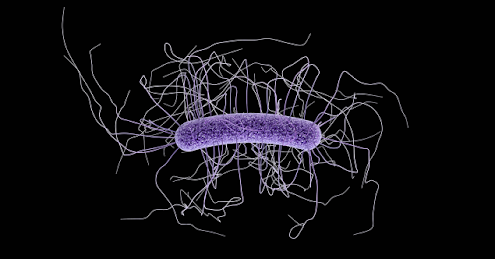
It was discovered that the bacteria C. diff (Clostridium difficile) produces spheres called ferrosomes and that these structures are important for infection in animals. Bacteria have long been thought to not have any organelles like eukaryotic cells do, but this now appears to be incorrect. The researchers at Vanderbilt wanted to determine if C. diff produces ferrosomes to manage its need for iron, focusing on how pathogens like C. diff get their iron and other nutrients. C. diff causes more than 29,000 deaths a year in the United States and its treatment options are limited. The research team found that two genes, fezA and fezB, were required to form ferrosomes. Using C. diff bacteria that did not have these genes, the researchers found that ferrosomes were necessary for the bacteria to fully colonize and cause disease in an animal model. They found that ferrosomes were especially important for C. diff infection in inflammatory bowel disease. This discovery demonstrated that the ferrosomes helped with combating “nutritional immunity”. The ferrosomes were encased in a membrane, classifying them as organelles in this bacteria. 

This study is really interesting as it demonstrated the presence of organelles in bacteria, which was otherwise thought to not contain any at all. What also makes the study more interesting is the possibilities it creates of creating new antibacterial drugs. Without ferrosomes, C. diff cannot perform to their full functions. Using this information on how the host-pathogen interaction is important for infection, there are a number of ways to discover how new antibacterial drugs could be made to treat C. diff. 

https://www.sciencedaily.com/releases/2023/11/231115113402.htm 

https://www.nature.com/articles/s41586-023-06719-9 


Wednesday, November 27, 2019

Antibiotic to combat resistant bacteria


Image result for darobactin

________________________________________________________________________________
A team led by Professor Kim Lewis was able to isolate a new polypeptide which they are calling Darobactin, which consists of seven amino acids. This new polypeptide is able to bind to a site on gram negative bacteria, disrupting them and killing them. It has shown great promise, having been effective against several types of bacteria that are both normal and antibiotic-resistant.

I think this is amazing. With how many reports of bacteria and viruses becoming more resistant to our current treatments, it is heartening that people are finding more ways to combat those super bugs. I hope that this brings more success in the future.

Article: https://www.sciencedaily.com/releases/2019/11/191121134519.htm
Related Article: https://phys.org/news/2019-11-antibiotic-gut-tiny-worm-weapon.html

Wednesday, February 13, 2019

Web Meets Genomics

According to Science Daily, a DNA search engine has been made to identify microbes. Researches have combined their knowledge of bacterial genetics and web search algorithms to build a DNA search engine called BIGSI. This search engine could help researchers monitor the spread of antibiotic resistance genes and understand how viruses and bacteria adapt and evolve. The way this works is BIGSI would be able to detect any new microbial genome in the history of microbial DNA. This program is developed with a HUGE memory capacity and simply needs internet to store and search information.

The BIGSI program allows researchers to compare DNA of multiple bacterial species, and by doing so, we can understand how they are related. One of the main focuses of this project was to study the dynamics of antibiotic resistance. Most bacteria and viruses are responsible for many infectious diseases, and over the years, they have been able to evolve and "survive" the antibiotic treatment, thus becoming extremely dangerous to humans.


I believe that anything that is created in order to help us, especially preventing viruses and infections, is for a good cause. This program has been long in demand, many illnesses have taken place and most people have lost lives due to bacterial and viral infections. Being able to compare and analyze microbial DNA can lead us in preventing such outbreaks. For example, the outbreak of food poisoning, where the cause (which was found later) was a Salmonella strain, could have been evaluated earlier with a new and faster system as the BIGSI.

Sunday, November 18, 2018

Natural Antibiotic Thanatin

https://www.sciencedaily.com/releases/2018/11/181115104630.htm
https://www.ncbi.nlm.nih.gov/pmc/articles/PMC40060/
 This spiny soldier bug has become quite useful in  battling gram negative bacteria. Gram negative bacteria is very hard to fend off resulting in very few antibiotics choices. However, researchers recently found a naturally forming antibiotic inside the bug which interrupts the defensive layer of the bacteria. This antibiotic is Thanatin. It attacks the formation of the 2nd outer layer of the negative gram, specifically the cells that transport lipopolysaccharide(LPS)  which is the main ingredient for the bacterial layer. Thanatin itself is able to stop LPS from binding to each other to form their membrane which means that it specifically targets bacterial protein/enzymes so there should not be human side effects (hopefully). This introduces new ways to produce antibiotics to potentially save lives.

Friday, November 16, 2018

Natural Antibiotic Strips Bacteria of their Defenses


In the United States, over 2 million illnesses and 23,000 deaths results from the resistance to antibiotics. Recently, a research has been done where researchers discovered that “an insect-derived antibiotic can destroy the protective membrane of some of the most prevalent drug-resistant bacteria.”

Scientist at the University of Zurich in Switzerland found that a natural antibiotic produced by an insect called the spined soldier bug, can attack the external membrane of Gram-negative bacteria. The World Health Survey surveyed half a million people and found that the five most common antibiotic resistant bacteria are: Escherichia coli, Klebsiella pneumoniae, Staphylococcus aureus, Streptococcus pneumoniae, and Salmonella. Of the five listed, four of them are Gram-negative bacteria.

The thanatin works in a way where it blocks the interactions between proteins that are required to form a bridge between lipopolysaccharide (LPS) molecules found on the inner membrane to the outer membrane where it forms a double layer to protect the bacteria. Without the defense barrier, the bacteria will be susceptible to antibiotics.

Antibiotic resistance has been an extremely big issue in World Health and I’ve noticed that many different research has been performed in order to address this issue since it is the cause for millions of illnesses and thousands of deaths each year. Reading other research where scientist try to inactivate the bacteria, it’s interesting how the researchers in this study came up with such an idea where the bacteria membrane itself should be prevented.

Saturday, April 14, 2018

How intestinal bacteria can affect your blood sugar and lipid levels

Researchers at the Kumamoto University lead a further discovery into the mechanism of the intestinal bacteria and its influence on sugar and lipid metabolism as that could shed some light on the metabolic diseases that affect the world today, like diabetes and dyslipidemia. The amount and possibly the profile of the intestinal bacteria seems to differ from person to person, especially when regarding weight. This variation in bacterial bacteria could overall affect the daily routines of the person, in terms of energy and fat accumulation in the body. This bacteria is known to be present in the very common Type 2 Diabetes, which further pushes the idea that there could be further research done to analyze the bacteria so to get insight on a possible way to prevent or help Type 2 Diabetes victims.
The researchers then conducted two types of experiments using two mouse models, one group being antibiotic treated mice, and the other non-antibiotic treated. In the antibacterial mouse model that was given antibiotics for 5 days, their blood glucose levels and lipid concentrations dropped significantly. When compared to the mouse model with the non-antibiotic treatment, the level still dropped but not as much. It was concluded therefore, that when the secondary bile is supplemented at the same time as antibiotics, blood glucose and blood triglyceride levels recovered and bounced back, suggesting that secondary bile acid produced by intestinal bacteria affected sugar and lipid metabolisms. Knowing this information gathered from this research shows that there is possible future research that could be done on these bacterial cells to bring researchers closers to finding a preventative or treatable way to treat metabolic diseases. In my opinion this is a grand discovery, the research conducted follows up with previous research done on the bacterial cells in the intestine, and now more information was able to be gathered to further knowledge in this area. I believe with just a further amount of research and patience, there is a very high chance the treatment to many common and popular metabolic diseases could be developed and found.


To read the research study conducted by the researchers at the Kumamoto University on Secondary Bile Acids: http://www.nature.com/articles/s41598-018-19545-1

Saturday, September 9, 2017

Honeybees can play a role in developing new antibiotics


Image result for honeybee


 In the article from ScienceDaily, UIC researchers, led by co-investigators Alexander Mankin and Nora Vazquez-Laslop discovered that a natural product from honeybees, Api137, is an inhibitor of translation termination. Antibiotics are known to kill bacteria by targeting ribosomes. However, Api137 interferes with different stages of translation when DNA is to be translated to proteins. This is significant because no new antibiotics have been discovered in 30 years and many bacteria are becoming resistant which is a major concern in public health. About 2 million people each year become infected with bacteria that is resistant to antibiotics, and about 23,000 of them die. This discovery can help create many new drugs to fight bacteria.

Thursday, January 26, 2017

New disorders found in children

Congenital disorder is one of the leading cause of infant mortalities worldwide. For the most part, researchers weren't able to find the cause nor find which children were at greater risks. All that researchers have learned was that genetic play a role in children with those disorders. Recently scientist with deep regrets have discovered fourteen new genetic disorders in children. Such news is bitter sweet because on one end, being able to identify the disorder creates hope that one day, there may be ways to treat or cure it.

https://www.sciencedaily.com/releases/2017/01/170125145851.htm

http://www.reuters.com/article/idUSFWN1FD0D1

Monday, January 23, 2017

tuberculous liver abscess


The article covered the rarity of the tuberculosis which affects the liver. Most commonly, tuberculosis is known for affecting the lung but for a person without any in-depth exposure to studies relevant to TB, he or she may not have known that TB comes in variety of forms and affects different region in the human body.
Elsevier is one of the leading organization that published this article. Elsevier is best known for its distinguished articles.
The article mentioned, such rare form of TB is found in more vulnerable ethic groups such as: African American.
The article was a great refresher for me, as I myself have read a few articles pertinent to tuberculosis in previous college courses but, I don’t recall having read any article that broke down microscopically the scope of the disease, in terms of who it affects all the way to why it is not commonly talked about or even reported. https://medlineplus.gov/tuberculosis.html

Friday, January 20, 2017

Virus

how virus high jack cels


http://dx.doi.org/10.1126/science.aal2130

The article gives an indepth explanation of the process when a cell becomes compromise by a virus. The article refers to the most common disease, HIV,  that highjack the cells most often violently. The article explains the process of the cell becomes overpowered by such disease.

Sunday, November 27, 2016

Human Antibiotics In Animals the Cause of Drug Resistance ?

Farm animals are becoming a public health concern as the diseases they carry are becoming more and more resistant due to the human antibiotic that are used to make the animals grow faster while being feed less food. Drug resistance spreads can be spread in other ways besides from animals to humans such as from person to person, when antibiotics are not taken as prescribed, incorrect dosage and duration. At first the antibiotics work on the farm animals, but then they become gene resistant and is passed down to larger groups of animals. This is due to the fact that segments of DNA can jump and change between different species and strains of the microorganisms. The used of antibiotics on farms is causing an issue with medicines ability to combat bacterial viruses. However, the farm industry does not believe that this rising issues should be of any concern because it is not as extreme as researchers are claiming it to be. Some farm companies are even keeping researchers away in order to keep them from finding more evidence that the farm industry is making it more difficult to treat bacterial diseases by making claims that allowing outsiders around the animals can cause the spread of disease.
The connection between human consumption of animals that are raised with antibiotics leading to resistance to drugs is a question that has been explored by researchers in 1975 from Tuft University. In order to test the connection the researchers took 150 chickens and gave them tetracycline and observed them over the course of four months. By the end of the four months the chickens that had bacteria within them that were 36% more tetracycline- resistant. In other cases it is seen that animals that are not even raised with antibiotics are carries of bacteria that is more resistant to antibiotics due to the spread of gene resistance.

A solution has been put in place by companies such as Tyson that is now avoiding the uses of human antibiotics while other company are raising livestock with vegetarian free antibiotics diet. Since there is not much research done on this topic due to the feud between researchers and meat companies it will be difficult to stop the detrimental transformation that this issue is causing for public health. However, regardless of whether or not there is a correlation between the use of human antibiotics and drug resistance a better alternative should be made to raise animals such as a healthier diet so that antibiotics are not heavily relied on. 

Sunday, November 6, 2016

Multi Drug-Resistant Pathogens

Animals are often given antibiotics in their food or sprayed on them so they ingest it when they clean themselves. The use of antibiotics in animals was thought to prevent disease and therefore produce more healthy livestock. However, pathogens are now becoming resistant to more and more antibiotics. Since the antibiotics are only killing off the pathogens that are not resistant to bacteria,the antibiotic resistant pathogens are thriving and are flourishing. 
A study was performed to find out how resistant they are becoming. Investigators sequenced 11 pathogen's genomes from chickens and the broilers of India. Each pathogen was resistant to at least five antibiotics in the fluoroquinolone, cephalosporin, sulfonamides, and macrolide families.  H. pollorum can be harmful to humans and livestock since it carries a toxin that interferes with the cell cycle. Interference with the cell cycle ultimately leads to cancer. The pathogen is a health concern due to the antibiotic resistance created by the abuse of antibiotics. The consumption of chicken in India and all over the world is becoming more and more prevalent which could lead to more antibiotic resistant bacteria. In the United States, 80% of antibiotics sold are given to livestock. In 2013 alone, 53% of sampled chicken was E. Coli resistant.
Back when it was decided to use antibiotics in livestock it made sense to the farmer/big business because their livestock could possibly live longer. If the pathogens were not making their livestock sick because the chickens and cows and whatever else are pre-treated with antibiotics, the business is making money. The introduction of antibiotics was rather selfish and could lead to more bad than it did good. Initially, it was a good idea but it should have been researched more. Antibiotics is over used in so many cases, even humans. Many people will insist on the prescription of an antibiotic to get better when it is not necessary. The use of antibiotics should be more strict and more limited. All we can do now is stop over-using antibiotics so more pathogens are not antibiotic resistant. 


https://www.sciencedaily.com/releases/2016/11/161104191327.htm
http://news.nationalgeographic.com/2015/02/150213-antibiotic-resistance-animals-ngfood/