Showing posts with label drug resistance. Show all posts

Tuesday, November 18, 2025

Defeating Resistant Lung Cancer Using CRISPR

    New groundbreaking research from ChristianaCare's Gene Editing Institute has revealed that CRISPR gene editing can disable the NRF2 gene in lung cancer cells (a key culprit in chemotherapy resistance. When NRF2 is overactive, tumors become a lot more resilient to standard drugs, but by knocking it out using CRISPR/Cas9, researchers were able to restore the cancer cells' sensitivity to chemotherapy and slow tumor growth.

    One of the most promising areas of this work is how precisely the team targeted the resistance mechanism. They were able to lock in on a tumor-specific mutation called R34G and NRF2 while using lipid-nanoparticles (LNPs) to deliver CRISPR safely into tumors in animal models. Amazingly, editing only 20% to 40% of the tumor cells was enough to boost the effectiveness of chemotherapy, a promising insight given that editing each individual cancer cell is not realistic in real-world treatment.


    Thus research could alter the way individuals think about cancer treatment, Rather than creating entirely new therapies, scientists are using gene editing to make existing chemotherapy more effective. Because NRF2 is implicated in resistance across a variety of solid tumors (not only lung cancer), this approach has the potential to benefit several patients. It is still early, but the precision, the targeted delivery, and the dramatic resensitization of tumors all look toward a powerful new weapon in the fight against drug-resistant cancer.

Sunday, October 19, 2025

Increasing Anti-Microbial Resistance Poses Threat to Globe


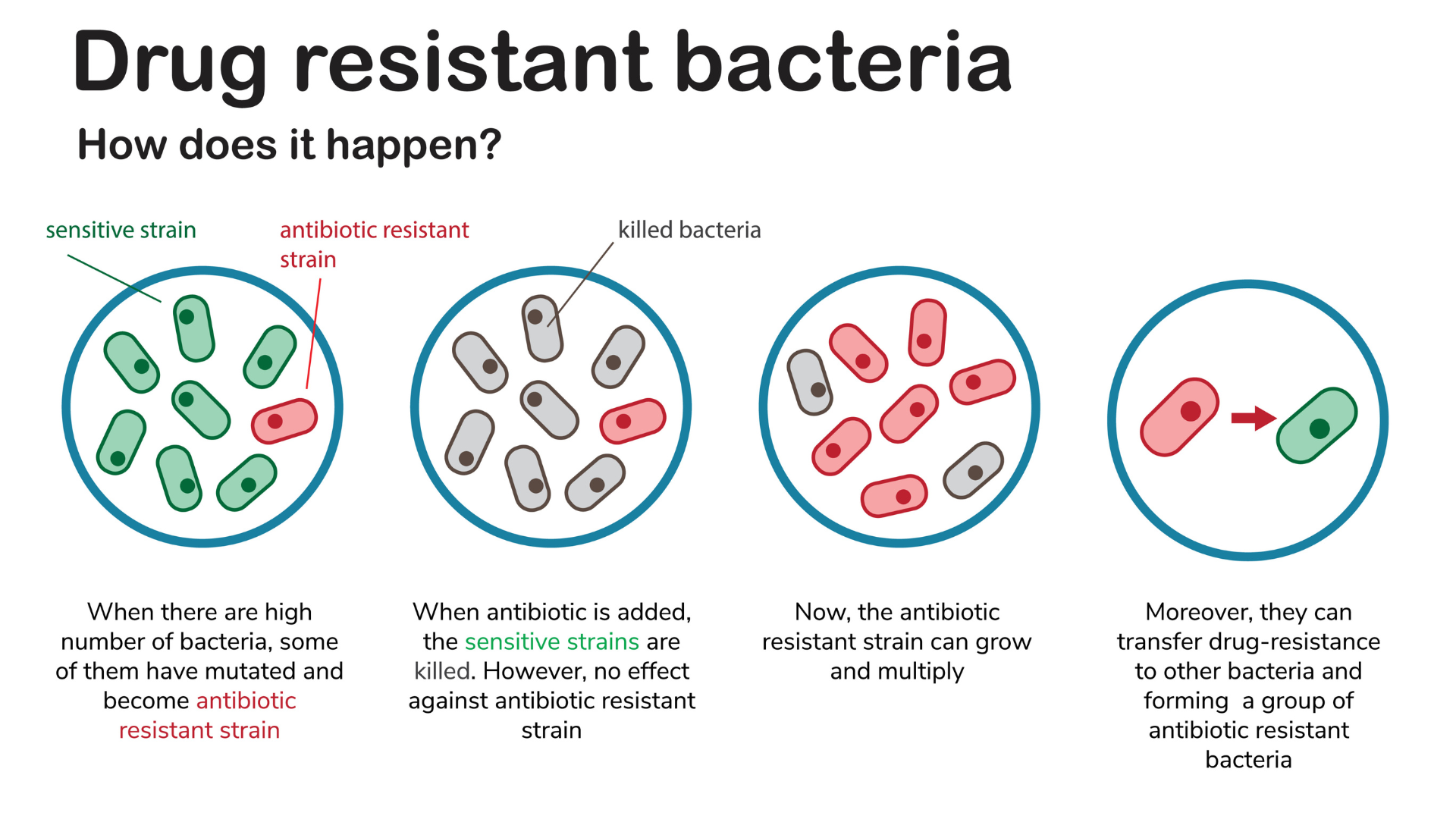
    Articles in the NY Times "W.H.O. Warns of Sharp Increase in Drug-Resistant Infections" and "The Global Threat of Antibiotic Resistance" reports of the spread of dangerous antimicrobial-resistant infections, which have been increasing by nearly 15 percent each year. This includes infections such as UTI’s, gonorrhea, E. coli, and other pathogenic bacteria that kill millions annually.  It’s estimated that more than 39 million people will die from antimicrobial-resistant pathogens in the next 25 years. While the increase in antimicrobial resistance is inevitable, it is being accelerated by improper, or excessive use of antimicrobials. Nearly 140 countries have joined the Center for Global Development’s antimicrobial resistance surveillance system and 100 of which contributed data. 

                  This presents an incredibly difficult challenge, especially for doctors who want to treat their patients but recognize that improper use could lead to a much larger crisis. I believe it is the responsibility of the prescriber to emphasize the importance of taking an entire course of antimicrobials, even if the patient feels better before finishing. However, patients also share responsibility by ensuring they aren’t skipping their last doses because they feel better leaving the last, strongest, pathogenic bacteria to survive, mutate, and spread resistance. Perhaps there should be stronger guidelines are even laws to prescribing antibiotics, like making a patient sign a form stating they’ll take the antimicrobials for the full length of time unless otherwise stated by the doctor. Education on this subject could also slow the increase of anti-microbial resistant infections, like teaching genetic resistance in high school science classes. Either way improper use needs to stop, or common infections could become a death sentence.

Wednesday, October 18, 2017

Genetic Diversity in Yeast Leads to Better Drug Resistance


In a report published in Science Daily, Scientists at the Wellcome Trust Sanger Institute and the Institute for Research on Cancer and Ageing of Nice in France found that greater genetic diversity can be a primer for increased drug and microbial resistance in an organism. The researchers used budding yeast, best known for its use in brewery's and winemaking. Dr Ignacio Vazquez-Garcia, the first author from the Wellcome Trust Sanger Institute and University of Cambridge, said: "the degree of diversity within the cell population -- known as clonal heterogeneity -- played a major role in the acquisition of antimicrobial resistance. By sequencing the genomes of sensitive and resistant cells we showed that some cells were pre-adapted, or primed." As the yeast gene pool was diversified, and heterogeneity increased, the yeast were found to be more resistant to microbes, while other yeast died. On the contrary, yeast that has greater homogeneity and inbreeding were less resistant to drugs and disease. This research could be applied to antimicrobial and anticancer drug research, and would make future generations of human medicine more effective in treating cancer and disease. I feel like this didn't really need its own study to prove? I was already under the impression that genetic diversity allows for a species to survive better as a whole, and that drug and microbe resistance was already under that umbrella. The study seems a little redundant.

Tuesday, April 18, 2017

Scientists Discover New Gene that is Driving Drug Resistance

Image result for tamoxifen

In all of the medications and treatments that are used for breast cancer, no drug is more commonly used then tamoxifen. Recently, scientists have discovered a gene in humans that makes the body resistant to the drug and, in turn, is causing more problems with patients diagnosed with breast cancer. Breast cancer cells need the hormone estrogen in order to grow and multiply, tamoxifen is used to block the receptors that receive this hormone. Scientists discovered that about 50% of the patients that are being treated with the drug eventually become resistant to the treatment. After several trial and error tests, they discovered that the gene NQ01 is the 'trigger' that will determine if a cell survives tamoxifen.

In the resistant cells, tamoxifen actually stimulates the mitochondria in the cell, causing it to fight against the drug. Scientists at the University of Salford used protein profiling, genetics, and metabolism to identify which genes were causing these cells to be resistant to the drug and found that with just the NQ01, a genes drug resistance will be compromised. With this discovery, they developed a chemical inhibitor that sensitizes the tamoxifen-resistant cells. With this discovered, this chemical inhibitor could be added to the medication in order to successfully treat patients with breast cancer. However, this may be an indication that cells are able to become resistant to other cancer-treating drugs that doctors and scientists are unaware about. This shows us just how far we are from finding a cure for breast cancer and all other types of cancer as well.

Links:
http://www.medicalnewstoday.com/releases/316772.php
https://medicalxpress.com/news/2017-04-gene-drug-resistance.html

Sunday, November 27, 2016

Human Antibiotics In Animals the Cause of Drug Resistance ?

Farm animals are becoming a public health concern as the diseases they carry are becoming more and more resistant due to the human antibiotic that are used to make the animals grow faster while being feed less food. Drug resistance spreads can be spread in other ways besides from animals to humans such as from person to person, when antibiotics are not taken as prescribed, incorrect dosage and duration. At first the antibiotics work on the farm animals, but then they become gene resistant and is passed down to larger groups of animals. This is due to the fact that segments of DNA can jump and change between different species and strains of the microorganisms. The used of antibiotics on farms is causing an issue with medicines ability to combat bacterial viruses. However, the farm industry does not believe that this rising issues should be of any concern because it is not as extreme as researchers are claiming it to be. Some farm companies are even keeping researchers away in order to keep them from finding more evidence that the farm industry is making it more difficult to treat bacterial diseases by making claims that allowing outsiders around the animals can cause the spread of disease.
The connection between human consumption of animals that are raised with antibiotics leading to resistance to drugs is a question that has been explored by researchers in 1975 from Tuft University. In order to test the connection the researchers took 150 chickens and gave them tetracycline and observed them over the course of four months. By the end of the four months the chickens that had bacteria within them that were 36% more tetracycline- resistant. In other cases it is seen that animals that are not even raised with antibiotics are carries of bacteria that is more resistant to antibiotics due to the spread of gene resistance.

A solution has been put in place by companies such as Tyson that is now avoiding the uses of human antibiotics while other company are raising livestock with vegetarian free antibiotics diet. Since there is not much research done on this topic due to the feud between researchers and meat companies it will be difficult to stop the detrimental transformation that this issue is causing for public health. However, regardless of whether or not there is a correlation between the use of human antibiotics and drug resistance a better alternative should be made to raise animals such as a healthier diet so that antibiotics are not heavily relied on. 

Saturday, April 4, 2015

common bacteria about to become antibiotic resistant

In the article of science daily it was stated that the common bacteria is near to turn out to be antibiotic resistant. The antibiotics have impacts such as respiratory or urinary infections in hospital environments. This issue can have an impact on the hospitals if there is contamination in the environment because two genes that grant resistance for a specific strong class of antibiotics can be mutual with families of the same bacteria. As an example of this the article discusses the case that happened in two of the hospitals in Los Angeles were they were attacked by drug- resistant bacteria of the same family, is now known that this was caused by medical scopes that were contaminated by bacteria which can resist carbapenems this is an antibiotic that is presume to be used with patients infected with resistant bacteria. Also the carbapenems is mostly used as a last resource treatment, because this carbapenems resistant have appeared is a serious threat this is now named Enterobacteriaceae, the two genes responsible are KPC and NDM- 1.

Friday, April 3, 2015

Tuberculosis evades immune system

Tuberculosis (TB) is an infection caused by Mycobacterium TB. Although it can spread to any organ it usually occurs in the lungs. This disease can also be spread from person to person through germs from coughing or sneezing.

 In the article the World Health Organization states that in 2013 TB killed approximately 1.5 million out of the 9 million that were affected that year. Just as with any other disease over time it develops resistance to the treatments, therefore new research always need to be continuously done. Dr. Nejentsev and his team try and do just this. They decided to study the genome for 5,500 people with TB compared to 5,600 people without TB. They found a gene on chromosome eight known as ASAP1 that had two different forms, one being more protective against TB and the other  less protective. They believe with more research in the future they will be able to make vaccines to target the ASAP1 immune pathways to protect against TB.

I believe with further research this study can help protect against TB and stop it from continuously spreading. Hopefully this study can also help find treatments for other diseases relating to immune pathways.

Wednesday, April 1, 2015

New lead against HIV

HIV first emerged in the 80's as a deadly disease which now has been made into a much more manageable disease, however like most diseases it is starting to form resistance to certain drugs. If drug resistance develops then researchers need to find new drugs or treatment methods for people with this disease which can be very costly. According to scientists of the American Chemical Society there might be a new method to having affordable drugs that will not allow this disease to form a resistance against them. 
In previous studies a drug company was able to develop a compound to inhibit HIV's interaction with the protein CCR5, but they didn't know that the virus could also attack the protein CXCR4. This protein is linked to the body's inflammatory responses so it is hard to develop a drug for this without the person having major side effects. Dennis Liotta wanted to do something about this, so his team and him tried coming up with a drug that would inhibit both these proteins with less side effects. Anthony Prosser, a member of Liotta's team, came up with an inexpensive method to test multiple drugs to do just this. The most effective drugs were found to not only be able to inhibit both these proteins but also the HIV reverse transcriptase.   Since this new method is inexpensive it could be the new method for treating HIV that is affordable for everyone. I believe this is a great thing for all those with this disease, for it looks like a promising new treatment method. I am curious to see what future research will bring.

Thursday, March 5, 2015

Drug Resistant Malaria Parasites


    Fifty years ago the spread of malaria carrying mosquitoes became an issue because they were all resistant to the drugs that were created to stop the disease. At that time the drug chloroquine was used as a cure. According to recent findings history looks like it is about to repeat itself. The parasite is currently only in Asia, but is showing possibility that it will spread to India soon. If this is true thousands of lives will be at risk because they will all become infected with resistant malaria.
      Researchers at Oxford studied around a thousand samples of malaria parasites and found that 39% contained genetic makeup that made them resistant to artemisinin which is the drug that has been used to cure malaria in recent times. With this information they were able to map out regions that will be at risk if the malaria resistant parasite keeps spreading. This can help those areas prepare for the possible infestation. The spreading rate of the parasite is actually starting to scare certain scientists.

This article is very interesting in that it shows how over time genetic mutations made the malaria parasite resistant to certain drugs. It is also interesting in that this is not the first time it has happened. The fact that this is actually an alarming threat to is crazy. Many bugs and even humans have become resistant to drugs, so it makes a person wonder if constant research should be done for a new drug when the previous one stops working. 


Wednesday, November 26, 2014

Typhoid Gene Revealed

Typhoid fever is a serious problem in many places in the world. When people eat or drink contaminated food or water, they contract typhoid fever. Typhoid fever takes many lives over the course of a year. About 26.9 million people are infected each year and an estimated 200,000 lives are taken. Now for the first time, scientists have discovered that some people carrying a particular gene might be more prone to catching typhoid fever. As lead researcher, Dr. Sarah Dunstan at the Nossal Institute of Global Health at the University of Melbourne explains that certain forms of the HLA-DRB1 gene found in humans is a natural resistance to typhoid fever.


Knowing this basic resistance to typhoid fever will hopefully lead to better understanding of disease resistance. With the knowledge of disease resistance, scientists will be able to better guard against typhoid fever and hopefully other bacterial diseases in the future. Typhoid fever is a very tricky bacteria that is becoming more and more resistant to antibiotics. Current vaccinations are barely effective especially against the strain of typhoid fever called paratyphoid fever. Because of this resistance, better prevention and treatment of typhoid fever is greatly needed in order to help the growing number of infected people around the world.

Thursday, December 6, 2012

Cancer treatment could be improved by discovery of drug resistance biomarker

Cancer therapies often have short-lived benefits due to the emergence of genetic mutations that cause drug resistance. A key gene that determines resistance to a range of cancer drugs has been reported in a study published by Cell Press in the journal Cell. The study reveals a biomarker that can predict responses to cancer drugs and offers a strategy to treat drug-resistant tumors based on their genetic signature.  Non-small cell lung cancer (NSCLC) is the most common type of lung cancer, and NSCLC patients with a specific type of tumor mutation can be treated with a targeted therapy called crizotinib. But these patients frequently develop drug resistance as a result of secondary mutations in their tumors, through unknown genetic mechanisms.  Bernards and his team developed a screen to identify genes whose suppression confers resistance to crizotinib in NSCLC cells. They discovered that inhibition of MED12, a gene that is mutated in cancers, resulted in resistance to not only crizotinib, but also other targeted drugs and chemotherapy used to treat various types of cancer.  The researchers also found that MED12 suppression caused drug resistance by enhancing signaling through the transforming growth factor beta receptor (TGF-betaR) - a protein involved in cell growth and cell death. By inhibiting TGF-betaR signaling in MED12-deficient cells, they were able to restore drug responsiveness. The results suggest that TGF-betaR inhibitors, which are currently being tested in clinical trials, may counter drug resistance in cancer patients with MED12 mutations.