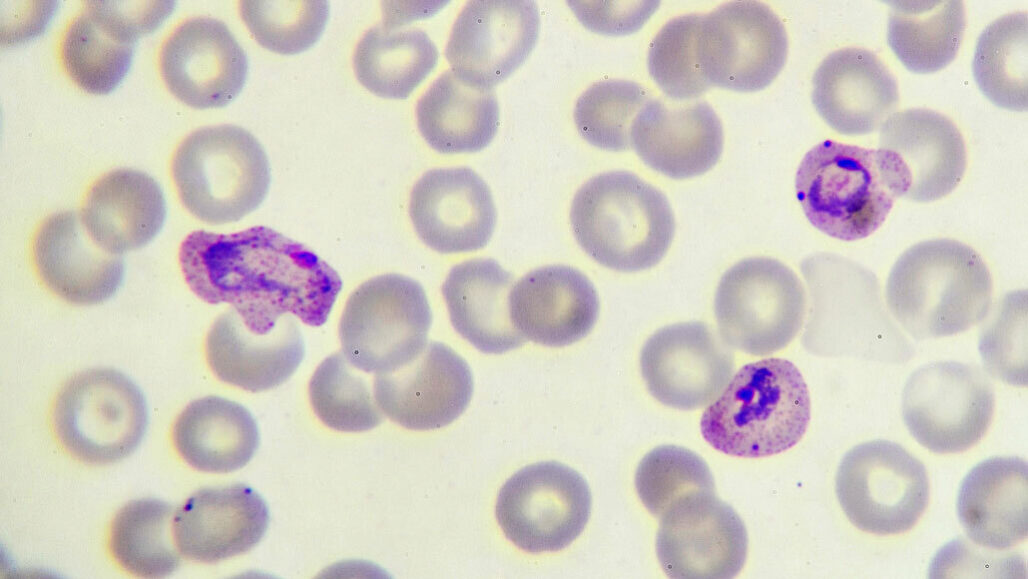
Showing posts with label parasites. Show all posts

Tuesday, November 26, 2024

The Fight Against Disease: A Strike Against Malaria

Malaria is an Epidemic

Malaria has been a growing problem in many third world countries, with mosquitos infecting an estimated 682,191 people a day in 2022. That is an increase of 5 million year over year from 2021. With the growing concern of how to stop this epidemic, researchers are looking at using a second-generation genetically attenuated parasite to create a "favorable immune induction profile and protective efficacy" response in humans infected with the virus. The trials show favorable results and it appears that the research is moving forward. This is great news, and to subdue any concerns, although the parasite does invade hepatocytes, it never reaches a blood stage infection due to the limitations placed on it via genetic modification. 


This is a great example of how genetic research can impact medicine and help save lives where other methods fall short. I'm excited to see where this goes, and if we can apply this to other parasite originated diseases. The next problem to work on in this case is a solution for those who have been previously infected, as this performs best in first infection cases, and sub optimally otherwise. Below is an important infographic relating to the study, easily digestible by those unfamiliar with the subject matter

.


Links:

https://www.nejm.org/doi/full/10.1056/NEJMoa2313892

https://www.nature.com/articles/s41541-024-00975-0

Tuesday, October 27, 2020

How malaria parasites hide from the human immune system

Plasmodium falciparum

According to ScienceNews, an article by Erin Garcia de Jesus, malaria parasites hide in the human body by keeping the cells they infect from clinging to blood vessels. By doing this, "infected cells get removed from circulation and parasite levels in the body remain low, making people less sick and allowing the parasite to persist undetected." This is why symptoms tend to wane during the dry season. This has been successful for the malaria parasite as it produces proteins and make them stick to the blood vessels so they won't be carried to the spleen. Researchers took samples to see if the gene was turned on or off from asymptomatic people in the dry season as well as symptomatic people in the wet season. "they saw that 1,607 genes had distinct seasonal patterns. In the dry season, 1,131 genes were turned on that were off in wet-season parasites. Another 476 were turned off in dry-season parasites, suggesting that when the wet season ends, P. falciparum may alter its genetics to make red blood cells less sticky." The one thing researchers are uncertain about is what genes are involved in the shift. I think this article was very interesting. First of all, this article is very recent and I think it's interesting to see how malaria parasites are able to hide in the human body and that researchers have just discovered this. As well as the fact that they are able to alter their genes which I had no idea they were capable of doing!

Friday, November 22, 2019

Parasitic Worm Infects Insect Brains

The worm infects the brain and functioning of the sandhopper. 

Researchers at University of Otago studied the bodies of sandhoppers and earwig, both types of insects found near water. They were looking to find how insects infected by a parasitic worm were affected by the parasite.

According to the Centers for Disease Control and Protection of the United States, a parasite is an organism that lives in or on the host and feeds off of the host. Parasites are contracted through eating or drinking. The CDC describes three different kinds of parasites: protozoans, helminths, and ectoparasites. In this case, the parasite in question is a helminth, or a multicellular worm that lays eggs within the host.

The researchers found that the protein structure of the infected worms was changed, but the function of the proteins did not change compared to the proteins of uninfected worms. They speculated that the protein change lead to negative effects of the neurons. They speculated that this change affected how memories were formed and stored. Thus, the parasites made the insects drown themselves in nearby bodies of water. These insects otherwise avoided water. The parasite eggs depended on water to hatch.

This research is interesting and pertains to genetics because in order to change the protein structure and function, the parasites must alter the order of base pairs on the hosts DNA. This change may be small but has large impacts.

https://www.cdc.gov/parasites/about.html
https://www.nytimes.com/2019/11/22/science/parasites-insects-drown.html

Wednesday, November 23, 2016

Diets Might Affect the DNA Sequence of an Organism's Genes

Research conducted at the University of Oxford discovered that what you eat might decide a lot more than what was originally thought. It turns out that an organism's diet has the potential to change their DNA sequence. This was discovered based off the idea that because organisms use food to build DNA, couldn't a difference in the food composition they consume lead to a differences in DNA sequences.Then, if this is true, is it possible to predict such differences based on how two organism's diets vary.


The study was conducted on two parasites who shared a common ancestor with each other, but both evolved to infect different hosts and therefor eat different foods. They discovered that the differences in the amount of nitrogen in these parasites diets bring out a change in their DNA. This is seen in the amount of nitrogen present in the different parasite's DNA sequences. Those that ate less nitrogen had less nitrogen present in their DNA compared to those whose diets consisted of more nitrogen. Based off these results a relationship is shown to exist between an organisms metabolism and its evolution, and how by adapting to a new diet an organism can bring about changes to its DNA sequences.

All of this is very interesting because it shows that it is possible to predict changes that may occur in related organisms by looking at their diets, but I'm not so sure yet whether this relationship between metabolism and evolution really exists. The changes in DNA sequences among those parasites could have come about due to a variety of things, not solely because they consume different levels of nitrogen. Nevertheless, I look forward to seeing more studies done on this in the future that both provide more evidence supporting the  existance of this relationship and how it can be applied to discover new things about evolution.

https://www.sciencedaily.com/releases/2016/11/161115111720.htm

http://www.ox.ac.uk/news/2016-11-15-scientists-uncover-genetic-evidence-we-are-what-we-eat

Sunday, November 20, 2016

Diets of Organisms Can Affect the DNA sequences of their Genes


Recent studies have found that the DNA sequence of an organism can be affected by their diet. This particular study was conducted at the University of Oxford where researchers studied DNA sequences of parasites. The parasites were then divided into two groups, depending on the composition of their diets, in which the researchers then observed differences in their DNA sequences. The co-author of this study, Dr. Steven Kelly, from Oxford's Department of Plant Sciences, shares insights about their hypothesis of this study, which was that an organism's DNA could be altered by the composition of the food it consumes.

Parasites were the ideal organisms to be used in this study because they are simple, and while they do share a common ancestor, they have since evolved to benefit from a variety of hosts and their diets very much differ. Parasites that were specifically used in this study were eukaryotic and bacterial parasites, that infect either plant or animal hosts. It was found in the study that changes in the DNA in each organism were typically caused by the level of nitrogen in the parasite's diet; particularly parasites with low nitrogen levels but high sugar levels had DNA sequences that consumed less nitrogen than a parasite with high nitrogen levels and high protein diets.

Related image

Researchers also were able to find a relationship between cellular metabolism and evolution, that prior to this study is believed to have been hidden. This newfound relationship was found based on mathematical models constructed by researchers; this model also helps to show how DNA sequences may be influenced by an adaptation to a different diet. From this evidence and information gained, researchers believe it is possible to use the analysis of DNA sequences of genes to predict the diets of other organisms that are closely related. These researchers are now beginning to look at more complicated organisms to see if they will find the same result. All of the data that has come out of this experiment certainly makes me believe that it will soon be possible to definitively tell for many more organisms, even more complex organisms, that the analysis of DNA sequencing of genes in one organism will surely help predict the diets of other organisms related to it.

http://www.wired.it/topic/dna/

<www.sciencedaily.com/releases/2016/11/161115111720.htm>.

Thursday, October 27, 2016

Protein found in hookworm ‘soup’ could fight asthma, other autoimmune diseases

A lab led by molecular parasitologist, Alex Loukas, has been analyzing hookworms and have found that they may be able to aid in the reduction of auto-inflammatory responses in diseases like asthma, Crohn's and celiac disease, and ulcerative colitis.  Hookworms have been around for a very long time, and when they get into a host they can cause nausea, anemia, cramping, fever, and a number of other symptoms. In the past century, humans have effectively reduced the abundance of hookworms in our offspring and have greatly reduced the abundance of hookworms in humans, and consequently the number of people that have these auto-immune diseases has also greatly increased. The scientific team studying these organisms has discovered that they may also have some traits that can combat these harmful diseases in humans.
Close up photo of a hookworm
The key isn't really in the hookworms, but the liquid that these worms secrete.  There is a protein in the fluid called AIP-2, which when injected into mice, alleviates their auto-immune responses.  In the experiment, the treated animals' diseases were almost completely reversed, and they also found that it shifted the balance of immune cells like T cells and dendritic cells.  This can be helpful in battling harmful immune reactions in the lungs.  Though the research is far away from any human testing, this may be a great discovery for treating diseases that cause a lot of ailment to humans.  This experiment also shows that our relationship to parasites should be altered. Parasites are only known to be harmful to us, but if we open our minds, we can discover completely new helpful relationships with these organisms in order to improve our quality of life.  In fact, the role could be completely reversed in which we harm those organisms for our own gain in health benefits.

Wednesday, April 20, 2016

Parasitic Worms May Prevent Crohn's Disease by Altering Bacterial Balance

The thought of parasitic worms swimming around in some people's intestines may be revolting, but they seem to forestall Crohn's disease and other various types of inflammatory bowel disease (IBD). A new study may explain how this works, which will reveal how worms enable microbes in the intestines to fight bacteria that promote inflammation.

In people with IBD, inflammation in the digestive tract usually results in bleeding and diarrhea which can sometimes lead to intestinal obstructions or other severe complications. Because parasitic worms can be harmful, they are unlikely allies against these diseases. IBD is rare in parts of the world where parasitic worms are prevalent. But, in more developed parts of the world where less people carry these parasites in their intestines, IBD is much more common.

To determine the "frenemy" relationship between our intestines and these parasites, immunologist Ken Cadwell and colleagues tested mice with the same genetic defect found in many humans with Crohn's disease. Mucus-secreting cells in the intestines malfunction in these animals, which reduces the amount of mucus secreted to protect the lining of the gut from harmful bacteria. Researchers also found a change in the rodents' microbiome. The abundance of a microbe, an inflammation-inducing bacterium found in the Bacteroides, soars in the mice with genetic effect. 

The researchers found that feeding the rodents one type of intestinal worm restored their mucus-producing cells to normal. At the same time, the levels of two different indicators declined in the animals' intestines. In addition, the bacterial lineup in the rodents' guts shifted. Bacteroids's numbers plunged, yet the prevalence of the Clostridiales, a species in a different microbial group, increased. A second species of worm also triggers similar changes in the mice's intestines. 

To check if these parasites cause the same effect in humans, the scientists compared two populations in Malaysia. One group consisted of urbanites living in Kuala Lumpur, who have few intestinal parasites. The second group consisted of an indigenous group, the Orang Asli, who live in a rural area where the parasites are widespread. A type of Bacteroides, the pro inflammatory microbes, predominated in the people of Kuala Lumpur. It was more rare among the Orang Asli, where Clostridiales was common. Treating the Orang Asli with drugs to kill their intestinal worms reversed this pattern, favoring Bacteroides species over Clostridiales species. The team analyzed two sets of data on the frequencies of different intestinal microbes, which included U.S. residents who were healthy, and children in North America who have IBD. They saw the same inverse relationship, where Clostridiales species are up and Bacteroides are down, and vice versa. 

The study's findings suggest that parasitic worms deliver their benefits through their impact on the microbial mixture in the intestines. But, the researchers caution that direct evidence is still warranted to show that Bacteroides species are responsible for Crohn's disease. Also, turning the results into clinical treatment may be difficult, because recent clinical trials were disappointing. The researchers indicated that worm therapy might only work on roughly 30% of people suffering from Crohn's disease, who have the same genetic flaw as the mice tested. 

I think this data is very interesting, and the correlation seems promising, but this treatment may not be realistic for many with Crohn's disease because people may not agree to this treatment. On paper this sounds like a great, natural treatment, but there also may be complications of these parasites inside the body that have not been researched or tested. I cannot imagine that the majority of Crohn's patients would choose to have these worms inside of them, over taking other medications to control their symptoms. Again, I believe these various studies are promising and do show correlation, but more research is definitely warranted, and may not be clinically realistic. 

Tuesday, November 17, 2015

Alteration of Butterflies Genes Using...Parasites?


The monarch butterfly, along with the silkworm and many other types of butterflies, have been found to be genetically modified by parasites, more specifically, genes from parasitic wasps. Researchers discovered that "These genes were acquired through a virus that weaves in and out of DNA...Parasitic insects known as braconid wasps lay their eggs inside the caterpillars of butterflies and moths. The wasp larvae that hatch from the eggs typically kill the host caterpillars" (Live Science).  The wasps also inject what is called a bracovirus, which can then incorporate themselves into the genomes of caterpillars.  These viruses benefit the parasite, allowing it to live freely inside it's host, the caterpillar, and from there, can then weave themselves into the host's genomes, allowing the virus to inhibit the immune defense of the host, protecting the larvae of the wasp (Live Science).
Butterflies may, sometimes, repel these parasites, by eliminating the eggs, or killing the larvae.  They can also repel these attacks if a different species of wasps, that doesn't normally parasitize that species of butterfly, attacks that butterfly.  However, this parasite has a mutual relationship with its host.  Just as the butterfly, or caterpillar, helps the parasite by giving it a safe place to protect the wasp larvae, the parasite returns the favor by protecting the host of other viruses.  The caterpillars and butterflies that survive such attacks, can then go on to produce offspring with the newly modified genes.  
I found this to be very interesting because usually we see GMOs (genetically modified organisms) being created within science labs; however, this article showed GMOs be created within nature itself.   


Friday, March 6, 2015

Using a Parasites Genome Against Itself

Parasitic hookworms are known to infect over 1 billion individuals worldwide, with many of these people living in undeveloped or developing countries. "A parasitic infection is a balance between the parasites trying to suppress the immune system and the host trying to attack the parasite." (MNT) Water and Sanitation in many of these developing countries is poor and causes  gastrointestinal issues, eyesight problems, and stunted growth in individuals. Although there are medications to kill hookworms, like many bacteria(some of which are resistant to antibiotics) they are developing a resistance to the medications. "As part of the search for effective new drugs, Sternberg(Professor of Biology at Caltech and a Howard Hughes Medical Institute investigator) and his colleagues investigated the genome of a hookworm species known as Ancylostoma ceylanicum." (MNT 1) The researchers decided to sequence 313 million nucleotides of the A. ceylancium genome and found that it is roughly 10% of the size of the human genome. Seeign as though there were over 30,000 genes the began looking at RNA to find out which genes were turned on when the parasite infected its host. There are 90 ASPR proteins (activation-associated secreted proteins) and the thought is that by targeting these genes, better treatments and medications can be provided to those that are infected.

I believe that this is an amazing discovery that will be very helpful for people in countries were parasites are primarily found. I also think this will be good for people that choose to go to these countries, as a way to prevent themselves from becoming infected.

Image result for hookworm parasites

Thursday, March 5, 2015

Drug Resistant Malaria Parasites


    Fifty years ago the spread of malaria carrying mosquitoes became an issue because they were all resistant to the drugs that were created to stop the disease. At that time the drug chloroquine was used as a cure. According to recent findings history looks like it is about to repeat itself. The parasite is currently only in Asia, but is showing possibility that it will spread to India soon. If this is true thousands of lives will be at risk because they will all become infected with resistant malaria.
      Researchers at Oxford studied around a thousand samples of malaria parasites and found that 39% contained genetic makeup that made them resistant to artemisinin which is the drug that has been used to cure malaria in recent times. With this information they were able to map out regions that will be at risk if the malaria resistant parasite keeps spreading. This can help those areas prepare for the possible infestation. The spreading rate of the parasite is actually starting to scare certain scientists.

This article is very interesting in that it shows how over time genetic mutations made the malaria parasite resistant to certain drugs. It is also interesting in that this is not the first time it has happened. The fact that this is actually an alarming threat to is crazy. Many bugs and even humans have become resistant to drugs, so it makes a person wonder if constant research should be done for a new drug when the previous one stops working. 


Sunday, February 1, 2015

Parasites Mutate Their Host Cells Into Cancer Cells


In certain tropical areas there is a parasite called Theileria.  These parasites infect the white blood cells of mammals and cause their healthy cells to mutate into cancer like cells. These parasites mainly infect cattle. Once Theileria attacks the white blood cells it will let out a protein that is called Pin1. This protein allows for the mutation in the cells to happen. Scientists were actually able to create a drug that will take the cancer cells and return them back to normal cells.

This discovery is helping scientists further understand if and how parasites and cancer are connected. Dr. Helen Rippon head of worldwide cancer research was even saying that it has been proven parasites can cause cancer in humans. Schistosomiasis  is another example of a cancer causing parasite. A human infected with this parasite increases their rise of bladder cancer. Schistosomiasis infects about 240 million people worldwide.

This article is very interesting in explaining to readers how cancer can be caused by a parasite. It is also very intriguing in the fact that scientists were able to create an anti-parasite drug to cure the host cells. The article is proving that future research can probably pinpoint the cause of many more types of cancer and gives hope that more cures will be discovered.

Article: http://www.sciencedaily.com/releases/2015/01/150126112243.htm

Tuesday, November 25, 2014

Pesky Parasites!

Parasites are often tricky to deal with once they are in the body. However, one may wonder how parasites are just allowed to interact with cells in an organism’s body without triggering alarms in the immune system. Scientists believe they have solved that mystery for some parasites. Turns out, some parasites have been disguising themselves to get past the cell walls of cells in order to interact with genetic material. Many cells use vesicles to bring nutrients and materials into a cell and waste out of the cell. Some parasites are now using genetic material to create their own vesicles to get past the cells defenses, much like, as some would say, Trojan soldiers in a giant wooden horse. When an experiment was undergone to test the theory, it was found that a parasite found in a mouse was able to directly interact with the mouse’s genes, altering its perception of the vesicle and manipulating its mechanisms to reduce resistance to the infection of the parasite.


While this Trojan horse situation seems like one of great danger, many scientist believe it may lead to not only better treatment for diseases that parasites cause, but even better treatment for allergies since the machinery the parasite vesicles block are also the ones that trigger allergic reactions. The vesicles from the parasites also leave very recognizable genetic material which can often be detected in human blood. This would make parasite infection detection much easier. Dr. Amy Buck from the University of Edinburgh’s School of Biological Sciences said, “We can now develop ways to target this with implications for the billions of people and animals at risk of infectious diseases and allergy." The research is set to continue in hopes that other parasites follow the same method of infection and perhaps viruses too. If more parasites invade in this way it will be easier to guard against them.