Showing posts with label metabolism. Show all posts

Friday, September 19, 2025

Dormant Power: The Hibernation Code Hiding in te Human Genome

In a study done by the University of Utah Health, new genetic research proposes that humans carry the same hibernation-related DNA that hibernating mammals have. In hibernators like squirrels, researcher have found that a gene cluster called the fat mass and obesity locus (FTO) plays a significant role. While humans have these genes as well, this region is the strongest genetic risk factor for human obesity. Researchers who identified the hibernator-specific DNA region near the FTO altered neighboring genes, discovering that the FTO locus is critical in metabolism. In hibernator-specific regions in mice, some mutations sped up and slowed down weight gain, while others impacted the mice’s ability to recover body temperature after being in a hibernation-equivalent state. These DNA regions were found not to be genes themselves, but DNA sequences that communicate with genes nearby and alter their expression up and down.

In understanding the hibernator’s ability to change its metabolism, better treatments for human metabolic disorders, including type 2 diabetes, could be created. In looking at the human potential of hibernator genes, researchers concluded that the hibernator-associated changes in the genome seemed to disrupt the function of certain DNA pieces rather than create a different function. Considering this, it seems that hibernators may have lost constraints that would otherwise stop extreme flexibility in the ability to control metabolism. This means that humans may be on a restrained temperature scale locked to a narrow range of constant energy consumption, while hibernators do not have this lock.

Hibernators also have the capacity to reverse neurodegeneration, stop muscle atrophy, and stay in good health despite fluctuations in weight. The researchers at the University of Utah Health believe their findings show that humans may already have the necessary genetic code to adapt similar behaviors. Finding this hidden hibernator mechanism within the human genome could help to significantly improve our own health.



Saturday, October 21, 2023

Development of Resistance to White-Nose Syndrome In Bats


White-nose syndrome (WNS) is a lethal fungal disease caused by the ascomycete Pseudogymnoascus destructans. Bat populations have been decreasing drastically across North America because of this disease, which causes bats to prematurely awaken from hibernation in search of water and food when little is available. Since there is little food resources available when the bats affected by P. destructans exit hibernation they starve or freeze to death. Recently, the little brown bat's population has been increasing suggesting a resistance to the fungus. Wing punch samples from survivors and victims of a WNS identified 63 unique single nucleotide polymorphisms (SNPs) that occur more often in WNS survivors than in bats who died of WNS. Only one of these were associated with the immune system in bats, while the rest were related to host response to WNS and changes in metabolism during hibernation. Survivors of the disease were found to have better fat storage and temperature regulation than those that succumbed to it. Researchers have tried developing vaccines, fungicide treatment, and habitat improvement strategies to combat WNS; however, these methods are rather ineffective and costly. 

Identifying the behavioral changes in WNS survivors as well as liking these changes to genotype and phenotype could be the next crucial step in combating this disease. Personally I would like to see more comparisons between North American and Eurasian bats and their genomes as Eurasian bats are not as susceptible to WNS (thought to be because of coevolution due to common origin). The resistance seen in little brown bats suggests a future for at least one species of bat, and with knowledge of what genes could aid in a bat's survival it may not be unreasonable to genetically modify bat species. In fact for farmers of plants like bananas, mangoes, cashews, avocadoes, peaches and cloves there would be financial incentive to create such an organism as without bats these species may cease to exist.


https://asm.org/Magazine/2021/Fall/Are-Bats-Developing-Resistance-to-White-Nose-Syndr#:~:text=But%20studies%20are%20now%20suggesting,the%20solution%20to%20the%20problem 


https://www.nationalgeographic.com/animals/article/white-nose-syndrome-some-bats-becoming-immune-pandemic

Sunday, February 6, 2022

Preference for Black Coffee and Dark Chocolate has Been Linked to Genetics


   An article from U.S. News talks about how scientists have discovered that people who like black coffee likely inherited this preference from someone in their family. Scientists found that black coffee drinkers' have a genetic variation that allow them to metabolize caffeine much faster than a regular person. Because they metabolize caffeine faster, the stimulating effect that caffeine has wears off much faster as well, and this results in them drinking more or stronger coffee. Scientists believe that these people begin to association the bitter taste of coffee with mental alertness and the stimulation caffeine gives them, and they tend to have a preference for other bitter foods like dark chocolate.

    As someone who does not particularly like coffee or drink it, I find this very interesting especially since I could never understand why some people find black coffee so appealing. It is amazing to learn that a genetic variation that changes the way someone metabolizes caffeine can create this learned behavior and preference for bitter tasting foods.

Related Article

Your Preference For Black Coffee Could Be Due To This, Finds Study - The Fresh Toast

Friday, April 9, 2021

New Metabolic Research leads to New Cancer Treatments


The mTOR pathway is a vital metabolic pathway for the creation of new cells, helping controlling someone's metabolism. It regulates cell growth based on the nutrients available to the cell, halting cells from being created if not enough nutrients are present. mTOR also produces s-adenosylmethionine (SAM) a metabolite used in protein synthesis that is also important for cell growth.

Cancer cells need to use the mTOR pathway to move throughout the body. When cancer is present the mTOR pathway is very active to because it is vital for the synthesis of new tumor cells. Because mTOR is essential for all cells in the body, inhibiting it can lead to some bad side effects., Knowing that when in tumor cell mTOR produces much more SAM than usual, researchers at Northwestern University have done studies on mice, injecting them with tumor cells and giving them SAM inhibitors and testing the speed at which the cancer spread. Their results were overwhelmingly positive and as of April 9th Biotech company Celuity announced an agreement with Pfizer to develop and commercialize the first mTOR inhibitors. I think that once the mTOR inhibitors have successful results in being adjuvant therapy, the safer route of SAM inhibitors will start to be used and better cancer treatments will follow.


 Links:


https://pipelinereview.com/index.php/2021040977858/Small-Molecules/Celcuity-Announces-Worldwide-Licensing-Agreement-with-Pfizer-to-Develop-and-Commercialize-Gedatolisib-a-First-in-Class-PI3K/mTOR-Inhibitor-for-Breast-Cancer.html


https://medicalxpress.com/news/2021-04-inhibiting-production-key-material-biosynthesis.html

Wednesday, October 9, 2019

Genetic Study Points to Metabolic Roots of Anorexia Nervosa

Article Link: genetic-study-points-to-metabolic-roots-of-anorexia-nervosa-66159
Supporting Article: researchers-explore-the-genetics-of-eating-disorders-65237

Through the biggest research on anorexia nervosa eating disorders, it was discovered that there are eight different genetic markers for the disorder. There is connection between AN and a locus overlapping six genes on chromosome 12 (Am J Psychiatry, 174:850–58) which is a chromosome that is linked to other disorders such as autoimmune diseases, and diabetes 1. Leading to the confirmation that the disorder has both psychiatric and metabolic origins. The disorder "claims more lives than any other psychiatric disorder. The condition affects up to 2 percent of women and 0.3 percent of men worldwide." psychiatrists have always struggled to find a treatment for the disorder due to its branched causes. 

In a breakthrough discovery, it was found that the disease is linked to the body’s ability to metabolize sugars and fats (insulin-glucose metabolism) and is related to high levels of physical activity. It was also found that characteristic single-nucleotide polymorphisms (SNPs) GABRG genes—which code for receptors involved in neural signaling that anorexia shares with several other psychiatric disorders, such as obsessive compulsive disorder, major depressive disorder and schizophrenia. Researchers have established that AN is 50 percent to 60 percent heritable. How the disorder works is that it allows the body to live without food longer than normal. This helps scientists to understand the disorder more and take metabolism and the patient's family history and genome into consideration when they work on a treatment plan for their patients. 


Genetic Study Points to Metabolic Roots of Anorexia Nervosa
I find these articles interesting as it changes no only the way psychiatrists view the disorder but how the patients, their family, and society views the disorder as well. Finding a biological tie to the disorder allows the patient to feel better about themselves and relieves some of the shame, excessive self-criticism and guilt they experience. It helps the society understand the disease more and know that this is a biological as well as it is a psychiatric disorder and not just a diet that an individual chooses. 

Thursday, July 25, 2019

Slowing Metabolic Rate Can Prevent Detrimental Effects of Genetic Mutations

     At Northwestern University, researchers sought to analyze the effect a 50% decreased metabolic rate posed on mutation rates in fruit flies. Their hypothesis was that this would increase mutation rate, but to their surprise, detrimental mutations never occurred. The experiment was led by Richard Carthew, who stated that with a normal metabolism, normal developmental problems in fruit flies occurred. However when the metabolic rate was slowed, these problems disappeared and while the fruit flies developed more slowly but did not experience developmental problems as they aged. According to Northwestern's Luis Amaral, it's always been though that if you break some genes, there can be some extreme consequences on development. However, what was found was that when these same genes were "broken" in the presence of a slowed metabolic rate, the previously seen consequences were not present.

      The research could explain why factory grown chicken, which are bred and fed for rapid growth, typically have more developmental problems and also contributes to the notion on why caloric restriction is correlated to longevity.

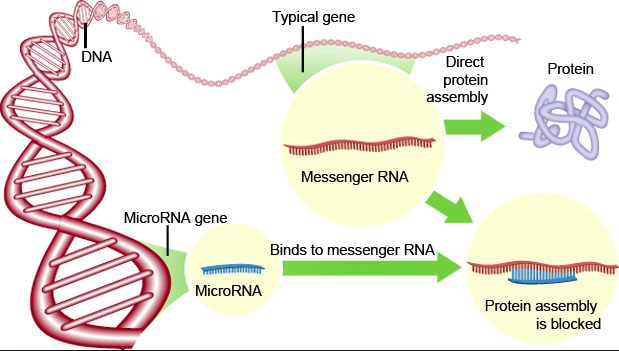
     Additionally, it was found that fruit flies with slowed metabolisms could also live without any microRNAs, which are typically responsible for regulating gene expression. MicroRNA, commonly abbreviated miRNA, can function simply by "blocking" genes on mRNA. The inverse is also true, as miRNA can also function to turn on transcription as well as regulate the amount of protein produced. Carthew said that it's been a long accepted fact that microRNA are an essential aspect of any living organism. However in this study, fruit flies with no microRNA whatsoever couple with a slowed metabolism were able to become normal functioning adults.
Image result for microrna   

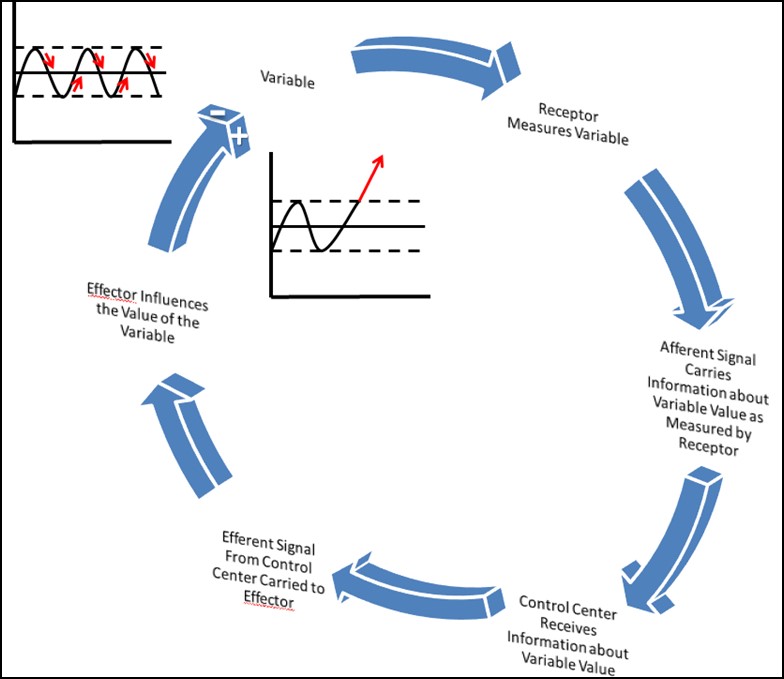
     Carthew one Amaral believe this is possible through the mechanism of feedback response, which quite simply is the ability of complex systems to adjust activity/performance to meet a desired outcome. Amaral states that a problem such as a mutation can be catastrophic in a fast growing organism, and that a slowed rate of development "can give an organism more time to adjust and react and correct potential errors. Carthew believes that this could eventually be applied to cancer, since tumors are extremely metabolically active. Tumors require enormous amounts of energy to grow at such a high rate, which is the reason patients who suffer from cancer often feel exhausted. If oncogenic cells could be directly targeted to have their metabolisms slowed, it is a possibility that the cell may be bought time to correct detrimental errors in cell reproduction.
Feedback Response Loop


Simplified Mechanism of Feedback Response
https://www.sciencedaily.com/releases/2019/07/190725150936.htm

Thursday, March 22, 2018

Can Coffee Improve Your Workout?


Recently, a study conducted by the University of Toronto in Canada looked into drinking coffee and its effects on an athletes performance. Coffee is the main source of caffeine for millions of peoples diet and can cause a variety of effects depending on the individual. Some people may be shaky and awake after consumption while others, report no change in awareness, shakes or jitters.  Researchers found that the gene that metabolizes caffeine is the CYP1A2 gene and depending if you have one or two copies of this gene, determines how fast your body can break down this drug. The study looked at 100 healthy young male athletes and required each individual to pedal a stationary bicycle for 10km as quickly as possible. It was shown that those with two copies of the CYP1A2 gene, considered fast metabolizers, had increased performance after consuming large amounts of caffeine while those with one copy of the CYP1A2, moderate metabolizers, showed almost no change in performance. However, those who are considered slow metabolizers of caffeine, who have no copies of CYP1A2, showed the biggest increase in physical performance during this study. This study may show a link to caffeine and performance but researchers stated in the article that there is no way that this study can conclude that caffeine does in fact increase an athletes performance.

Article: https://www.nytimes.com/2018/03/21/well/move/can-coffee-rev-up-your-workout-it-may-depend-on-your-genes.html
Original Study: https://www.ncbi.nlm.nih.gov/pubmed/29509641

What is the Dengue virus? And are You at Risk?


What is the Dengue virus? And are You at Risk?


Dengue virus mostly found in the tropical areas and is transmitted through animal or insect bite/stings. The Dengue virus is mostly spread through mosquito bites. The Dengue virus can either cause Dengue fever or Dengue Shock Syndrome. Dengue fever is characterized by high fever, severe headaches, pain behind the eyes, severe joint and muscle pain, fatigue, nausea, vomiting, skin rash, and mild bleeding (i.e. nose bleeds, bleeding gum, or easy bruising). If dengue fever goes untreated it could lead to dengue shock syndrome. Dengue shock syndrome can be a result from dengue infection. Dengue shock syndrome causes increased vascular permeability, myocardial dysfunction and dehydration which in turn causes multi-organ failure. In this study, researchers analyzed the genetics 411 patients admitted with dengue virus infection to three hospitals in Thailand. The patient’s genetics were compared to the genetics of 290 healthy individuals admitted to the same hospitals. From the data collected researchers identified two genes related to blood vessel inflammation that confer risks of Dengue Shock Syndrome and four genes relate to drug metabolism that affect risk of Dengue Fever. The study's main purpose was to determine if different races had a higher risk for dengue inflections. The researchers concluded that Southeast and Northeast Asians are highly susceptible to both phenotypes, while African are best protected against Dengue Shock Syndrome and Europeans best protected against Dengue Fever but most susceptible to Dengue Shock Syndrome. I find this article interesting because with a greater understanding of the genetic correlations of Dengue inflections, research could be done find treatments to make individuals genetically less susceptible to the diseases. With a better understanding of the origin of the disease, treatments can be modified to attack the source of the disease not just counteract the symptoms. Also, the idea that the researchers focused on race susceptibility in interesting. I wonder how the results of this study how change when considering mixed raced individuals. Would these individuals have a combination of susceptibility/immunity? Or will these individuals experience adverse effects?


Tuesday, January 23, 2018

Can Genes Have An Affect on Obesity?


Many researchers have spent time identifying genetic variants that increase the risk of obesity, but are still trying to determine how these genes interact with other factors in our body to make us fat. Due to advances in molecular biology, the Human Genome Project helped to identify about 200 loci that point to genes that increase the risk of obesity. A genome-wide association study scanned many individuals’ DNA looking for what could be liking them to what causes obesity. The associations studies show obesity involves not just one gene but many genes and their influence seems to be low. Scientists are also trying to find more about the correlation between genes and the environment. Although obesity can be a pattern in some families, it is also a known fact that parents constantly cook and eat the same foods. Genes may not explain it all and can have a weak effect on some, but they can also have a stronger effect on those who are exposed to different environments.
According to another article in the NY Times, Dr. Majzoub and his colleagues wrote a paper figuring out how the gene known as MRAP2, acts in the brain to control weight. They discovered that it is a helper gene. It normally acts in the brain to signal another gene already known to be involved in controlling appetite. This article captured my attention because the questioning of whether genes can alter our obesity really had me thinking. Although, from my point of view, I always thought it could be from others having a faster metabolism then some, or most just choosing to eat what they want and not maintain a healthy lifestyle. I also began wondering if you were born into a family who all appear to be obese, can you most likely inherit those genes and be a little overweight too?


Monday, March 13, 2017

Java Genes

Have you ever wondered how some people could make it through a whole day running on one cup of coffee while others could drink a gallon and still need a nap?  Well I have since I'm one of those people who probably consume a typically dangerous amount of caffeine on a daily basis, and it turns out that it is actually linked to your genes.  Researchers have found several variations of a gene that controls caffeine metabolism.  Some people carry a variation where they metabolize caffeine more slowly than others who have a different variant.  The slower your body metabolizes it, the less the person feels the need to drink it, while the faster a person's metabolism is, the more caffeine they can tolerate at a time.  This is why some people feel jittery or anxious after one cup as opposed to others who just feel more happy and energized.  In addition to a link to caffeine metabolism, scientists also noted that those same genes also coded for how the body metabolizes other drugs in the body, like nicotine.  This finding in the study could be very important to the future of medicine if they can link these genes controlling metabolism of other drugs as well, which could hopefully lead to new, more precise treatments of numerous diseases.

Wednesday, March 1, 2017

How Infectious Bacteria Colonize our Intestines

A recent study from Hebrew University shows the specific mechanisms for how bacteria are able to colonize a host. By utilizing a pathogenic strain of E. coli, the researchers were able to determine that the bacteria feel the proteins on the surface of where they are traveling. When they feel proteins that are present in the intestines, they implant themselves and start to undergo gene expression. Certain genes in their genome only express after they have implanted themselves in the intestines. They get the energy for this gene expression by feeding off of the host cell's metabolism, making them behave similar to a virus. I found this article particularly interesting because it gives us more insight as to how bacteria are able to colonize their hosts. This research could potentially help medical researchers to figure out new and more effective ways of treating bacterial infections.


http://science.sciencemag.org/content/355/6326/735.full 

Wednesday, November 23, 2016

Diets Might Affect the DNA Sequence of an Organism's Genes

Research conducted at the University of Oxford discovered that what you eat might decide a lot more than what was originally thought. It turns out that an organism's diet has the potential to change their DNA sequence. This was discovered based off the idea that because organisms use food to build DNA, couldn't a difference in the food composition they consume lead to a differences in DNA sequences.Then, if this is true, is it possible to predict such differences based on how two organism's diets vary.


The study was conducted on two parasites who shared a common ancestor with each other, but both evolved to infect different hosts and therefor eat different foods. They discovered that the differences in the amount of nitrogen in these parasites diets bring out a change in their DNA. This is seen in the amount of nitrogen present in the different parasite's DNA sequences. Those that ate less nitrogen had less nitrogen present in their DNA compared to those whose diets consisted of more nitrogen. Based off these results a relationship is shown to exist between an organisms metabolism and its evolution, and how by adapting to a new diet an organism can bring about changes to its DNA sequences.

All of this is very interesting because it shows that it is possible to predict changes that may occur in related organisms by looking at their diets, but I'm not so sure yet whether this relationship between metabolism and evolution really exists. The changes in DNA sequences among those parasites could have come about due to a variety of things, not solely because they consume different levels of nitrogen. Nevertheless, I look forward to seeing more studies done on this in the future that both provide more evidence supporting the  existance of this relationship and how it can be applied to discover new things about evolution.

https://www.sciencedaily.com/releases/2016/11/161115111720.htm

http://www.ox.ac.uk/news/2016-11-15-scientists-uncover-genetic-evidence-we-are-what-we-eat

Thursday, October 27, 2016

‘Habit’ Uses Your DNA to Act as Your Personal Nutritionist


A new company open now to beta testing is boasting that it can help achieve your diet goals by going far beyond any other diet trend. Because every person is different, these generalized plans don’t affect everyone the same, and if one person metabolizes one food better or more efficiently than another, two people eating the same health food will see different effects. Instead of taking a generalized approach at helping their clients, Habit asks for a DNA sample and formulates a nutrition plan based solely on each individual client. But it gets better (and weirder) they will also pair you with a Habit nutrition coach and they deliver meals cooked according to your personal genomic blueprint and health goals.
So how do they make this blueprint? Well, DNA codes for every process your body undergoes metabolism is no different and the company lab checks for over 60 individual biomarkers that together describe how the individual will ‘react’ or metabolize food. They also require the client to take a liquid meal supplement once in the beginning of the service to check “phenotypic flexibility” which just gives a working understanding of your metabolism in action (think of it like a control in an experiment). From this information, they make a blueprint of an optimal balanced diet for the individual.

It’s not all about losing weight either--the clients express their goal and the coaches and personalized food help them reach that goal. So whether it’s lose some weight, training for a sport, healthily putting on weight, Habit claims to be the best help to you. The company has a very interesting goal and procedure and personally I’m excited to hear more about the results of their beta testing.

Links:
http://www.popsci.com/personalized-nutrition-company-will-use-your-dna-to-tell-you-what-to-eat?dom=currents&src=syn
https://habit.com/our-science/

Friday, November 20, 2015

Genetic Makeup May Help Explain Methadone Overdoses


 Genetic variations that affect how quickly people metabolize the synthetic drug methadone have been identified. Methadone is a prescription drug used to treat pain. Methadone is also used to treat addiction to narcotic drugs used for pain relief and heroin. Although methadone is a narcotic pain reliever, if it remains in the body for too long, it can be deadly. 

Dr. Evan Kharasch from Washington University School of Medicine stated that, “A person’s genetic makeup influences how an enzyme in the liver metabolizes methadone. This explains why some people can have very high levels of methadone in their blood – high enough to trigger a potential overdose – even if they have received the same dose of the drug as others who are not affected the same way.” The researchers have concluded that if genetic testing is used prior to patients being prescribed methadone that the findings could help prevent and reduce some of the 5,000 deaths that occur in the United States each year due to methadone overdoses. In figuring out why people metabolize methadone differently and how exactly a person’s genetic makeup affected that process, blood samples were analyzed from healthy volunteers to determine their genetic makeup and then gave them methadone and observed how quickly it cleared from their bodies. This experiment allowed the researchers to pinpoint genetic sub-types that affect methadone metabolism. 

The results from the experiment showed that variations in a gene that influences how methadone clears in the liver had a major effect on how long the drug stayed in the body. The researchers also found that the genetic variants were more likely to affect metabolism of methadone in liquid or pill form than intravenous methadone. To primary doctors, that finding is important because they may be more likely to prescribe the oral form and may or may not be familiar with the difficulties in using methadone to treat pain. I found this interesting because if tests are done prior to prescribing patients the narcotic pain reliever, overdoses due to the drug can be prevented and the overall amount of deaths per year due to overdoses can decrease.

In addition, the study also found that, African-Americans were more likely to have the gene variant associated with slower methadone metabolism and less likely to have the gene variant associated with faster methadone metabolism. They believe that, that is why African-Americans and Caucasian patients typically clear methadone at different rates, because African-Americans were more likely than Caucasians to have higher methadone levels in the blood despite receiving the same amounts of the drug.

Original Article