Showing posts with label DNA sequence. Show all posts

Friday, September 19, 2025

Dormant Power: The Hibernation Code Hiding in te Human Genome

In a study done by the University of Utah Health, new genetic research proposes that humans carry the same hibernation-related DNA that hibernating mammals have. In hibernators like squirrels, researcher have found that a gene cluster called the fat mass and obesity locus (FTO) plays a significant role. While humans have these genes as well, this region is the strongest genetic risk factor for human obesity. Researchers who identified the hibernator-specific DNA region near the FTO altered neighboring genes, discovering that the FTO locus is critical in metabolism. In hibernator-specific regions in mice, some mutations sped up and slowed down weight gain, while others impacted the mice’s ability to recover body temperature after being in a hibernation-equivalent state. These DNA regions were found not to be genes themselves, but DNA sequences that communicate with genes nearby and alter their expression up and down.

In understanding the hibernator’s ability to change its metabolism, better treatments for human metabolic disorders, including type 2 diabetes, could be created. In looking at the human potential of hibernator genes, researchers concluded that the hibernator-associated changes in the genome seemed to disrupt the function of certain DNA pieces rather than create a different function. Considering this, it seems that hibernators may have lost constraints that would otherwise stop extreme flexibility in the ability to control metabolism. This means that humans may be on a restrained temperature scale locked to a narrow range of constant energy consumption, while hibernators do not have this lock.

Hibernators also have the capacity to reverse neurodegeneration, stop muscle atrophy, and stay in good health despite fluctuations in weight. The researchers at the University of Utah Health believe their findings show that humans may already have the necessary genetic code to adapt similar behaviors. Finding this hidden hibernator mechanism within the human genome could help to significantly improve our own health.


Tuesday, July 18, 2023

A study proposes that the genetic sequencing of infants should be conducted at birth.

The BabySeq Project was a randomized clinical trial designed to measure the utility of using genomic sequencing in routine newborn care. Several years ago, they conducted research which revealed that 17 of 159 seemingly healthy babies whose genes were sequenced showed mutations that revealed the likelihood of future illnesses. There is a follow-up that BabySeq did, which shows that three mothers from the previous study took action to prevent the conditions that they saw mutations for. 

Currently, at birth, newborns are screened for 60 diseases, but there are 700 treatable conditions that are not included in the screenings. The possibilities with these technologies could potentially identify biomarkers that develop diseases, which could help with preventative measures. In terms of what BabySeq’s impact is on the modern family, three of the babies were revealed to be carrying BRCA1 and BRCA2 genes, which can cause an increased risk of cancer. Their mothers, who did not know they were carrying this gene, had risk-reducing surgery after learning of their baby's status.


Fyodor Urnov, an expert in gene editing at the University of California, Berkeley, argues that it is unethical to not use this technology, considering it can save lives long term. In my view, assessing this technology on a case-by-case basis is essential, as it may prove particularly valuable for families with a background of genetic illnesses. However, a significant portion of our population remains reluctant to embrace the concept of DNA collection and sequencing. In my opinion, DNA sequencing at birth should be an option for parents, but never forced or pressured to those who are disinclined. 


Saturday, December 3, 2022

Genomic Study of S. flava Leads to Insight on Evolution of Herbivorous Insects


Herbivorous insects make up roughly 25% of all animals on Earth. In an effort to understand them better researchers did a study on Scaptomyza flava, a fruit fly species of the family Drosophilidae. They are leaf-eating insects which use their ovipositors, or egg laying organs with valves that open and shut like jaws and tough, tooth like, bristles to cut into and scoop out their food. It mimics a mouth. Some scientists hypothesized that the development of organs like the ovipositors were central to the evolution of herbivorous leaf-eatering flies, like S. flava. To figure this out researchers tried to learn how changes to the ovipositors corresponded to flies' feeding habits and diet. They found that bristle number increased with the emergence of plant eating millions of years ago. They also wanted to learn more about how insects started eating plants and this study was done by sequencing these flies' DNA. The team found candidate genes thought to be responsible for the development of these "toothy genitals", as the article calls them. 

I was surprised to learn there is more than one species of fruit flies. There are other kinds of fruit flies other than the ones we work on in labs. I was also surprised how important a feature, this weird and small organ, is to these biologists. How important the study of the ovipositor is to better understanding herbivorous insects. I am glad that this DNA study was their first step towards understanding the "genetic basis of this trait," as well. 

Thursday, November 29, 2018

Discovering Britian's past from DNA


In the early 400’s, the Roman empire was forced out of the area we now call Britain by the Anglo-Saxon forces, and with it brought what was believed to be the end of a group named Romano-British. However a fine-scale genetic analysis of genes shared in British inhabitants shows that the Romano-British survived the invasion and slowly interbred with the Anglo-Saxons to form the British population we know today. The British islands were completely empty around 10,000 years ago due to the ice age receding and exposing the land, nomads slowly trekked from mainland Europe over land bridges to the newly exposed land. The researchers determined that those in western wales share the most genetic information with these original inhabitants of the land. Another discovery was that the population of Northern Scotland shares about 25% genetic makeup with ancestors from Norway supporting a theory that the two lands were once connected. Oddly enough the researchers discovered little to no traces of foreign rule from the Danish in early 11th century nor Norman population in the 1060’s but were mostly dominated by the Roman linked DNA as Caesar's rule put a high priority on intermarriages between local populations and the Roman Empire. The Infrastructure of the Roman empire allowed for easier relocation to Britain from all across the Roman Empire, creating a more diverse population.

It is interesting to find out the background and the different populations that contributed to what we currently call Britain. Britain may seem like a small nation if you compare population sizes of the different nations in the world however Britain plays a key role in many cultures throughout the world. Seeing as Britain once controlled 3/4ths of the entire world and is now reduced to a small mound of land that is no larger than the US state of Michigan, fragments of British DNA are scattered around the world and knowing what makes up this DNA lets us understand what influences other cultures that were once under British rule.

References

Wade, N. (2017, December 21). Study Reveals Genetic Path of Modern Britons. Retrieved from https://www.nytimes.com/2015/03/19/science/study-reveals-genetic-path-of-modern-britons.html?rref=collection/sectioncollection/science&action=click&contentCollection=science&region=stream&module=stream_unit&version=search&contentPlacement=8&pgtype=sectionfront

O'Hanlon, L. (2012, October 22). Tracing Your Ancestry. Retrieved from https://www.technologyreview.com/s/405384/tracing-your-ancestry/

Friday, December 1, 2017

Teaching life a new trick: Bacteria make boron-carbon bonds


In article on Science Daily, researchers have developed a way to genetically engineer a enzyme in a bacteria that would create chemical compounds containing bonds between boron and carbon. This is essential because there has been no known life form that can produce the boron-carbon bonds because the bonds would be usually created by chemists in laboratories. The findings is part of a new wave of synthetic biology, which living organisms are taught to make "greener"chemical compounds needed for pharmaceuticals, agricultural chemicals and industrial products. Creating greener alternatives can be beneficial because they are more economical and would supposedly produce less toxic waste.

It is interesting how researchers are capable on creating more efficient and safer ways of producing chemicals from living organisms. This could be a new opening to more experiments like this, leading to synthetic made chemicals just from living organisms. With this, it could be possible that laboratory made chemicals could be abandoned or less depended on because of the toxins that are produced and for how much it costs to produce the chemicals. This could benefit many in pharmaceuticals and business.


https://www.sciencedaily.com/releases/2017/11/171129131417.htm

http://www.sciencenewsline.com/news/2017112921320019.html

Tuesday, April 18, 2017

Neanderthal DNA contributes to Human Genome


      Although the Neanderthals haven't been around for over 40,000 years a part of them still lives on today and it can be found in modern humans. Small bits and pieces of their genome is said to be observed.Recent research as been able to to show evidence of Neanderthal DNA sequence in today's humans and that it influences how our genes are expressed. The influence helps regulate what genes turn off and which ones turn on effecting such traits as height, schizophrenia, and even lupus among others.
      Previous studies have been done to find correlation between Neanderthal genes and traits and those of modern humans but they were not as successful. There was some evidence however that their traits could have effected depression and fat metabolism but not as supported as the recent studies. The Neanderthal gene ADAMTSL3 was uncovered in modern humans that helps to decrease the risk of schizophrenia while also influencing height, Researchers are pleased with these discoveries but say further investigation and studies need to be done. 

Thursday, November 24, 2016

DNA Editing and the Responsibility it May Hold


A recent study has brought forth a new technology that may be able to hold lots of control over editing one's DNA sequence. This technique, that enables gene editing, is potentially a very useful tool in the nature of eventually finding causes of disease and syndromes that are caused by mutations in DNA sequences. This technology would also help us learn more about cells and how they function, ever adding to the information that we already have, and helping us to understand the biology of our bodies more extensively.

The new technology, CRISPR, may sound innovative and helpful; however it also raises concerns. One primary concern is that future parents could potentially attempt to almost 'design' their babies, or at least their DNA sequencing. Another concern that has been brought to researchers' attention is the possibility of premature use of this technology, that may lead to detrimental results in patients that may qualify for it. However, there is so much still to learn about this editing technique and the power it holds, that hopefully we can avoid any dangers that may lie ahead. Researchers have also put a halt on some of the more extensive research this technique entails in terms of ethical use; therefore, the future use of this gene technique will presumably be received better by the public and potential patients.

Image result for gene editing

Most diseases or syndromes caused by DNA mutations do not focus on correcting the mutation itself, but rather a way to minimize the symptoms of the mutation and make it more feasible to live with. For example, cystic fibrosis, a disease that fills the lungs with excess mucus, which is caused by only a single DNA mutation, is most commonly treated by symptoms, attempting to reduce the pent up mucus in a person who suffers from cystic fibrosis' lungs. The practice of treating the symptoms and not correcting the mutation stems from further issues in that it is extremely challenging to attempt to 'fix' an extremely long DNA sequence, and it is unprecedented in the DNA sequence of living humans.

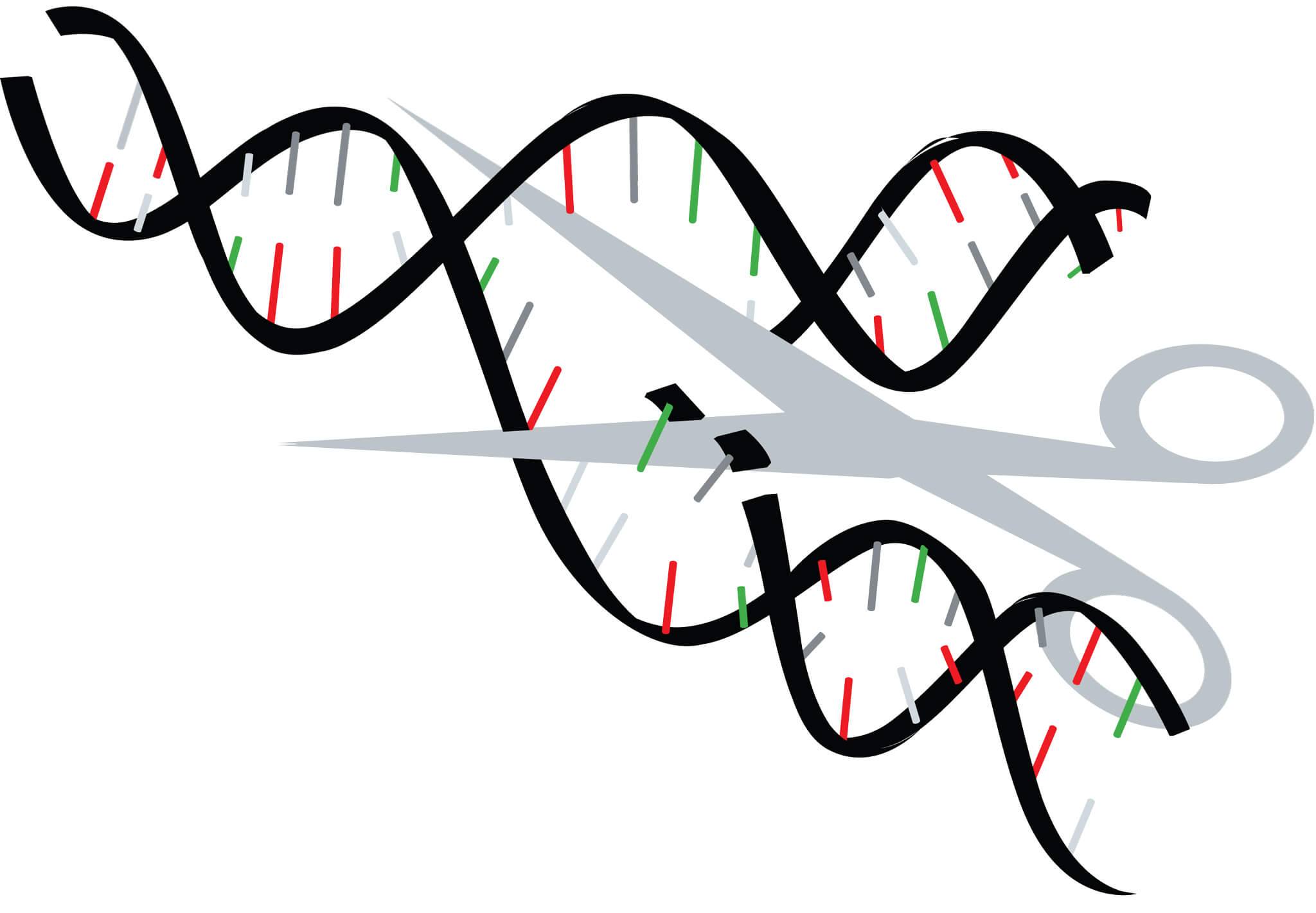
However, in 2012, this technology referred to as CRISPR/Cas was determined to have the ability to operate on human DNA. CRISPR/Cas is used a pair of scissors, that 'cut' the DNA strand where a specific strand of RNA is used, in order to commence DNA repairing that would, if done properly, instead fix the mutation that was causing disease. For some diseases this technique would be used on, it may even be possible to extract blood stem cells from the body, alter them using CRISPR, and put them back into the body. Although, it will likely still be quite some time before this technology and technique is tested on people.

I am very curious to see where this new technology takes us, and how well it can potentially work. It is very interesting to see how the researchers may test all of the possible outcomes in order to ensure there will be no ethic capabilities while testing the use of CRISPR on people. If this technique along with the technology really works, it will be the start of many positive biological impacts on those who suffer from diseases from DNA mutations.

Wednesday, November 23, 2016

A Single Gene Recently Linked to Developing Schizophrenia


A recent study shows that a single gene may be linked to developing schizophrenia, a severe as well as chronic mental disorder that typically impacts how a person feels, thinks, and behaves. It is commonly said that those who develop schizophrenia have 'lost touch with reality.' Although schizophrenia is typically not as prevalent as other mental disorders, the symptoms of schizophrenia are usually very debilitating. Finding any genetic or even general biological link to the cause of schizophrenia is very critical, due to the fact that it is literally impossible to produce a model of the mental disorder in a living cell.

This study, conducted by a team of researchers from Harvard Medical School, began in 2014, and originally, researchers were able to identify 108 regions in our DNA sequence where specific genetic variants increase a person's risk of developing schizophrenia. Using the data originating from this research, the researchers have now combined this with a genetic analysis gathered from almost 100.000 DNA samples from about 30 countries, as well as brain samples from about 700 deceased patients. Animal models were used along with the other genetic samples and data in order to observe the biological processes that were used to help identify the single gene that must be associated with developing schizophrenia.

Related image

The gene the researchers discovered, C4, which is also known as the complement component 4, is known to be involved in the immune system. With the use of the brain samples of those deceased, the postmortem brain samples, researchers were able to determine the number of C4 genes located in one's brain, which varied throughout samples. Based on how long or short their C4 gene was typically determined how active the gene was. One specific variation of this gene, which was not specified to be either long or short, just a particular variation, leads to a higher risk of the ability of the gene to express itself in the person's immune system correlates with the higher risk of adolescents developing schizophrenia. Researchers then tested the connection of the C4 gene to the higher risk of developing schizophrenia, and found that C4 is very involved in the synaptic pruning process that occurs in the brain naturally as the brain matures through childhood, as well as adolescence. It seemed as though the more synapses were cut away, the higher the expression of the C4 gene prevailed.

After analyzing the brain tissues of human patients with schizophrenia, it showed that there were fewer connections between neurons, which just goes further to show that a highly expressed C4 gene in the brain may really be cutting away these neural connections in the brain. Although these recent finds do not indicate any treatments or potential cures, it is the start of what could potentially be a long road to uncovering. I personally think that this is a huge step in addressing schizophrenia, and hope that this means that we are at least on the right track. I am excited to see how scientists use this new information to apply it to further findings. All cures and treatments have to start somewhere, so maybe this is just the beginning.

Sunday, November 20, 2016

Proving that You Are What You Eat

We often say, "you are what you eat," when it comes to a healthy diet. According to Samantha Heller, clinical nutritionist at NYU Medical Center, "everything you eat becomes a part of not only your inner being, but the outer fabric of your body as well." Healthier food promotes healthier skin and the opposite is true when you consume unhealthy foods. Eating junk food or unhealthy food can lead to sallow, dry and old skin overtime. In addition, other skin problems can occur such as acne, eczema, and psoriasis. However, scientists have found genetic evidence that proves "you are what you eat."


At the University of Oxford, researchers have proved that an organism's diet can affect the DNA sequences of their genes. By doing a study on two parasites, scientists have detected a difference in DNA sequences based on the organism's diet. Researchers hypothesized that the composition of an organism's diet can alter an organism's DNA.  The hypothesis was tested using two different groups of parasites: eukaryotic parasites (Kinetoplastida) and bacterial parasites (Mollicutes). According to Dr. Steven Kelly from Oxford's Department of Plant Sciences,  the parasites selected serves as an excellent model system because they share a common ancestor but have evolved to infect different hosts and eat very different foods.

Based on their results, researchers found that different levels of nitrogen in the parasites' diets contributed to the change in DNA sequences. Parasites that usually have a low nitrogen, high-sugar diet, had a different DNA comparison to parasites with nitrogen-rich, high-protein diets. Using mathematical models, researchers have been able to predict the diets of related organisms by analyzing the DNA sequence of the genes. 

While the hypothesis holds true for simple organisms, it is still unclear if the same will occur in complex organisms. While there are many factors that can affect the DNA structure of an organism, the study has proved that a high percentage of the differences in DNA sequences are due to diet composition. If results do end up proving to be true for complex organisms, it will be quite useful in encouraging public awareness for promoting a healthier lifestyle for everyone. It will serve essential in providing evidence how an individual's diet can certainly affect future generations and hopefully encourage everyone to maintain a healthy diet. 

Tuesday, September 13, 2016

Non-Coding DNA May Not be as Useless as We Think


Non-Coding DNA May Not be as Useless as We Think

DNA is the genetic material that makes everything that's living unique and similar at the same time.  All living things share at least a small percentage of their DNA with all other organisms, and this is due to the idea that all life on earth came from a single common ancestor.  DNA calls for the production of amino acids, and these chains of amino acids form to become more complex proteins.  DNA is made up of a 4 letter alphabet, GTCA, and is read in groups of 3, however, not all DNA calls for the production of proteins. Start and stop codons call for what parts of the DNA are to be transcribed and then translated into the basic building blocks that create us and all other life.  The genes that do not fall between these codons are called non-coding DNA, simply because they do not code for the production of protein.  For years, scientists have questioned the importance of these non-coding regions, and many thought that they were completely useless. A team led by Moises Mallo from Portugal explored what may happen if the non-coding regions were altered.

Snakes, such as this Gaboon viper, have can have more than 100 pairs of ribs.
Picture of a snake's backbone and vertebrae, retrieved from here
The team looked into why snakes have ribs that extend out of each vertebra all the way down to their tails.  This is uncommon among vertebrates because for most vertebrates there is a distinguished head, neck, rib cage, and tail region, even though the sizes for each region vary between species.  For snakes it seems just like all one long region.

The scientists examined the specific genes that slow down the rib production in mice, and actually found that it was the same in snakes too.  The difference was in the non-coding DNA that was surrounding those certain genes.  This has led scientists to believe that the non-coding sequences may have some important evolutionary stems and that they are related to the body size of the organism.

Wednesday, May 4, 2016

Morning Person or Night Owl: It's In the Genes


Have you ever wondered why some people spring up early in the morning while others drag their feet like zombies and need numerous pots of coffee to be prepared for the day. Or the complete opposite where people can stay up until the mere hours of the night while others struggle to catch the 11 o' clock news? Well, with the work from researchers at the University of Leicester used a study done on fruit flies to identify that these characteristics in humans and other organisms is genetically linked.

They conducted their research by studying the chronotype in fruit flies and took note of when they emerged from their pupal case. They discovered that most emerged during the morning hours while a smaller some emerged later in the day. The flies that were late to emerge were then bred together and what was found is that researchers were able to breed flies with the same chronotype as their parents meaning that early and late rising is genetic.

A genetic analysis was ran 24 hours prior to the emergence of the flies and what was found is that it was not just the same genes that were active during at different time in both types of flies but also that the genes were characteristically different themselves.  Researchers explained that different gene expression in the early risers and night owls is due to genetic variations in their DNA sequence. Meaning that the cause of some flies or humans arising later than others is not due to a delay in the genetic clock of individuals but is actually completely different in every aspect.

I found this article very interesting because while reading the article I came across the reason this research is being done and I found that it is going to be most beneficial for us as human beings to better understand our biological clock. We are all required to work "normal" shifts such as a 9 to 5 work day or school day and it is becoming more evident that everyone has a peak in their day when their performance is at its highest and that is what should be the basis of people's schedules.

Monday, February 8, 2016

Colorimetric Analysis Promises Easier Detection of Faulty Genes

Just last year, scientists from Shaanxi Normal University in China developed a colorimetric analysis test for detecting faulty or unwanted genes (such as the BRCA1 and BRCA2 genes, implying a high risk of getting breast cancer). Colorimetric tests are usually used to determine the concentration of a specific chemical or reagant in a solution or compound, through use of a color reagant for easy detection. When this technique (specifically, an ultrasensitive cascade signal amplification strategy) is applied, it becomes visually easier to detect genes that cause colon cancer, breast cancer, and countless other diseases.

According to their published paper in RSC Advances, the six researchers began their experiment by using a hairpin probe containing a 3' DNA sequence for target recognition and an enzyme referred to as DNAzyme. Upon contact with target DNA sequences, the enzyme freed itself, cleaved multiple molecular beacons, and as more DNAzymes were released, padlock probes triggered an RCA reaction (which amplified the DNA). This amplification produces a different DNAzyme that reads out signals, such as BRCA1 detection, so precisely that it can detect the gene down to approximately 3.3fM (femtolomars) (RSC Publishing).

Of course, there are alternative ways of testing for genes such as BRCA1/2, so this new technique isn't an 'end all be all' for gene detection. However, I think this is certainly a more accessible method of doing so. For one, using RCA to amplify the sequences in question is a great idea, because the detection of the gene will be far easier to see at the end, especially in colorimetric analysis. It's like putting layers of the same color on top of each other - easier to detect, harder to miss. More than that, due to Myriad Genetic's recent loss of patent protection for their BRCA1/2 gene test, more accessible tests are needed. If this test continues to be experimented with and researched on, it's likely doctors will soon be using them in hospitals worldwide. I'm personally excited to see where this leads.

http://www.rsc.org/chemistryworld/2015/04/brca1-gene-breast-cancer


Sunday, December 13, 2015

Maybe a "Quit Smoking" Gene

Do you smoke still? Have you ever tried to break the habit? Whatever the case, you are not alone in the struggle. 


Scientists throughout the world, specially Ming Li and the research team in Virginia, have conducted experiments between 1994-2014 to assess possible genetic influences on smokers. 22 different studies were performed with over 9, 500 smokers involved, and the results were revolutionary. These scientists specifically targeted a Taq1A sequence of DNA in the human genome.  Smokers with the A2/A2 variation of this DNA sequence found it easier to quit smoking--the "cold turkey" and instantaneous quitters. Smokers with other variation of the Taq1A gene found it very difficult to quit, often committing and getting hooked back to the habit. The sequences of DNA influence the amount of dopamine being produced in the brain in response to the nicotine levels in blood. Consequently, the A2/A2 individuals release less dopamine, making nicotine less addictive; therefore, it becomes easier to quit. 

I found this research very interesting. I have always wondered why some individuals can quit smoking seemingly much easier than others. Professor Edelmen, a professor of medicine in New York, states, "There's a huge variability in the ability to quit smoking…" Although this is true, geneticists have discovered a genetic influence on smokers that makes sense biologically. 


Thursday, December 3, 2015

Blood from Children Contain Evidence of Prenatal Smoking

Researchers at John Hopkins University Bloomberg School of Public Health led a study where the blood of 531 children up to five years old were tested  to see if they could find any evidence that shows that their mother's smoked during pregnancy. In a previous study, there were presences of epigenetic marks, which include DNA methylation, in the DNA of a newborn's umbilical cord at 26 locations of the genome. The epigenetic markers are molecules not part of the DNA sequence and regulate the turning on and off of genes.


This new study took this even further, by finding that when the 26 epigenetic markers were looked at in the children, 81%  of the time the researchers could correctly predict that there was prenatal smoking. Although, in some cases it could be from exposure to secondhand smoke after birth. This study overall found that not only is the DNA marked in newborns, but it is still shows the epigenetic markers even five years after the children are born. This is known as an epigenetic memory. Prenatal smoking causes many health problems for children down the line and finding out if their mother's smoked during pregnancy can at least get a head start in preventing or treating these problems. I never knew that you can actually tell if a woman smoked during pregnancy, especially in the DNA of their child even after five years of being born.

Original article

Wednesday, April 22, 2015

Search for the Genetic Culprit of Heart Disease


Image result for heart disease


A recent article in the New York Times took an interesting look at the genetic links of heart disease within a particular family. It seems that heart disease is commonly seen as a disease that can be prevented by controlling variables such as weight control, healthy diet, exercise, and refraining from smoking. For many people this is true, but for the Del Sontro family this is not the case. In fact, six of the seven siblings presented with early age heart disease despite their rigorous efforts to control their health. As a result of recent concerns and fears of sudden heart failure the family decided to participate in a study in which scientists are analyzing the genetic makeup of each member of the Del Sontro family, seeking allele mutations in the three billion chemicals that make up human DNA.
Recent advances in data processing has allowed this process to be possible, while in prior years this wouldn't even be fathomable. Although, there are  still 30,000 genes in each person’s DNA which can be painstakingly difficult to find the particular glitches that are present in the Del Sontro family, as opposed to normal healthy individuals. A recent journal posted on the American Heart Association's website did research regarding the determination of genes related to heart disease and they found the proposed genetic locus responsible for LDL subclass phenotypes also results in an atherogenic lipoprotein phenotype. This research among others like this are steps in the right direction in identifying the culprit.
I have hope that with the progress that technology is making we will one day be able to determine the genetic culprit, and eventually be able to offer some type of genetic counseling that will allow us to be able to prevent and treat heart disease in a more effective manner. People who have genetic heart disease predisposition's, the Del Sontro family in particular are living in fear just basically waiting for something to happen and afraid to deviate from the healthy path even remotely.
 

Wednesday, December 3, 2014

Scientists Confirm the Skeleton of Richard III by DNA Analysis


A skeleton found underneath a parking lot in Leicester, England believed to be the remains of King Richard III was recently confirmed by DNA analysis of the remains as well as tracing the genetic evidence over 20 generations. This is the oldest DNA identification of any known person. The head geneticist of the University of Leicester stated, "Even with our most conservative statistical analysis, we're 99.999% sure." Along with the biological data, the historical data and recorded place, time, and cause of death also prove to confirm this identification. Retrieving 500 year old DNA was not an easy task. The researchers had to go through millions of ribbons of splintered DNA fragments. By matching mitochondrial DNA and following the passing down of the Y chromosome, it was confirmed that the remains were indeed of King Richard III. (And also stirred up proof of infidelity while they were at it.)

Original Article: http://www.popularmechanics.com/science/health/genetics/scientists-confirm-remains-king-richard-iii-17487010

Related Article: http://news.nationalgeographic.com/news/2014/12/141202-richard-iii-genes-shakespeare-science/

Saturday, November 22, 2014

Genomics at the corner of explain evolution of human brain

Scientist at the University of Colorado say that they are inching ever closer to dissecting and explaining the evolutionary genomics of the human brain. By sequencing the DNA of animals related to humans and locating the genes responsible for brain growth and development researchers are moving closer to the cusp of the how the human brain came to be. Aside from lack of anthropological technique, the complete sequence of of a human can't tell us all we need to know about the human brain. In fact, just trying to pinpoint all the genes responsible for the brain itself has proven to be a difficult task. The researchers are using marmoset because they are primates that operate in social groups and are able to be handled with relative ease.

The last few years scientist have been able to identify more sections responsible towards brain development in the marmosets but genes relating directly to social and cognitive portion of the brain are still unknown. According to the research there has been a couple of studies on proteins that play a role in the synapse and altered forms of the gene SRGAP2 are found in humans and Neanderthals and not the marmoset. This suggest the gene plays a new role.


Hopefully this research will continue to flourish and provide us with new information as to how the pivotal standing difference (the brain) of humans and other primate came to be. I would personally like to undergo this specific research itself if possible.

Main article: http://www.sciencedaily.com/releases/2014/07/140709095342.htm

Related article: http://www.kavlifoundation.org/science-spotlights/evolution-what%E2%80%99s-uniquely-human-about-human-brain#.VHE8BvnF83m

Saturday, April 19, 2014

Stressful Environments May Lead To Genetic Defects

A recent study done by a research team led by Daniel Notterman examined the genetic effects of stressful upbringings. They examined 40 9-year-old black boys and found that those who grew up in disadvantaged environments have 19 percent shorter telomeres than their advantaged peers. Telomeres are DNA sequences which live at the end of each chromosome, protecting the ends from damage and vary in length by person, and shrink with age. They also reported that boys with genetic sensitivities to their environment have shorter telomeres after experiencing stressful social environments tha the telomeres of boys without the genetic sensitivities.

Notterman and his team limited there sample size to those that had given saliva samples at age 9, those who had black or African American mothers, and those who had provided complete information about their social environments. Of the 40 boys, half were raised in disadvantaged environments which was characterized as low household income, low maternal education, an unstable family structure and harsh parenting. Another Professor who studies population health stated that this work adds to the growing body of research related to the role of chronic stress in health inequalities, especially among the poor.


I think this is a wonderful study because there are too few studies focused on African American children in this context. This type of study really highlights the importance of early intervention to moderate disparities in social and educational opportunities because it really is shocking how profound the effect is by such a young age. At just 9 years of age these genetic effects from chronic stress are already prevalent and may lead to accelerated aging and higher susceptibility to illnesses. It’s also a very interesting fact that this study was done using saliva rather than blood. This innovation can lead to more simplistic studies of our telomeres at various points in time and can indicate how our social environment may affecting our DNA. In my opinion any further research that increases our knowledge of how these telomeres and how they affect our body is exciting because knowing more about a potential biological clock can have a profound results.

Monday, March 31, 2014

Gene-Editing System Fights Liver Disorder

Researchers at MIT have announced that they have created a way to cure adult mice of a liver disorder by using a new gene-editing program called CRISPR. This program is able to cut out mutated DNA and replace it with a corrected sequence, effectively eliminating any harmful mutations in the patients genetic code. CRISPR is modeled after the cellular mechanisms that bacteria use to protect themselves against viral infection, and utilizes a DNA-slicing enzyme called Cas9 bound to an RNA guide strand. While implementing the Cas9 enzyme into the organism, scientists also deliver a DNA template strand, which aids the target cell in rebuilding the correct DNA sequence after the mutation has been cut out.


Any kind of technology that takes a step forward in the potential to cure harmful diseases is a step in the right direction. The concept of simply "cutting out" a harmful sequence and replacing it with the correct sequence seems like basic solution on paper, but the implementation of the technology needed to apply the correct slicing enzyme and also introducing a template DNA strand is much easier said than done. Hopefully this kind of genome editing makes its way to the human testing phase, as this could be a huge step in curing a number of genetic mutation diseases, such as hemophilia or Huntington's disease.

Link to the article found here.
More information about CRISPR and its use by bacteria can be found here.

Friday, November 22, 2013

Could be more to know about the world of Epigenetics than previously assumed...


As time pushes onward, humans are constantly obtaining more information about how the body works and how our traits are passed from generation to generation. This article gives insight to the world of Epigenetics, which scientists have previously believed to be set in stone. However, as researchers backtrack and take a closer look, epigentics is not as simple as we assumed. This article mentions how we have viewed the DNA sequence as an independent of the epigenetic mechanisms (that which are responsible for controlling the gene expressions and are heritable). Further reading of this article will allow the readers to be able to see just how complex the transcription of the DNA can be. Some of the transcription ways are straightforward, but others occur at different rates or times which can all effect the output of the process. I feel that is is important that researchers keep investigating what controls our traits, that way we can learn how to better ourselves and the future generations to come. 


Below is a link to another article, also giving details about epigentics: